
Outdated Drivers Are Slowing You Down
One free scan finds every outdated or missing driver and matches the right update for your exact hardware.Free scan · exact hardware matchWindows Errors? Fix Them Before They Spread
Repair common Windows errors and clear accumulated junk for a smoother, more stable PC - no reinstall needed.Free scan · no reinstalliTechGuides is reader-supported. When you buy through links on our site, we may earn an affiliate commission. As an Amazon Associate I earn from qualifying purchases. Learn more
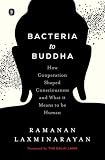
In an authorized excerpt from Bacteria to Buddha, Ramanan Laxminarayan traces a path from a single cell responding to its environment to the human capacity for reflection. The book’s larger argument, as Hachette India describes it, is that cooperation helped shape consciousness; that is the author’s thesis, not a scientific consensus established by the excerpt.
Hindustan Times published the excerpt on October 2, 2026, with permission from the book’s publisher, Hachette India. Read the authorized excerpt at Hindustan Times.

What the excerpt says about consciousness
The excerpt begins at the boundary between an organism and its surroundings. Living things encounter environmental signals and respond to them; for a simple organism, that responsiveness is bound up with survival. Laxminarayan uses this basic interaction as the start of a much longer progression: sensing and response develop into perception, cognition, imagination and, eventually, the human ability to reflect on experience.
Rather than treating consciousness as an isolated human possession, the passage frames it as a changing relationship with the outside world. Its movement from bacteria toward human self-observation gives the book its title’s arc. This is a literary and evolutionary framing in the excerpt, not a report of a newly published study or a comprehensive account of scientific evidence.
How cooperation fits the book’s larger argument
Hachette India presents the book’s central question as: “What if consciousness evolved not simply to think, but to cooperate?” Its description connects cooperation with trust, empathy, compassion and human relationships. In that account, consciousness is not only a way to register the world, but also part of how humans live with one another.
That cooperation-centered explanation should be read as Laxminarayan’s argument as presented by the publisher. The excerpt and publisher listing do not, by themselves, establish it as a settled scientific explanation or provide independent evidence validating the thesis.
About the book and its listed hardback edition
Bacteria To Buddha: How Cooperation Shaped Consciousness And What It Means To Be Human is by Ramanan Laxminarayan and is published by Hachette India under the John Murray India imprint. Hachette India lists the hardback as ISBN 9789357315203, published September 17, 2026, with a listed extent of 267 pages and a price of INR 799. The price is the publisher’s listed price for India; availability and current selling prices may vary.
Catalogue page counts are not consistent: Google Books and Crossword show 280 pages, including a Crossword hardback record carrying the same ISBN. Because the listings differ, use the publisher’s 267-page extent when identifying the publisher’s edition, rather than assuming the catalogue figures describe an identical edition.
See Hachette India’s publisher listing for the hardback. The ISBN is the clearest way to distinguish that edition from other catalogue records.
Independent reader supportYour contribution helps us test, update, and keep practical guides available for everyone.The author’s description of the book’s journey
In a LinkedIn post, Laxminarayan described the book’s path from bacteria to Buddha as a journey between “a single cell sensing its environment and a meditating monk observing his own mind.” The post captures the book’s broad sweep from basic responsiveness to reflective awareness. Its date was not visible in the post search result.
Quick Recap
Read Laxminarayan’s post on LinkedIn.
Product prices and availability are accurate as of the date/time indicated and are subject to change. Any price and availability information displayed on Amazon at the time of purchase will apply.
What’s actually slowing this PC down?
Pick the symptom - the matching free tool is one click away.

