
Recommended Free Tools
iTechGuides is reader-supported. When you buy through links on our site, we may earn an affiliate commission. As an Amazon Associate I earn from qualifying purchases. Learn more
A knowledge pipeline runs when a trigger fires, passes information through ordered steps, uses AI only where a step needs interpretation or summarizing, and writes the result to a destination you control. Build it in that order: define the outcome and sources, pick the trigger, lay out the steps, decide where AI belongs, restrict what the AI can see and do, add human review where mistakes are costly, then configure, test, and monitor before publishing. The platform details below reflect vendor documentation checked in October 2026. Vendor products change quickly, so confirm names, connectors, and preview status before you commit to one.
Start with the outcome and the source systems
Most failed automations trace back to an unclear goal. Before you open any tool, write the pipeline in one sentence that names the input, the transformation, and the destination. For example: “When a vendor invoice arrives by email, extract the amount and due date, add a row to the payables tracking sheet, and post to the finance channel only if the invoice is due within seven days.”
Then list every system the pipeline touches:
- Sources: the mailbox, shared drive folder, spreadsheet, form, API, or database that holds the raw information.
- Destinations: the place where results must land, such as a tracking sheet, a ticketing system, a document library, or a chat channel.
- Owner and success test: who reads the output, and how you will know a run was correct (for example, every invoice appears exactly once in the sheet).
Check connector coverage at this stage, not after you have built the flow. A workflow designed around an app that the platform cannot reach has to be redesigned.
Choose the trigger
A trigger is the event or condition that starts the workflow. Actions are the steps that run afterward. Depending on the service, triggers can be a schedule, an app event, a webhook or incoming request, or a manual start. The table below shows how the documented platforms describe these options.
#1 Best Overall

- Efficiency & Organization Boost: Thoughtfully designed layout for easy recording of key meeting details like date, location, objective, and attendees. Professional index pages enable easy categorization and quick access, enhancing overall efficiency.
- Long-lasting and Reliable: Crafted for durability, this work notebook includes a double-sided pocket for added convenience. With 140 pages of premium 100gsm paper, it offers a smooth writing experience with no ink bleed-through. The twin-wire spiral binding ensures easy page-turning and long-lasting use.
- Your Versatile Meeting Partner - Our daily notebook for work is a versatile companion. Executives, project managers, team leaders, students—everyone benefits from its efficient organization and note-taking prowess. It's not just a meeting planner for work; it's an indispensable office supplies for anyone seeking to enhance their meeting productivity.
- Boost Meeting Efficiency: A meeting notebook helps you manage and streamline meeting details, ensuring discussions, decisions, and action items are accurately captured and organized. It promotes a more efficient workflow, allowing for easy reference and retrieval of information during and after the meeting.
- 100% Quality and Service - Your satisfaction is our top priority. If you encounter any quality issues with our product or if you are not completely satisfied for any reason, we will gladly exchange your item promptly. Simply contact us through an Amazon message, and our dedicated team will ensure a smooth and straightforward process. We stand behind the quality of our products and strive to provide you with the best customer service possible.
| Trigger type | How the run starts | Documented examples | Setup note |
|---|---|---|---|
| Schedule | Runs at a set recurrence | Zapier scheduled start; Microsoft 365 Copilot Workflows recurrence | In Azure Logic Apps, schedule-based triggers only fire after the workflow is published. |
| App event | A new item appears in a connected app | Zapier lists incoming email and a new spreadsheet row as examples | Depends on the connector supporting that event in your plan and region. |
| Webhook or request | An outside system calls the workflow | Azure Logic Apps documents outside events as a trigger type | Publishing is required before the trigger can fire. |
| Manual or on demand | A person starts the run | Zapier on-demand start | Useful for testing and one-off requests before you automate them. |
| Workflow or MCP invocation | Another workflow or an MCP call starts the run | Zapier documents starts via Zap workflows and MCP | Not stated for every platform; check each vendor’s current trigger list. |
Choose the least frequent trigger that still meets the outcome. A scheduled daily digest is easier to audit than a flow that reacts to every incoming message, because you control when it runs and how much data it touches.
Lay out the workflow as ordered steps
Microsoft’s Azure Logic Apps guide describes a workflow as starting with a trigger and continuing with actions. Google’s Gemini Enterprise workflow documentation describes sequential steps in which each result can influence the next. In practice, most knowledge pipelines follow the same six-stage pattern:
- Collect. Retrieve the raw items: emails, files, rows, or API records. Limit each query to the items the outcome needs, such as messages from the last 24 hours with a specific label.
- Normalize. Convert the inputs into a consistent shape, such as trimming attachments, removing signatures, or mapping fields into named columns.
- Decide. Apply explicit conditions, such as an amount threshold, a sender domain, or a missing field.
- Interpret (optional). Use an AI step to summarize, classify, or extract information from free text.
- Write. Create or update the destination record through a defined action.
- Notify or wait. Send a message, or pause for a human decision before any external change.
Microsoft’s Foundry and Logic Apps documentation puts the design principle plainly: “Most real world AI solutions need to combine both agents and deterministic steps.” This is a vendor statement about design, not independent evidence that any particular platform performs better.
Rank #2

- Half Meeting Half Note: 1.MEETING PLANNING: Date, Location, Topic & Attendees 2.MEETING MINUTES: Agenda, Quick Notes & Other 3.NOTES AREA: Lined Page 4.ACTION ITEMS: Action Steps, Person, Due Date & Check Box 5.NEXT MEETING: Date, Time & Location 6.INDEX PAGE: Date, Title, Page Number, which will help create more effective meetings and good results.
- Premium Quality Notebook for Work: Golden spiral binding is sturdy and flexible, with easy-to-turn pages. Hot-stamped cover is water-resistant and not easy to bend. Bonus Bookmark and Pockets. Perfectly hold up well to frequent transfers in and out of backpacks, briefcases, and cars.
- Fight Ink-bleeding & Great Size: The high-end 100gsm paper could prevent ink bleeding through or feathering, handle double-sided writing and most daily use pens pretty well. The office/business work notebook measures 7.5"x 10"(similar to B5 size), Generous size provides ample space to jot down your meeting notes.
- Each 160 Pages Per Book: Provide ample space for note taking & planning and with the date section at the top for tracking them. With 160 pages for meeting minutes, the manager notebook will cover more than half a year, even in daily use. Also provides index pages for organizing this office planner.
- Better Tool Drives Better Meetings: The hassle of organizing the chaotic meeting notes VS this professional meeting notebook. Definitely a step up! Everything is neatly zoned on each page makes it a breeze to fill them out and ensure all you need are accounted for.
Decide where AI belongs and where it does not
Use AI where the input is messy and the output needs judgment. Use fixed conditions and actions where the routing or record change must be predictable and repeatable.
| Task in the pipeline | Better handled by | Reason |
|---|---|---|
| Summarizing a long report or thread | AI step | Requires reading and condensing unstructured text. |
| Classifying free-text requests into categories | AI step with structured output | Define the allowed categories and fields so downstream steps receive consistent values. |
| Routing invoices above a set amount to a reviewer | Deterministic condition | A threshold should give the same answer every run. |
| Creating or updating a CRM or tracker row | Explicit action | Record changes should be traceable to a defined field mapping. |
| Drafting an external reply | AI draft plus human approval | An error reaches someone outside your organization. |
Ask for structured output
Google’s Gemini Agent node can return plain text or structured JSON. For pipelines, structured output is usually safer, because a later condition can check a specific field such as category or due_date instead of parsing a paragraph. Define the fields you need, and add a condition that handles an empty or unexpected value rather than passing it on.
Limit what each AI step can see and do
Scope is the most important control in an AI pipeline, and it is also the one most often left at defaults. Set it per step, not once for the whole workflow.
Rank #3
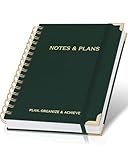
- Easily Stay On Track & Make The Most Of Your Time: ZICOTOs’ daily planner makes it easier than ever for you to stay organized, reduce stress & enjoy more free time! Arrange your schedule, priorities, to do’s and jot down plans & ideas on the daily notes section
- Smartly Plan Ahead & Boost Your Productivity: Absolutely clever & efficient! With the to do list notebook / notepad you can break down your daily tasks into half-hourly focus blocks and map out priorities & follow-up duties to keep your day on track and enhance productivity
- Plenty Of Space For Efficient Planning: Stay focused & manage your time wisely! The 8.4x6.1” work planner & organizer notebook offers ample space for 105 days of life-changing planning with each day being spread across 2 pages - set yourself up for purposeful days
- Now Is The Best Time To Start: The daily planner is undated so you can start to add structure to your schedule and cultivate new planning habits right away! Beat procrastination, boost happiness & make each day count with the hourly planner
- Adds Beauty To Daily Planning: A gorgeous dark green linen cover, chic golden letters, a gold ring wire and a clean, easy-to-use layout, elastic band - enjoy the lovely and modern design of the undated daily planner!
Knowledge sources
Google’s documentation warns that when the full Drive or OneDrive tool is enabled on the same agent node, it takes precedence over restricted selected knowledge sources. If an agent must search only a specific folder, do not attach broad file tools to that same node. Google recommends placing restricted search and broader tool use in separate agent nodes when both are required.
Do these 3 things before closing this tab:
1Fix the driver behind crashes, sound loss and screen glitches2Clear out junk files and repair common Windows errors3Scan for outdated or missing drivers - takes under a minuteConnected actions and tools
Microsoft’s Foundry documentation says agents can use connector actions, APIs, workflows, and MCP servers as tools. Give each agent only the tools its step needs. A summarizing step needs read access to one source and no write access anywhere. A step that creates records needs write access to one destination only.
Administrative controls
Microsoft 365 Copilot Workflows states that administrators control access to the feature. In enterprise settings, confirm who can create, publish, and edit workflows before you roll out a pipeline to a team.
Rank #4

- Easily Stay On Track & Make The Most of Your Time: ZICOTOs’ daily planner makes it easier than ever for you to stay organized, reduce stress & enjoy more free time! Arrange your schedule, priorities, to do’s and jot down plans & ideas on the daily notes section
- Smartly Plan Ahead & Boost Your Productivity: Absolutely clever & efficient! With the planner notebook you can break down your daily tasks into half-hourly focus blocks and map out priorities & follow-up duties to keep your day on track and enhance productivity
- Plenty Of Space For Efficient Planning: Stay focused & manage your time wisely! The 9.3x6.3” (inner pages) work planner & organizer notebook offers ample space for 80 days of life-changing planning with each day being spread across 2 pages - set yourself up for purposeful days
- Now Is The Best Time To Start: The daily planner is undated so you can start to add structure to your schedule and cultivate new planning habits right away! Beat procrastination, boost happiness & make each day count with the hourly planner
- Adds Beauty To Daily Planning: A gorgeous champagne pink cover, chic gold foil letters, a golden ring wire and a clean, easy-to-use layout - enjoy the gorgeous and modern minimalist design of the undated daily planner!
Insert human review where errors matter
Human approval is useful when a workflow crosses systems, waits on people, or runs for a long time. Microsoft documents approval and pause-and-resume patterns for Logic Apps workflows that work with Foundry agents, and Google’s workflow builder includes a human-in-the-loop step that can request answers during a run.
Add a review gate before any step that sends external messages, changes financial records, deletes data, or affects customers. Define what happens on rejection: the workflow should stop, log the item, and notify the owner, rather than retrying silently.
Free tools Windows power users keep installed
One-click scans. No signup required.
Configure, test, inspect, and publish
Microsoft’s Azure Logic Apps automation guide includes an AI assistant that can generate a workflow structure from plain-language instructions. The generated structure still needs your input. Use this sequence:
Best Value

- Easily Stay On Track & Make The Most Of Your Time: ZICOTOs’ daily planner makes it easier than ever for you to stay organized, reduce stress & enjoy more free time! Arrange your schedule, priorities, to do’s and jot down plans & ideas on the daily notes section
- Smartly Plan Ahead & Boost Your Productivity: Absolutely clever & efficient! With the planner notebook you can break down your daily tasks into half-hourly focus blocks and map out priorities & follow-up duties to keep your day on track and enhance productivity
- Plenty Of Space For Efficient Planning: Stay focused & manage your time wisely! The 9.3x6.3” (inner pages) work planner & organizer notebook offers ample space for 80 days of life-changing planning with each day being spread across 2 pages - set yourself up for purposeful days
- Now Is The Best Time To Start: The daily planner is undated so you can start to add structure to your schedule and cultivate new planning habits right away! Beat procrastination, boost happiness & make each day count with the hourly planner
- Adds Beauty To Daily Planning: A gorgeous terracotta cover, chic gold foil letters, a golden ring wire and a clean, easy-to-use layout - enjoy the gorgeous and modern design of the undated daily planner!
- Write the specification. Name the trigger event or condition, the actions you want, and the expected result. Vague instructions produce vague flows.
- Review the generated structure. Check every action against your source and destination list.
- Complete connections and parameters. Supply any missing connection, required field, or setting, and resolve setup alerts. Do not test until the alerts are cleared.
- Save as a draft and build incrementally. Add one stage at a time and test after each addition.
- Test with representative inputs. Include a normal case, an input with a missing field, a duplicate, a malformed item, and an item containing sensitive data you do not want the AI to see.
- Inspect run history. Open each step and confirm its input and output. Check that the AI step returned the structure your conditions expect.
- Publish. For schedule-based triggers and outside events in Azure Logic Apps, publishing is required before the trigger fires.
- Monitor the first live runs. Review run history after the first several executions, then set a regular review cadence and name an owner for failures.
Compare platform options
Several platforms document this kind of pipeline, but the vendor materials do not establish a single best choice. Compare them against your own sources, destinations, and governance requirements. The table reflects what each vendor documents as of October 2026.
| Platform | Documented trigger starts | Integration scope | Knowledge and tool boundaries | Review and governance | Availability notes |
|---|---|---|---|---|---|
| Azure Logic Apps with Microsoft Foundry agents | Events and schedules; agents can run from either | Microsoft describes triggers across “1,400+ connectors.” This is a vendor-reported figure with no separate methodology in the reviewed page. | Agents can use connector actions, APIs, workflows, and MCP servers as tools | Approval and pause-and-resume patterns are documented | The Foundry integration is labeled preview on the Microsoft Learn page, may incur charges, and is subject to Azure Preview terms. Confirm current status before presenting it as generally available. |
| Zapier | On demand, scheduled, via Zap workflows and MCP, and from app events such as incoming email or a new spreadsheet row | Connector breadth not stated in the trigger guide | Event data is passed to the agent and becomes available in its instructions | Not stated in the trigger guide | The trigger guide was updated October 1, 2026. Zapier is moving Agents to AI by Zapier, so check current product naming and migration details. |
| Microsoft 365 Copilot Workflows | Recurrence and AI actions | Outlook, Teams, SharePoint, Planner, Approvals, Office 365 Users, and Dataverse. No custom or non-Microsoft connectors in this experience. | Not stated | Administrators control access. Generated workflows should be reviewed and tested before production. | For advanced workflows or non-Microsoft services, the page directs users to Power Automate or listed partner connectors. |
| Gemini Enterprise workflows | Sequential steps; the trigger types are not stated in the workflow documentation reviewed | Connected apps and actions through the Gemini Agent node | Full Drive or OneDrive tool takes precedence over restricted selected knowledge on the same node | Human-in-the-loop step can request answers; conditions branch on prior outputs or external data | Check Google’s current documentation for the supported model list and access requirements. |
Questions that decide the choice
- Does every source and destination have a supported connector or action on your plan, in your region?
- Can the AI step be limited to the exact files or sources it needs, without a broad tool attached to the same node?
- Do you need deterministic branching, structured output, and a human approval pause in one flow?
- Who will administer access, and what do they control at the tenant or organization level?
- Is the feature generally available, or does it carry preview terms or charges that your organization must approve?
- How will you monitor failed runs, and who receives the alert?
If your pipeline is mostly inside Microsoft 365 apps and uses only the listed connectors, the Copilot Workflows experience may cover it. If it needs a non-Microsoft service, the documentation points to Power Automate or partner connectors. Pipelines that combine several outside services with agent steps and human approval generally need more orchestration control than a single-app flow provides.
Quick Recap
Product prices and availability are accurate as of the date/time indicated and are subject to change. Any price and availability information displayed on Amazon at the time of purchase will apply.

