
iTechGuides is reader-supported. When you buy through links on our site, we may earn an affiliate commission. As an Amazon Associate I earn from qualifying purchases. Learn more
ATSC 3.0, marketed in the United States as NextGen TV, can do more than the broadcast standard it is replacing—but that does not mean every viewer will see a better picture or get better reception today. Its promise is real; the reasons it has been slow to win people over are mostly practical: many viewers do not see a compelling benefit, older TVs cannot receive it without compatible equipment, built-in tuners have been associated with higher-priced sets, and broad coverage figures do not guarantee useful service at a particular home.
What is ATSC 3.0, and what does it actually improve?
ATSC 3.0 is a terrestrial television-broadcast standard. In the United States, the consumer-facing brand is NextGen TV. The Advanced Television Systems Committee (ATSC) describes its A/300 system standard, approved April 14, 2026, as a suite of voluntary standards and recommended practices. It is largely incompatible with earlier ATSC systems; ATSC says that change enables improvements in performance, functionality, and efficiency.
The standard gives broadcasters options for higher-capacity Ultra High-Definition services, improved compression efficiency, immersive audio, reception designed for fixed and mobile devices, internet-protocol (IP) transport, accessibility features, personalization, interactive services, and advanced emergency alerting. Those are capabilities of the system—not a promise that every station is using every feature. Whether a viewer gets a particular channel or feature depends on local deployment and the broadcaster’s service.
Do these 3 things before closing this tab:
1Scan for outdated or missing drivers - takes under a minute2Clear out junk files and repair common Windows errors3Fix the driver behind crashes, sound loss and screen glitchesIP transport does not mean that an ATSC 3.0 television signal is simply an internet stream. The standard is designed for broadcast delivery, while also enabling IP-based services. A TV’s internet connection may be relevant to particular features or equipment, but it is not a substitute for local broadcast coverage.
#1 Best Overall
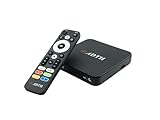
- NEXTGEN TV ATSC 3.0 + ATSC 1.0 TUNER IN ONE BOX – Advanced over-the-air TV receiver supports both ATSC 3.0 (NextGen TV) and legacy ATSC 1.0 broadcasts. Ideal digital converter box for upgrading older TVs or adding live OTA TV channels to any HDMI display. TV antenna required.
- NO CABLE OR SUBSCRIPTION FEES – Watch local news, sports, and major broadcast networks with a TV antenna. A cost-effective solution for cord cutters seeking free HD and 4K over-the-air television.
- UP TO 4K HDR TV TUNER OUTPUT – Supports up to 4K resolution with HDR for sharper detail, richer color, and improved contrast on compatible NextGen TV broadcasts and 4K TVs (broadcast availability varies by location).
- 64GB BUILT-IN STORAGE WITH DVR RECORDING & PLAYBACK – 64GB of onboard storage comes ready for DVR use right out of the box — no additional accessories required. Record live over-the-air TV with pause, rewind, and replay functionality for convenient time-shifted viewing. Expand recording capacity further by connecting external storage (USB flash drive or microSD card, sold separately).
- DOLBY DIGITAL PLUS & AC-4 AUDIO SUPPORT – Compatible with modern broadcast audio formats for clearer dialogue and immersive sound when supported by your TV or audio system. Smart TVs required for this functionality.
ATSC’s deployment page reports that NextGen TV service reaches more than 76% of U.S. households, a deployment estimate accessed October 7, 2026. Separately, the National Association of Broadcasters (NAB) reported on July 30, 2026, that the Cleveland launch brought service to all 25 largest U.S. television markets. Both measures describe market or household reach; neither verifies reception at an individual address or the features carried by a specific station.
The technology is not limited to the United States. ATSC says South Korea adopted the system in 2016 and launched 4K broadcasts in 2017; its deployment page reports service reaching more than 80% of South Korea’s population. ATSC also reports that Jamaica launched service in 2022, Brazil adopted ATSC 3.0 technologies as a basis for its TV 3.0/DTV+ system in 2025, and Trinidad and Tobago began a transition in 2025. These deployments show international use, but do not establish that every country has the same services or rollout status.
Why is ATSC 3.0 not taking off? Four barriers help explain it
The title’s “four reasons” is a useful way to organize the obstacles, not an official or exhaustive count. In its January 2025 Future of Television Initiative report, an industry working group identified low consumer awareness, a lack of distinctive content and services, and ATSC 3.0 tuners appearing in higher-cost TV models as primary barriers to wider adoption. The fourth point below is a practical synthesis: deployment figures do not tell consumers whether service at their home will be reliable or compelling.
Free tools Windows power users keep installed
One-click scans. No signup required.
1. The benefits are hard to notice before you buy
A new standard is a tough sell when its advantages are possibilities rather than obvious changes on a viewer’s favorite channel. A station may not offer 4K, immersive audio, interactive features, or advanced alerts just because its market has ATSC 3.0. If the programming and features a person actually watches look much the same, “more capable broadcast technology” may not feel like a reason to replace a working TV.
Rank #2
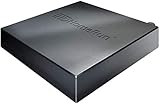
- NextGen TV certified - watch live TV on multiple devices simultaneously throughout your home with our Multi room Multi user network tuner solution
- Full whole-home DVR by connecting a USB hard drive - no subscription required (paid TV guide available for advanced auto-record features)
- ATSC 1.0 content is compatible with Android, FireTV, AppleTV, Roku, Sony, XBox, iPhone, iPad, Win10/11, Mac
- ATSC 3.0 DRM-free content is compatible with Android, FireTV, AppleTV, Roku Ultra 4800X and newer, iPhone, iPad, Win 10/11, Mac. Not compatible with DRM protected channels
- 4 tuners (2 ATSC 3.0, all 4 ATSC 1.0)
The Future of Television Initiative report named lack of consumer awareness of the benefits and lack of unique content or services as adoption barriers. That is the working group’s diagnosis, not a complete survey of every buyer’s reasons. It captures the central challenge: viewers need a distinct benefit they can use, not just a new standard name.
2. An older TV’s tuner cannot decode the new format
ATSC 3.0 is not backward-compatible with an ATSC 1.0-only tuner. An existing TV may still receive the ATSC 1.0 broadcasts that stations continue to provide during the transition, but it cannot decode an ATSC 3.0 signal by itself. To watch those broadcasts, the viewer needs a compatible external tuner or converter, or a TV with a compatible built-in tuner.
That creates a transition burden: broadcasters and viewers must accommodate parallel systems and equipment changes rather than switching every household over at once. The FCC authorized voluntary, market-driven deployment in the United States and generally required broadcasters to continue a primary ATSC 1.0 stream through local simulcasting during the transition. Its 2025 DA 25-761 order discusses coverage requirements for the ATSC 1.0 simulcast; applications meeting a 95% predicted-population threshold receive expedited treatment and a presumption of grant. The policy helps preserve access to existing service, but it does not make old tuners able to receive the new format.
Quick wins for a faster PC:
Repair Windows errors before they cause bigger problemsFix Now →Scan for outdated or missing drivers - takes under a minuteDriver Scan →3. The compatible tuner may be bundled with a costlier TV
The Future of Television Initiative report identified implementation of ATSC 3.0 tuners in higher-cost television models as a barrier. The report’s January 2025 finding is not a current survey of every TV model or price, but it points to a familiar adoption problem: a viewer replacing a television may have to look beyond the least expensive sets to find the capability built in.
Rank #3
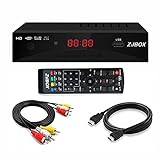
- Our ATSC digital TV converter box receives over-the-air ATSC digital TV broadcast via external antenna and converts it to your Analog and Digital TV, Projector, and Computer Monitor. TV recording, Favorite Channel List, Parental Control Function.
- Full HD: The 1080p output resolution allows you to watch and record free to air television depending on signal quality. Closed Caption, Auto Tuning, Timing Start Up & Shut Down.
- You can select view Photos, play MP3 music files and view movie files, and recorded TV program from your USB storage device.
- TV Recording Function: The function allows you to record TV programs in USB hard drive and playback on your TV or Computer.Note: This device does not have built-in storage and requires an external storage device. It is best suited for external hard drives with a FAT32 file system capacity of up to 4TB or flash drives with a capacity of up to 32GB.
- What You Get: 1 x Digital TV Box,1 x Remote Control,1 HDMI Cable, 1 Composite cable,1 year Warranty.
An external converter is another route, although it adds a device and its own compatibility questions. The report described converter devices in a historical range of $90 to $250 in January 2025; that is not a current retail quote. It named ADTH, Zinwell, and ZapperBox as converter makers, but that does not amount to a current recommendation or a guarantee that every model supports every station or feature.
4. “Available in your market” does not mean “works well at my home”
Coverage milestones answer a broad deployment question, not the one a viewer needs answered before buying: which stations can my antenna receive at my address, and are their ATSC 3.0 services worth the change? Signal availability and reception depend on local station coverage, terrain, antenna placement and type, and the receiver. ATSC describes the system as designed for robust reception and mobile use, but that design goal is not evidence that a particular household will get better reception.
Check address-level coverage tools and confirm service with local stations before choosing equipment. Treat a market launch or household-reach percentage as a reason to investigate, not a reception guarantee. This distinction also explains why the fourth barrier is a synthesis of deployment and adoption evidence, rather than a fourth cause explicitly named by the working group.
Is NextGen TV worth it, and do you need a new TV?
You do not need a new TV merely to keep watching ATSC 1.0 broadcasts during the transition, provided your current TV can receive those broadcasts and they remain available locally. You do need an ATSC 3.0-compatible tuner to decode ATSC 3.0 broadcasts. That tuner can be built into a compatible TV or supplied by an external converter.
Rank #4
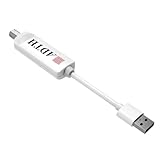
- Before you buy: check ATSC 3.0 in your area. NEXTGEN TV availability varies by city and channel. Use a coverage tool (city/channel lookup and OTA prediction) to confirm your local stations.
- Encrypted ATSC 3.0 channels require internet and compatible DRM. To view protected channels, your streaming device must support Widevine L1 and be connected to the internet (Wi‑Fi or Ethernet).
- Host device compatibility matters (Dolby AC-4 + HEVC). ATSC 3.0 playback depends on your device’s built-in codec support. Run the ADTH NextGen TV Test app to verify your device before connecting the tuner.
- Known to work well with: Onn 4K Pro and Fire TV Cube (3rd gen) play both ATSC 1.0 and ATSC 3.0 in independent testing. Built-in Android TV, Google TV, and Fire TV televisions vary by model. USB tuner compatibility is not guaranteed on all TV models, even within the same brand. For best results, use a tested streaming device or check the ADTH NextGen TV Test app and supported device list before purchase
- Not a network tuner, plays on the device it’s plugged into. Unlike network tuners, this USB tuner is intended for one TV/one streaming device at a time.
Whether it is worth buying now depends on your local stations, the features and programming they actually offer, and whether you are already replacing a TV. The Future of Television Initiative report cited more than 10 million NEXTGEN TV sets sold by December 2023 and an estimated 15,000 new sets sold each day; those are figures reported by the 2025 report, not independently verified current sales rates. The report also cited Consumer Technology Association data indicating that 4.5 million compatible sets, or 10% of all TV sets shipped to U.S. retailers in 2024, were ATSC 3.0-compatible.
The report reproduced a Consumer Technology Association forecast, issued in July 2024, of 21 million units shipped in 2026 and 28 million in 2027. Those were forecasts, not verified shipment totals. Such figures indicate that compatible sets were entering the market; they do not show how many buyers use the tuner, what service those buyers receive, or whether the upgrade meets their needs.
| Option | When it makes sense | What to verify |
|---|---|---|
| Replace the TV with a NEXTGEN TV-certified set | You already need a new television and want a built-in ATSC 3.0 tuner. | Confirm the exact model’s certification and support for the security features and stations you need. Do not assume every set offers identical reception, recording, or service features. |
| Add an external converter to your current TV | You want to keep a working screen and add ATSC 3.0 reception. | Check station compatibility, security or DRM handling, DVR and recording functions, and whether the device needs an internet connection for features you plan to use. The 2025 report’s $90–$250 range is historical, not today’s price. |
| Wait | Your local service is limited, the available features do not matter to you, or your current setup meets your needs. | Recheck local station offerings and receiver options when you are ready; deployment and transition policy can change. |
Before buying, use this checklist:
- Look up ATSC 3.0 stations and coverage for your address, then confirm relevant channels and features with the stations.
- Check whether the exact television or converter is NEXTGEN TV-certified and whether it handles the security features used by the services you want.
- Confirm any internet requirement, recording or DVR limits, and connection needs for an external converter.
- Choose an antenna based on local stations and installation conditions, not on a generic promise that a particular antenna will improve reception.
Will FCC policy require a new tuner or settle encryption questions?
Not on the basis of the cited FCC action. In FCC 25-72, the Commission sought comment on whether to require ATSC 3.0 tuners in new receivers and on encryption and multichannel video programming distributor carriage. A notice seeking comment is not an adopted rule. The cited materials do not establish a final order resolving those questions, so buyers should not treat a tuner mandate or a settled encryption policy as current law based on that notice.
The broader U.S. transition remains voluntary and market-driven in the sources cited here. FCC policy around simulcasting and applications governs parts of the transition, while the question of what consumers will be required to buy is distinct from the fact that an ATSC 1.0-only tuner cannot decode ATSC 3.0.
The practical verdict
ATSC 3.0 is a more capable broadcast platform, not an automatic picture-quality upgrade for every channel or a guaranteed reception fix. Its slow consumer uptake is understandable: the benefit can be invisible, old tuners do not work with the new format, compatible built-in tuners have been associated with more expensive sets, and market-level coverage does not answer whether service at a specific home is useful. Check local service first; if you are already buying a TV, compare certified sets, and if you want to keep your screen, assess a compatible converter against its feature and internet requirements.
Quick Recap
Product prices and availability are accurate as of the date/time indicated and are subject to change. Any price and availability information displayed on Amazon at the time of purchase will apply.

