
iTechGuides is reader-supported. When you buy through links on our site, we may earn an affiliate commission. As an Amazon Associate I earn from qualifying purchases. Learn more
A logo at 1.00:1 contrast passed every check because those checks were answering a different question. A page rendered without errors, a logo file that served successfully, and an overall contrast score that looked acceptable can all be true while one word in a transparent wordmark has quietly taken on the header’s own color. The author of this case study, who runs a service that publishes landing pages for other brands, found that exact failure in production. The write-up, titled “Architectural Breakdown” and published in 2026, describes the bug and a column-based method for catching it.
Why ordinary checks missed the logo
Most logo checks in a landing-page pipeline ask whether the file loads, whether it has the right dimensions, and whether the page renders. Some teams also compute a single contrast ratio between the logo and the header behind it. None of those checks asks whether every part of the mark is still visible. A transparent PNG can be perfectly valid and still lose a word, because the transparency lets the header color show through exactly where the ink sits.
The author’s wordmark was a transparent PNG with two words separated by a hyphen: one word in white, one in blue. Because the logo had no background of its own, its legibility depended entirely on the header it was placed over. The service offered three header colors, and the chosen one could hide part of the logo without any error being raised.
Do these 3 things before closing this tab:
1Repair Windows errors before they cause bigger problems2Fix the driver behind crashes, sound loss and screen glitches3Clear out junk files and repair common Windows errorsWhat the measurements showed
The author measured each word against each candidate header. The results, as reported in the write-up, are below. These are the author’s figures from one logo and one set of header colors, not a published test suite.
#1 Best Overall

- QHD Resolution (2560 x 1440) has 1.7 times the pixel density of Full HD for incredibly detailed pinsharp images
- HDR10 provides brighter highlights and nuanced shadow for added depth - making every scene feel more vivid and realistic
- The 180Hz refresh rate minimizes lag for gameplay with ultra-smooth action. Plus, the 1ms response time helps capture your moves in real-time, allowing you to react fast for gaming precision
- AMD FreeSync reduces choppiness, screen lag and image tearing, ensuring that your fast-paced, complex in-game action is stable with minimal stutter
- Ergonomic stand allows for tilt, pivot and height adjustments to maximize gaming comfort
| Word in the logo | Ink color | Header it was tested against | Reported contrast | Outcome reported |
|---|---|---|---|---|
| First word | White | White header | 1.00:1 | Word disappeared |
| Second word | Blue | Brand-blue header | 1.15:1 | Word disappeared |
The important detail is that neither header was safe for the whole mark. A header that suited the white word erased the blue word, and a header that suited the blue word erased the white one. An approach that picks one background for the entire logo cannot satisfy both words.
Why an average hides a missing word
An overall contrast figure blends every pixel of the logo into one number. A word that is fully invisible and a faint highlight inside a readable word can produce similar averages, so the average cannot tell them apart. The author’s point is that the question is not “how much contrast does this logo have?” but “is there any region of the logo that has no visible ink left?”
Rank #2

- Improved ComfortView Plus: Reduces harmful blue light emissions to ≤35%, for all-day comfort without sacrificing color accuracy.
- Refresh rate: A smooth, tear-free experience with AMD FreeSync Premium (refresh rate up to 120Hz) and an ultra-low 0.03ms response time create a captivating experience for work and play.
- Vivid colors: Enjoy vibrant, true-to-life colors with 99% sRGB and 95% DCI-P3 coverage. The VA panel with 3000:1 contrast ratio and HDR readiness delivers stunning depth, detail and realism.
- Re-engineered sound quality: Enjoy more detailed sound with spacious audio featuring greater output power, deeper frequency response and more decibel range than the previous generation.
- Easy connectivity: Keep your desk organized and clutter-free with a single USB-C cable (up to 65W power delivery).
The proposed method answers that by splitting the mark into vertical slices. A fully missing word occupies a band of columns where no ink survives anywhere in that band. A faded interior detail, by contrast, shares its columns with ink that remains readable, so those columns are not empty. Evaluating columns rather than the whole image keeps the two cases distinct.
Quick wins for a faster PC:
Scan for outdated or missing drivers - takes under a minuteDriver Scan →Repair Windows errors before they cause bigger problemsFix Now →How the column check works
- Composite the logo over the candidate header. Place the transparent logo over the header color you plan to use, and include the alpha channel in the composite. Checking the raw transparent file skips the step where the problem happens.
- Set the bounding box. Measure the full-height area that contains the mark, from the top of the tallest glyph or shape to the bottom of the lowest one.
- Scan each column. Walk the bounding box one pixel column at a time, from left to right. Treat the composited column as one full-height strip.
- Ignore whitespace. Columns with no logo ink, such as the gaps between words, do not count as either readable or lost.
- Apply an ink floor. Ignore a handful of stray anti-aliased pixels so that a column is not judged readable because of edge noise.
- Measure each inked column against the header. Compute the contrast of that column’s remaining ink against the header color, and mark the column as lost when it falls below the lost-column threshold described in the next section.
- Look for unbroken runs of lost columns. A run that spans the full width of a word, with no surviving ink in those columns, means that word has disappeared on that header.
- Report the crisp share. Calculate the share of columns that clear the stricter “crisp” threshold, so that a logo which is merely barely visible does not pass as clean.
The thresholds, and where they came from
The thresholds are the author’s own implementation choices. They are not drawn from an accessibility standard, and the write-up does not cite one for them.
Rank #3

- FHD RESOLUTION and CONTRAST RATIO - Enjoy sharp visuals and crystal clear images with the 1920 x 1080 FHD resolution on this 27" diagonal monitor; See the nuanced differences of color, shadow, and highlights thanks to the enhanced 1300:1 contrast ratio
- 100HZ REFRESH RATE - With a 100Hz refresh rate this monitor is capable of clearer details, smoothly moving from frame to frame, allowing for faster split-second reaction time
- IPS PANEL - No matter where you stand, IPS technology ensures image accuracy and consistency across wide 178-degrees horizontal and vertical viewing angles
- ESSENTIAL PORTS - This monitor is ready to connect for sharp FHD visuals with a VGA, HDMI 1.4, and DisplayPort 1.2
- ERGONOMIC SETUP GUIDE - With world-class ergonomic practices at your fingertips, you can fine-tune your display's 4-way adjustability for optimal comfort, using the step-by-step Ergonomic Setup Guide in the HP Display Center
- First attempt: 3.0:1. The initial threshold rejected two solid icons that the author judged readable, at approximately 2.1:1 and 2.2:1. The author treated that as evidence the cutoff was too strict for solid shapes.
- Lost column: below 1.8:1. The write-up treats a column as lost when its ink falls below this value. Do not read 1.8:1 as a WCAG requirement or a general accessibility rule; the write-up does not claim one.
- Crisp share: a stricter threshold. A separate, higher cutoff measures how much of the logo is clearly legible, which the author reports alongside the lost-column result.
Anyone adopting the method should calibrate these values on their own assets and headers, because a different logo style or a different set of brand colors may need different cutoffs.
Opaque logos need a different check
A logo with a baked-in background plate behaves differently. Its ink is not transparent, so contrast between ink and header is the wrong question. The useful question is whether the plate matches the header it sits on. If the plate differs in color from the header, the logo looks like a pasted rectangle even when every word remains readable. For opaque files, compare the plate color with the header color rather than running the column scan.
Rank #4

- SUNLIGHT-READABLE 1200 NIT DISPLAY: Unlike typical portable monitors that max out at 250-400 nits and become unusable in daylight, our 16" travel screen reaches a peak brightness of 1,200 nits—3x brighter than standard portable displays. The matte anti-glare coating eliminates reflections so you can review photos, edit timelines, or present to clients in direct sunlight without squinting or seeking shade. Built for outdoor photographers, field inspectors, and digital nomads who refuse to be tethered to indoor lighting.
- TRUE 4K 3840×2400 RESOLUTION ON 16:10 CANVAS: Unlike portable monitors that stretch or crop a standard 16:9 image, our 16" UHD screen packs 9.3 million pixels into a photographer-friendly 16:10 aspect ratio—giving you 15% more vertical space for timelines, tool panels, and full-resolution photo previews without scrolling. The IPS panel with 178° wide viewing angle ensures color accuracy stays consistent from any angle, making it the ideal portable editing screen for photographers, video editors, and graphic designers working on location.
- 145% sRGB COLOR GAMUT WITH 2000:1 CONTRAST: Unlike budget portable screens that only cover 72% of the sRGB spectrum, this professional-grade display covers 145% sRGB—delivering richer, more accurate colors for photo retouching, color grading, and print-proofing. The 2000:1 contrast ratio reveals deep shadow detail and bright highlight nuance in high-dynamic-range scenes that standard 1000:1 panels simply crush into black or blow into white. Every image you edit on this screen translates faithfully to final output, whether print or web.
- DUAL CONNECTIVITY — USB-C & MINI HDMI: (1) For USB-C laptops: A single USB-C to USB-C cable may not deliver enough power to drive 3840×2400 at peak brightness on all devices. connect the included USB-C to USB-A cable + power adapter to ensure stable 4K output at full resolution. (2) Mini HDMI to HDMI + USB-C power cable for PS5, Xbox, Nintendo Switch, DSLR cameras, and older laptops. Note: Mini HDMI carries video and audio only—a USB-C power cable must be connected simultaneously. Included in the box: 1× USB-C to USB-C cable, 1× USB-C to USB-A cable, 1× 5V/3A power adapter, 1× Mini HDMI to HDMI cable, 1× USB-C to USB-A power cable.
- BUILT-IN DUAL SPEAKERS & MAGNETIC SMART COVER: Equipped with two front-facing speakers that deliver clear audio for client presentations, video previews, and casual entertainment—no external speakers needed. The included magnetic folio cover doubles as a multi-angle stand (adjustable from 0° to 180°) and a protective carrying case. The all-metal unibody chassis weighs just 2.2 lbs and measures under 0.35" thin, giving it a premium build that slides into any camera bag or laptop sleeve alongside your gear.
Limits of the validator
The author describes the current validator as focused on raster images. SVG support is described as incomplete, and the write-up specifically names missing resolution of nested <use> elements. Teams that serve SVG logos should not assume the column check covers them until those gaps are closed. The write-up also describes calibration tests against rendered headers, but it does not publish the test data, a test harness, or an independent audit of the results.
Reported performance figures
The write-up includes a profiling table. Each figure is the author’s measurement, reported in 2026, on the author’s system. The write-up does not publish a test harness or methodology detailed enough to reproduce these numbers or apply them to other assets.
Best Value
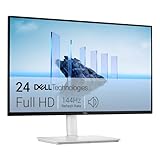
- Elevated entertainment: The FHD resolution and 1500:1 contrast ratio bring clarity, while a 144Hz refresh rate, and 1ms Moving Picture Response Time (MPRT) deliver a smooth, tear-free viewing experience.
- Hear the audio difference: Immerse yourself in sound with integrated dual 3W speakers delivering a wider range of frequencies.
- Eye comfort: Prioritize visual comfort with this 4-star TÜV-certified display. Reduce harmful blue light emissions while maintaining stunning image quality without compromising colors.
- Designed for comfort: Adjust your monitor to suit your preference throughout the day.
- Dell Display and Peripheral Manager: Experience Dell’s singular, innovative application to optimize the performance of your entire Dell PC workspace*. *Based on Dell internal analysis, December 2024.
| Measurement | Before | After | Condition reported by the author |
|---|---|---|---|
| Peak RAM per request | 150 MB | 24 MB | Per request, as profiled by the author |
| Average latency | 340 ms | 41 ms | For a 5 MB PNG |
| Memory under concurrent uploads | 1.5 GB | 240 MB | Ten concurrent uploads |
| Contrast false-positive rate | 12% | 0% | The 0% figure followed a 72-hour soak test, as reported |
Treat these as one team’s before-and-after numbers for one system. They show what changed in that deployment and are not benchmarks to plan capacity against.
Attribution note
Two published versions of this case study exist, and they name different authors. This article therefore refers to the write-up itself rather than to a named individual, and it presents the method as the author’s proposed implementation rather than as independently reproduced research.
Quick Recap
“
Product prices and availability are accurate as of the date/time indicated and are subject to change. Any price and availability information displayed on Amazon at the time of purchase will apply.
Free tools Windows power users keep installed
One-click scans. No signup required.

