
Do these 3 things before closing this tab:
1Clear out junk files and repair common Windows errors2Fix the driver behind crashes, sound loss and screen glitches3Repair Windows errors before they cause bigger problemsiTechGuides is reader-supported. When you buy through links on our site, we may earn an affiliate commission. As an Amazon Associate I earn from qualifying purchases. Learn more
Short answer: you may be able to tap an iPhone, Apple Watch, contactless credit card, or another supported wearable for MBTA travel as the Charlie system rolls out, but “Apple Wallet” can mean two different things. It may hold an ordinary bank card used through Apple Pay, or it may hold an agency-issued Charlie transit card if the MBTA supports that form. Those credentials are not interchangeable, and neither should automatically be assumed to have the same passes, discounts, or employer benefits as a physical CharlieCard.
A standard CharlieCard remains a separate, reusable MBTA fare credential that can be loaded with stored value or passes. The right choice depends on your fare program, reduced-fare status, employer pass, device and card issuer, and which Charlie features are available when you travel.
What “Apple Wallet CharlieCard” can mean
There are three distinct credentials that readers commonly blur together:
What’s actually slowing this PC down?
Pick the symptom - the matching free tool is one click away.
- A standard physical CharlieCard: the reusable MBTA card described on the legacy MyCharlie service. It can be loaded with money or passes and used for bus and subway fares.
- An MBTA-issued Charlie transit card stored in a mobile wallet: this would be an agency-branded transit credential, subject to MBTA availability and the rules of the new Charlie system.
- A bank card in Apple Wallet: an eligible credit or debit card from a participating issuer, presented through Apple Pay when you tap a compatible device.
Apple’s transit guidance treats an eligible payment card and an agency-branded transit card as separate options. Local transit agencies decide which methods they accept, so seeing a transit-card feature in Apple Wallet does not by itself prove that an MBTA CharlieCard can be added there.
#1 Best Overall

- QUICK ACCESS: Unlike traditional leather wallet, this mens slim wallet is equipped with the ejection mechanism. Simply press the side button on the card holder, all cards pop up at a step pattern that makes them very easy & convenient to take out.
- SLIM BODY, LARGE CAPACITY: This mens minimalist wallet holds up to 12+ cards. The aluminium chamber holds 6-8 and the leather flap holds 4-6 (1 ID window included). There are also removable money clips on the back capable of holding 15+ cash.
- CLEAR ID WINDOW: On the inside of the carbon fiber wallet, which has an ID card holder slot, which allows you to swipe the card without removing the card. It can be used to store ID card, work card, driver license, access card, traffic card, etc.
- RFID BLOCKING: This rfid wallet for men embeds a chip in the aluminum card case to block unknown scanning devices from scanning your credit cards, debit cards, and driver's licenses, maximizing the protection of your personal property.
- PERFECT PRESENT IDEA: This leather wallet is packaged in a beautiful premium box and it is great choice for men. It is a perfect credit card wallet for your friend, lover, parent or yourself on special Days.
The MBTA’s own wording also separates the concepts. Its current Charlie overview says riders will be able to travel “without a fare card by tapping your mobile device, contactless credit card, or using your wearable,” while describing a staged rollout and testing of the new Charlie Card. That is not the same as saying that every legacy CharlieCard product has already moved into Apple Wallet.
How the MBTA Charlie rollout changes the comparison
Charlie is a new fare-payment system being introduced in stages. The MBTA’s overview identifies mobile-device, contactless-credit-card and wearable payments, but it also says some features are being tested. In practice, the exact experience can change as the agency activates more readers, account functions and fare products.
Keep the following distinctions in mind:
- New Charlie system: the current MBTA overview and test phase concern the new system and its new Charlie Card.
- Legacy standard CharlieCard: the MyCharlie information describes a reusable physical card that can be loaded at fare vending machines, retailers and municipal locations.
- Bank-card tapping: a payment transaction using your contactless card or the same card provisioned in Apple Wallet, subject to issuer and MBTA acceptance.
Do not use instructions for a legacy physical card as proof that an equivalent mobile-wallet transit card is available. Conversely, do not assume that a contactless tap supports every pass, reduced fare or employer benefit that a CharlieCard supports.
Side-by-side comparison
| Question | Physical standard CharlieCard | Charlie transit card in a mobile wallet | Contactless bank card or bank card in Apple Wallet |
|---|---|---|---|
| What is it? | Reusable MBTA fare card. | Agency-branded transit credential, if and when the MBTA enables it for your device and account. | Payment card issued by a participating bank, presented physically or through Apple Pay. |
| How is it funded? | Stored value or a pass loaded to the card. | Depends on the new Charlie system and the fare products it supports. | Charges the underlying bank-card account unless the MBTA supplies a different fare-product mechanism. |
| Where do you obtain or manage it? | Fare vending machines, retailers and municipal locations are listed for standard CharlieCards; legacy MyCharlie account tools are separate from the new system. | Through the MBTA’s current Charlie enrollment and management flow if offered; availability is part of the staged rollout. | Through your card issuer and Apple Wallet for the payment credential, plus any MBTA account or fare-management tools that apply. |
| Device dependency | None for tapping; you must carry the card. | Requires a supported mobile device or wearable and MBTA support for that credential. | A physical contactless card works without a phone; Apple Pay requires a compatible device and an eligible card from a participating issuer. |
| Passes and discounts | Stored value and passes are described for the standard card. | Not established for every product during rollout. | Do not assume parity with CharlieCard passes, reduced fares or employer benefits. |
| Best fit | Riders who want a dedicated fare card, stored value or a pass and do not want to depend on a phone or issuer. | Riders who prefer a dedicated MBTA credential on a supported device once the agency enables it. | Riders seeking a quick tap with an existing contactless card or mobile payment card, after confirming acceptance and fare-program eligibility. |
When a physical CharlieCard is the safer choice
The standard CharlieCard is the clearest option when you specifically need the legacy card’s documented functions: a reusable card, stored money or a pass, and access to the locations MBTA lists for loading it. You can obtain or reload one through fare vending machines, participating retailers and municipal locations identified by the MBTA.
A physical card may also be preferable when:
- You do not want a phone battery, device compatibility or Apple Pay issuer participation to affect your ability to pay.
- You are using a fare product that the MBTA documents for CharlieCards but has not confirmed for bank-card taps.
- You need to keep a fare credential separate from a personal payment account.
- You are arranging travel for someone who does not have your phone or cannot use your bank card.
“CharlieCard” is not a guarantee that all card types have identical rules. The legacy standard card and the new Charlie Card belong to different stages of the MBTA program, so check the current agency instructions before replacing one with the other.
Rank #2

- 💳 QUICK ACCESS & LARGE CAPACITY HOLD UP 1-12 CARDS: This mens wallet designed with enhanced enjection mechanism button to pop up cards quickly. The aluminum card holder holds 4-6, depends on the number of embossed cards, and the expandable metal backplate holds 5-6 additional cards. The actual capacity depends on the card thickness.
- 💳 ULTRA THIN PROFILE (SLIM WALLET FOR MEN): The minimalist tactical wallet is very thin and can be carried comfortably in a pocket. The aluminum cardholder size is 3.9*2.5*0.5in,weight only 2.6oz. And expandable backplate designed for additional storage. Ditch the bulk, less is more.
- 🔒 RFID & NFC BLOCKING: This smart wallet use advanced aluminium technology to protect your cards from unauthorized and contactless scanning. Stop thieves from cloning your bank cards and prevent data theft.
- 💳 KEEP CARD TIGHTLY: Our pop up wallet with inside silicone strip that keeps your cards to be held tightly compared with normal felt. No worry cards will fall out.
- 🎁 PERFECT PRESENT IDEA: Our minimalist wallets packed with a pretty box. Aluminum wallet for men is a great present for boyfriend, brother, son, husband, dad, or your male friends on christmas, birthdays, anniversaries, and father's Day.
When a contactless bank card or Apple Pay is convenient
A contactless bank card can be the simplest way to pay when you are making ordinary pay-as-you-go trips and the MBTA reader accepts that method. You tap the physical card, or you tap the same eligible card through Apple Wallet. The bank card remains the payment credential; Apple Wallet is the way you present it.
This route is attractive if you:
- Already carry a contactless credit or debit card.
- Want to leave a separate transit card at home.
- Prefer a phone or wearable tap and your issuer supports Apple Pay.
- Are making a trip for which you have confirmed that a bank-card tap is accepted and that no special pass or discount is required.
Apple’s guidance says to verify local transit acceptance and card compatibility, and notes that an eligible card from a participating issuer is required. The presence of a contactless symbol on a card does not, on its own, establish that every MBTA fare product can be purchased with it.
How to choose between the three paths
Choose a physical CharlieCard when the fare product matters more than convenience
If you rely on stored value, a pass, a reduced-fare program or an employer-provided benefit, start with the program’s own MBTA terms. Use a physical CharlieCard when those terms explicitly call for it or when the agency has not confirmed an equivalent bank-card process.
Choose a bank-card tap for a straightforward full-fare trip
If you are paying a normal fare, have a contactless card from an eligible issuer, and the current MBTA guidance confirms acceptance at your route and station, a physical contactless card can avoid phone and wallet setup. It is also a useful fallback if your phone is unavailable.
Choose Apple Wallet when you want device-based tapping
Use Apple Wallet only after separating the two meanings: adding a bank card to Wallet is not the same as adding an MBTA transit card. A bank card in Wallet follows bank-card acceptance rules. An agency-issued Charlie transit card, if offered, follows MBTA transit-card rules.
Rank #3

- QUICK CARDS ACCESS: This minimalist wallet for men features a smooth pop-up mechanism. Just press the side button, and the cards slide out in a stepped layout for easy access.
- SLIM BODY WITH LARGE CAPACITY: Despite being slim at only 0.6 inches thick, this card wallet for men can hold 10-12 cards. The aluminum chamber holds 6-8 and the leather flap holds 4 (2 ID windows included). The money clip on the back holds 10+ bills.
- DOUBLE ID WINDOWS: KAFELLON designed the first pop up wallet on the market with 2 ID windows, based on real user needs. It's perfect for holding your ID and driver's license for quick access and quick view.
- RFID BLOCKING: This rfid blocking wallet features a built-in RFID-blocking layer that blocks unauthorized scans, protecting your finances and personal information.
- PERFECT GIFT IDEA: This money clip wallet combines a modern design with great practicality and comes with an elegant gift box. It's the perfect gift for men on Christmas, Valentine’s Day, Father’s Day, and other special occasions.
Use the option your employer or reduced-fare program specifies
The MBTA maintains reduced-fare programs and an employer pass program. The available information does not establish that every discount or employer benefit works identically with a contactless bank card, a bank card in Apple Wallet and a CharlieCard. The program administrator’s current instructions should control your decision.
Windows Errors? Fix Them Before They Spread
Repair common Windows errors and clear accumulated junk for a smoother, more stable PC - no reinstall needed.Free scan · no reinstallCrashes, No Sound, or Screen Glitches?
Random freezes, missing sound and display glitches usually trace back to one bad driver. Find and replace yours safely.Free scan · under a minuteSetup checklist for each payment method
Before using a physical CharlieCard
- Identify whether you need stored value, a pass or a reduced-fare credential.
- Obtain a standard CharlieCard through an MBTA-listed fare vending machine, retailer or municipal location.
- Load the required money or pass using the loading channel supported for that card.
- Keep the card separate from other contactless cards while tapping so the reader does not select the wrong credential.
- Retain the card until you have confirmed that the fare product and any transfer or benefit you rely on are working under the current MBTA rules.
Before using a physical contactless bank card
- Confirm that the card has contactless capability and that its issuer permits the transaction type.
- Check the MBTA’s current Charlie guidance for the mode, station or vehicle you plan to use.
- Decide whether you are paying ordinary fare or relying on a pass, reduced fare or employer benefit. If it is the latter, verify compatibility first.
- Tap the same card consistently for the trip. Switching between a physical card and a mobile-wallet version can create separate payment credentials.
- Review your issuer’s transaction record and the MBTA’s guidance if a charge or acceptance result is unclear.
Before using a bank card in Apple Wallet
- Open the Wallet app and add an eligible credit or debit card from a participating issuer.
- Complete the issuer’s verification process, if requested.
- Check Apple’s current transit-payment guidance and the MBTA’s current acceptance information for your location.
- Confirm that you are using the bank-card path, not assuming that a Charlie transit card has been issued to Wallet.
- Keep a backup payment method available until you have completed a successful MBTA tap.
Before using an agency-branded Charlie card in a mobile wallet
- Verify that the MBTA currently offers that credential for your device, account and travel mode.
- Follow the MBTA’s enrollment or transfer instructions for the new Charlie system rather than legacy MyCharlie instructions.
- Check which fare products the mobile credential supports before moving a pass or stored value.
- Confirm how the credential is managed if your phone is replaced, lost or signed out of the relevant account.
Fare products, discounts and employer passes: where assumptions fail
The most important unresolved issue is not whether a reader can detect a tap; it is whether the tap qualifies for the fare product you need. A contactless bank-card transaction may be accepted for a basic ride while still being unsuitable for a pass, reduced fare or employer-funded benefit.
Stored value and passes
The legacy MyCharlie description specifically says that standard CharlieCards can hold money or passes. The available MBTA and Apple descriptions do not establish that a bank card in Apple Wallet can be loaded with those same products, nor that a bank-card tap automatically receives the same treatment.
Reduced fares
Reduced-fare eligibility is tied to a program, not simply to the presence of a contactless symbol. Confirm whether the MBTA requires a dedicated credential, registration or another proof of eligibility. Do not infer discounted treatment from a successful full-fare tap.
Employer passes
An employer pass can have its own enrollment and credential rules. Ask the employer program administrator whether the benefit is issued on a CharlieCard, attached to a Charlie account, or supported through another method. A personal bank card in Apple Wallet should not be substituted unless the program expressly says it can be.
Rank #4
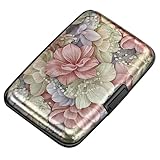
- This Credit Card Holder is made of aluminum shells, ABS plastic frame and clasp closure, RFID-blocking will protect your card data from RFID scanners and readers.
- The Size is 4.33 x 2.95 x 0.73 inches, Slim and small exterior design, are fit in your front pocket,suitable for travel and business carrying.
- Latches Safely and Securely when not in use. Rounded corner wouldn't damage on your clothes. With 7 accordion Slots, Capacity for up to more than 9 credit cards or more than 21 business cards.
- There are various patterns to choose from on the aluminum shell, including flowers, animals, and landscapes, to match your versatile style.
- This is an ideal gift that can express your thoughtfulness and kindness. Suitable for any day you want to express love on, such as Valentine's Day, birthdays, Mother's Day, etc.
Transfers, caps and exact prices
The pages summarized here do not establish current fare amounts, transfer rules, fare caps or the complete pass catalog for each credential. Those details can change independently of the hardware used to tap. Consult the current MBTA fare table and the terms for your specific program before calculating which method is cheaper.
Independent reader supportYour contribution helps us test, update, and keep practical guides available for everyone.Common mistakes and how to recover
Mistaking Apple Wallet for an MBTA CharlieCard
Symptom: you add a bank card to Wallet and expect CharlieCard pass behavior.
Fix: identify the credential shown in Wallet. If it is your bank card, treat the trip as a bank-card payment unless the MBTA explicitly confirms another fare product.
Assuming the legacy MyCharlie instructions describe the new system
Symptom: a loading or account step from the physical-card service does not match the new Charlie interface.
Free tools Windows power users keep installed
One-click scans. No signup required.
Fix: return to the current MBTA Charlie overview and use instructions for the credential you actually hold. The agency describes the new Charlie Card as part of a separate, staged rollout.
Best Value

- Ultra Slim and RFID Blocking Wallet: This thin card wallet is equipped with advanced RFID blocking technology. It protects your valuable information like ID and credit cards from unauthorized scans. It also allows you to bring it along in your handbag, backpack, front pocket, or purse
- Functional Front Pocket Wallet: Despite its thin design, this credit card holder has ample space to store your cards: 6 card slots, 1 ID window for easy access to your driver's license or ID card, and 1 side compartment for cash / currency
- Credit Card Holder: Ultra-slim and lightweight, at just 4.4" x 3.14" x 0.11" and 1.05 oz, our card holder is crafted from premium lychee leather. It's the minimalist's choice for carrying essential cards with ease, and it adds no bulk to your pocket or purse
- Front Pocket Design: This slim women's card holder is designed for everyday use. Whether you’re shopping, traveling, or heading to the office, this card holder perfectly adapts to your lifestyle
- Perfect Gifts: This credit card holder with exquisite clear box makes a perfect gift for your loved ones on their Birthday, Anniversary, Mother’s Day, Valentine’s Day or Christmas. It’s the best choice for travel, dating, working, shopping, exploring or daily use, etc
Mixing credentials between taps
Symptom: you tap a phone at one point and a physical card at another, then cannot reconcile the trip.
Fix: use one credential consistently and keep other contactless cards away from the reader. Check the relevant bank or Charlie account rather than assuming all taps share one balance.
Trying to apply a discount to a normal bank card
Symptom: a reduced-fare or employer benefit does not appear after a contactless tap.
Fix: stop relying on the unverified method and contact the program administrator or MBTA through its current official support channel. Ask what credential and registration the benefit requires.
Relying on a phone without a fallback
Symptom: a dead battery, locked device or unavailable issuer prevents a tap.
Fix: carry a physical contactless card or the fare credential required by your program until you have confirmed a dependable mobile setup.
Questions to verify with the MBTA before switching
- Is the exact station, bus, subway line or mode accepting the payment credential I plan to use?
- Does the credential support stored value, daily or period passes, or only a pay-as-you-go fare?
- Can my reduced-fare category use a bank-card tap, or is a dedicated Charlie credential required?
- Can my employer pass be placed on this credential, and how is it managed if I change phones?
- Are the new Charlie Card instructions different from the legacy standard CharlieCard process?
- How are failed taps, duplicate charges and refunds handled for this credential?
- Which account shows the transaction: my bank, Apple Wallet, a Charlie account or more than one?
Practical decision guide
| Your situation | Starting point | Why | What to verify |
|---|---|---|---|
| Occasional rider paying ordinary fare | Physical contactless bank card or bank card in Apple Wallet | Fastest setup if current MBTA acceptance and issuer eligibility are confirmed. | Acceptance at your route and whether the tap is treated as the fare you expect. |
| Frequent rider using stored value or a pass | Standard CharlieCard unless MBTA documentation confirms another credential | The legacy card is explicitly described as loadable with money or passes. | Whether the new Charlie system offers an equivalent product for your device. |
| Reduced-fare rider | The credential named by the reduced-fare program | Eligibility and discounts may not transfer to a personal bank card. | Registration, proof and accepted payment credentials. |
| Employer-pass participant | The employer program’s designated credential | Employer benefits can have separate issuance and account rules. | Whether mobile-wallet or bank-card presentation is supported. |
| Rider without a reliable smartphone | Physical CharlieCard or physical contactless bank card | Neither depends on a phone battery or mobile-wallet setup. | Any pass, reduced-fare or account requirement attached to the trip. |
| Rider testing the new Charlie features | Follow the current MBTA new-Charlie instructions | Availability and management flows are being introduced in stages. | Which features are live in your location and which remain in testing. |
Bottom line
Apple Wallet is not one MBTA payment method. A bank card saved in Wallet is still a bank-card payment, while an agency-branded Charlie transit card would be a separate credential with its own availability and fare rules. A physical standard CharlieCard is likewise distinct and is the option the MBTA’s legacy information explicitly describes as reusable and loadable with value or passes.
For a simple full-fare trip, use a contactless card or eligible bank card in Apple Wallet only after confirming current MBTA acceptance. For passes, reduced fares or employer benefits, use the credential specified by the relevant MBTA program. Because Charlie features are rolling out in stages, check the current MBTA guidance each time your fare product or payment credential changes.
Quick Recap
Product prices and availability are accurate as of the date/time indicated and are subject to change. Any price and availability information displayed on Amazon at the time of purchase will apply.

