
What’s actually slowing this PC down?
Pick the symptom - the matching free tool is one click away.
iTechGuides is reader-supported. When you buy through links on our site, we may earn an affiliate commission. As an Amazon Associate I earn from qualifying purchases. Learn more
Neither option is proven to be better. The studies covered here do not directly compare AI reading tutors with flashcards. Flashcards can offer hands-on practice with letters and sounds; an AI tool may offer guided or adaptive practice, depending on what it actually does. Choose based on the skill your child needs to practise, the quality of the feedback, and how well an adult can support the learning.
What does the evidence actually compare?
“Learning to read” includes several skills, and studies of one skill do not establish results for all the others. Recognizing letters and connecting them to sounds are different tasks from reading a passage fluently or understanding what it means.
The available studies compare particular technology-supported approaches with teacher-led instruction, usual instruction, or human tutoring. They do not test AI tutors against flashcards. That means there is no evidence-based winner in this head-to-head choice, and results for a studied program should not be treated as a prediction for a child using a different app or a deck of cards at home.
Early decoding and letter skills
A 2026 kindergarten experiment by Pistre, Ballenghein, and Aparicio studied 71 children aged 5–6 using a research chatbot and traditional teacher-led instruction in a counterbalanced design. Both conditions showed gains on measures including letter identification and recognition and phonological awareness. Some lower-performing pupils had descriptively larger gains after AI on selected measures, but most direct comparisons were not statistically significant; the paper reports a marginal direct contrast for identification. The experiment was small and did not test a commercial AI tutor or flashcards.
#1 Best Overall
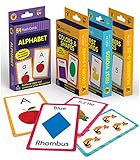
- Early Learning Toddler Flash Cards: Turn your child’s lessons into fun, phonics games and math games that bring learning to life with Carson Dellosa’s Early Learning Flash Cards!
- Why You’ll Love These Kids Flash Cards: Kids learn basic sight words, colors and shapes, numbers 0-25, and the alphabet. Bonus resource cards feature additional phonics games and math games for even more learning fun!
- What’s Included: The preschool flash cards bundle includes 4 packs of flash cards, including 53 First Words, 54 Colors & Shapes, 52 Numbers 0-25, and 52 Alphabet Flash Cards, with 5 bonus resource cards for a total of 216 cards.
- Working Together: Each flash card is made with a glossy cardstock finish and rounded edges for easy flipping and sorting. The sight words, numbers, and abc cards are double-sided with a word or number on one side and illustration on the other.
- Why Carson Dellosa: For more than 40 years, Carson Dellosa has provided solutions for parents and teachers to help their children get ahead and exceed learning goals. Carson Dellosa supports your child’s educational journey every step of the way.
Reading comprehension
A 2019 meta-analysis by Xu and colleagues examined intelligent tutoring systems (ITS) and reading comprehension among K–12 students. It pooled studies of varied systems and measures, not a single current generative AI product. Its results cannot show that an AI tutor teaches beginning phonics better than cards.
Adaptive technology and tutoring
A 2023 global meta-analysis by Alrawashdeh and colleagues covered 27 studies of personalized and adaptive learning technologies in reading literacy. The reported average effect was g = 0.29, with context-related moderators. These technologies are broader than generative AI tutors, so the average is not a forecast of what a particular child or app will achieve.
Rank #2
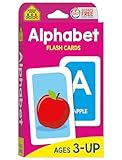
- BUILD EARLY ALPHABET SKILLS: Help children learn uppercase and lowercase letters with 56 colorful Alphabet Flash Cards, including 26 uppercase, 26 lowercase, 3 index cards, and 1 parent card. Practicing letters and letter-picture associations helps children build memory, early literacy, and reading confidence.
- FUN LEARNING PRACTICE: Bold, bright illustrations and big, easy-to-read letters make mastering the ABCs engaging and interactive. Children can connect each letter to its corresponding object, such as "K is for Kite," reinforcing phonics and pre-reading skills.
- PORTABLE & EASY TO USE: Large 3.0" x 5.575" glossy cards with rounded corners are easy for small hands to hold, sort, and play with. The convenient size makes them perfect for home, classroom, or on-the-go learning.
- TIME-TESTED LEARNING TOOL: Flash cards are a proven way to teach essential skills. The included Parent Card provides instructions for games and activities to extend learning, giving children hours of practice while keeping lessons fun.
- DEVELOPED IN THE USA: School Zone learning materials have helped educate three generations of children. Flash cards, workbooks, readers, and learning games are created with teacher guidance and parent approval, proudly developed in the USA.
Separate tutoring studies offer evidence about structured human support, not autonomous AI. Their results can help families understand the value of guided practice, but they do not settle the flashcards-versus-AI question.
How do the reported results differ?
| Evidence | Reported result | What it can tell you |
|---|---|---|
| ITS and K–12 reading comprehension meta-analysis, Xu and colleagues, 2019 | Across mixed standardized and researcher-designed measures, the overall effect was 0.60 (95% confidence interval 0.36–0.85). For comparisons with human tutoring, the effect was 0.20 (95% confidence interval 0.02–0.38; n = 21), described by the authors as small; all those comparisons used standardized measures. | Some studied ITS approaches improved reading-comprehension outcomes on average. The effect varied by comparison and measure; it is not an estimate of an AI tutor’s advantage over flashcards. |
| Kindergarten tutoring trial, published 2025; conducted during the 2021–22 school year | Among 818 emergent readers, 70% of tutored students versus 32% of students in the comparison group reached the program’s target reading level. The intervention group scored 0.23 standard deviations higher on oral reading fluency. | This was consistent one-to-one tutoring supported by technology, not an autonomous AI tutor or a flashcard trial. The figures describe this program and setting. |
| BookNook virtual-tutoring study reviewed by the What Works Clearinghouse in May 2026 | The study examined 1,777 students in grades 1–4. The WWC reported Tier 1 strong evidence for literacy achievement and said the study met its standards without reservations. | This review concerns a defined in-school virtual-tutoring intervention and study. It does not establish that a consumer AI reading app or flashcards will produce the same result. |
What can flashcards and AI practice each do?
Flashcards: direct practice with a person beside the child
Alphabet or phonics cards can prompt a child to retrieve a letter name, a letter sound, or a sound-to-letter connection. An adult can listen, give a prompt, correct a mix-up, and move on when the child is ready. Cards are a practice aid, not a complete reading curriculum, and the sources discussed here do not establish an effect size for flashcards.
Rank #3

- Language: english
- Language arts
- This product will be an excellent pick for you
For example, show one card and ask, “What sound can this letter make?” If the child is unsure, model the sound and invite another try rather than turning the card into a test. Use cards that match what the child is learning in class; letter names, sounds, and spelling patterns can be confused if the practice jumps ahead.
AI tools: different designs, different jobs
“AI tutor” can mean very different things. A speech-enabled reading program may listen to a child read aloud and offer coaching. An open-ended chatbot may respond to questions or generate activities. A research chatbot used in a study is not necessarily equivalent to either type of consumer tool.
Rank #4

- Toddler Montessori Learning Toys: This educational talking flash card features 224 colorful illustrations and sounds. It includes animals, vehicles, food, fruits, and vegetables etc. Kids can expand their vocabulary and enhance cognitive skills while playing
- Speech Therapy and Sensory Toys: Talking flashcards are a valuable tool for children. The sound-image combo helps them learn and interact in a Montessori style, making it ideal for speech therapy
- Easy to Use: Simply turn on the switch, insert a card into the reader, and hear content in a standard American accent. The reader makes real animal sounds and has a repeat button. Adjust volume with a 5-level control. It’s user-friendly for young children
- Rechargeable and Durable: The talking flash cards has a rechargeable battery and USB cable, lasting up to 4 hours on a single charge. It features an auto-off function to save power. Screen-free, it helps reduce screen time and protects toddlers’ eyesight
- Good for 1-5 Years: It is an educational device for preschoolers and can also be a travel partner for long drives or road trips. If you are looking for fun and educational device for your kids, this toddler learning flash cards is a good choice
The Institute of Education Sciences’ Reading Together project page describes Amira’s intended capabilities as listening to oral reading, assessing mastery, and providing adaptive coaching. That is a feature description, not a completed independent efficacy result on the page. Check what a specific tool actually does, what evidence evaluates that version, and whether its corrections are appropriate for your child’s lesson.
Do these 3 things before closing this tab:
1Repair Windows errors before they cause bigger problems2Scan for outdated or missing drivers - takes under a minute3Clear out junk files and repair common Windows errorsHow should you choose for your child?
- Name the skill to practise. Ask the teacher whether the immediate need is letter recognition, sound-letter links, decoding unfamiliar words, oral reading fluency, or comprehension. A tool evaluated for comprehension is not automatically suited to a child who is still learning letter sounds.
- Check the feedback. The child should get corrections or hints that are accurate, understandable, and suited to the skill. With cards, an adult supplies the feedback. With an AI tool, find out how it handles mistakes, unclear speech, and a child who guesses.
- Plan for adult involvement. Notice whether a parent, teacher, or tutor can see what the child practises and step in when the child is confused. The kindergarten chatbot study’s authors describe AI as supporting rather than replacing teachers; the positive kindergarten tutoring trial used consistent one-to-one tutors.
- Match evidence to the actual option. Look for evidence involving a similar age, reading skill, intervention, and setting. A result for a defined school program does not prove a separate app works, and none of the studies here compares that app with flashcards.
- Choose a practice the child can sustain. Observe whether the child is engaged and practising accurately, or becoming frustrated and repeating errors. The sources do not establish a universal home schedule or an optimal number of minutes, so adjust with the child’s teacher rather than treating a fixed dose as proven.
When is extra help more important than the tool?
If a child is persistently struggling, ask the teacher what specific skill is difficult and what structured support is available. One-to-one tutoring may be worth discussing: the 2025 kindergarten trial found positive results for its technology-supported tutoring model, while the WWC’s May 2026 review found strong evidence for literacy achievement in one defined virtual-tutoring study. Neither result means that every tutoring service, chatbot, or app will work equally well.
Best Value
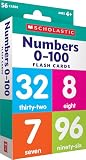
- Give children a head-start in math with these double-sided flash cards
- Made of heavy duty cardstock
- Plastic-coated for color-fastness and durability
- A wonderful study tool
- Laminate for extra durability
Keep the distinction clear: guidance from a skilled adult, the design of a program, and the technology used to deliver practice are not interchangeable. Cards can support a focused practice moment, and software may add another way to practise, but neither should be assumed to replace effective teaching or individualized help when a child needs it.
What is a sensible starting point?
For a child practising letters and sounds, try a small set of familiar phonics cards with an adult who can listen and correct gently. Consider an AI tool only if its actual activity matches the child’s current need, its feedback can be checked, and an adult remains involved. If the child is having difficulty, involve the teacher before relying on either option alone.
Quick Recap
Product prices and availability are accurate as of the date/time indicated and are subject to change. Any price and availability information displayed on Amazon at the time of purchase will apply.
Free tools Windows power users keep installed
One-click scans. No signup required.

