
What’s actually slowing this PC down?
Pick the symptom - the matching free tool is one click away.
iTechGuides is reader-supported. When you buy through links on our site, we may earn an affiliate commission. As an Amazon Associate I earn from qualifying purchases. Learn more
AI can make education more accessible and responsive, but it can also widen inequality when reliable internet, affordable tools, relevant content, teacher support, and effective safeguards are available to some learners and not others. The divide is not simply who owns a device: it is whether students and teachers can use suitable tools well, safely, and consistently. The global evidence identifies risks and conditions for fair use; it does not establish that AI has already caused the same learning outcomes everywhere.
Will AI make education more unequal?
It can, but the outcome is not predetermined. AI tools may support access, personalization, educational management, and teachers’ work. UNESCO’s 2025 report on learner rights discusses those possibilities alongside risks to equity, privacy, safety, ethics, and the right to education. OECD guidance from 2023 similarly says digital tools may improve learning quality and equity under the right conditions, while warning that unequal access, uneven capacity, resource quality, privacy concerns, and bias can create or amplify disparities.


That distinction matters: evidence of unequal connectivity is not evidence that AI has already changed test scores or long-term opportunity. The global figures below describe access to the internet, not AI use or educational performance. The concern is that schools introducing AI into already uneven systems could reinforce existing gaps unless they plan for who can access, understand, and benefit from it.
Who benefits from AI in the classroom?
Students and teachers are more likely to benefit when the tools are affordable, accessible, educationally sound, suited to local languages and curricula, and supported by people who can evaluate their outputs. A tool that works for a well-connected school with trained staff may not work as well for a school facing unreliable internet, limited budgets, or a shortage of relevant resources.
UNESCO Assistant Director-General for Education Stefania Giannini wrote in the 2025 publication AI and the future of education. Disruptions, dilemmas and directions: “Artificial intelligence (AI) is reshaping the way we learn, teach and make sense of the world around us – but it is doing so unequally.” This is an argument about unequal conditions and representation, not a quantified finding that AI has produced a particular learning result.
What happens to students without reliable internet?
They may be unable to reach online AI tools when needed or use them consistently. Even when a school has a connection, learners’ ability to benefit can depend on appropriate devices, affordability, accessible design, and whether access continues beyond a limited rollout. These are connected barriers; providing a device alone does not resolve the others.
UNESCO’s 2025 reporting illustrates the scale of the underlying connectivity gap:
Do these 3 things before closing this tab:
1Clear out junk files and repair common Windows errors2Fix the driver behind crashes, sound loss and screen glitches3Repair Windows errors before they cause bigger problems- Around 2.6 billion people lacked internet access as of 2024, according to UNESCO’s 2025 report on learner rights. This is a general internet-access estimate, not a count of people unable to use AI for education.
- UNESCO’s 2025 school-connectivity figures report internet access at 40% of primary schools globally, 50% of lower secondary schools, and 65% of upper secondary schools.
- In UNESCO’s 2025 Q&A, school connectivity is reported at 80–90% in the Americas, Europe, and the Commonwealth of Independent States, compared with 64% in Asia-Pacific States and 40% in Africa. The same Q&A reports internet access as low as 14% in rural areas of least developed countries.
These figures describe infrastructure in UNESCO’s account; they do not measure whether connected schools use AI, whether students have home access, or what effect AI has on learning.
Where does the educational divide come from?
UNESCO’s 5C framework offers a way to examine whether an AI initiative can work equitably: coordination and leadership; content and solutions; capacity and culture; connectivity and infrastructure; and cost and sustainability. Consider all five rather than treating adoption or device ownership as a sufficient measure of access.
| Condition | What to examine | How a gap can arise |
|---|---|---|
| Connectivity and infrastructure | Reliable school and home internet, appropriate devices, accessibility, and continuity. | Students may have intermittent or no access to the connection or equipment required to use online tools. |
| Cost and sustainability | Who pays for devices, subscriptions, upkeep, and support, and whether access lasts beyond a pilot. | A short-term trial or unaffordable recurring costs can leave learners without dependable access. |
| Content and solutions | Educational quality, age appropriateness, language coverage, disability access, and curriculum fit. | A tool may be available but still fail to serve learners whose language, accessibility, or curriculum needs it does not meet. |
| Capacity and culture | Teacher preparation, student AI literacy, local context, and the ability to assess outputs critically. | Uneven preparation can affect how safely and effectively students and teachers use or evaluate AI-generated material. |
| Coordination and leadership | Clear policy, accountability, privacy and data protection, procurement, and bias review. | Without clear oversight, privacy, safety, efficacy, and equity concerns may be missed or handled inconsistently. |
The 5C categories come from UNESCO’s framework; the emphasis on governance and bias also reflects OECD’s 2023 guidance. UNESCO’s 2025 explainer notes that gender, disability, language, age, and rural location can compound barriers rather than operate one at a time.
Rank #4

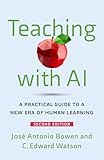
- Presents guiding principles and action steps that address both the issues and the opportunities that come with artificial intelligence
- Learn how to cultivate a schoolwide understanding of AI,
- Implement student-centered practices that support academic integrity
- Ensure that effective teaching and learning remain the school’s top priority
How can schools use AI more fairly?
Schools can make equity a practical test at every stage: before choosing a tool, during implementation, and when deciding whether to continue it. The goal is not simply to put AI in more classrooms, but to establish whether the tool is useful and safe for the learners and teachers it is intended to serve.
- Map who can access it. Check school and home connectivity, device availability, accessibility needs, and whether learners can use the tool consistently—not just whether a school has a connection.
- Check the full cost. Account for subscriptions, equipment, maintenance, and support, and identify who pays. Assess whether the arrangement can last beyond a pilot.
- Review the learning resource. Examine educational quality, age appropriateness, curriculum fit, language coverage, and accessibility before making it part of instruction.
- Prepare teachers and students. Provide guidance and training, preserve teacher autonomy, and help learners assess outputs critically. These are priorities in OECD’s 2023 guidance.
- Set safeguards and responsibility. Clarify who is accountable for procurement and use, how privacy and data protection are handled, and how safety, efficacy, and bias concerns will be reviewed.
- Evaluate who benefits. Look at whether the intended learners can participate and whether the tool meets its educational purpose. Do not treat adoption, connectivity, or device distribution by itself as proof of equitable access or improved learning.
UNESCO and OECD both frame the result as conditional: AI may support learning and access, but fair use depends on infrastructure, resources, human capacity, and governance. UNESCO calls for a human-centred, rights-based approach; OECD emphasizes affordable access to quality resources, teacher autonomy and preparation, and attention to privacy, safety, efficacy, and equity.
Quick Recap
Product prices and availability are accurate as of the date/time indicated and are subject to change. Any price and availability information displayed on Amazon at the time of purchase will apply.

