
Do these 3 things before closing this tab:
1Scan for outdated or missing drivers - takes under a minute2Clear out junk files and repair common Windows errors3Fix the driver behind crashes, sound loss and screen glitchesiTechGuides is reader-supported. When you buy through links on our site, we may earn an affiliate commission. As an Amazon Associate I earn from qualifying purchases. Learn more
AI certifications are not “crushing” traditional degrees in 2026. Employer surveys show that certificates can signal skills and help organizations upskill, but degrees remain important—and practical experience and demonstrated ability matter too. The useful question is not which credential wins outright; it is which path best fits the role you want and gives you evidence of skills employers can use.
What the 2026 evidence says about certificates and degrees
A June 24–July 7, 2026, survey of 3,128 U.S.-based people directly involved in hiring found that 91% considered certificates valuable indicators of skills, while 73% considered college degrees important. Those findings can coexist: they measure employers’ stated views, not whether certificates have displaced degrees in actual hiring. The survey was conducted by Centiment for Western Governors University (WGU). WGU’s 2026 survey release

In the same survey, 42% said they planned to increase their focus on skills over degrees. That signals a possible shift in emphasis, not the end of degree requirements. WGU also reported that 38% named internships, apprenticeships, or project-based work as the most effective way for recent graduates to move from education into employment. A credential is only one part of a candidate’s evidence.
AI skills do not make education requirements disappear
Online job postings show that AI-skill requirements appeared across education levels. An analysis by the Federal Reserve Bank of Atlanta of Lightcast postings found that nearly 628,000 online postings in 2024 required at least one AI skill—1.7% of all postings. The share varied by the posting’s minimum education requirement:
#1 Best Overall
| Minimum education listed | Share of postings requiring at least one AI skill |
|---|---|
| High school diploma or GED | 0.5% |
| Associate degree | 1.4% |
| Bachelor’s degree | 4.7% |
| Master’s degree | 5.0% |
| PhD or professional degree | 5.3% |
These are shares of postings within each education category, not the share of AI jobs requiring that degree. They indicate that AI-skill demand and formal education requirements can appear together. The analysis measures online postings, not completed hires. Federal Reserve Bank of Atlanta analysis
Employer priorities also vary by location and survey. North Carolina’s 2026 Employer Needs Survey ranked work experience and demonstrated skills above industry certifications, professional licenses, and four-year degrees for entry-level hiring importance among surveyed employers. That is a state-specific finding, not a universal ranking. North Carolina Employer Needs Survey
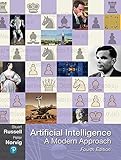
Rank #2

- brand: Pearson
- ARTIFICIAL INTELLIGENCE: A MODERN APPROACH, 4TH EDITION
What certification surveys can—and cannot—tell you
Pearson’s 2026 report surveyed 505 IT and HR leaders across the United States, United Kingdom, China, Brazil, Mexico, Saudi Arabia, and India. In that survey, 78% chose professional certification as a leading investment for upskilling, and 93% reported a positive return on investment from certified IT employees. The findings concern IT certifications broadly; they do not establish that an AI certificate causes better hiring outcomes, higher pay, or a positive return for every individual.
Free tools Windows power users keep installed
One-click scans. No signup required.
A separate WGU survey, fielded in September and October 2025 among 3,147 U.S. hiring professionals and released in January 2026, found that 21% were hiring for AI-specific skills or certifications and 25% prioritized candidates comfortable using AI tools. In that survey, 46% planned to increase their focus on skills over degrees. These figures come from a different survey, with different dates and questions, than WGU’s June–July 2026 survey; they should not be combined into a single trend. Pearson’s 2026 IT certification report release · WGU’s January 2026 hiring outlook
Choose a learning path for the role you want
Use the job market for your target role—not a broad claim about certificates or degrees—to guide the decision. This is a practical decision aid, not a source-published ranking.
- Check actual job postings. Review several current postings in your location and at your intended level. Note whether they require a degree, name a particular certification, or emphasize experience and demonstrable skills. A preferred credential is not the same as a stated requirement.
- Match the credential to the work. A certificate is most useful when its subject maps to tasks in the role and the assessment asks you to demonstrate relevant knowledge or ability. A certificate title alone does not show how much practical skill was tested.
- Look for work you can show. Prefer a learning route that produces a relevant project, portfolio item, internship, apprenticeship, or other applied experience. Be ready to explain your contribution and the decisions behind the work.
- Check recognition with relevant employers. Look for the credential in postings and ask people familiar with hiring for that role or field how they interpret it. The survey evidence here concerns broad employer views and does not establish equal recognition across occupations.
- Account for existing education and experience. If you already have a degree or substantial experience, a focused certificate may help you demonstrate newer skills. If a target role explicitly requires a degree, a certificate should not be assumed to waive that requirement.
When a certificate, degree, or combination makes sense
A certificate may fit a focused skills gap
Consider a certificate when postings for your target role value it, you need a bounded way to learn a specific skill, and the program includes credible assessment or applied work. Treat it as evidence of a particular learning outcome—not as a blanket substitute for education, experience, or a portfolio.
A degree may fit roles with formal education requirements
If target employers require or consistently request a degree, a certificate alone may not meet their screening criteria. Degrees also represent broader formal study than a short credential; the cited surveys do not establish that the two are interchangeable.
The Tool Desk
Outbyte Driver Updater FREEScan for outdated or missing drivers - takes under a minuteDriver Scan →Outbyte PC Repair FREEClear out junk files and repair common Windows errorsFree Scan →A combined path can connect learning to proof
For many candidates, education, a relevant certification, and applied work serve different purposes: the education provides a broader foundation, the certificate can signal focused study, and a project or work experience shows how skills are applied. Which combination is worthwhile depends on the role’s requirements and the time and cost involved.
Quick Recap
Best Value
What not to infer from the numbers
- Employer surveys report respondents’ views or plans; they are not randomized evidence that a credential caused a job offer or better earnings.
- The North Carolina results describe employers in that state, while the WGU surveys cover U.S. hiring respondents and Pearson’s report covers seven countries and IT certification.
- The Atlanta Fed analysis counts online job postings, not hires, and its figures describe 2024 postings.
- None of these sources establishes that AI certifications generally replace degrees or guarantee employment.
Product prices and availability are accurate as of the date/time indicated and are subject to change. Any price and availability information displayed on Amazon at the time of purchase will apply.

