
iTechGuides is reader-supported. When you buy through links on our site, we may earn an affiliate commission. As an Amazon Associate I earn from qualifying purchases. Learn more
Agent skills need more than a place to be stored: teams need to know who changed each skill, which version was used, who can publish or invoke it, and what happened when it ran. A registry can govern packages and their release workflows, but runtime authorization must be checked separately. “700 skills, 0 governance” is the framing of Fenju Fu’s October 6, 2026 article—not a verified measure of the industry.
What “700 skills, 0 governance” means
Fenju Fu’s article uses the phrase “700 Skills, 0 Governance” to describe a potential mismatch: an organization may accumulate many agent skills and related tools without an equally clear system for controlling their changes, releases, access, and use. Fu’s article attributes figures including 700-plus skill and production-knowledge files, 12 production pipelines, and 100-plus tools to OpenMontage, and describes repositories trending that day. Those are claims in the article, not independently verified or durable industry statistics.



The useful point is the governance problem, not the headline’s numbers. As skills become shared operational artifacts, teams need answers to four questions:
Free tools Windows power users keep installed
One-click scans. No signup required.
- Provenance: Who created or changed this skill, and who reviewed the change?
- Versions: Which version was installed or used, and can the team identify or restore an earlier release?
- Authorization: Who may publish, approve, install, and invoke it?
- Auditability: What actor, artifact and version, time, and outcome can be reconstructed?
Fu’s article captures the operational stakes with questions such as “Who changed this skill?”, “Which version was running before the break?”, “Who had permission to invoke this skill in the first place?” and “What’s the full audit trail of the last 24 hours?” These are the article’s scenario questions, not evidence of a measured industry-wide failure rate. Its concise distinction is: “Memory is not governance.”
#1 Best Overall
Why a skill needs lifecycle controls
A skill package can include more than descriptive instructions. It may contain scripts, documentation, and other files that influence an agent’s behavior or execute on a user’s computer. Depending on its contents and the environment in which it runs, a package could read or modify files, run commands, contact services, browse websites, or handle sensitive inputs.
That makes a skill both a capability and a changeable software artifact. A team that cannot identify the package version, its publisher, or its review history may struggle to trace a behavior change or recover from a faulty release. Discovery and reuse are valuable, but they do not by themselves establish trust or limit what a skill can do.
What a governed registry can control
A skill registry can centralize package discovery and distribution while adding controls around publication and release. iFlytek’s SkillHub project describes a self-hosted registry with documented support for versioned packages and tags, team namespaces and roles, review and promotion workflows, visibility settings, and audit-logged governance actions. Its CLI guide documents login, search, install, list, and publish flows.
Outdated Drivers Are Slowing You Down
One free scan finds every outdated or missing driver and matches the right update for your exact hardware.Free scan · exact hardware matchPC Slower Than It Used to Be?
A free scan shows the junk files, broken settings and background clutter dragging Windows down - then fixes them in one click.Free scan · Windows 10 & 11These features address parts of the artifact lifecycle. Their presence does not, on its own, prove that a particular deployment is secure, compliant, or configured appropriately. The project documentation describes product capabilities; operators still need to decide how controls are configured and whether they meet their requirements.
Rank #3
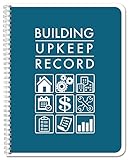
- Made in USA - Proudly produced in Ohio by a Veteran-owned business
- NEVER MISS ESSENTIAL MAINTENANCE: This book is the perfect place to keep all building maintenance and upkeep records on any property. Keep thorough and complete records of all performed and needed maintenance - there are spaces to keep track of property details and a monthly schedule of duties along with preferred vendor information and an expense overview.
- ESSENTIAL FOR PROPERTY MANAGEMENT: Every good manager knows that in order to be successful you need to take good records. Having properties means there’s always something that needs to be taken care of, that either you’re aware of, or a tenant is. Never wonder if the thing got done, this book has a space to record all of that, and you’ll be able to reflect and see dates, times, vendors, and cost per each bit of maintenance that’s been done.
- DURABLE TRANSLUX COVER GREAT FOR TRAVEL: Our unique cover is a semi-rigid transparent cover that leads to a sturdy book that resists stains and wrinkles. Regardless of your field of expertise, this 8.5” x 11” book is a great size for larger handwriting but still a great size for travel and won’t rip or tear in your bag
- Reorder SKU: LOG-100-7CW-PP(Building-Upkeep)
Controls to look for
- Clear identity and ownership: Packages should be attributable to a publisher or team, with changes traceable to an actor.
- Identifiable releases: Versions and tags should let operators distinguish what was reviewed, promoted, installed, and used.
- Separation of duties: Namespace roles and review steps can distinguish publishing from approval or promotion.
- Controlled distribution: Visibility and access settings can help limit who can discover or obtain a package.
- Useful audit records: Logs should make governance actions attributable and reviewable, with enough detail and retention for the team’s needs.
- Configured validation and review: Scanning and review workflows may help surface risks, but their scope and configuration matter.
Registry permission is not runtime authorization
A registry governs packages: who can publish them, how they are reviewed, which versions are distributed, and who can access them. That is distinct from deciding what an agent is authorized to do when it invokes a skill.
For example, permission to install a package does not necessarily mean a runtime will prevent it from accessing a file, calling a service, or executing a command. Whether execution is constrained depends on the agent runtime and orchestration environment, and on how those controls are connected to identity, policy, and the skill itself. Do not infer execution-time enforcement from registry roles alone; verify which controls apply at publication, installation, and execution in the specific deployment.
How to assess a skill-governance setup
Before choosing or configuring a registry, map controls to the actions your team needs to govern. A registry’s feature list is not a substitute for checking the full path from package creation through execution.
Recommended Free Tools
- Trace ownership and changes. Establish who owns each skill, how changes are attributed, and who is expected to review them.
- Define release identity. Decide how versions and tags distinguish reviewed releases, and how operators will identify the version installed or used.
- Assign lifecycle roles. Specify who may publish, review, promote, install, and change package visibility. Avoid treating these as interchangeable permissions.
- Check execution-time enforcement. Identify which runtime or orchestration controls govern invocation and what actions a skill can perform. Confirm whether those controls enforce the policies you expect.
- Inspect audit coverage. Determine which actors, package versions, actions, times, and outcomes are recorded, and whether retention is adequate for your operational needs.
- Review scanning and privacy responsibilities. Establish what validation is enabled, what it can and cannot detect, and how the instance handles data and retention.
Useful comparison criteria include self-hosting and data location, version and release controls, team permissions, review and promotion flow, audit-log coverage and retention, scanning configuration, runtime integration, and the operational burden on the team. The right balance depends on the environment; a registry’s documentation cannot establish how every alternative compares.
Best Value

- Voice mail log
- Spiral bound to lay flat when open
- 480 message areas
- Check off boxes to record calls or actions
- Pack of 2 books
SkillHub’s documented controls—and their limits
SkillHub is one documented example of the registry approach. Its project README describes it as a self-hosted, open-source registry and documents semantic-versioned packages with tags, namespaces and roles, review and promotion workflows, visibility settings, audit-logged governance actions, and CLI-based discovery and distribution.
Its Content Safety Policy, last updated August 18, 2026, describes configurable package validation and scanning, review workflows, reports, administrator actions, role-based access control, visibility settings, and audit records. The policy also states that scanning may be disabled and that these controls do not certify a package as safe or compliant. A scan result should therefore be treated as one input to review, not as a guarantee.
SkillHub’s Privacy and Data Governance Policy, also last updated August 18, 2026, assigns instance operators responsibility for matters including notices, access configuration, retention, assessment of external services, and legal compliance. Self-hosting does not remove those responsibilities; it makes the operator’s configuration and practices particularly important.
What good governance looks like in practice
A governed skill stack makes it possible to follow a package from ownership and change through approval, distribution, and use. The registry can supply structure for package lifecycle and publishing permissions. Runtime or orchestration controls must separately address who may invoke a skill and what it may do. Audit records then help the team reconstruct events across those layers.
The headline’s “0 governance” should not be read as a measured industry condition. The more durable takeaway is that a growing skill collection creates concrete questions about ownership, version history, authorization, and evidence of activity. Answering them requires controls across the registry and the execution environment—not just a larger library of skills.
Quick Recap
Product prices and availability are accurate as of the date/time indicated and are subject to change. Any price and availability information displayed on Amazon at the time of purchase will apply.

