
Recommended Free Tools
iTechGuides is reader-supported. When you buy through links on our site, we may earn an affiliate commission. As an Amazon Associate I earn from qualifying purchases. Learn more
The reliable way to edit an image with AI is to treat the tool as one step in a process. Define the communication goal, write down what must stay exactly as it is, make one scoped change at a time, inspect the result against the original, and finish the last corrections in ordinary design or photo-editing software. Used this way, AI speeds up the parts of editing that are slow to do by hand, while you keep control of the parts that determine whether the image is accurate and usable.
The guidance below draws on official OpenAI and Adobe documentation. Those sources describe how each feature is meant to behave. They are not independent comparative tests, and neither vendor publishes an error rate for its edits, so the quality checks in this article are practical editorial advice rather than vendor-verified standards. OpenAI’s image-creation guidance is dated April 10, 2026. Adobe’s Photoshop AI Assisted Editor FAQ was last updated September 29, 2026. Feature names, beta status and regional availability change, so confirm them in your own app before you rely on them.
Start with a brief, not a prompt
Most poor AI edits begin before any prompt is typed. If you have not decided where the image will appear and what it has to communicate, the tool has no reliable target, and every regeneration drifts further from what you need. Write a short brief first, with these elements:
Do these 3 things before closing this tab:
1Clear out junk files and repair common Windows errors2Fix the driver behind crashes, sound loss and screen glitches3Repair Windows errors before they cause bigger problems- Destination: the website hero, a slide, a print flyer, a social post, or a product listing. Each has different resolution, crop and text needs.
- Message: the one thing a viewer should understand in the first two seconds.
- Subject, action and setting: what is in the frame, what it is doing, and where it is.
- Style, framing and light: for example, a flat studio look, a medium close-up, soft window light, or matte materials.
- Locked elements: everything that must not change, such as a logo, a product’s shape and colour, a person’s pose, or the camera angle.
- Permitted changes: the specific things you want altered, nothing more.
OpenAI’s guidance is that clear, descriptive prompts work well and that explicit preservation instructions help steer an edit. In practice, the second half of that is where most people fall short. Compare these two requests:
#1 Best Overall

- Please note: Kamvas 13 (Gen 3) Pen Display is not a standalone product, this device must be connected to a computer/laptop to work.
- All-new Canvas Glass 2.0: HUION Kamvas 13 (Gen 3) drawing tablet for pc features a fully laminated 13.3-inch screen and brand new anti-sparkle canvas glass 2.0 for reduced glare and improved accuracy. It is perfect for designers, artists, and illustrators to unleash their creativity.
- Advanced PenTech 4.0 Technology: The 16384 levels of pressure sensitivity and 2g IAF ensure a fluid and natural drawing experience, while the 3 customized pen side buttons improve your workflow.
- Improved Color Accuracy: With enhanced color accuracy to Avg. ΔE<1.5, 16.7 million display colors, 99% sRGB coverage, and Rec.709 standard color gamuts, HUION Kamvas 13 (Gen 3) digital art tablet delivers stunning visuals.
- Rigorous Color Calibration: HUION Kamvas 13 (Gen 3) drawing monitor includes a factory calibration report for added assurance of color consistency.
- Weak: “Make this product photo look better.”
- Scoped: “Keep the bottle’s shape, label text and reflections exactly as they are, and keep the camera angle. Replace only the background with a plain light-grey studio backdrop with a soft floor shadow.”
The second request tells the tool what to change and what to protect, so you can check the result against a clear standard.
Label your reference images
When an edit combines several visual inputs, such as a source photo, a style example and a product shot, the order and role of each image matter. OpenAI advises keeping the set of references small, since a few well-chosen images are easier to manage than many. Give each one a role in your prompt:
- Source photo: the image to be edited, whose composition should be kept.
- Style reference: an image that supplies colour, mood or texture only.
- Object reference: an item to be placed into the scene, with its identity to be preserved.
Describe spatial relationships in plain language: “place the mug on the left third of the table, in front of the plant, at the same height as the laptop.” Vague placement such as “add a mug somewhere” invites the tool to choose a layout you did not want.
Rank #2

- PLEASE NOTE:XPPen Artist13.3 Pro drawing tablet Need to connect with computer,you need to use it with your computer or laptop, the 3 in 1 cable is included
- Drawing Tablet with Screen: Tilt Function- XPPen Artist 13.3 Pro supports up to 60 degrees of tilt function, so now you don't need to adjust the brush direction in the software again and again. Simply tilt to add shading to your creation and enjoy smoother and more natural transitions between lines and strokes
- Graphics Tablets: High Color Gamut- The 13.3 inch fully-laminated FHD Display pairs a superb color accuracy of 88% NTSC (Adobe RGB≧91%,sRGB≧123%) with a 178-degree viewing angle and delivers rich colors, vivid images, and dazzling details in a wider view. Your creative world is now as powerful as it is colorful
- Drawing Pad: One is enough- The sleek Red Dial on the display is expertly designed with creators in mind, its strategic placement allows for natural drawing postures. With just one wheel, you can effortlessly zoom in and out, adjust brush sizes, and flip the canvas—all tailored to suit the habits of everyday artists. The 8 customizable shortcut keys allow you to personalize your setup, streamlining your workflow and enhancing creative efficiency
- Universal Compatibility & Software Support:supports Windows 7 (or later), Mac OS X 10.10 (or later), Chrome OS 88 (or later), and Linux systems. Fully compatible with major creative software including Photoshop, Illustrator, SAI, and Blender 3D. Register your device to access additional programs like ArtRage 5 and openCanvas for expanded creative possibilities.
Make one change at a time
A common mistake is to bundle five requests into one prompt: fix the lighting, remove the background, change the colour palette, add a person and adjust the text. When the result is wrong, you cannot tell which instruction caused the problem. Work in sequence instead:
- Get the core composition and subject right first, with no cosmetic changes.
- Save that version as a checkpoint.
- Request one adjustment, such as brightness, simplifying the background, or softening the colours.
- Inspect the result, then either accept it or reverse that single step.
OpenAI also recommends repeating the key constraints in later requests. Restating “keep the product label unchanged” in each round helps prevent visual drift, where small unintended changes accumulate across revisions.
Limit the edit to the area that needs it
Whole-image regeneration is the bluntest tool. When only one part of the picture needs to change, a local edit protects everything else. Adobe documents this approach in Photoshop, and the three main options differ in how much they preserve.
Rank #3
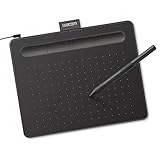
- Wacom Intuos Small Graphics Drawing Tablet: Enjoy industry leading tablet performance in superior control and precision with Wacom's EMR, battery free technology that feels like pen on paper
- Works With All Software: Wacom Intuos tablet can be used in any software program to explore new facets of digital creativity; draw, paint, edit photos/videos, create designs, and mark up documents
- What the Professionals Use: Wacom's industry leading pen technology and pen to paper feeling makes it the preferred drawing tablet of professional graphic designers
- Software and Training Included: Only Wacom gives you software with every purchase. Register your Intuos tablet and gain access to some of the best creative software and Wacom's online training
- Wacom is the Global Leader in Drawing Tablet and Displays: For over 40 years in pen display and tablet market, you can trust that Wacom to help you bring your vision, ideas and creativity to life
Selection-based Generative Fill in Photoshop
Adobe’s Generate Images documentation describes Generative Fill, Generative Expand and reference-image controls. You select the area to change with a selection tool and describe the change. The selection focuses the edit, so an object in one corner should not reshape the rest of the composition. Check the seam where the new content meets the original, because that boundary is the most common place for visible errors.
Generative layers for reversible exploration
According to Adobe’s Generative AI features FAQ, generated content can sit on generative layers. These let you explore variants and reverse them without changing the original image. This suits a workflow where you are unsure which option is best: generate several candidates, compare them against the untouched photo, and keep the one that works.
AI Assisted Editor (desktop beta)
Adobe’s AI Assisted Editor in Photoshop on desktop is documented as a beta. It makes a flattened copy for prompt-based edits, which means the result is not built from editable layers. Keep your original, layered file untouched and work on the copy. Adobe’s FAQ also states that Firefly-powered features are unavailable in some territories, so check the FAQ for your region before planning a project around this mode.
Rank #4

- 16K Pressure Sensitive Stylus: XPPen magic drawing pad introducing X3 Pro slim stylus is a breakthrough innovation boasting industry-first 16K pressure levels, 100%* higher than that of its peers. Free of charging and pairing, 60° tilt recognition, pick up to draw. It delivers much more precise and smoother lines than ever before, excelling at hyper-nuanced creation
- Natural pen-on-screen experience: The 12.2-inch standalone drawing tablet is crafted with AG-etched technology, 2160*1440 screen resolution, a 3:2 aspect ratio, pairs with 97% sRGB and an incredible 16.77 million colors, offers you a paper-like drawing experience in full color
- Easy on eyes: Thoughtfully designed with eye comfort in mind, the screen is TÜV Rheinland certified, and enhanced with ten steps of soft light treatment, so you can create without worrying about straining your eyes even when racing against deadlines
- Android Ecosystem: The standalone drawing tablet operates on the Android 14 system, allowing you to download various apps from Google Play. A 3-month membership of both Clip Studio Paint & ibis Paint X upon activating the account, along with the purchase of the Magic Drawing Pad
- Excellent Performance: The no computer needed drawing tablet adopts 8 GB running memory, 256 GB storage memory (expandable up to 1TB with a micro SD card), thirteen MP rear camera & eight MP front camera allowing you to capture any worthy memory moments
| Workflow | Scope of the change | Editable layers | Control over untouched areas | Suited to text-heavy layouts | Availability |
|---|---|---|---|---|---|
| Whole-image prompt editing in a chat-based tool | Whole image, unless the tool offers a region selection | Not stated in OpenAI’s image-creation guidance | Relies on explicit preservation instructions and inspection | Polish in a design tool, per OpenAI’s guidance | Check current access for your account and region |
| Selection-based Generative Fill (Photoshop) | Selected area | Adobe’s FAQ describes generative layers, which can be reversed | Higher, because the rest of the image is outside the selection | Finish text and layout with conventional Photoshop tools | Confirm feature availability in your Photoshop version |
| Generative layers (Photoshop) | Selected area, with variants that can be reversed | Yes, per Adobe’s FAQ | Original image is not altered | Finish text and layout in conventional tools | Confirm feature availability in your Photoshop version |
| AI Assisted Editor (Photoshop desktop beta) | Prompt-based edit on a flattened copy | No, the copy is flattened | Keep the original file as the untouched reference | Use a copy for finishing; keep layers in the original | Beta; not available in some territories per Adobe’s FAQ (last updated September 29, 2026) |
The table compares documented behaviour, not measured quality. Choose the workflow that matches your need for layers, control and access in your region.
Independent reader supportYour contribution helps us test, update, and keep practical guides available for everyone.Inspect the result before you trust it
A prompt describes what you asked for. It does not confirm what the tool produced. Review each version at full size and against the original, and look at these areas specifically:
- Edges: where a person, object or product meets the background, look for halos, smearing or clipped outlines.
- Object geometry: check that handles, wheels, buttons, fingers and text-bearing surfaces have the correct number of parts and sensible proportions.
- Shadows and reflections: the light source implied by a new shadow should match the existing light, and reflections should show the right surroundings.
- Perspective: lines on floors, walls, tables and packaging should converge consistently with the original camera angle.
- Repeated patterns: tiles, fabric weaves, leaves and grids often generate near-miss repeats.
- Skin, faces and product details: check texture, eyes, teeth, logos and printed labels at 100% zoom.
- The seam: compare the edited region with the untouched area next to it for colour, noise and sharpness mismatches.
If an element fails the check, do not keep regenerating the entire image in the hope that the flaw disappears. Return to the checkpoint, narrow the selection or the instruction, and retry only the affected part.
Best Value

- Customize Your Workflow: The 6 customizable press keys on Huion H640P drawing tablet for pc let you assign your most-used commands—like undo, zoom, brush switch, or save—so you can keep your hands on the tablet and your mind on the art. Whether you're a digital painter switching brushes, or a comic artist zooming in and out, these keys keep your workflow smooth and uninterrupted. Plus, the Huion driver lets you save different shortcut profiles for different apps, so you never have to reconfigure when switching software.
- Professional Pen Performance: Huion H640P drawing pad for computer comes with the battery-free PW100 stylus that's always ready when inspiration strikes. With 8192 levels of pressure sensitivity, every light sketch, or bold stroke responds naturally to your hand—just like a real pen. The 5080 LPI resolution and 233 PPS report rate deliver lag-free, precise strokes, so you can draw confidently without second-guessing your cursor. The pen side buttons help you switch between pen and eraser instantly.
- Compact and Portable: Huion H640P computer graphics tablet features a compact, ultra-portable design at just 0.3 inches thin and 0.61 lbs light, so it slides easily into your backpack—perfect for sketching in coffee shops, taking notes in class, or editing on the go between home and studio. The 6x4 inch active area offers enough room for natural pen movements while fitting comfortably on crowded desks, or lecture hall seats.
- Stable Compatibility: Huion H640P graphic drawing tablet works seamlessly with Mac, Windows, Linux PCs, and Android smartphones/tablets (OS version 6.0 or later). Left-handed friendly, and you just need to flip the tablet and adjust the settings in the driver. Please note: H640P does NOT support iPhone/iPad.
- Move Beyond the Mouse: Huion Inspiroy H640P is a pen tablet that replaces your mouse for more natural, precise control. Freehand draw, take notes, or even play OSU—everything you do with a mouse, you can do better with a pen. The precise tip makes it ideal for detailed photo editing, graphic design, or signing PDF. Meanwhile, the ergonomic pen grip helps you avoid the strain that comes from hours of using a mouse.
Finish in a precision tool
Some corrections are faster and more reliable outside the generator. OpenAI’s image guidance recommends polishing in design tools when a layout is dense or when an image contains a lot of in-image text, since generated lettering is often misspelled or misaligned. Use the tool for the picture and your design software for the rest:
- Typography: set headlines and captions as live text, not as part of the generated image.
- Colour: correct white balance, exposure and contrast so the image matches your other assets.
- Retouching: clean up small defects with conventional healing, cloning or clone-stamp tools.
- Layout: set crops, margins and alignment against the final template, not against the first render.
- Export: export at the resolution and colour profile the destination requires.
Adobe describes conventional Photoshop tools alongside its generative features, which is why this final pass can usually happen in the same application.
Check permissions and disclosure before publishing
OpenAI states that attribution is optional for images generated with its service, and that usage should follow your organisation’s guidelines and its usage policies. That is a starting point, not a clearance. It does not settle what a client contract, a publishing platform, an advertising standard or a local law requires. Before publishing:
Quick Recap
- Confirm the rights to every source photo and reference image, including any identifiable people, trademarks and branded products in the frame.
- Check your client agreement or your organisation’s policy for AI-use disclosure.
- Check the rules of the platform where the image will appear.
- Confirm that the tool and feature you used are available in your region and on your plan.
- Keep the original file, the brief and the final version together, so you can answer questions about how the image was made.
“
Product prices and availability are accurate as of the date/time indicated and are subject to change. Any price and availability information displayed on Amazon at the time of purchase will apply.

