
iTechGuides is reader-supported. When you buy through links on our site, we may earn an affiliate commission. As an Amazon Associate I earn from qualifying purchases. Learn more
Pregnancy and the postpartum period are associated with changes in the brain, but the evidence does not support describing them as brain damage or a uniform loss of ability. Susana Carmona’s A Mother’s Brain: The New Science of the Neuro-Maternal Revolution, published by MIT Press on October 6, 2026, examines this evolving science. The findings are intriguing—and still developing.
What is A Mother’s Brain?
A Mother’s Brain: The New Science of the Neuro-Maternal Revolution is a 192-page hardcover by Susana Carmona, published by MIT Press on October 6, 2026. Its publisher describes the book as a synthesis of research on pregnancy-related changes in hormones, the immune system, and the brain. That description identifies the book’s subject; it is not independent confirmation of every scientific claim it discusses. MIT Press book page.
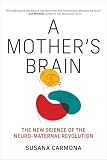


The title points to a genuine area of research: how pregnancy and the transition into parenthood relate to brain plasticity. A useful term for that broader life transition is matrescence. It is a framing for becoming a mother, not a medical diagnosis.
What happens to the brain during pregnancy and postpartum?
Reviews describe pregnancy and postpartum as periods of substantial neurobiological change. Human studies have reported changes in structural brain measures, while animal research has investigated possible biological mechanisms in greater detail. These are complementary but distinct kinds of evidence: findings in animal models can suggest mechanisms, but they do not establish that the same processes occur in the same way in every human mother.
#1 Best Overall
Some human imaging studies report differences in gray-matter measures across pregnancy and after birth. A difference in measured volume or cortical thickness does not, by itself, show that neurons have been lost, that the brain is damaged, or that intelligence has declined. Nor does a scan establish what a structural change does. Reviews stress that human evidence is more limited than animal research and that explanations of the changes remain active research questions. Pawluski and colleagues’ review and Barba-Müller and colleagues’ review.
What one early-postpartum study found
A 2022 study compared 78 healthy women scanned 1–4 days after giving birth with 40 nulliparous controls. The researchers reported regional differences in gray matter and cortical thickness. The early postpartum measures did not predict mother–infant attachment scores at 3 or 12 weeks. The authors called for longitudinal research to establish how these changes develop over time and what biological functions, if any, they serve. This study offers a snapshot in a particular group at a particular point after birth; it is not a universal account of every pregnancy or postpartum brain. The study in Social Cognitive and Affective Neuroscience.
Is “mommy brain” real?
“Mommy brain” is a popular shorthand, not a precise scientific description. It can imply a single, predictable cognitive problem, while the research concerns a complex period of biological change. Structural imaging findings do not establish that mothers as a group experience a uniform cognitive deficit, and the studies described here do not justify treating brain changes as proof of damage.
Research reviews discuss overlap between brain systems implicated in caregiving and systems involved in reward, salience, emotion regulation, and social cognition. Those connections are best understood as proposed associations and interpretations, not as proof that one brain region causes caregiving or that a particular scan can measure someone’s capacity to bond with a child.
Rank #3

- Used Book in Good Condition
What can brain research tell us about maternal mental health?
Brain plasticity is relevant to peripartum mental health, but imaging findings alone cannot diagnose a mental-health condition or show that a brain difference caused one. A 2018 review discusses both possible adaptation and vulnerability and emphasizes how much remains to be established in human studies. A brain scan should not be read as a verdict on a person’s health, parenting, or future. Barba-Müller and colleagues’ review.
How to read claims about the maternal brain
- Check the evidence type: Is the finding from human participants or an animal model?
- Check when measurements were taken: Pregnancy, the first days after birth, and later postpartum are not interchangeable time points.
- Check what was measured: Structural measures such as gray-matter volume are different from functional measures.
- Separate association from cause: A difference or correlation does not establish what produced it or what it means for caregiving or health.
- Look for the study population and design: A single-time-point comparison cannot show an individual’s trajectory in the same way longitudinal follow-up can.
These distinctions matter because the field is still developing. A review of maternal-brain research notes the relative scarcity of human studies compared with animal studies, while the 2022 imaging study itself calls for longitudinal work to clarify the course and function of the observed differences.
Independent reader supportYour contribution helps us test, update, and keep practical guides available for everyone.The book at a glance
| Detail | Information |
|---|---|
| Title | A Mother’s Brain: The New Science of the Neuro-Maternal Revolution |
| Author | Susana Carmona |
| Publisher | MIT Press |
| Format | Hardcover |
| Length | 192 pages |
| ISBN | 9780262054782 |
| Publication date | October 6, 2026 |
These are the publisher’s catalog details; availability may vary by retailer. Check the MIT Press listing.
Recommended Free Tools
Quick Recap
Best Value
- Ideal Gift - Premium vegan leather cover with patterns. This easy-to-carry and versatile journal book will be an excellent gift on Christmas, Birthday, etc to convey your best wishes.
- Exquisite Design - Unique appearance, soft texture, easy to carry around. This journal book is suitable for home, office, outdoor adventure, and travel, etc. A classic vegan leather cover ensures well protection. In addition, it comes with a strap to ensure that the paper and accessories will not be scattered.
- Perfect size - 7.8" * 5" (20 cm * 12.5 cm) and has 70 pages (140 pages), perfect for carrying and writing. It can be easily put into a backpack, or purse, and travel anytime, anywhere.
- Multifunctional - Designed for easier reading and notes taking. It would be the perfect handy choice for you during daily uses, journeys, and work. Card slot bags are also included to organize your cards, tickets, photos, etc. And also a page-size slot with zipping for storing cash, cell phone, and more.
- This journal is also very suitable for use as bullet journals, daily planners, logbooks, food planners, artist sketchbooks, drawing, sketching, paintings, etc.
Product prices and availability are accurate as of the date/time indicated and are subject to change. Any price and availability information displayed on Amazon at the time of purchase will apply.

