
Quick wins for a faster PC:
Scan for outdated or missing drivers - takes under a minuteDriver Scan →Repair Windows errors before they cause bigger problemsFix Now →Fix the driver behind crashes, sound loss and screen glitchesFind Drivers →iTechGuides is reader-supported. When you buy through links on our site, we may earn an affiliate commission. As an Amazon Associate I earn from qualifying purchases. Learn more
A lithium-binding copolymer electrode has recovered lithium from a solution made by processing spent batteries, offering a possible alternative to conventional recycling steps. New Atlas reported an estimated recovery cost of about US$12.70 per kilogram of lithium, but the figure is a study-associated estimate—not a verified industrial cost—and the work has not been shown to operate commercially.
How does the electrode recover lithium from spent batteries?
The process described by New Atlas starts with spent batteries that are treated in an organic solvent. That step produces a lithium-containing solution, or brine, alongside other metals. The electrode is then energized in that mixture and selectively binds lithium.




Calling it a “sponge” describes the electrode’s lithium-binding role; it does not mean the device is shown dismantling or recycling whole batteries by itself. The reported method is an electrochemical separation stage applied to a solution made from battery material.
Free tools Windows power users keep installed
One-click scans. No signup required.
The electrode is a copolymer: a polymer made from multiple components, including components that respond to electrical current. The available account does not establish its exact composition, the detailed operating conditions, or how lithium is separated from the electrode after capture.
#1 Best Overall
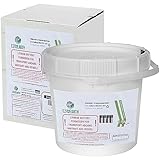
- Container for Wide range of Lithium Batteries -- Easily recycle various lithium batteries from diverse devices, promoting hassle-free disposal and reducing electronic waste. Hold up to 41.8 lbs of Lithium batteries.
- Easy and Convenient Recycling Process -- Our kit offers an easy process. You will receive a container in a box, and a free return label. Just drop your batteries, attach the label, and send for recycling—no stress or extra fees.
- Prevention of Landfill Disposal -- Recycling makes sure that lithium batteries don't end up in landfills. This prevents dangerous materials from getting into the environment and helps keep our ecosystems safe.
- Recycling You Can Trust -- We are certified recycling experts who share our dedication to the environment. Your batteries will be handled responsibly, reducing the negative impact of improper disposal.
- Be a Part of Something Bigger -- Recycling your lithium batteries isn't just responsibility – it's a step towards a circular economy. By doing your part, you're helping to conserve valuable resources and lessen the demand for new materials.
What does the reported cost estimate mean?
New Atlas reported an estimated cost of about US$12.70 per kilogram of lithium recovered. This is an estimate associated with the study, not a current market price, a commercial service quote, or a demonstrated cost for operating an industrial facility. The account does not provide enough detail to independently assess the estimate’s assumptions.
The same November 30, 2025 report compared that estimate with these cost ranges for other approaches:
| Approach | Reported cost per kilogram of lithium | What the available account establishes |
|---|---|---|
| Copolymer-electrode recovery | About US$12.70 | Study-associated estimate reported by New Atlas; assumptions and industrial applicability are not established in the account. |
| Acid leaching | US$81–462 | Comparison range reported by New Atlas; the underlying assumptions and comparability with the electrode estimate are not established. |
| High-heat smelting | US$36–126 | Comparison range reported by New Atlas; the underlying assumptions and comparability with the electrode estimate are not established. |
The figures make the electrode approach look promising on cost, but they are not enough to show that it is cheaper on an equivalent, real-world basis. The located account does not verify a shared cost model, recovery yield, lithium purity, energy demand, solvent use, or waste handling for the methods being compared.
How durable and selective is the electrode?
New Atlas reported that the electrode maintained conductivity for more than 500 cycles. That is a reported laboratory result, but the account does not define precisely what counts as a cycle or specify the test conditions. Conductivity retention alone also does not establish how much lithium the electrode captures, the purity of the recovered lithium, or how its performance changes at larger scale.
The report describes the electrode as selectively capturing lithium from a mixture containing other metals. It does not provide verified quantitative selectivity, recovery yield, or product-purity figures, so those performance measures cannot be compared with established recycling processes from the available information.
Is the technology commercially available?
No commercial deployment or consumer product is established by the available account. New Atlas characterizes the work as a proof of concept and says scaling and refinement are still needed. The electrode should therefore be understood as a research-stage method, not equipment that battery owners or recyclers can currently buy and use based on this report.
Before the reported approach could be judged for commercial use, scale-up would need to show that the separation works reliably on larger, variable battery-derived mixtures and that its full process costs—including solvent, energy, electrode life, and downstream handling—hold up. The account does not establish those results.
The Tool Desk
Outbyte Driver Updater FREEScan for outdated or missing drivers - takes under a minuteDriver Scan →Outbyte PC Repair FREEClear out junk files and repair common Windows errorsFree Scan →What the report does—and does not—show
The work points to electrochemical separation in organic solvents as a possible route for recovering lithium from battery waste. The cost estimate and reported cycle durability are encouraging signals, but they do not yet establish a cheaper industrial process. New Atlas’s November 30, 2025 account is the source for the figures above; the primary ACS Energy Letters paper and supporting information were not available in the located material, leaving the experimental details and cost-model assumptions unverified.
Quick Recap
Product prices and availability are accurate as of the date/time indicated and are subject to change. Any price and availability information displayed on Amazon at the time of purchase will apply.

