
Free tools Windows power users keep installed
One-click scans. No signup required.
Mobile proxies behave differently because two separate systems shape their traffic: the proxy service that relays requests, and the cellular carrier network that connects the exit to the internet. If the carrier uses carrier-grade NAT (CGN), multiple subscribers may share one public IPv4 address. That can affect connectivity and make an IP address alone inadequate to identify a subscriber—but it does not make a mobile proxy inherently faster, safer, more private, reliable, or undetectable.
What a mobile proxy does—and what the carrier does
A mobile proxy is an intermediary: your client connects to a proxy endpoint, and the service forwards requests through cellular-connected infrastructure. A destination sees the address and connection characteristics of that exit path, rather than simply seeing your original connection.
Carrier-grade NAT is a separate, carrier-side function. The IETF defines CGN as a network function that shares IPv4 addressing among subscribers. It is placed in the internet service provider’s network, where subscribers have limited or no control over it. “Carrier-grade” describes where the function sits in the network; it is not a promise of equipment quality. See IETF RFC 6888.
When a carrier uses CGN, the public IPv4 address visible to a destination may be shared by multiple subscribers. The carrier maintains translations that associate subscriber-side traffic with external address-and-port mappings. This carrier-level sharing is not the same thing as a proxy provider’s choices about which connection to use, how long to keep a session, or when to rotate an exit.
#1 Best Overall

- 【Strong Adsorption】The inspiration of the silicone phone suction case comes from the adhesive force of the octopus. Each suction cup phone mount is 3.15 inches long and 2.17 inches wide, with 24 independent suction cups providing a stronger and more stable suction force, so you don't have to worry about your phone falling during use.
- 【Back of Phone Suction Grip】Remove the adhesive film on the phone suction cup and stick it on the phone case. You can then fix the phone on any smooth surface, which is very convenient. (The phone suction cup cannot be removed and reused after being attached to the phone case. It is recommended to attach it to a regular phone case, not a valuable one.)
- 【Widely Used】Our non-slip silicone phone sticky grip mount attaches to almost any flat phone case and make it compatible with common mobile phones such as iPhone and Android.You can shoot, watch videos or video calls in the kitchen, gym, dance studio, bathroom and other places.
- 【Capture the Wonderful Picture】Whether you are a TikTok creator or just like to share videos and photos, this phone suction cup can help you hands-free capture wonderful videos and photos for sharing with friends.
- 【Note】You can fix the phone suction cup on a smooth surface such as a mirror or glass. If necessary, wipe the suction cup with a damp cloth to obtain stronger suction. Before releasing your hand, make sure the phone is firmly fixed. (Not applicable to rough walls, wooden surfaces, and other uneven surfaces)
Why shared mobile IPs affect connectivity and attribution
One public address can represent multiple subscribers
Because a CGN may share an IPv4 address among subscribers, an address by itself does not identify one unique person or device. If a service blocks or flags a shared address, the effect can extend beyond one subscriber’s traffic. Conversely, an IP-only record of activity may be ambiguous.
Ports and timestamps can matter
RFC 6888 explains that identifying a subscriber behind a CGN may require the external IPv4 address, source port, and timestamp associated with a mapping. That is why an IP address alone may not be enough to interpret an abuse report or attribute a particular connection in a shared-address setting.
Rank #2

- SUPERIOR COMFORT — Unlike traditional circular ear buds, the design of EarPods is defined by the geometry of the ear. Which makes them more comfortable for more people than any other ear bud–style headphones.
- HIGH-QUALITY AUDIO — The speakers inside EarPods have been engineered to maximize sound output and minimize sound loss, which means you get high-quality audio.
- BUILT-IN REMOTE — EarPods with USB-C plug also include a built-in remote that lets you adjust the volume, control the playback of music and video, and answer or end calls with a pinch of the cord.
- COMPATIBILITY — Works with all devices that have a USB-C port.
- INTEGRATED MICROPHONE — A built-in microphone precisely captures your voice while you’re on the phone, taking a FaceTime call, or summoning Siri — so you’re always heard loud and clear.
Carrier NAT can constrain communications
The IETF notes that CGNs can create substantial limitations for communication between subscribers and the rest of the internet, and that providing proxy functionality at the boundary between internal and external networks is more involved. These are general constraints of CGN—not a prediction that a particular mobile proxy will fail or perform poorly.
RFC 6888 also recommends that CGN operators avoid logging destination addresses or ports unless administratively required, because destination logging raises privacy concerns. The standard describes a recommendation, not a guarantee about what any carrier or proxy provider actually logs.
Recommended Free Tools
Rank #3

- Secure Hold: Our PopSockets adhesive phone grip gives your cell phone a secure, comfortable hold in hand to help prevent drops while texting, taking photos, or scrolling on the go. Designed to stick firmly to most phone cases and devices.
- Hands-Free Made Easy: Easily turn your PopSocket into a phone stand to prop up your phone anywhere, perfect for watching videos, video calls, or following recipes. A must-have phone holder that keeps your device secure and ready for anything.
- Compatibility: Works with all phones, tablets, and Kindles. Sticks best to smooth, hard plastic cases and may not adhere to silicone or textured cases. Easily swap your PopTop to change up your style.
- Black PopSockets: Simple, refined, and endlessly versatile. A timeless essential for any phone.
- Travel Must-Have for People On the Go: A must-have travel accessory for flights, flying, airports, air travel, airplanes, planes, international trips, cruises, and long travel days. Key gadget for your airport haul, travel accessories and must-haves.
Which differences depend on the proxy provider
Carrier standards explain address sharing and some network constraints; they do not define a provider’s product behavior. The label “mobile proxy” does not establish the service’s rotation schedule, session persistence, speed, location coverage, inbound reachability, or supported protocols. Those details depend on the provider’s network and implementation and should be checked in its documentation.
- Session behavior: Check whether a session can remain on one exit, what triggers rotation, and whether the provider documents those controls.
- Network performance: Look for evidence about stability, latency, throughput, and reachability for the locations and use cases that matter. The CGN standard provides no comparative speed or reliability measurements.
- Coverage and protocols: Confirm supported locations, carriers, IPv4 or IPv6 behavior, and client protocols instead of inferring them from “mobile.”
- Logging and accountability: Review disclosed logging practices, abuse handling, and support. A carrier’s CGN policy does not establish the proxy provider’s policy.
How mobile proxies compare with residential and datacenter proxies
These labels describe different network origins, not a universal ranking of quality. A useful comparison asks what path traffic takes, what address sharing or reachability constraints apply, and how the specific service handles sessions and accountability. The IETF source supports general points about CGN; it does not provide measured comparisons of mobile, residential, and datacenter proxy speed, reliability, or detection.
Rank #4

- [360 ° Flexible Rotation Design] Comes with a rotatable lanyard ring that supports 360 ° free rotation, effectively solving the problem of twisted and tangled lanyards
- [Wide compatibility] The ultra-thin 0.02-inch design does not block the charging port at all, and both wired and wireless charging can be used directly without removing the pad. Compatible with most smartphones such as iPhone, compatible with various wristbands, lanyards, crossbody straps, and keychains
- [Durable and Portable Material] Premium rust-resistant stainless steel material with good flexibility, which not only avoids scratching the phone case, but also has excellent anti rust and anti fading performance
- [Multi scenario Practical] Paired with a lanyard or wristband, hands-free use can be achieved. The phone is within reach and not easily dropped, ideal for daily commuting and outdoor activities. Suitable for full coverage phone cases, does not support half coverage phone cases
- [Quality Service] If you find any damage or other issues with the product upon receipt, please contact us immediately. We will handle it quickly
| Comparison question | What to establish |
|---|---|
| Network origin and address sharing | Whether exits use cellular carrier connectivity, whether public addresses are shared, and what attribution limits follow. |
| Connection characteristics | Documented stability, latency, throughput, and inbound reachability for the service. Comparative figures are not established by RFC 6888. |
| Session controls | Whether sessions persist, how rotation works, and which controls are available; these are provider-specific. |
| Coverage and protocols | Documented locations, carriers, IP versions, and client protocols; do not assume them from the proxy category. |
| Consent and device sourcing | How devices are recruited, what traffic they relay, and what device owners are told. |
| Transparency | Published logging and abuse practices, support, and clear limitations. Claims such as “undetectable” or “always trusted” need independent evidence. |
Device sourcing and consent are separate from network behavior
A mobile exit does not by itself reveal how the participating device or connection was obtained. A 2021 NDSS study, “Your Phone is My Proxy: Detecting and Understanding Mobile Proxy Networks,” examines mobile devices used as proxy peers and discusses security and privacy implications. Its findings concern the networks and period studied and should not be generalized to every current service.
In a 2026 warning, the FBI described SDK partnerships and malware as possible ways residential proxy networks can obtain device connectivity, including in mobile-app contexts. That warning is a reason to scrutinize sourcing and consent; it does not show that all mobile proxy services use those methods. See the FBI alert.
Windows Errors? Fix Them Before They Spread
Repair common Windows errors and clear accumulated junk for a smoother, more stable PC - no reinstall needed.Free scan · no reinstallOutdated Drivers Are Slowing You Down
One free scan finds every outdated or missing driver and matches the right update for your exact hardware.Free scan · exact hardware matchBest Value
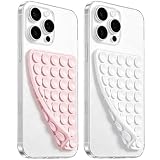
- 【PKYAA Double Sided Silicone Suction Phone Case Mount】PKYAA With Double Sided 40 Strong and Reliable individual suction cups, PKYAA provides a thicken and upgraded universal silicon suction mount for your phone.
- 【Friendly to Content Creators】If you are a content creator or an online influencer, you can create videos anywhere with this suction mount completely hands free with this silicone cell phone mount for cases.
- 【HANDS-FREE & Adhere to Mirrors】This Double Sided silicone suction phone case mount allows you to stick your phone to the mirror easily. No longer holding your phone in one hand to watch video tutorials while making up.
- 【Strong Grip on the Smooth Surface】You can easily hang your phone anywhere with a smooth surface. All you do is you clean off your phone and smooth surface. It is STURDY and it not only sticks to mirrors, it also sticks to windows, it sticks to refrigerators, tiles and other clean, flat surfaces.
- 【Press Down Firmly Every 30 Minutes】Use your palm or fingers to press the phone down firmly and check it's secure before letting go. Apply even pressure for a few seconds to allow the suction cup to adhere properly. To maintain the grip and prevent accidental falls, it's a good practice to periodically reapply pressure to the suction cup.
What the evidence can—and cannot—tell you
RFC 6888 is an IETF standards document published in April 2013 and provides foundational guidance about CGN behavior, mapping records, and privacy considerations. The NDSS study dates to 2021 and is specific to the networks it examined. Provider policies and network practices can change, so neither source establishes current terms or performance for a particular service.
No universal performance figure or named statistic follows from these sources. Claims about trust, block rates, user counts per IP, or being undetectable should not be treated as established facts without direct, current evidence for the service in question.
Quick Recap
Product prices and availability are accurate as of the date/time indicated and are subject to change. Any price and availability information displayed on Amazon at the time of purchase will apply.

