
iTechGuides is reader-supported. When you buy through links on our site, we may earn an affiliate commission. As an Amazon Associate I earn from qualifying purchases. Learn more
Offshore wind can power electrolysers at sea, turning electricity into hydrogen for storage and delivery. The technology is moving beyond proposals: the PosHYdon project announced first hydrogen production on an operational North Sea platform on 22 July 2026. But that milestone is not the same as a large commercial system being in service. AquaPrimus is still a demonstrator in development, while AquaVentus’s planned SEN-1 production area and AquaDuctus pipeline remain future infrastructure.
What is offshore hydrogen production?
Offshore hydrogen production uses electricity generated at sea—such as electricity from wind turbines—to run electrolysis offshore. An electrolyser uses electricity to split water into hydrogen and oxygen. The hydrogen then needs to be compressed and either stored or transported to where it will be used.
Putting the electrolyser offshore could connect hydrogen production directly to offshore wind generation. Another approach is to send wind-generated electricity to shore and produce hydrogen there. These are different infrastructure choices, not interchangeable descriptions of the same system: one places water treatment and hydrogen-production equipment offshore, while the other locates electrolysis on land.
How can offshore wind make hydrogen at sea?
Prepare water for electrolysis
In the PosHYdon process description, seawater is converted into demineralised water on the offshore platform before electrolysis. That means seawater is not simply fed untreated into the electrolyser; water treatment is part of the offshore system.
#1 Best Overall

- Build and experiment with a real, working 3-foot tall wind turbine to learn how wind is one of the most promising sources of clean, renewable energy available today.
- Single-piece blade construction for improved durability and better aerodynamics.
- Generate electricity to charge a battery and power a small model car.
- New weatherproof battery box can be left outside!
- Includes stakes to secure the turbine to the ground.
Use wind power to produce hydrogen
Electricity powers the electrolyser, which produces hydrogen. PosHYdon combines offshore wind, offshore gas infrastructure and hydrogen equipment at the Q13a-A platform in the Dutch North Sea. Its project description says it is examining practical integration and how offshore conditions, including salt, affect the electrolyser.
Compress, store and deliver the hydrogen
Making hydrogen is only one part of the chain. AquaPrimus’s planned test scope includes compression and storage as well as seawater treatment, electrolysis and hydrogen use. Delivery also requires infrastructure: AquaVentus describes AquaDuctus as an associated offshore hydrogen pipeline project. The project descriptions establish that these components matter, but do not provide enough comparable data to rank pipeline transport against offshore storage or other delivery choices.
Rank #2

- FIFTH-GENERATION WIND TURBINE KIT: Updated version of the best-selling STEM kit about wind power and energy, kids can make their own wind turbine to explore this renewable energy source.
- OPTIMIZED FOR INDOOR & OUTDOOR USE: Design includes a new blade hub and gear ratio to enhance performance in outdoor wind and with indoor fan setups.
- WHAT YOU LEARN: Dive into the technology behind one of the most promising sources of clean energy, how it has been used it the past, and how it is used today.
- INCLUDES ELECTRIC MODEL CAR: Use your turbine to generate and store electricity to power a model car in just two minutes—no batteries required!
- GUIDED JOURNEY THROUGH WIND POWER: The 32-page, full-color manual provides illustrated step-by-step assembly instructions and easy-to-understand explanations about the scientific concepts at work.
Is wind-to-hydrogen technology already working offshore?
There is a real production milestone, but the projects are at different stages. PosHYdon announced first green hydrogen production on an operational North Sea platform on 22 July 2026. Older schedules that forecast a 2024 start are superseded by that later project update. AquaPrimus remains a demonstrator in development, and SEN-1 is described as planned capacity—not installed or operating capacity.
| Project | What the publisher says | How to interpret its status |
|---|---|---|
| PosHYdon | The project announced first green hydrogen production on 22 July 2026 at an operational North Sea platform. | A first-production announcement; it does not establish large-scale commercial output. |
| AquaPrimus | AquaVentus describes a 1–5 MW at-sea electrolyser demonstrator in development. The page is undated and was accessed in 2026. | A planned demonstrator intended to test components and their interaction under offshore conditions, not an operating production facility. |
| SEN-1 | AquaVentus describes 1,000 MW of planned offshore electrolysis capacity in its undated FAQ, accessed in 2026. | A plan for a large production area, not current installed or operating capacity. |
| AquaDuctus | AquaVentus describes it as the offshore hydrogen pipeline project associated with SEN-1. | Planned delivery infrastructure; the cited project description does not establish an operating pipeline. |
| OYSTER | The European Commission reports that the project terminated on 5 May 2025. | A completed project, not a current operating pilot. Its outputs covered offshore-integrated electrolyser arrangements, pilot power electronics, deployment sites and techno-economic assessment. |
What design choices shape an offshore hydrogen system?
There is no single offshore configuration. The project examples show several choices developers need to make, but the available project descriptions do not provide a consistent basis for declaring one approach cheapest or most efficient.
Rank #3
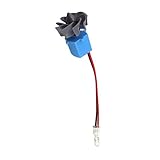
- Professional demonstration model designed for teaching the principles of DC wind power generation in physics education.
- This educational model comes with complete assembly parts for structured hands‑on construction and clear principle demonstration.
- Engineered with an optimized design for efficient wind energy utilization, enabling stable power generation from various wind directions.
- Compact in size, quiet in operation, and provides excellent demonstration effects for physical science teaching and laboratory experiments.
- Suitable for physics classrooms, science laboratories, and educational displays, supporting in‑depth learning of energy conversion and power generation technology.
Electrolyse at sea or onshore
Offshore electrolysis can avoid sending all generated electricity to shore before making hydrogen, but it puts water treatment, electrolysers and related equipment in a marine setting. Sending electricity ashore for onshore electrolysis places the electrolyser on land instead. The cited sources do not establish comparable costs, efficiencies or reliability for these alternatives.
Build new facilities or reuse a platform
PosHYdon uses an operational offshore platform, offering a project example of integrating hydrogen equipment with existing offshore infrastructure. That is distinct from designing a new offshore structure for hydrogen production. The sources describe the integration example but do not establish that reuse is suitable or more economical for every site.
Rank #4
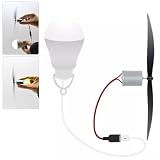
- Explore Renewable Energy Concepts - This hands-on STEM kit allows children to build a functional wind turbine model, demonstrating how wind power is converted into electricity to for light the included LED bulb.
- Foster Critical Thinking & Creativity - Encourages problem-solving skills and scientific inquiry through an engaging assembly process that makes complex energy concepts tangible and to understand.
- Complete All-in-One Learning Set - Package includes a DC motor generator, high-quality wind propeller, 1-meter USB cable, and 5W LED bulb - everything needed to start experimenting immediately.
- Perfect for Home & Classroom Use - An excellent resource for school science projects, STEM curriculum supplements, and homeschool education, designed to meet for educational standards for young scientists.
- Safe & Ready to Use - Constructed from metal and ABS components with a simple, secure assembly; the turbine easily connects to any USB port or power bank for instant clean energy experiments.
Connect equipment directly or use a hub
A direct arrangement links wind generation to an electrolyser; a hub-based arrangement can bring together production or transport infrastructure. SEN-1 and AquaDuctus illustrate planned production-area and pipeline development, but the cited material does not provide enough detail to compare hub designs or quantify their performance.
Do these 3 things before closing this tab:
1Scan for outdated or missing drivers - takes under a minute2Clear out junk files and repair common Windows errors3Fix the driver behind crashes, sound loss and screen glitchesChoose how to handle hydrogen after production
Compression, storage and transport all form part of the system. AquaPrimus includes compression and storage in its planned test scope, while AquaDuctus represents pipeline planning. The sources do not establish a preferred mix of offshore storage, pipelines or other transport options.
Best Value

- [Compact & Flexible Installation] This Wind Turbine boasts a small footprint, making it ideal for limited spaces such as rooftops, balconies, and RVs. Its versatile design allows for easy installation on street lights or boats. Enhance your energy generation by connecting multiple units in parallel, optimizing your power output efficiently. Perfect for renewable energy enthusiasts!
- Experience a Quiet & Safe environment with our product. The Low Rotational Speed minimizes mechanical noise, making it ideal for public areas. Designed with safety in mind, it protects wildlife, including birds, by eliminating high-speed rotating blades. Enhance your space with this efficient solution that prioritizes tranquility and safety.
- [Enhanced Spiral Blade Design] This product boasts a unique 3D Archimedes spiral blade shape for improved aerodynamics, maximizing efficiency while reducing turbulence and noise. Ideal for those seeking advanced performance in their appliances. Experience the perfect blend of innovation and functionality in your everyday tasks.
- Experience exceptional performance with our Wind Turbine, designed for optimal energy generation even at low wind speeds starting from 1.5 m/s. Ideal for urban settings, it effectively harnesses gentle breezes, providing a reliable renewable energy solution. Its compact design ensures easy installation, making it perfect for both residential and commercial use.
- [Widely Application] Perfect for Off-Grid Power Solutions, Battery Charging (12V Systems), Urban Renewable Energy Projects, Solar Kits, Monitoring Equipment, Street Lighting, Balconies, Gardens, Boats, and RVs. Enhance your energy efficiency with this versatile product designed to meet diverse energy needs.
What can the project figures—and the gaps—tell us?
The stated capacities describe projects at different stages and should not be read as equivalent measures of deployed hydrogen production:
- 1–5 MW: AquaVentus’s stated capacity for the AquaPrimus demonstrator in development; its undated project page was accessed in 2026.
- 1,000 MW: AquaVentus’s planned SEN-1 electrolysis capacity in its undated FAQ, accessed in 2026. It is a plan, not operating capacity.
- 94.6 MW: Equinor’s stated system capacity for Hywind Tampen on its undated project page, accessed in 2026. Hywind Tampen is a floating wind farm that powers offshore oil and gas fields; it is not a hydrogen project.
Those numbers do not form a direct performance comparison: two concern hydrogen project capacities at different development stages, while Hywind Tampen is a wind-power system serving a different purpose. The cited sources do not supply a consistent, comparable set of offshore-versus-onshore hydrogen costs, conversion efficiencies, reliability data or lifecycle impacts. A numerical ranking on those measures would therefore go beyond what these project descriptions establish.
Quick Recap
Product prices and availability are accurate as of the date/time indicated and are subject to change. Any price and availability information displayed on Amazon at the time of purchase will apply.
The Tool Desk
Outbyte Driver Updater FREEFix the driver behind crashes, sound loss and screen glitchesFind Drivers →Outbyte PC Repair FREEClear out junk files and repair common Windows errorsFree Scan →
