
Make routing an explicit decision layer: define what a successful route means, compare deterministic and adaptive policies on the same representative tasks, and log each decision through the final outcome. Use deterministic rules when reproducibility and auditability matter; use adaptive selection when context should change the route. If confidence, timeouts, or tool failures affect execution, define and test an observable fallback or abstention path rather than letting an agent improvise one.
What is non-deterministic routing in a multi-tool agent?
Routing is the choice an agent makes about which tool, agent, model, or communication protocol should handle a request or the next step of a task. It is non-deterministic when that choice varies as prompts, tool descriptions, context, or runtime conditions change. The variation may come from stochastic model decisions, but it can also be an intentional response to changing state.
Those cases are not the same. A stochastic router may choose different eligible tools for effectively similar inputs. An adaptive router may choose differently because a tool is slow, a task has progressed, or the current context has changed. A deterministic orchestration rule maps defined inputs to a defined route, making the decision easier to reproduce. Determinism can improve auditability, but it does not by itself make a choice more accurate or more adaptable.
Routing also happens at different layers. A tool router chooses a capability such as search or code execution; an agent router delegates work to an agent; a model router selects a language model; and a protocol router selects how agents communicate. They share the problem of choosing a path, but evidence for one layer should not be treated as proof about another. For example, RACER studies risk-aware selection among language models, not tool selection.
Do these 3 things before closing this tab:
1Repair Windows errors before they cause bigger problems2Fix the driver behind crashes, sound loss and screen glitches3Clear out junk files and repair common Windows errors#1 Best Overall

- Valued Carpenter Pencil Set: You will get 2 pcs solid carpenter pencils with 26 piece 2.8 mm refills, 1 replaceable sharpener, 1 plastic storage box.The complete carpenter pencils combination allows you to finish your work faster and more easily
- Deep Hole Marker Pencil: The deep-hole construction pencils adopts 45mm elongated tip design, which is more convenient to mark in the small hole or in other tight areas that other carpenter markers cannot reach
- Carpenter Pencils with Sharpener: The sharpener is screwed into the top of the work pencil, which won't get lost either. Built-in pencil sharpener that keep the lead with pointed and smooth to Improves line of sight in fine work
- Stronger Solid Lead: This work pencil is matched with a 2.8 mm thick lead , which is much thicker and stronger during the drawing process of construction work, it will not break or damage easily
- Marks on Various Surfaces: 3 colors solid construction pencil can marks on various surfaces,such as metal, plastic, wood, paper etc. Ideals for woodworkers, contractors, craftsmen, builders, merchants and masons
Why can an agent choose different tools for similar requests?
A route can change when the decision inputs or operating conditions change. Common sources to inspect include:
- Prompt and context variation: reformulated requests, accumulated conversation history, or progress on a long task can alter which capability appears relevant.
- Tool metadata: names, descriptions, capability claims, and the order in which tools appear can influence model-led selection. In its evaluated setting, BiasBusters reports that semantic alignment between a query and tool metadata strongly influences choices; small description changes can shift selections, and repeated exposure to one endpoint can amplify provider bias.
- Runtime state: an unavailable or slow tool may make another route preferable, provided the routing policy can observe that condition and has a rule for responding.
- Policy design: random selection is variable by design; model-led and learning-based policies can depend on changing inputs or learned preferences; explicit rules can instead constrain when a route is eligible.
Do not assume every different route is a defect. If the request, eligible tools, or runtime state changed, an adaptive route may be appropriate. The engineering problem is to distinguish useful adaptation from brittle selection, unexplained skew, or avoidable route changes.
Rank #2

- Ergonomically Designed: Work in tight areas with a compact design that gets into tough spots
- Compact and Lightweight: Both tools are designed to fit into difficult to reach spaces. The 1/4" impact driver has a length of 5.55 in. and weighs just 2.8 lbs, while the 1/2" drill/driver measures only 7.5 in. and weighs 3.6 lbs
- Both the DEWALT impact driver and electric drill driver feature integrated LED work lights with a convenient 20-second delay, ensuring enhanced visibility in dimly lit or challenging work areas
- One-Handed Loading - Keep one hand free with a 1/4 in. hex chuck that accepts 1 in. bit tips
- Power drill cordless with 1/2" single sleeve ratcheting chuck provides tight bit gripping strength, making bit changes faster and more secure
Which routing policy should you use?
No policy family is best for every agent. Compare candidates against the same tasks and operating conditions, using outcomes as well as route consistency. ORCH discusses several policy families and their trade-offs; its comparison is a framework, not a universal ranking.
| Policy family | What it does | Useful strengths | Costs and risks to evaluate |
|---|---|---|---|
| Random routing | Selects among eligible routes without a stable task-specific preference. | Simple baseline for measuring whether a more deliberate policy helps. | Low reproducibility; route variation can make failures harder to diagnose. ORCH describes it as non-reproducible. ORCH |
| Rule-based or deterministic orchestration | Uses explicit conditions to choose or exclude routes. | Interpretable decisions and repeatability when inputs and rules are held fixed. | Rules require expert work and may adapt poorly to new tasks or tools; a repeatable wrong choice is still wrong. ORCH |
| Context-aware or performance-adaptive routing | Changes route based on request context, task progress, or observed runtime signals. | Can respond to changing needs rather than relying on one fixed route. ProtocolRouter, for example, selects protocols using scenario requirements and runtime signals. | Requires reliable signals and evaluation under changing conditions; switching, coordination, and operational complexity can offset gains. |
| Learning-based routing | Uses a learned policy to select a route. | Can represent selection patterns that are difficult to encode as hand-written rules. | May be opaque and costly to train, and must be tested against new tools and changing request distributions. ORCH |
| Risk-aware candidate set with abstention | Considers a calibrated set of candidate models and can abstain rather than force one model choice. | Provides a research example of accounting for misrouting risk instead of treating every decision as a confident single pick. RACER | RACER concerns model routing; its assumptions and results need local validation before use, and the approach does not directly establish tool-routing performance. |
A hybrid is often worth evaluating: deterministic rules can define eligibility and hard runtime constraints, while a model or adaptive policy chooses among eligible candidates. This separates what must be controlled from what may benefit from judgment. It is a design option, not a guarantee of better results.
Recommended Free Tools
Rank #3

- 【Great Compatibility】This Katerk 1/4 inch hex shank bit holder is specifically designed for 1/4 inch hex shank drill bits. It's compatible with most 1/4 fast hex handles, hex sockets, various electric screwdrivers, and handheld screwdrivers. The bit holder makes it a valuable addition for any handyman.
- 【Secure and Safe】Built with a secure backup nut design, each drill bit holder securely locks onto your bits, ensuring they stay firmly in place. Additionally, our bit holder incorporates a high-quality steel ball rolling design that holds up to several kilograms of weight, ensuring your various drill bits don't fall off.
- 【Easy One-Handed Operation】The bit holder for impact driver allows you to change bits single-handedly, simplifying your workflow. Its multi-color design further allows for quick identification of the drill bit you need.
- 【Compact and Convenient】Thanks to its compact size, this 1/4 inch bit holder is easy to carry around. The bit holder allows for easy attachment to various tools, making this a convenient addition to your construction accessories. The Katerk bit holder is cast from high-quality alloy material, promising a long product lifespan. Despite its rugged strength, the bit holder remains lightweight, making it portable.
- 【Cool Christmas Gift For Men Stocking Stuffers】 This screwdriver bit holder, driver bit holder, impact bit holder, can be given as a gift to your loved one, especially for anyone involved in construction or electrical work. It's a must-have for stocking stuffers for men and women, tools gifts for dad, tech gadgets for men, gifts for dad, gifts for him, gifts for husband, gifts for boyfriend, cool gadgets for men, and cool gifts for dad.
How should you evaluate whether routing is reliable?
Measure the end-to-end task, not just whether a router picked a plausible tool. Set up a representative evaluation set and compare the current model-led router with a deterministic baseline. Keep the task inputs and failure conditions consistent so that differences are attributable to the routing policy rather than a changed test.
Track the following together:
- Task success and progress: whether the final request was completed, and whether intermediate steps moved toward completion.
- Repeatability and auditability: whether similar inputs select the same route when they should, and whether a trace explains the choice.
- End-to-end latency and cost or overhead: include inference or token cost where available, plus communication overhead for multi-agent protocols.
- Route stability: count unnecessary switching and bouncing between candidates, while recognizing that a justified change in state can merit a new route.
- Failure behavior: test unavailable, slow, and failing tools, injected delays, and cases where no route is valid.
- Selection skew and metadata sensitivity: test equivalent tools with controlled description and ordering changes, then inspect whether choices shift without a task-relevant reason.
Benchmark results illustrate why these dimensions should be considered together, not copied as expected production gains. ProtocolBench evaluates success, end-to-end latency, communication overhead, and robustness under failures. In its Streaming Queue scenario, completion time varied by up to 36.5% across protocols and mean latency differed by 3.48 seconds; in its Fail-Storm Recovery scenario, ProtocolRouter reduced recovery time by up to 18.1% versus its best single-protocol baseline. These are results for the paper’s scenarios, not universal improvements for other agents.
Rank #4

- Long Nib and Deep Hole Marker: Our mechanical carpenter pencil with 45mm nib is designed for easy marking of deep holes or narrow areas. These construction pencils are the great choice for woodworking tools, construction tools, carpenter tools, contractor tools, wood carpentry tools and architect tools
- Extra Refills in 2 Colors for Versatile Marking: The construction mechanical pencil comes with 12 extra 2.8mm refills, including 6 red and 6 black refills. The black refill is suitable for light surfaces, while the red wax is perfect for dark surfaces. Our carpenter mechanical pencil makes sure that you'll have an ample supply for extended use
- Built-in Sharpener: Our construction pencil comes with a built-in sharpener to ensure the mechanical pencil tip is always sharp and ready for use. Never buy an extra pencil sharpener again. A great tool for any woodworker pencil, contractor pencils. The refill can easily be extended or retracted with a simple click of the pencils mechanical, allowing you to work more efficiently and accurately
- Portable Clip Design: Our deep hole construction pencil features a portable clip design, easy to carry and attach to your pocket or tool box, so that you can keep the carpenter pencils mechanical close at hand, making it a convenient tool to have on the go. Great gifts choice for carpenters
- Stronger Pencil Lead: The black refills are made of lead, sturdy and smooth. The red refills are made of wax, clear and light. These marking pencils are much thicker and stronger than normal pencils during the marking process of construction work, suitable for various surfaces, such as glasses, metal, boards, floors, walls, furniture, etc. The written marks can be easily wiped with a wet paper towel when needed
Dynamic tool selection is also a distinct evaluation setting. AutoTool studies selection throughout an agent’s reasoning trajectory rather than assuming a fixed tool inventory. The paper reports a 200,000-example dataset with selection rationales covering more than 1,000 tools and 100-plus tasks, and experiments using Qwen3-8B and Qwen2.5-VL-7B across ten benchmarks. In that experimental setup, it reports average gains of 6.4% in math and science reasoning, 4.5% in search-based question answering, 7.7% in code generation, and 6.9% in multimodal understanding. Those figures describe the paper’s setup, not a general forecast for adding dynamic routing.
Independent reader supportYour contribution helps us test, update, and keep practical guides available for everyone.How do you make confidence and fallback safe?
A confidence score should not control execution or fallback merely because it is available. First test whether the router’s confidence corresponds to observed correctness on data representative of deployment. A calibration procedure fit to one model and request distribution is not a permanent guarantee after tools, prompts, or traffic change.
Free tools Windows power users keep installed
One-click scans. No signup required.
Best Value
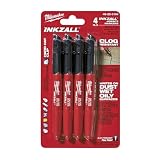
- Milwaukee Ink all Fine Point Marker, Black, 4 Per Pack
- 4 per pack Features Clog Resistant Marker Tip Writes through Dusty, Wet and Oily Surfaces Durable Marker Tip for Writing on Concrete, OSB and Rough Surfaces
- Clog resistant tip writes on dusty, wet and oily surfaces and is optimized for rough surfaces such as OSB, cinderblock and concrete
- Hard hat clip- attaches for easy access
- Quick dry time with reduced smearing and marking
The Scientific Reports routing-stability study describes post-hoc temperature scaling on held-out development data, followed by a confidence gate and timeout-triggered fallback. Its evaluation perturbs context to simulate reformulation and long-horizon correction, and simulates tool delays. It also models an objective that combines accuracy and progress while penalizing switching and bouncing. These methods support testing calibration and recovery locally; they do not establish a universal confidence threshold.
Define distinct behavior for distinct conditions. A timeout is not the same as a tool error, low confidence, or an absence of any valid route. Depending on the application, the response may be to retry within a limit, select an eligible alternative, abstain, or escalate. Whichever behavior is chosen, make it visible in the trace and measure whether it improves task completion without unacceptable delay or cost.
What is a practical implementation sequence?
- Specify the route space. List tools or agents, their capabilities and constraints, and what happens when each is slow, unavailable, or returns an error. Make descriptions as consistent and unambiguous as possible.
- Instrument the current router. Record input context, eligible candidates, selected route, confidence if provided, tool outcome, latency, fallback behavior, and final task result. Protect sensitive user data according to your system’s requirements.
- Build a representative baseline comparison. Evaluate the current model-led policy against a deterministic policy on the same tasks. Add adaptive or risk-aware options only when the use case benefits from state-sensitive routing or explicit risk handling.
- Exercise normal and adverse conditions. Include varied but equivalent request phrasings, context changes, description or ordering perturbations, tool delays, errors, and unavailable routes. Keep these controlled so route brittleness can be distinguished from task differences.
- Score more than accuracy. Compare task success and progress alongside latency, cost or communication overhead, route changes, and failure recovery. Choose trade-offs that match application requirements rather than optimizing one metric in isolation.
- Calibrate before gating. If confidence will determine execution, fallback, or abstention, assess it on held-out examples before setting a gate. Recheck calibration when the tool inventory or request distribution changes.
- Make recovery explicit and observable. Define what happens for low confidence, timeout, tool error, and no valid route. Verify through traces that the intended fallback, retry, alternative, or escalation actually occurred.
These steps are an engineering synthesis, not a universally validated recipe. The right balance depends on the cost of a wrong route, the need for reproducibility, the value of adapting to context, and the operational burden of monitoring and recovery.
Quick Recap
Product prices and availability are accurate as of the date/time indicated and are subject to change. Any price and availability information displayed on Amazon at the time of purchase will apply.

