
Hidden surface removal (HSR) is the process of deciding which parts of a 3D scene are visible from a chosen viewpoint, so surfaces blocked by nearer geometry do not appear in the rendered image. It is also commonly called visible surface determination (VSD). A z-buffer is one familiar way to solve the problem, but HSR names the visibility task—not one particular algorithm.
What hidden surface removal determines
Imagine viewing a 3D scene through a camera. Several surfaces may project onto the same image location, but only the surface closest to the viewer should normally contribute to that pixel. HSR works out which surface is in front along each viewing direction and which is occluded.
The related term visible surface determination describes the same problem from the opposite perspective: rather than removing hidden parts, it identifies the visible ones. In line rendering, the corresponding problem is often called hidden-line removal. The visibility decision may be made at image pixels, across geometric objects or regions, or by ordering and subdividing primitives. Cornell’s lecture notes and a computer graphics textbook chapter discuss these approaches.
How a z-buffer decides which surface is visible
Z-buffering, also called depth buffering, resolves visibility at image samples. The renderer stores a depth value for each pixel. When geometry produces a fragment at that pixel, the renderer compares its depth with the stored value. If the new fragment is nearer under the renderer’s depth convention, the renderer updates the pixel’s color and depth; if it is farther away, it leaves the visible sample unchanged.
The Tool Desk
Outbyte Driver Updater FREEFix the driver behind crashes, sound loss and screen glitchesFind Drivers →Outbyte PC Repair FREERepair Windows errors before they cause bigger problemsFix Now →#1 Best Overall

- Spacious Design: Measuring 21.1" wide and 14.1" deep, our lap desk comfortably fits most laptops up to 15.6". Extra room for accessories ensures convenience.
- Enhanced Functionality: Packed with handy features, including a 5x9" precision tracking mouse pad and a built-in phone slot for seamless work or video calls. Plus, enjoy ergonomic support with the integrated cushioned wrist rest.
- Cool Comfort: Enjoy a stable surface with our lap desk's dual bolster cushion, designed for comfort and airflow, keeping your lap cool during extended use.
- Durable Surface: Work with confidence on our lap desk's solid surface, featuring a sleek black carbon color, ensuring optimal air circulation to prevent your laptop from overheating.
- On-the-Go Convenience: With an integrated handle and lightweight design (2.8 lbs), our lap desk is portable for travel or moving around the house, offering flexibility in any space.
- Start with a depth buffer. Initialize each pixel’s stored depth to a value representing the far end of the view.
- Rasterize scene geometry. Project primitives into the image; they produce fragments at covered pixels.
- Compare depth locally. Test each fragment against the depth already stored at its pixel.
- Keep the nearer sample. Update both color and depth when the fragment passes the depth test; otherwise retain the existing sample.
Because each comparison is local to a pixel, z-buffering does not require the renderer to submit every primitive in a globally correct back-to-front order. Apple’s Metal documentation on calculating primitive visibility using depth testing describes adding a depth texture—also called a depth buffer—to a render pass. It notes that depth testing may take place before fragment shading, which can avoid shading hidden fragments in some pipelines; that benefit is not guaranteed for every renderer or scene.
How HSR methods differ
HSR is a family of visibility techniques. Methods differ in where they make the visibility decision, whether they depend on a draw order, and how they handle geometry that overlaps or intersects.
Rank #2

- 5-in-1 Connectivity: Equipped with a 4K HDMI port, a 5 Gbps USB-C data port, two 5 Gbps USB-A ports, and a USB C 100W PD-IN port. Note: The USB C 100W PD-IN port supports only charging and does not support data transfer devices such as headphones or speakers.
- Powerful Pass-Through Charging: Supports up to 85W pass-through charging so you can power up your laptop while you use the hub. Note: Pass-through charging requires a charger (not included). Note: To achieve full power for iPad, we recommend using a 45W wall charger.
- Transfer Files in Seconds: Move files to and from your laptop at speeds of up to 5 Gbps via the USB-C and USB-A data ports. Note: The USB C 5Gbps Data port does not support video output.
- HD Display: Connect to the HDMI port to stream or mirror content to an external monitor in resolutions of up to 4K@30Hz. Note: The USB-C ports do not support video output.
- What You Get: Anker 332 USB-C Hub (5-in-1), welcome guide, our worry-free 18-month warranty, and friendly customer service.
| Method or family | Where visibility is resolved | Ordering or scene considerations |
|---|---|---|
| Z-buffering | Per pixel or image sample, using stored depth. | Does not need a global primitive submission order; it uses a depth comparison at each covered sample. Apple; WebGL Fundamentals |
| Painter’s algorithm (depth sorting) | By drawing primitives in an order, commonly from back to front, so nearer geometry drawn later covers farther geometry. | A simple global order can fail with cyclic overlaps or intersecting surfaces; subdivision or another treatment may be needed. Apple; WebGL Fundamentals |
| Object-space and other geometric approaches | By comparing objects, parts of objects, or geometric regions rather than relying only on final pixel-by-pixel comparisons. | Specific approaches make different computation and data-structure choices; there is no universal winner established by the cited materials. Textbook chapter |
| Specialized approaches | Depending on the technique, through spatial hierarchies, scene structure, or ray-based visibility queries. | Examples discussed in the textbook chapter include ray casting, hierarchical z-buffering, BSP trees, portals, and potentially visible sets. Textbook chapter |
A z-buffer uses storage for depth values at image samples. Other methods trade that storage and per-sample work for different ordering, geometric computation, or scene data structures. Correctly identifying what is visible is separate from doing so efficiently; the best fit depends on the rendering goal and scene.
Why painter ordering is not always enough
The painter’s algorithm works intuitively when objects can be drawn in a valid back-to-front order: distant surfaces are drawn first and nearer ones cover them. But some arrangements cannot be represented by one simple global ordering. For example, surfaces may intersect, or three regions may overlap cyclically so that each appears in front of another in a different part of the image.
Do these 3 things before closing this tab:
1Fix the driver behind crashes, sound loss and screen glitches2Clear out junk files and repair common Windows errors3Scan for outdated or missing drivers - takes under a minuteRank #3
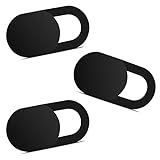
- Note: Not suitable for MacBooks released after 2023 or devices with a protruding front camera; Not applicable to full-screen or notch-style tempered glass screen protectors; Do not use on the rear camera of the phone.
- 💻 Why Do You Need a Webcam Cover Slide? — Safeguard your privacy by covering your webcam with our reliable webcam cover when not in use. Don't let anyone secretly watch you. Stay protected!
- ✅ Thin & Stylish — Enhance your laptop's functionality and aesthetics with our 0.027" ultra-thin webcam covers. Seamlessly close your laptop while adding a touch of sophistication.
- ✅ Fits Most Devices — Compatible with laptops, phones, tablets, desktops! Keep your privacy intact on Ap/ple, Mac/Book, iPh/one, iP/ad, H/P, L/novo, De/ll, Ac/er, As/us, Sa/msung devices.
- ✅ 365 Days Protection — Our upgraded 3.0 adhesive ensures a strong hold that won't damage your equipment. Experience reliable, long-term privacy protection day in and day out.
In those cases, sorting whole primitives may produce incorrect visibility. A renderer may need to split geometry into smaller pieces or use depth testing. As Apple puts it in its Metal guide: “To determine visibility independently from the submission order, you need to add hidden-surface removal.”
Independent reader supportYour contribution helps us test, update, and keep practical guides available for everyone.What the term does—and does not—tell you
- It tells you the rendering problem: determine which surfaces are visible from a viewpoint and suppress occluded portions.
- It does not specify one algorithm: z-buffering, depth sorting, ray casting, and hierarchical or spatial methods are among the approaches discussed in teaching material.
- It does not imply a universal performance result: resource use and computation vary by method, scene, and rendering setup. No general prevalence, cost, or performance statistic is established by the cited sources.
A theoretical result should not be mistaken for a general benchmark: a 1992 paper by Micha Sharir and Mark H. Overmars gives an O(n √k log n) running-time bound for a particular algorithm on n triangles with a known partial depth order and an output visibility map of combinatorial complexity k. Those assumptions define the result; it does not describe HSR performance across arbitrary scenes or hardware. ACM paper abstract.
Quick Recap
Best Value

- Spacious Design: Measuring 21.1" wide and 12" deep, our lap desk comfortably fits most laptops up to 15.6". Extra room for accessories ensures convenience.
- Enhanced Functionality: Packed with handy features, including a 5x9" precision tracking mouse pad and a built-in phone slot for seamless work or video calls. Plus, enjoy laptop support with the integrated device ledge.
- Cool Comfort: Enjoy a stable surface with our lap desk's dual bolster cushion, designed for comfort and airflow, keeping your lap cool during extended use.
- Durable Surface: Work with confidence on our lap desk's solid surface, featuring a blush pink color, ensuring optimal air circulation to prevent your laptop from overheating.
- On-the-Go Convenience: With an integrated handle and lightweight design (2.14 lbs), our lap desk is portable for travel or moving around the house, offering flexibility in any space.
Rank #4

- Anti-Slip Surface - Transform your laptop into a mobile workstation with the AboveTEK portable laptop lap desk. The anti-slip surface provides a strong grip for laptops up to 15.6 inches(Diagonal), while the double rubber strip on the bottom ensures a stable display or typing experience on your lap, couch, or bed.
- Retractable Mouse Pad - Retractable laptop mouse pad extends on both directions for the left/right handed with elevation along the edges for stopping mouse from falling off. The size of laptop tray is 14" X 9.7" and the size of mouse pad is 7.4" X 6.1".
- Effective Heat Shield - The effective heat shield made of sturdy and thick material protects your laptop from overheating. Prioritizes your comfort and safety, an ideal lap pad or board for working anywhere.
- EASY to Carry and Store - With an ergonomic and simplistic design, the lap desk is portable to store in a backpack. Only 15" in size, 2.2 lb of weight and with slim 0.6 inch thickness, it is ready to be easily carried around.
- Widely Applicable - The smooth platform accommodates laptops and tablets up to 15.6 inches(Diagonal), making it a versatile accessory and one of the best gifts for mom, dad, students and professionals. Perfect for use as a laptop bed tray or tablet holder anywhere at home, library, or park.
Product prices and availability are accurate as of the date/time indicated and are subject to change. Any price and availability information displayed on Amazon at the time of purchase will apply.

