
The Tool Desk
Outbyte PC Repair FREEClear out junk files and repair common Windows errorsFree Scan →Outbyte Driver Updater FREEFix the driver behind crashes, sound loss and screen glitchesFind Drivers →Virtual prototypes let hardware and software teams begin Android-related development, integration, and testing before target silicon or boards are ready. The key is choosing a model that represents the part of the system the work depends on: a processor, an SoC with peripherals, or—in automotive development—a larger vehicle architecture. Running software on a virtual platform can establish functional behavior and support repeatable tests, but it does not by itself prove real-hardware performance or replace validation on the final device.
What a virtual prototype represents
In hardware–software co-design, a virtual prototype is a software model of some or all of a hardware system. Developers can use it to start software work while hardware design continues, bringing integration problems forward rather than waiting for a physical target. Arm’s overview of virtual prototyping places it alongside hardware emulation, FPGA prototypes, and hybrid approaches; the best fit depends on the system and evidence a team needs, not on one method being universally superior.
The term covers different levels of representation. A model may simulate a processor’s instruction behavior, provide a reference subsystem, include an SoC’s peripherals, represent a development board, or connect an automotive software platform to a simulated vehicle environment. Those differences determine what software can run and which questions a test can answer.
Which kind of virtual platform fits Android work?
| Platform type | What it represents | Android-related use described by the source | Important qualification |
|---|---|---|---|
| Arm Virtual Hardware | Arm describes Cortex-M and Corstone Fixed Virtual Platforms (FVPs), as well as selected cloud models of third-party development kits. | Useful for the platform classes and software workflows supported by those models; it should not be treated as a general Android phone emulator. | Arm says its FVPs simulate instruction and exception behavior. Some third-party board models include peripherals and execute the same binaries as their physical counterparts, but are not performance accurate. See Arm’s current Arm Virtual Hardware product overview. |
| Application-processor or SoC virtualizer kit | A processor model extended with modeled peripherals and custom SoC elements. | An Arm Community technical example from April 8, 2015 describes early firmware, UEFI, Linux, Android bring-up, and peripheral-driver integration using Synopsys Virtualizer Development Kits based on Arm Fast Models and extensible with SystemC TLM-2.0 models. | This is a historical example, not confirmation of present availability, support, or a current product recommendation. Its capabilities depend on the model and components configured. |
| Automotive digital twin | A broader virtual system that can include Arm-based platforms, vehicle architecture, signals, virtual ECUs, networks, services, and environmental scenarios. | An Arm/Google article published in 2026 describes Android Automotive OS, Linux, middleware, and platform software running on virtual representations of future hardware, connected to a virtual vehicle harness and cloud workflows. | This represents system context beyond a processor model. The article describes an announced workflow and capabilities; it is not an independent benchmark or proof of commercial availability for every component. |
How virtual prototypes support the development sequence
A virtual platform is most useful when its modeled boundaries are explicit. The following sequence is a practical way to organize work; it is not a universal vendor-prescribed process, and not every model includes every device or interface.
PC Slower Than It Used to Be?
A free scan shows the junk files, broken settings and background clutter dragging Windows down - then fixes them in one click.Free scan · Windows 10 & 11Outdated Drivers Are Slowing You Down
One free scan finds every outdated or missing driver and matches the right update for your exact hardware.Free scan · exact hardware match#1 Best Overall

- 【Strong Adsorption】The inspiration of the silicone phone suction case comes from the adhesive force of the octopus. Each suction cup phone mount is 3.15 inches long and 2.17 inches wide, with 24 independent suction cups providing a stronger and more stable suction force, so you don't have to worry about your phone falling during use.
- 【Back of Phone Suction Grip】Remove the adhesive film on the phone suction cup and stick it on the phone case. You can then fix the phone on any smooth surface, which is very convenient. (The phone suction cup cannot be removed and reused after being attached to the phone case. It is recommended to attach it to a regular phone case, not a valuable one.)
- 【Widely Used】Our non-slip silicone phone sticky grip mount attaches to almost any flat phone case and make it compatible with common mobile phones such as iPhone and Android.You can shoot, watch videos or video calls in the kitchen, gym, dance studio, bathroom and other places.
- 【Capture the Wonderful Picture】Whether you are a TikTok creator or just like to share videos and photos, this phone suction cup can help you hands-free capture wonderful videos and photos for sharing with friends.
- 【Note】You can fix the phone suction cup on a smooth surface such as a mirror or glass. If necessary, wipe the suction cup with a damp cloth to obtain stronger suction. Before releasing your hand, make sure the phone is firmly fixed. (Not applicable to rough walls, wooden surfaces, and other uneven surfaces)
- Match the model to the target. Identify the intended instruction set and decide whether the work needs a processor, subsystem, SoC, board, or vehicle-level representation. Check which devices and interfaces are actually modeled.
- Bring up early software. Start with boot firmware and the operating system components supported by the chosen platform. The historical Virtualizer example describes firmware, UEFI, Linux, and Android-related bring-up; the automotive workflow described by Arm and Google includes Android Automotive OS and platform software.
- Add the integration context the test needs. Include modeled peripherals, buses, middleware, services, or vehicle signals where applicable. A CPU model alone cannot answer a question that depends on an absent peripheral or system service.
- Automate repeatable checks. Use the virtual environment to run reproducible functional and integration tests. Arm and Google describe cloud development, virtual test suites, playback, and simulation for automotive scenarios; those are reported workflow capabilities, not independently measured performance results.
- Validate on physical hardware when required. Compare against the target hardware for behavior that depends on real timing, performance, electrical characteristics, or components not represented in the model. A passing virtual test establishes behavior only within the model’s fidelity and scope.
What the automotive Android workflow adds
Android Automotive development can require more than a model of the application processor. Vehicle behavior depends on interactions among Android Automotive OS, middleware and services, vehicle properties exposed through the Vehicle HAL (VHAL), networked components, and changing operating conditions. A digital twin can bring those elements into one integration context so teams can test software against virtual vehicle signals and architecture before the full physical system exists.
Cloud-hosted Android and Arm platforms
In its 2026 article, Arm and Google contributors describe cloud instances powered by Google Axion processors running Android Virtual Devices (Cuttlefish) and virtual test suites. The described workflow also uses Arm-based virtual platforms around Arm Compute Subsystems. These pieces serve different roles: Cuttlefish provides an Android Virtual Device environment, while the Arm platform represents the target hardware software stack being developed for.
Rank #2

- SUPERIOR COMFORT — Unlike traditional circular ear buds, the design of EarPods is defined by the geometry of the ear. Which makes them more comfortable for more people than any other ear bud–style headphones.
- HIGH-QUALITY AUDIO — The speakers inside EarPods have been engineered to maximize sound output and minimize sound loss, which means you get high-quality audio.
- BUILT-IN REMOTE — EarPods with USB-C plug also include a built-in remote that lets you adjust the volume, control the playback of music and video, and answer or end calls with a pinch of the cord.
- COMPATIBILITY — Works with all devices that have a USB-C port.
- INTEGRATED MICROPHONE — A built-in microphone precisely captures your voice while you’re on the phone, taking a FaceTime call, or summoning Siri — so you’re always heard loud and clear.
Virtual vehicle harness and scenarios
The same article describes a virtual harness representing vehicle electrical architecture, identified as RemotiveLabs’ RemotiveTopology. Android Automotive software can interact with VHAL properties, middleware, services, and virtual vehicle networks in that context. Playback and environmental simulation can supply repeatable journeys and operating conditions, making it possible to exercise integration scenarios without relying on an identical physical drive for each test.
Keep announced capabilities distinct from validation evidence
The Arm/Google description explains an approach to cloud-based development and system integration; it does not publish comparative benchmarks or establish that every named service or configuration is generally available. Teams should verify the actual platform configuration, model coverage, access, and support for their intended project before treating an announced workflow as an available production environment.
Free tools Windows power users keep installed
One-click scans. No signup required.
Rank #3

- Secure Hold: Our PopSockets adhesive phone grip gives your cell phone a secure, comfortable hold in hand to help prevent drops while texting, taking photos, or scrolling on the go. Designed to stick firmly to most phone cases and devices.
- Hands-Free Made Easy: Easily turn your PopSocket into a phone stand to prop up your phone anywhere, perfect for watching videos, video calls, or following recipes. A must-have phone holder that keeps your device secure and ready for anything.
- Compatibility: Works with all phones, tablets, and Kindles. Sticks best to smooth, hard plastic cases and may not adhere to silicone or textured cases. Easily swap your PopTop to change up your style.
- Black PopSockets: Simple, refined, and endlessly versatile. A timeless essential for any phone.
- Travel Must-Have for People On the Go: A must-have travel accessory for flights, flying, airports, air travel, airplanes, planes, international trips, cruises, and long travel days. Key gadget for your airport haul, travel accessories and must-haves.
How to choose between virtual prototyping, emulation, FPGA, and hybrid methods
Arm’s public overview compares virtual prototyping with hardware emulation, FPGA prototypes, and hybrid approaches, but the overview does not provide quantitative decision thresholds. A useful selection therefore starts with the question being tested rather than a blanket claim about speed or fidelity.
- Target representation: Does the test require only instruction execution, or also peripherals, board-level devices, vehicle networks, and services?
- Software fidelity: Can the intended firmware, operating system, and binaries run on the model without special rewriting or recompilation?
- System context: Are the buses, signals, devices, and dependencies needed for the scenario present and connected?
- Performance accuracy: Is timing or throughput part of the acceptance criterion? Arm explicitly says its selected third-party development-kit models are not performance accurate; confirm the limitation for the particular model rather than assuming that applies to all virtual platforms.
- Debug and repeatability: The historical Virtualizer article describes processor- and peripheral-level debugging, while the automotive article describes repeatable cloud test scenarios. These are reported capabilities, not independent comparative benchmarks.
- Infrastructure and schedule: Consider setup effort, access to models, compute needs, and when physical hardware becomes available. The cited public overview identifies approaches to compare but does not give universal cost, setup-time, or capacity figures.
What virtual testing can—and cannot—establish
Virtual prototypes can let hardware and software development proceed in parallel, bring up supported software early, expose integration defects, and run repeatable checks across modeled scenarios. Their value rests on the accuracy and completeness of the representation for the specific test.
Rank #4

- [360 ° Flexible Rotation Design] Comes with a rotatable lanyard ring that supports 360 ° free rotation, effectively solving the problem of twisted and tangled lanyards
- [Wide compatibility] The ultra-thin 0.02-inch design does not block the charging port at all, and both wired and wireless charging can be used directly without removing the pad. Compatible with most smartphones such as iPhone, compatible with various wristbands, lanyards, crossbody straps, and keychains
- [Durable and Portable Material] Premium rust-resistant stainless steel material with good flexibility, which not only avoids scratching the phone case, but also has excellent anti rust and anti fading performance
- [Multi scenario Practical] Paired with a lanyard or wristband, hands-free use can be achieved. The phone is within reach and not easily dropped, ideal for daily commuting and outdoor activities. Suitable for full coverage phone cases, does not support half coverage phone cases
- [Quality Service] If you find any damage or other issues with the product upon receipt, please contact us immediately. We will handle it quickly
A model that runs the same binary as a physical board does not necessarily reproduce its performance. Likewise, a processor-level model cannot validate an unmodeled peripheral, and a vehicle simulation cannot establish all behavior of physical ECUs, networks, sensors, or environmental conditions unless those behaviors are represented with sufficient fidelity. Use virtual results as evidence about the modeled system, then use target hardware or other appropriate methods for claims the model cannot support.
Independent reader supportYour contribution helps us test, update, and keep practical guides available for everyone.Historical and ecosystem context
The SoC virtualizer example dates to April 8, 2015. Its discussion of Android Lollipop booting in under ten minutes on a particular multi-cluster platform is an author’s anecdote about one setup, not a general benchmark. It illustrates the purpose of early software bring-up, not an expected boot time for current hardware or tools.
Quick wins for a faster PC:
Clear out junk files and repair common Windows errorsFree Scan →Fix the driver behind crashes, sound loss and screen glitchesFind Drivers →Best Value
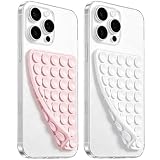
- 【PKYAA Double Sided Silicone Suction Phone Case Mount】PKYAA With Double Sided 40 Strong and Reliable individual suction cups, PKYAA provides a thicken and upgraded universal silicon suction mount for your phone.
- 【Friendly to Content Creators】If you are a content creator or an online influencer, you can create videos anywhere with this suction mount completely hands free with this silicone cell phone mount for cases.
- 【HANDS-FREE & Adhere to Mirrors】This Double Sided silicone suction phone case mount allows you to stick your phone to the mirror easily. No longer holding your phone in one hand to watch video tutorials while making up.
- 【Strong Grip on the Smooth Surface】You can easily hang your phone anywhere with a smooth surface. All you do is you clean off your phone and smooth surface. It is STURDY and it not only sticks to mirrors, it also sticks to windows, it sticks to refrigerators, tiles and other clean, flat surfaces.
- 【Press Down Firmly Every 30 Minutes】Use your palm or fingers to press the phone down firmly and check it's secure before letting go. Apply even pressure for a few seconds to allow the suction cup to adhere properly. To maintain the grip and prevent accidental falls, it's a good practice to periodically reapply pressure to the suction cup.
Separately, Arm and Panasonic Automotive Systems announced a collaboration on November 7, 2024, to use and extend VirtIO for hardware–software decoupling. Their announcement identifies Android Automotive and Automotive Grade Linux as current cockpit use cases and describes plans to broaden standardized interfaces. Those statements describe the organizations’ announced work and intentions, rather than proof that a future interface scope is already implemented across products.
Quick Recap
Product prices and availability are accurate as of the date/time indicated and are subject to change. Any price and availability information displayed on Amazon at the time of purchase will apply.

