
iTechGuides is reader-supported. When you buy through links on our site, we may earn an affiliate commission. As an Amazon Associate I earn from qualifying purchases. Learn more
This robotic mouse is a puppet on a concealed, motorized carriage—not a free-roaming robot. A stepper motor moves it through a small opening, servos animate its body and head, and a belt-linked mechanism opens the door before the puppet reaches it.
How does the robotic mouse work?
Will Donaldson’s animatronic mouse house coordinates three motions: horizontal travel through the opening, a left-right turn of the puppet’s body, and an up-down movement of its head. A NEMA 17 stepper motor turns an ACME lead screw, moving a carriage along a 200 mm linear guide. The mouse puppet is mounted on that carriage.
Two SG90 servos fit inside the puppet. One turns its body from side to side; the other moves its head up and down. An Arduino Uno coordinates the motions, while a TB6600 driver powers the stepper motor. Optical limit switches detect the ends of the carriage’s travel.
In other words, the mouse appears to emerge, look around, and retreat because several mechanisms work together behind the scene—not because the puppet walks on its own. Tom Nardi’s Hackaday report describes the project, and Donaldson’s project write-up documents its design and components.
#1 Best Overall
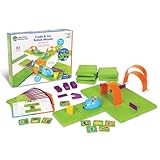
- SCREEN-FREE CODING: Kids practice sequencing, problem-solving, and early robot coding with this hands-on coding robotics kit that teaches programming basics through simple buttons and matching coding cards
- BUILT FOR YOUNG CODERS AGES 4+: Designed with early learners in mind, this coding toy supports coding for kids ages 4+ and helps emerging programmers build confidence through playful trial-and-error
- FOR CLASSROOM STEM CENTERS: Teachers can set up repeatable coding activities using the maze grids, walls, tunnels, and activity cards for classroom rotations, STEM labs, and small-group work
- INCLUDES: Comes with Colby the robot mouse, 16 maze grids (build a 20" x 20" board), 22 maze walls, 3 tunnels, 30 double-sided coding cards, 10 double-sided activity cards, a cheese wedge, and an Activity Guide; requires 3 AAA batteries (not included)
- CRITICAL THINKING & EARLY PROGRAMMING: Children strengthen sequencing, logic, and directional understanding as they program the mouse to navigate mazes-an easy-to-use kids robot toy and a strong introduction to robotics coding
How does it open the door without pushing with its nose?
Donaldson first considered a spring-loaded door that the mouse could push with its snout. He rejected that approach because contact could deform the puppet’s nose and the door would obscure much of the mouse.
The finished design links carriage movement to a hinged door using a slider-crank arrangement and a GT2 timing belt. The door begins opening before the puppet arrives, so the mouse can pass through without pushing on the door with its face. Donaldson describes the timing belt’s purpose as opening the door “just before the mouse’s snout makes contact,” avoiding deformation of the puppet’s face.
Rank #2

- Hands-On Physics Project, Mouse Trap Car Kit: Students build mousetrap-powered cars and race them to test how stored energy converts to motion. Designed for classrooms, after-school programs, middle school physics, and STEM clubs.
- Complete Supplies for 2 Builds: Each kit includes everything needed to build 2 functional cars, making it ideal for group learning, classroom competitions, or science fair prep. All materials are organized and ready to distribute, with no additional purchases required.
- Physics Concepts in Practice: Students observe kinetic energy and friction as they build and test their cars. Supports structured engineering design challenges and independent student experimentation.
- Clear Instructions for Independent Work: Step-by-step guide allows students to build and test without constant teacher assistance. Reduces supervision load for instructors managing large groups.
- Durable Components for Classroom Use: Key parts are built to withstand repeated assembly and testing. Consistent build quality across all kits ensures reliable results for every student group.
What keeps the mechanism hidden?
The mouse and carriage sit behind an opening, with white fabric curtains concealing the machinery. A small 3D-printed lantern with a yellow LED adds a scene-setting detail. The disguise is part of the effect: the audience sees the puppet and its movements rather than the guide, carriage, and drive components.
PC Slower Than It Used to Be?
A free scan shows the junk files, broken settings and background clutter dragging Windows down - then fixes them in one click.Free scan · Windows 10 & 11Outdated Drivers Are Slowing You Down
One free scan finds every outdated or missing driver and matches the right update for your exact hardware.Free scan · exact hardware matchWhat would it take to recreate the build?
Donaldson’s parts list includes a finger puppet mouse, Arduino Uno, 200 mm guide-rail set, stepper motor and TB6600 driver, SG90 servo, 12 V power supply, optical limit switch, 5 mm flange bearing and hub, 5 mm rod, GT2 timing belt and pulley, fasteners, heat-set inserts, acrylic, scrap wood, PLA, wire, and a 7805 voltage regulator. The listed parts describe this build; they are not a tested kit or a guarantee that substitutes will fit or work together.
Rank #3
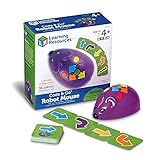
- SCREEN-FREE CODING FUNDAMENTALS: Kids practice sequencing, problem-solving, and early programming by using simple button commands to code the robot mouse-no apps or screens needed
- HANDS-ON CODING CHALLENGES: Use the 30 double-sided coding cards to plan step-by-step paths, then test, debug, and try again as kids build confidence through trial-and-error play
- DESIGNED FOR KIDS AGES 4+: Built for early learners, this coding toy supports STEM learning as kids develop logic, directional skills, and problem-solving through interactive play
- INCLUDES: Comes with Jack the robot mouse, 30 double-sided coding cards, and an Activity Guide; the mouse lights up, makes sounds, has 2 speeds, and requires 3 AAA batteries (not included)
- ADD-ON CODING MOUSE FOR HOME OR CLASSROOM: Use the robot mouse on its own to code routes using household obstacles, or add it to the Code & Go Robot Mouse Activity Set (LER2831, sold separately) for expanded play options
Fabrication and alignment matter as much as the electronics. Donaldson says the parallel guide rails must be aligned to prevent the carriage from binding and describes using a laser-cut acrylic template. He also identifies the plywood base plate as a weakness because the stepper motor could “wiggle” under drive.
His project page includes some affiliate links. The available documentation does not establish that the original bespoke installation is sold as a kit, nor does it confirm that every CAD file or source file is publicly available. Donaldson said he was not publishing all CAD models immediately, and Hackaday reported that the CAD files and source code were private at the time of its January 2022 article. The available sources do not establish whether that changed later.
Rank #4

- BUILD, CODE, PLAY & LEARN: Construct a robotic reptile pal that responds to your gestures, changes colors, and automatically fires and retracts its tongue!
- INNOVATIVE ENGINEERING: The expertly designed 15-inch-long model includes articulated eyes, torso, and leg joints to simulate realistic movements.
- FULLY EQUIPPED FOR UNPLUGGED CODING LESSONS: The robot utilizes a color sensor, infrared sensor, and RGB LEDs that allow kids to use physical colored action cards to program the robot to move and react in different ways; no screens, devices, or software required!
- THREE UNIQUE PLAY MODES: In Coding Mode, use the action cards to program your pet to carry out a series of movements; in Wild Mode, your chameleon will camouflage and change its color to match its surroundings; in Pet Mode, this one-of-a-kind robotic reptile reacts to your touch!
- AUTHENTIC LEARNING WITH COMPREHENSIVE GUIDE: The 48-page manual guides kids through assembly (ages 8+ with help from an adult; 12+ for independent play), encourages exploration of robotic components, and teaches about how nature can inspire, improve, and solve engineering design problems.
What does the reported 18,000-cycle figure mean?
Donaldson estimates that the installation completed about 18,000 cycles after running for several hours a day for a month without failure. That is the creator’s estimate in his project write-up, not an independently verified endurance test or a standardized reliability benchmark.
Quick wins for a faster PC:
Fix the driver behind crashes, sound loss and screen glitchesFind Drivers →Clear out junk files and repair common Windows errorsFree Scan →Quick Recap
Best Value
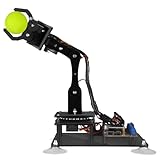
- 【Learn Programming & Robotics】Developed for robot lovers, the 5-DOF robotic arm kit is compatible with Arduino IDE. Detailed manual(PDF) and a variety of interesting Arduino code routines are provided.
- 【Various Control Methods】 Manual Control (Controlled by rotating potentiometer knobs on driver board); Remote Control (Controlled by graphical processing-based PC software)
- 【Multiple Features】Self-learning, drawing, imitating, etc.
- 【Digital Assembly Guides】We provide detailed tutorials(PDF) --Can be found in the box (Paper tutorials are NOT available as the tutorials are updated frequently).
- 【Technical support】Backed by a skilled support team, problems receive fast and accurate solutions.
Product prices and availability are accurate as of the date/time indicated and are subject to change. Any price and availability information displayed on Amazon at the time of purchase will apply.

