
Neither living neural tissue models nor computer simulations are sufficient for every neural-interface test. Use electrode characterization to evaluate how a device records or stimulates; use a suitable living preparation to investigate responses from cells or tissue; use simulations to explore defined mechanisms and design scenarios. For consequential performance or safety claims, combine methods where appropriate and validate each result against evidence suited to the claim.
What counts as a living neural tissue model?
“Living neural tissue model” covers several different preparations, not one standardized test platform. The terminology matters because each model offers a different balance of biological detail and experimental control. A 2022 nomenclature consensus distinguishes nervous-system organoids and assembloids, while a 2024 review of neural-engineering tissue models also compares self-assembled and engineered constructs.
- Spheroids are relatively simple aggregates of cells.
- Organoids are self-organizing multicellular models derived from pluripotent stem cells or primary tissue and named for the major anatomical region they model.
- Assembloids bring together organoids or specialized cell types to study interactions across components.
- Engineered neural tissues combine cells with designed scaffolds or biomaterials. Their geometry and local biochemical, mechanical, or electrical environment can be more deliberately controlled.
These preparations are not interchangeable, and none should be treated as a miniature, complete nervous system. The 2024 review notes that self-assembled models can preserve aspects of cell organization and interaction, but may develop slowly, vary between batches, and have uncontrolled structure or incomplete maturation. Engineered constructs allow greater control over architecture and cues, but do not reproduce all native neural organization. The authors put the limitation plainly: “With our current technologies and techniques, it is not yet possible to replicate the exquisite organisation of human neural networks or represent the high complexity of neural pathways.”
What can each method tell you about a neural interface?
Here, a neural interface is an electrode or related device that records activity from, or stimulates, neural tissue. The key distinction is what is physically present during the test: an electrode characterization test evaluates the device and its electrical interface; a living-tissue assay can measure biological responses; a simulation calculates behavior represented in its model.
#1 Best Overall

- Spacious Design: Measuring 21.1" wide and 14.1" deep, our lap desk comfortably fits most laptops up to 15.6". Extra room for accessories ensures convenience.
- Enhanced Functionality: Packed with handy features, including a 5x9" precision tracking mouse pad and a built-in phone slot for seamless work or video calls. Plus, enjoy ergonomic support with the integrated cushioned wrist rest.
- Cool Comfort: Enjoy a stable surface with our lap desk's dual bolster cushion, designed for comfort and airflow, keeping your lap cool during extended use.
- Durable Surface: Work with confidence on our lap desk's solid surface, featuring a sleek black carbon color, ensuring optimal air circulation to prevent your laptop from overheating.
- On-the-Go Convenience: With an integrated handle and lightweight design (2.8 lbs), our lap desk is portable for travel or moving around the house, offering flexibility in any space.
Electrode characterization: how the device behaves
Defined tests can assess recording and stimulation performance and behavior at the electrode–electrolyte interface. These are device measurements; by themselves, they do not establish how living cells respond to a material or stimulation protocol. A 2020 electrode-testing tutorial discusses standardized performance testing and notes that broadly shared methods for comparing electrode efficiency have been lacking. Clear, standardized reporting makes device comparisons more interpretable, but it does not answer every biological or translational question.
Living preparations: how cells or tissue respond
Cell cultures, organotypic slices, and other suitable preparations can expose biological material to an electrode, its materials, stimulation, or culture conditions. Investigators can then examine tissue–material interactions or responses such as those involving glial cells. Microelectrode arrays (MEAs) provide a physical platform for bidirectional interaction with living neuronal networks, including in brain-on-a-chip arrangements. A foundational 2008 NIH Bookshelf chapter on in-vitro neuroelectrode models describes these kinds of uses; it remains useful for the principles, not as evidence of current availability for a particular platform. A 2025 review of brain-organoid-on-chip models discusses that more recent class of systems.
Rank #2

- 5-in-1 Connectivity: Equipped with a 4K HDMI port, a 5 Gbps USB-C data port, two 5 Gbps USB-A ports, and a USB C 100W PD-IN port. Note: The USB C 100W PD-IN port supports only charging and does not support data transfer devices such as headphones or speakers.
- Powerful Pass-Through Charging: Supports up to 85W pass-through charging so you can power up your laptop while you use the hub. Note: Pass-through charging requires a charger (not included). Note: To achieve full power for iPad, we recommend using a 45W wall charger.
- Transfer Files in Seconds: Move files to and from your laptop at speeds of up to 5 Gbps via the USB-C and USB-A data ports. Note: The USB C 5Gbps Data port does not support video output.
- HD Display: Connect to the HDMI port to stream or mirror content to an external monitor in resolutions of up to 4K@30Hz. Note: The USB-C ports do not support video output.
- What You Get: Anker 332 USB-C Hub (5-in-1), welcome guide, our worry-free 18-month warranty, and friendly customer service.
Simulations: what follows from stated assumptions
A computer simulation can represent electrical, mechanical, or biological behavior and let researchers vary specified inputs systematically. It is useful for exploring a hypothesis, examining sensitivity to assumptions, or comparing modeled design choices. It cannot directly reveal a cellular response that the model does not represent. Its conclusions are bounded by its equations or other model structure, parameter values, and the conditions for which it has been validated. Discussions of organ-on-chip modeling and neural development across in-vivo, in-vitro, and in-silico approaches describe the complementary roles of these approaches.
How do the approaches compare?
| Decision axis | Living neural tissue model | Computer simulation |
|---|---|---|
| Direct biological response | Can measure responses from the cells or tissue actually included in the preparation and assay; what it reveals depends on the model and readout. | Can calculate a biological response only to the extent that the relevant mechanism and suitable parameters are represented. |
| Control over conditions | Engineered constructs can provide more control over geometry and materials; self-assembled preparations may have less predictable structure. | Inputs and assumptions can be specified and varied systematically, but the results depend on the model formulation. |
| Repeatability and scale | Batch variation, maturation, and long development times can complicate repeatability and throughput. | Supports repeatable scenario exploration, but implementation choices and parameter uncertainty still need scrutiny. The cited sources do not establish a universal time comparison. |
| Best fit | Questions about cells, tissue, biological mechanisms, or tissue–interface interactions when the preparation represents relevant biology. | Hypothesis exploration, sensitivity analysis, design-space evaluation, and interpretation of specified mechanisms. |
| Main limitation | In-vitro conditions are not the same as the in-vivo environment, and the preparation may not represent all relevant tissue features. | A result cannot establish a physical tissue effect beyond the assumptions and validation domain of the model. |
There is no established head-to-head benchmark showing that one approach universally outperforms the other for neural-interface testing. Compare them against the decision at hand: biological relevance, control of inputs, reproducibility, the kind of readout obtained, and the validation needed to support the claim.
Outdated Drivers Are Slowing You Down
One free scan finds every outdated or missing driver and matches the right update for your exact hardware.Free scan · exact hardware matchPC Slower Than It Used to Be?
A free scan shows the junk files, broken settings and background clutter dragging Windows down - then fixes them in one click.Free scan · Windows 10 & 11Rank #3
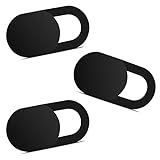
- Note: Not suitable for MacBooks released after 2023 or devices with a protruding front camera; Not applicable to full-screen or notch-style tempered glass screen protectors; Do not use on the rear camera of the phone.
- 💻 Why Do You Need a Webcam Cover Slide? — Safeguard your privacy by covering your webcam with our reliable webcam cover when not in use. Don't let anyone secretly watch you. Stay protected!
- ✅ Thin & Stylish — Enhance your laptop's functionality and aesthetics with our 0.027" ultra-thin webcam covers. Seamlessly close your laptop while adding a touch of sophistication.
- ✅ Fits Most Devices — Compatible with laptops, phones, tablets, desktops! Keep your privacy intact on Ap/ple, Mac/Book, iPh/one, iP/ad, H/P, L/novo, De/ll, Ac/er, As/us, Sa/msung devices.
- ✅ 365 Days Protection — Our upgraded 3.0 adhesive ensures a strong hold that won't damage your equipment. Experience reliable, long-term privacy protection day in and day out.
Which method should you use for your question?
If you need to know whether an electrode records or stimulates effectively
Start with defined electrode-performance measurements. Report the test conditions and the recording or stimulation measures transparently so readers can interpret the device result. Add a biological preparation if the claim also concerns tissue interaction or biological response; device characterization alone does not establish those outcomes.
If you need to know how tissue responds
Choose a living model based on the cells, tissue features, or interactions relevant to the question. For example, a question about a material’s effect on a particular cell type calls for a preparation and assay that include that biology. An organoid or assembloid may be useful for selected aspects of development, cell interactions, or disease, but its name alone does not show that it is mature or representative enough for a given interface claim.
Rank #4

- Anti-Slip Surface - Transform your laptop into a mobile workstation with the AboveTEK portable laptop lap desk. The anti-slip surface provides a strong grip for laptops up to 15.6 inches(Diagonal), while the double rubber strip on the bottom ensures a stable display or typing experience on your lap, couch, or bed.
- Retractable Mouse Pad - Retractable laptop mouse pad extends on both directions for the left/right handed with elevation along the edges for stopping mouse from falling off. The size of laptop tray is 14" X 9.7" and the size of mouse pad is 7.4" X 6.1".
- Effective Heat Shield - The effective heat shield made of sturdy and thick material protects your laptop from overheating. Prioritizes your comfort and safety, an ideal lap pad or board for working anywhere.
- EASY to Carry and Store - With an ergonomic and simplistic design, the lap desk is portable to store in a backpack. Only 15" in size, 2.2 lb of weight and with slim 0.6 inch thickness, it is ready to be easily carried around.
- Widely Applicable - The smooth platform accommodates laptops and tablets up to 15.6 inches(Diagonal), making it a versatile accessory and one of the best gifts for mom, dad, students and professionals. Perfect for use as a laptop bed tray or tablet holder anywhere at home, library, or park.
If you need to explore design choices or mechanisms
Use a simulation to make assumptions explicit and systematically examine the outcomes they imply. Identify what the model includes, which parameters drive the result, and what evidence supports its use for the conditions being studied. If the conclusion depends on a biological effect, pair the modeling with an experiment capable of observing that effect.
Independent reader supportYour contribution helps us test, update, and keep practical guides available for everyone.What should you check before trusting a living model?
Model selection is part of the experiment, not just a choice of lab format. A Nature framework for neural organoids, assembloids, and transplantation studies calls for designs tied to explicit scientific questions, adequate characterization, transparent methods, and data sharing. It also describes how long-term culture, sophisticated assays, and delayed feedback can affect progress and reproducibility.
What’s actually slowing this PC down?
Pick the symptom - the matching free tool is one click away.
Best Value

- Spacious Design: Measuring 21.1" wide and 12" deep, our lap desk comfortably fits most laptops up to 15.6". Extra room for accessories ensures convenience.
- Enhanced Functionality: Packed with handy features, including a 5x9" precision tracking mouse pad and a built-in phone slot for seamless work or video calls. Plus, enjoy laptop support with the integrated device ledge.
- Cool Comfort: Enjoy a stable surface with our lap desk's dual bolster cushion, designed for comfort and airflow, keeping your lap cool during extended use.
- Durable Surface: Work with confidence on our lap desk's solid surface, featuring a blush pink color, ensuring optimal air circulation to prevent your laptop from overheating.
- On-the-Go Convenience: With an integrated handle and lightweight design (2.14 lbs), our lap desk is portable for travel or moving around the house, offering flexibility in any space.
- Fit to the endpoint: State which cell types, interactions, or tissue behavior the assay needs to capture.
- Characterization: Describe the preparation’s composition, maturity, structure, culture conditions, and relevant quality controls.
- Reproducibility: Account for variation between batches and explain how preparations and outcomes are compared.
- Readout and controls: Specify what is measured, under which device and stimulation conditions, and what controls separate device effects from other influences.
- Limits of translation: Treat an in-vitro result as evidence about that preparation and assay. It is not automatically evidence of the same response in an intact nervous system.
Time and dimensions vary by system. The 2024 Royal Society of Chemistry review reports that development of neural organoids and assembloids can take up to six months depending on complexity; cited examples include up to 50 days for spinal-cord assembloids modeling multisynaptic circuitry and three to four months for brain assembloids. The same review gives an example cerebral-organoid diameter of approximately 4 mm, compared with target tissue close to 5 cm. These are review-reported examples, not universal specifications or guarantees for a particular laboratory model.
How should simulation results be validated?
Validation should match the claim. A model that estimates a device’s electrical behavior needs evidence relevant to that behavior; a model making a claim about a cellular response needs experimental support that can observe that response. Document the modeled structures and mechanisms, parameter sources, assumptions, and range of conditions tested. Then compare predictions with appropriate measurements and be explicit about where agreement has—and has not—been established.
A simulation can guide which experiment to run, help interpret observed behavior, or identify which assumptions most affect a prediction. Agreement with a limited experiment does not automatically validate the model for other tissues, devices, or conditions. Likewise, a living-model result does not remove the need to establish how well the preparation represents the biology relevant to a broader claim.
What does the growing organoid literature mean for interface testing?
The growth of a field is not proof that a model is ready for every application. A perspective in the 2025 issue of Nature, first published online in 2024, describes more than 3,000 articles published annually in the broader neural-organoid and assembloid literature—not specifically in neural-interface testing. That expanding body of work makes clear terminology, model characterization, and question-specific validation especially important; it does not establish a universal neural-interface testing protocol.
Recommended Free Tools
Quick Recap
Product prices and availability are accurate as of the date/time indicated and are subject to change. Any price and availability information displayed on Amazon at the time of purchase will apply.

