
iTechGuides is reader-supported. When you buy through links on our site, we may earn an affiliate commission. As an Amazon Associate I earn from qualifying purchases. Learn more
Dampness beside a water heater does not prove the tank has failed. Water may come from condensation, a leaking fitting or drain valve, or discharge from the temperature-and-pressure (T&P) relief valve. If that valve’s discharge pipe runs to another location, the outlet may be where you first notice the water. Find the source safely; recurring or unexplained moisture needs a qualified inspection.
Why dampness does not diagnose a failed tank
Water on the floor is a clue, not a diagnosis. It may be coming from the tank, but it can also originate at a connection, fitting, drain valve, or relief-valve discharge. Whirlpool notes that a small puddle can form when a gas water heater is first started because of condensation; it should stop once the heater reaches normal operating temperature. Persistent or returning moisture should not be dismissed as condensation. Whirlpool’s water-heater leak guidance describes both condensation and other potential leak sources.
A relief-valve pipe can carry water away from the heater, so its outlet may be the only visible sign that the valve has discharged. The location of a wet patch alone cannot establish whether the tank is leaking or failing.
What the location and pattern of water can tell you
| What you notice | What it may indicate | What to do |
|---|---|---|
| A small puddle when a gas heater is first started | Startup condensation is one possibility; the manufacturer says it should stop after the heater reaches normal operating temperature. | If moisture persists or returns, look for another source and seek qualified help if uncertain. Whirlpool. |
| Moisture at an accessible connection or fitting | A connection or fitting may be leaking; Whirlpool identifies these as common places to investigate. | If safe, dry visible drips and see where moisture returns. Do not disassemble components or tighten them without model-specific expertise. Whirlpool. |
| Water at the T&P discharge outlet | Possible causes include pressure or thermal expansion, debris, a valve issue, or another heater problem. | Never block the line. Recurring discharge warrants professional diagnosis. Whirlpool; State Water Heaters. |
| A large amount of very hot water from the discharge line | State Water Heaters says this may be due to tank overheating. | Follow the heater’s labeled shutdown instructions and call a qualified person promptly. State Water Heaters. |
| Dampness but no visible source | The cause remains unknown; damp flooring by itself does not establish tank failure. | Arrange a qualified inspection rather than guessing at the cause. Whirlpool. |
How to check safely
- Look without touching hot or hazardous parts. Check only areas and connections that are readily accessible. Do not open electrical or gas components, touch hot surfaces, or handle hot water.
- Dry accessible drips if it is safe. Whirlpool recommends drying water to make it easier to see where moisture returns. Observe the area; do not take apart or adjust heater components.
- Look for the visible end of the discharge pipe. If the T&P pipe terminates somewhere accessible, check whether it is wet. Do not disconnect, cap, plug, or obstruct it.
- Escalate if the source is unclear or discharge is substantial. Follow the shutdown instructions labeled on your specific heater and contact a qualified plumber or water-heater technician. Whirlpool advises turning off gas and water when the source cannot be found, but shutdown procedures vary: follow your unit’s instructions and avoid unsafe contact with gas, electricity, or hot water.
Why a T&P relief line must stay open
The T&P valve is a safety device, and its discharge pipe is part of that safety system. Never cap, plug, obstruct, or remove the pipe to stop a drip. Water-heater manufacturers warn that restricting the relief line can create an explosion hazard; hot discharge can also cause severe scalding.
#1 Best Overall

- Provides Protection: Helps protect your RV or home water heater from excess temperature and water pressure
- Connection: ¾-inch NPT connection allows hookup to RV and home water heaters; Dimensions: 1 3/16-inch shank; 4-inch probe
- Factory Setting: 150 PSI/210° Fahrenheit
- Features: Extension probe is epoxy-coated to prevent corrosion buildup; Construction: All brass body with stainless steel pressure spring
- Certification: CSA certified to ANSI Z21.22
Discharge routing requirements depend on the locally adopted code and amendments. For example, the Phoenix-adopted 2024 International Residential Code, section P2804.6.1, requires the termination to be “readily observable by the building occupants” and sets requirements for the pipe’s route and endpoint. That is a Phoenix code example, not a universal rule for every home. The International Code Council’s technical guidance explains why discharge piping must not be obstructed or improperly routed, including the risks of blockage, scalding, and property damage. Ask your local building department or a qualified professional about the requirements that apply where you live.
How thermal expansion can trigger a drip
When water heats, it expands. In a closed plumbing system, that expansion can raise pressure; the pressure may cause intermittent discharge through the relief valve. American Water Heater explains that repeated thermal expansion can also contribute to premature tank leakage and recommends a correctly sized expansion tank for a closed system. A drip alone does not confirm that thermal expansion is the cause, and an expansion tank will not repair a corroded or leaking tank. American Water Heater’s thermal-expansion guidance describes the issue.
Rank #2

- CASH ACME RELIEF VALVE: The NCLX Series T&P protects water heaters by safely relieving excess temperature and pressure, helping prevent damage and supporting safe, reliable system operation.
- DURABLE CONSTRUCTION: Engineered with a cast bronze body and 2-2/32" extended shank length for compatibility with many water heater applications, along with brass and stainless steel internal components, a silicone seat disc, and a stainless steel pressure spring for reliable operation.
- FACTORY CALIBRATED: Pre-set to activate at 150 PSI pressure relief and 210°F temperature relief, providing dependable protection for residential water heater systems.
- CODE COMPLIANT: Certified lead-free to NSF/ANSI/CAN 372 standards and compliant with ASSE 1003 and CSA B356 requirements for residential water heater safety applications.
What a professional may need to assess
A qualified plumber or water-heater technician can trace the moisture and determine whether it comes from condensation, a connection, the tank, or the relief system. Depending on the symptoms, the investigation may include water pressure and thermal expansion, the valve and discharge piping, and the heater itself. If an expansion tank is appropriate, its capacity and compatibility depend on the plumbing system and heater; do not select a size or assume a purchase will resolve the leak without a diagnosis.
PC Slower Than It Used to Be?
A free scan shows the junk files, broken settings and background clutter dragging Windows down - then fixes them in one click.Free scan · Windows 10 & 11Outdated Drivers Are Slowing You Down
One free scan finds every outdated or missing driver and matches the right update for your exact hardware.Free scan · exact hardware matchA pressure gauge can help observe household water pressure, but it does not identify the source of dampness. Whirlpool recommends checking pressure with a gauge and directs pressure concerns to a utility or qualified plumber. A drain pan may reduce damage from some leaks where suitable, but it is not a repair and must meet applicable installation and code requirements.
Quick Recap
Best Value
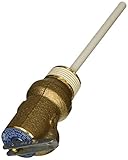
- Size: Small.For best results, use only Rheem replacement parts for repairing your Rheem Water Heater
- Maximum Temperature Setting (Deg. F): 210, Maximum Pressure Setting (psi): 150, CSA Capacity (BTU/HR): 105,000, Inlet Thread Size - NPT (in.): 3/4
- Outlet Thread Size - NPT (in.): 3/4, Overall Length (in.): 7-1/4, Body Length (in.): 3-1/4, Sensor Length (in.): 4
- Kits which contain this part: 45W613
Rank #4

- 3/4" male NPT threaded inlet for connecting to a female NPT threaded connection.
- ALL brass body and stainless steel spring for corrosion resistance.
- Designed for protection against excessive pressure only
- Universal 3/4" size is suitable for most U.S. residential usage.
- Easy and fast installation.
Rank #3

- CASH ACME RELIEF VALVE: The NCLX Series T&P protects water heaters by safely relieving excess temperature and pressure, helping prevent damage and supporting safe, reliable system operation.
- DURABLE CONSTRUCTION: Engineered with a cast bronze body and 2-5/16" extended shank length for compatibility with many water heater applications, with brass and stainless steel internal components, silicone seat disc, and stainless steel pressure spring.
- FACTORY CALIBRATED: Pre-set to activate at 150 PSI pressure relief and 210°F temperature relief, providing dependable protection for residential water heater systems.
- CODE COMPLIANT: Certified lead-free to NSF/ANSI/CAN 372 standards and compliant with ASSE 1003 and CSA B356 requirements for residential water heater safety applications.
Product prices and availability are accurate as of the date/time indicated and are subject to change. Any price and availability information displayed on Amazon at the time of purchase will apply.

