
What’s actually slowing this PC down?
Pick the symptom - the matching free tool is one click away.
TensorFlow is an open-source machine-learning framework and execution system for building, training, evaluating, and deploying models. It provides tools for expressing computations and running them on CPUs and supported accelerators. Most beginners can start with TensorFlow through the Keras API, and they do not need a GPU to learn or run CPU-based examples.
What TensorFlow is and how it works
TensorFlow gives developers a way to describe machine-learning computations and execute them. Its original paper calls it “an interface for expressing machine learning algorithms and an implementation for executing them.” The project’s repository describes TensorFlow as “An Open Source Machine Learning Framework for Everyone.” Its API and reference implementation were released as open source under the Apache 2.0 license in November 2015, according to the original paper.

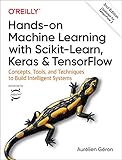

The name points to a basic building block: a tensor is a multidimensional array of values. TensorFlow operations transform those values. A model combines computations, learns from data during training, is evaluated, and can then make predictions or perform other inference tasks. TensorFlow’s broader ecosystem supports running this work across different environments, from local machines to supported accelerators and deployment targets.
What TensorFlow is used for
TensorFlow is used to develop and run machine-learning models. Its official tutorials range from introductory model-building to more specialized workflows and application areas.
The Tool Desk
Outbyte Driver Updater FREEFix the driver behind crashes, sound loss and screen glitchesFind Drivers →Outbyte PC Repair FREERepair Windows errors before they cause bigger problemsFix Now →#1 Best Overall

- Use scikit-learn to track an example ML project end to end
- Explore several models, including support vector machines, decision trees, random forests, and ensemble methods
- Exploit unsupervised learning techniques such as dimensionality reduction, clustering, and anomaly detection
- Dive into neural net architectures, including convolutional nets, recurrent nets, generative adversarial networks, autoencoders, diffusion models, and transformers
- Use TensorFlow and Keras to build and train neural nets for computer vision, natural language processing, generative models, and deep reinforcement learning
- Build models: Assemble layers and other components with Keras.
- Load and prepare data: Use tools such as
tf.data. - Customize training: Create custom layers and training loops when a standard workflow is not enough.
- Scale training: Use distributed training across GPUs, multiple machines, or TPUs, where supported.
- Explore applications: Follow tutorials for computer vision, natural-language processing, and generative models.
These are different levels of the same workflow: begin with a model suited to the task, train it on data, evaluate its behavior, and use it for inference. For a first project, the official TensorFlow beginner tutorials provide a guided route.
TensorFlow and Keras are related, but not identical
Keras is the high-level deep-learning API many people use to build models with TensorFlow. It offers a concise way to assemble layers and train models, while TensorFlow provides a broader computational and deployment ecosystem. Beginners can start with Keras without needing to begin with TensorFlow’s lower-level customization options.
Rank #2

- Machine Learning Using TensorFlow Cookbook: Create powerful machine learning algorithms with TensorFlow
- ABIS BOOK
- Packt Publishing
Keras is also not limited to TensorFlow: the Keras 3 guide lists JAX, TensorFlow, and PyTorch as supported backends. In TensorFlow 2.16 and later, installing TensorFlow with pip install tensorflow installs Keras 3 by default. TensorFlow 2.0 through 2.15 instead installed the corresponding Keras 2 line. For current setup details, consult the platform-specific installation instructions rather than assuming older package behavior still applies.
Do you need a GPU to use TensorFlow?
No. You can learn TensorFlow and run CPU-based computations without a GPU. A GPU can be useful for many large workloads, but using one requires compatible hardware and software; installing TensorFlow alone does not guarantee that a GPU is available to it.
Rank #3
For a first test, TensorFlow documents a CPU calculation using tf.reduce_sum(tf.random.normal([1000, 1000])). To check whether TensorFlow can see GPUs, run tf.config.list_physical_devices('GPU'). The first command succeeding confirms a CPU operation ran; it does not confirm GPU configuration. The second checks visible GPU devices and can return an empty list if none are available to TensorFlow.
Try TensorFlow in Colab or install it locally
Google Colab is a hosted notebook environment, so you can run TensorFlow tutorials without first setting up Python packages, drivers, or CUDA dependencies on your computer. This is the simplest starting point if you want to try examples before managing a local installation. The official tutorials include notebooks that run in Colab; use the tutorial collection to choose a beginner quickstart.
For local use, TensorFlow’s official installation guide recommends pip for the current stable package and provides a CPU-only option. GPU installation depends on the operating system, processor architecture, driver, and accelerator software. Instructions differ across Linux, Windows, WSL2, macOS, and processor architectures, so follow the guide for your exact platform and check its current compatibility requirements before installing.
- Choose your environment. Use a Colab notebook to avoid local setup, or select the matching platform section in the TensorFlow installation guide for a local installation.
- Install using the documented route. For a local setup, follow the guide’s current pip instructions. Do not add GPU-specific dependencies unless your platform and hardware meet the listed requirements.
- Verify a basic operation. Import TensorFlow and run
tf.reduce_sum(tf.random.normal([1000, 1000]))as a CPU calculation. - Check GPU visibility separately, if needed. Run
tf.config.list_physical_devices('GPU')and confirm that the expected device appears.
Training models and deploying them are different stages
TensorFlow supports both developing models and executing them in deployment environments, but the right tools depend on where inference will run. Server-side deployment and on-device inference have different constraints: an on-device workflow may need to account for hardware acceleration and the device’s available resources.
TensorFlow’s team announced TensorFlow 2.20 on August 19, 2025, and said TensorFlow Lite would be removed from future TensorFlow Python packages. The announcement encourages migration to LiteRT, which is positioned for on-device machine learning and hardware acceleration. Because the transition and platform support can change, consult the TensorFlow 2.20 announcement and current release notes before choosing a version-specific on-device workflow.
A practical starting point
Start with a Keras Sequential model in a TensorFlow tutorial notebook. Sequential models connect layers and other building blocks in order, making them a straightforward way to understand model construction. Once you can build and train a basic model, move to data pipelines, custom training, distributed execution, or a specific application area only when your project calls for those capabilities.
Quick Recap
Product prices and availability are accurate as of the date/time indicated and are subject to change. Any price and availability information displayed on Amazon at the time of purchase will apply.

