
Free tools Windows power users keep installed
One-click scans. No signup required.
A proprietary memory design is worth considering when a customer has a hard-to-meet requirement, a credible long-term commitment and enough expected demand to justify the engineering and supply risk. Otherwise, a standards-based part is usually the safer choice: it is more likely to work across products and to have alternative suppliers.
Why standard memory is usually the lower-risk choice
JEDEC standards help create a shared engineering ecosystem. When products conform to the same specification, customers can often use compatible parts from more than one manufacturer; a part from SK Hynix, for example, may fit the same socket as a compatible Micron part. That gives a customer options if a supplier leaves the market or stops making a particular product.
Standards also make it easier for designers, component vendors and system makers to build around a common interface. A nonstandard part may work well in its intended system but have fewer compatible components, less accumulated engineering support and a narrower path to replacement. Standard products are generally less expensive than custom chips, including in specialized military and aerospace applications.
In an April 1, 2024, EE Times article, Synopsys senior manager of product marketing Graham Allan summarized the history of nonstandard memory this way: “The highway of DRAM technologies is littered with the roadkill of non-JEDEC-standard memories.” Hybrid Memory Cube and Rambus virtual-channel DRAM illustrate the broader risk: a technically distinctive design can struggle to survive without a durable ecosystem. Reduced-latency DRAM also lost potential when a development partner exited.
The Tool Desk
Outbyte Driver Updater FREEScan for outdated or missing drivers - takes under a minuteDriver Scan →Outbyte PC Repair FREERepair Windows errors before they cause bigger problemsFix Now →#1 Best Overall

- A-Tech 16GB RAM Module, DDR4 SO-DIMM 260-Pin, 3200MHz PC4-25600 (PC4-3200AA)
- Non-ECC Unbuffered, JEDEC DDR4 Standard 1.2V Operating Voltage
- Compatible with select Laptop, Notebook, Mini PC, and All-in-One (AIO) systems. Please verify your system's memory type, form factor, and maximum supported capacity before purchasing
- Not compatible with desktop DIMM, non DDR4 memory, or ECC memory types such as RDIMM, LRDIMM, and ECC UDIMM
- Increases available memory capacity to enhance system responsiveness, application performance, and multitasking capabilities.
Custom memory and sole-source memory are not the same
Custom describes how a product is developed: it is made or adapted in response to a customer’s requirements. Sole-source describes supply: only one manufacturer makes the product. A custom product is not automatically sole-source, and a sole-source product is not necessarily custom. In practice, however, a customer-specific design can become difficult to replace if no other supplier makes a compatible part.
Proprietary features can take several forms. A DRAM may have an unusually wide or narrow organization to suit a system. A standard chip may become proprietary in practice when it is put in a package adapted for an extreme environment, such as deep-sea exploration. A change to low-level signaling or pins can be more consequential: other devices may not interoperate, and the customer may have to keep using the same supplier.
Rank #2

- A-Tech Memory RAM upgrade compatible for select Desktop PC/Computers
- Single 2 GB Module; DDR3 DIMM 240-Pin; Speeds up to 1600 MHz, PC3-12800/PC3-12800U
- NON-ECC Unbuffered ( UDIMM ); 1Rx8 or 1Rx16 (Single Rank); JEDEC standard DDR3 1.5V or DDR3L 1.35V
- Expands your system's available Memory RAM resource, improving performance, speed and allowing you to take on more while maintaining a smooth experience
- Quick and easy to install, no expertise required (Please refer to your system's manual for seating and channel guidelines)
Form factor can create the same kind of dependency. Sony’s Memory Stick, for example, was a distinctive format that tied compatible products to its supply. Phison CTO Sebastien Jean put the signaling concern bluntly: “If you want to actually customize low-level signaling, forget it.” The point is not that every physical or electrical change is unworkable, but that the more a design departs from common interfaces, the harder it can be to qualify a substitute.
How the trade-offs compare
| Decision factor | Standards-based memory | Proprietary or customer-specific memory |
|---|---|---|
| Supplier options | May be available from multiple suppliers when products conform to the same standard and are compatible. | May depend on one supplier, particularly when the design or interface is unique. |
| Interoperability | Designed around shared specifications, supporting compatibility across conforming products. | Can be limited by custom signaling, pins, packaging or form factor. |
| Ecosystem | Can benefit from broader engineering support and a pool of compatible components. | May have a smaller support base and fewer replacement paths. |
| Cost and engineering effort | Generally less expensive than a custom chip and does not require the same customer-specific development. | Requires upfront engineering; non-recurring engineering (NRE) costs should be addressed in the project agreement. |
| Differentiation | Provides established functionality but may not meet an unusual security, environmental or system requirement. | Can address specialized security, gaming, aerospace or extreme-temperature requirements. |
| Demand and customer relationship | Can serve a broader market rather than relying on one customer’s forecast. | Is more defensible when expected volume is credible and the customer relationship is durable. |
| Intellectual property | Uses established specifications, though product-specific ownership still depends on the parties’ agreements. | Ownership and rights to reuse the solution need explicit agreement between customer and supplier. |
| End of life | Multiple compatible suppliers may make a replacement easier to find, but availability is not guaranteed. | Ending production can leave a customer without a practical replacement and strain the relationship. |
When the extra risk can make sense
A proprietary design is most compelling when standard memory cannot meet a meaningful requirement and the customer can support the investment over time. Security, gaming, aerospace and qualification for extreme temperatures are examples of areas where specialized designs can create value. A supplier may also gain engineering experience, establish a reputation with a major customer and open opportunities in related markets.
Rank #3

- Actual memory speed may vary depending on the system, CPU, motherboard, BIOS settings, and supported memory configuration. DDR4 3200MHz modules may operate at lower speeds such as 2933MHz or 2666MHz when supported by the host system. Please check your device specifications and compatibility before purchase.
- Adherence to JEDEC and compliance to RoHS with respect to environmental protection regulation, production and manufacturing
- All new generation product of DRAM module. Strict test and verification procedures are performed for products
- Lifetime warranty and Free technical support
- ※ Refer to the latest version on the official website. In case of discrepancies, the official website prevails.
Macronix chairman and CEO Miin Wu described the strategic value of customer-specific work as: “We are creating our own product; we are creating our value.” Macronix’s ArmorFlash is presented as a customer-specific security solution that helped expand into a broader product category. That is a possible outcome, not a guarantee: a custom project can instead remain dependent on a narrow customer base.
There is no universal sales-volume threshold at which custom memory becomes worthwhile. The relevant question is whether the forecast, expected product lifetime, engineering cost, qualification effort and likely margin together support the investment. The EE Times article reports no market-size, shipment, revenue, percentage or performance figure that establishes a general break-even point.
Rank #4
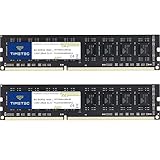
- [Color] PCB color may vary (black or green) depending on production batch. Quality and performance remain consistent across all Timetec products.
- DDR3L / DDR3 1600MHz PC3L-12800 / PC3-12800 240-Pin Unbuffered Non-ECC 1.35V / 1.5V CL11 Dual Rank 2Rx8 based 512x8
- Module Size: 16GB KIT(2x8GB Modules) Package: 2x8GB ; JEDEC standard 1.35V, this is a dual voltage piece and can operate at 1.35V or 1.5V
- For DDR3 Desktop Compatible with Intel and AMD CPU, Not for Laptop
- Guaranteed Lifetime warranty from Purchase Date and Free technical support based on United States
What a supplier should establish before accepting a project
Phison’s account points to practical questions a supplier should resolve before committing engineering resources:
- Is the customer likely to remain viable? A design tied to a customer that cannot sustain its business may leave the supplier with development costs and no continuing demand.
- Is expected volume credible? Forecasts should support the engineering effort and the product’s likely life, not just an initial design win.
- Will the customer pay NRE? Agree on who pays for non-recurring engineering and what that payment covers. Jean said NRE charges help filter requests from customers without a concrete plan; as he put it, “It weeds out the people who ask for stuff and have no real plan to actually make it real or sell it, because ultimately, we don’t make money off of the NRE.”
- Is there an executive sponsor? A committed decision-maker can help keep the project aligned with the customer’s business priorities.
- Is engineering capacity available? A promising project still has an opportunity cost if it diverts staff from more viable work.
- Who owns the resulting intellectual property? If the customer specifies the change, it may expect ownership. If the supplier develops the solution, the supplier may seek the right to reuse the underlying approach for others while protecting customer confidentiality. Put ownership, reuse and confidentiality terms in writing.
- What is the end-of-life plan? Establish how much notice will be given, whether last-time buys are possible and what alternatives exist if the product is discontinued. A sole-source product can be difficult to end without harming the customer relationship.
What the failure examples do—and do not—show
Hybrid Memory Cube, Rambus virtual-channel DRAM and reduced-latency DRAM show how a nonstandard or partner-dependent technology can lose momentum when a broad ecosystem or development support fails to materialize. Intel 3D XPoint Optane is a different warning: substantial engineering investment does not ensure a sufficiently profitable market. Sony Memory Stick highlights the customer-side cost of a proprietary format, while ArmorFlash shows that a specialized customer solution can, in some cases, support a broader offering.
What’s actually slowing this PC down?
Pick the symptom - the matching free tool is one click away.
Best Value

- Micro SD Card Module: The module includes 74HC125 and AMS1117 chips, enabling voltage level conversion between 3.3V and 5V systems, ensuring stable communication between the Micro SD card and host devices with different voltage levels.
- Interface level: 3.3V or 5V
- Supported Interface: SPI
- Supported Card Type: Micro SD Card (TF Card)
- Socket: Pop-up
These examples do not establish that every custom memory project will fail or that every standard part will remain available. They show why a design win alone is not enough: the supplier and customer need a plausible path to sustained demand, ongoing support and eventual replacement.
Quick Recap
Product prices and availability are accurate as of the date/time indicated and are subject to change. Any price and availability information displayed on Amazon at the time of purchase will apply.

