
SED is a specific kind of field-emission display, but “FED” is often used more narrowly to mean conventional gate-controlled designs such as CNT or microtip displays. Both technologies use electrons in a sealed vacuum to excite phosphors directly, but their emitter structures change how they are driven and what engineers must control.
What do SED and FED have in common?
Both are thin, direct-view display technologies designed to combine a flat panel’s form with some qualities associated with a cathode-ray tube (CRT). Inside a sealed, evacuated glass envelope, electrons accelerate toward phosphors on the viewer-facing anode. The phosphors emit red, green or blue light where the electrons land, so the panel produces light directly rather than modulating a separate backlight.
The vacuum envelope needs mechanical support: spacers help keep the glass from collapsing under atmospheric pressure, while getters help maintain the vacuum after sealing. Anode and phosphor fabrication, spacers, getters, evacuation and sealing are therefore shared parts of the manufacturing challenge. The cathode plate—where electrons are emitted—is the principal design difference.
How do the emitters and electron paths differ?
Conventional FED: a gate pulls electrons toward the anode
In common carbon-nanotube (CNT) and microtip FED designs, a gate sits near the cathode. The electric field extracts electrons in a mostly vertical direction toward the anode. Changing the cathode-to-gate voltage controls the emission current, which varies nonlinearly according to Fowler–Nordheim behavior. That makes consistent emitter geometry and current across a large panel an important manufacturing and control problem.
#1 Best Overall

- Clear visuals. Fluid motion: A 144Hz refresh rate and 1ms MPRT deliver smooth, tear‑free motion across work, gaming, and streaming for clearer, more fluid viewing.
- Eye comfort: TÜV Rheinland 3‑star* certification reduces harmful blue light while preserving stunning color quality without compromise. *TÜV Rheinland 3-star eye comfort certification.
- Wide viewing angle: Get consistent views across a wide 178° /178° viewing angle.
- In-Plane Switching (IPS): See excellent color accuracy and consistency across wide viewing angles with In-plane Switching (IPS) technology.
- Ultra-thin bezels: Maximize your viewing experience with thin bezels.
SED: electrons cross a tiny lateral gap first
A surface-conduction electron-emitter display (SED) applies voltage across a nanometre-scale gap between two electrodes. Electrons tunnel laterally across this gap; the anode field then captures some of them and accelerates them toward the corresponding phosphor. Other electrons scatter or are absorbed as heat. This sideways, surface-conduction path is the origin of the SED name.
The SED process is consequently two-stage: emission across the gap, followed by scattering and anode capture. The technical description reports that about 3% of emitted electrons are captured by the anode field. It also describes an emitter drive of about 20 V. Those figures explain why a low drive voltage should not be mistaken for low current or automatically low power.
How do their drive electronics compare?
The following voltage figures come from an Applied Nanotech technical comparison published in 2007. They describe a particular SED contrast demonstration and typical CNT-FED ranges, not universal requirements for every panel or a modern product specification.
Rank #2

- 【INTEGRATED SPEAKERS】Whether you're at work or in the midst of an intense gaming session, our built-in speakers provide rich and seamless audio, all while keeping your desk clutter-free.
- 【EASY ON THE EYES】 Protect your eyes and enhance your comfort with Blue-Light Shift technology. This feature reduces harmful blue light emissions from your screen, helping to alleviate eye strain during long hours of use and promoting healthier viewing habits.
- 【WIDEN YOUR PERSPECTIVE】Our sleek minimal bezel design ensures undivided attention. The nearly bezel-free display seamlessly connects in a dual monitor arrangement, delivering an unobstructed view that lets you focus on more at once, completely distraction-free.
| Drive measure | SED | Typical CNT-FED |
|---|---|---|
| Signal voltage | 18.9 V in the 100,000:1 luminance-contrast demonstration | About 35–50 V |
| Scan voltage | 9.5 V in the same demonstration | About 50–100 V |
| Current implication | Scattering losses mean steady-state current may be as much as 30 times higher | Not stated as a comparable figure in the Applied Nanotech technical comparison (2007) |
SED’s lower voltage comes with a different electrical burden: the comparison says its steady-state current can be as much as 30 times higher because of electron losses. Higher current makes interconnect resistance more consequential. Even a small voltage drop along a panel can contribute to brightness variation from one edge to another.
Quick wins for a faster PC:
Clear out junk files and repair common Windows errorsFree Scan →Scan for outdated or missing drivers - takes under a minuteDriver Scan →Repair Windows errors before they cause bigger problemsFix Now →How are pixels addressed and grayscale produced?
In passive-matrix FEDs, a common approach is to scan the image one line at a time and use pulse-width modulation (PWM) to set grayscale. The nonlinear relationship between gate voltage and emission current complicates control, while variation in emitter geometry can make output uneven across the panel.
The cited comparison provides SED signal and scan voltages, but does not establish one universal SED addressing or grayscale method. It is therefore safer to compare the stated FED practice with the reported SED drive figures than to assume every SED implementation uses the same matrix or modulation scheme.
Rank #3

- SUNLIGHT-READABLE 1200 NIT DISPLAY: Unlike typical portable monitors that max out at 250-400 nits and become unusable in daylight, our 16" travel screen reaches a peak brightness of 1,200 nits—3x brighter than standard portable displays. The matte anti-glare coating eliminates reflections so you can review photos, edit timelines, or present to clients in direct sunlight without squinting or seeking shade. Built for outdoor photographers, field inspectors, and digital nomads who refuse to be tethered to indoor lighting.
- TRUE 4K 3840×2400 RESOLUTION ON 16:10 CANVAS: Unlike portable monitors that stretch or crop a standard 16:9 image, our 16" UHD screen packs 9.3 million pixels into a photographer-friendly 16:10 aspect ratio—giving you 15% more vertical space for timelines, tool panels, and full-resolution photo previews without scrolling. The IPS panel with 178° wide viewing angle ensures color accuracy stays consistent from any angle, making it the ideal portable editing screen for photographers, video editors, and graphic designers working on location.
- 145% sRGB COLOR GAMUT WITH 2000:1 CONTRAST: Unlike budget portable screens that only cover 72% of the sRGB spectrum, this professional-grade display covers 145% sRGB—delivering richer, more accurate colors for photo retouching, color grading, and print-proofing. The 2000:1 contrast ratio reveals deep shadow detail and bright highlight nuance in high-dynamic-range scenes that standard 1000:1 panels simply crush into black or blow into white. Every image you edit on this screen translates faithfully to final output, whether print or web.
- DUAL CONNECTIVITY — USB-C & MINI HDMI: (1) For USB-C laptops: A single USB-C to USB-C cable may not deliver enough power to drive 3840×2400 at peak brightness on all devices. connect the included USB-C to USB-A cable + power adapter to ensure stable 4K output at full resolution. (2) Mini HDMI to HDMI + USB-C power cable for PS5, Xbox, Nintendo Switch, DSLR cameras, and older laptops. Note: Mini HDMI carries video and audio only—a USB-C power cable must be connected simultaneously. Included in the box: 1× USB-C to USB-C cable, 1× USB-C to USB-A cable, 1× 5V/3A power adapter, 1× Mini HDMI to HDMI cable, 1× USB-C to USB-A power cable.
- BUILT-IN DUAL SPEAKERS & MAGNETIC SMART COVER: Equipped with two front-facing speakers that deliver clear audio for client presentations, video previews, and casual entertainment—no external speakers needed. The included magnetic folio cover doubles as a multi-angle stand (adjustable from 0° to 180°) and a protective carrying case. The all-metal unibody chassis weighs just 2.2 lbs and measures under 0.35" thin, giving it a premium build that slides into any camera bag or laptop sleeve alongside your gear.
Which has better contrast, brightness and motion response?
The technologies share the basic advantage of direct phosphor emission. A 2007 Applied Nanotech comparison describes SED and FED as capable of CRT-like fast response, high efficiency, brightness and contrast, but those qualitative claims do not amount to a controlled, side-by-side measurement across finished panels.
That comparison reports a 100,000:1 luminance contrast ratio demonstrated by SED. Treat this as a reported SED demonstration, not proof that SED always has higher contrast than FED, or that the figure applies to current retail displays. The available figures do not establish a comparable FED contrast result or settle which technology is brighter or faster in every implementation.
Windows Errors? Fix Them Before They Spread
Repair common Windows errors and clear accumulated junk for a smoother, more stable PC - no reinstall needed.Free scan · no reinstallCrashes, No Sound, or Screen Glitches?
Random freezes, missing sound and display glitches usually trace back to one bad driver. Find and replace yours safely.Free scan · under a minuteWhat do size, weight and manufacturing tell us?
The Applied Nanotech technical comparison (2007) gives a specific SED example: a 36-inch panel measuring 7.3 mm thick and weighing 7.8 kg. These are figures for that panel, not general specifications for all SED displays or a comparison with a matching FED model.
Rank #4

- 100% sRGB Color Gamut: With 100% sRGB, our display reveals an astonishing brightness and variance in red, green, and blue color across a wide gamut, providing a more defined and naturalistic display of color in every image.
- DP & HDMI Ports: Two HDMI ports and one DisplayPort port provide up to 100Hz refresh rate, refining picture clarity in all action-packed gaming sequences and graphic design projects. Audio In and a Headphone Jack provide diverse audio options.
- Blue Light Shift: Blue Light Shift reduces blue light, allowing you to comfortably work, watch, or play applications without straining your eyes.
- Built-in Speakers: Perfectly suited to work & gaming settings, built-in speakers deliver robust & smooth audio while saving space on your desk.
- FPS-RTS Game Modes: FPS and RTS are Sceptre's custom set display settings built for an enhanced gaming experience. FPS (First Person Shooter), RTS (Real-Time Strategy).
Both technologies faced the challenge of making emitters and electrodes uniformly over a large area. Manufacturing approaches investigated included printing; CNT-FED programs also used direct CNT growth or printed CNT layers. The central difference in production was the cathode plate, while much of the vacuum-envelope and anode assembly work was shared.
The engineering trade-offs are distinct. FED programs must control emitter uniformity and nonlinear extraction across many emitters. SED avoids that same gate-controlled geometry, but its higher current makes electrical resistance and panel-wide voltage uniformity especially important. Neither point alone establishes which would be cheaper or more reliable to manufacture at scale.
Independent reader supportYour contribution helps us test, update, and keep practical guides available for everyone.Did SED televisions reach the market, and can you buy one now?
Canon said it began SED research in 1986 and started joint development with Toshiba in 1999. In a 14 September 2004 announcement, the companies described plans to combine Canon’s electron-emission and microfabrication work with Toshiba’s CRT and mass-production expertise, with production then planned to begin in 2005.
What’s actually slowing this PC down?
Pick the symptom - the matching free tool is one click away.
Best Value
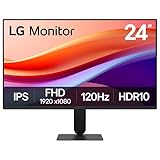
- Vivid Color with Full HD Resolution - The LG 24" IPS monitor with Full HD (1920 x 1080) resolution delivers sharp, vibrant visuals from virtually any angle. Whether you're tackling tasks, browsing the web, or managing your inbox, this monitor helps you stay clear, focused, and productive.
- Virtually Borderless. Visually Seamless. - The ultra-slim bezels and 3-side virtually borderless design creates a clean, modern look that keeps your focus where it belongs—on the screen. The sleek stand and base adds a floating feel, perfect for dual setups or a clutter-free workspace.
- Experience Smooth Motion with 120Hz - With a fast 120Hz refresh rate, you’ll experience smoother frame transitions. Whether you're working or gaming, enjoy more fluid visuals with less screen stutter and motion blur.
- 1ms Motion Blur Reduction for Crisp Gameplay - 1ms Motion Blur Reduction(MBR) keeps fast-paced gameplay sharp by minimizing blur and ghosting. Whether you're tracking enemies or racing to the finish, every frame stays crisp—giving you the edge when it matters most.
- Work, Create and Game in Bold Color - With HDR10 support and up to 99% sRGB color gamut coverage, this LG Monitor delivers rich, vivid color across a wide spectrum—ideal for immersive gaming, creative projects, and everyday productivity.
On 8 March 2006, Canon and Toshiba announced a revised plan for first-stage mass production in July 2007 and an SED TV launch in the fourth quarter of 2007. The announcement identified those dates as forward-looking plans; it does not prove that the televisions launched as scheduled. Historical product plans are not evidence of current availability.
No current SED or FED television, panel, or repair item is established by those historical announcements and the dated technical comparison. That is not proof that no specialist or second-hand unit exists; it means a buyer should verify any claimed product, condition, seller and support directly rather than treating SED or FED as currently available mainstream TV technologies.
Which label should you use?
Use field-emission display (FED) for the broader family, and SED for the lateral surface-conduction design within that family. In a head-to-head comparison, “FED” often means the more conventional gate-controlled CNT or microtip version. Naming that convention avoids the apparent contradiction of asking how SED differs from a technology family that can include SED itself.
Quick Recap
Product prices and availability are accurate as of the date/time indicated and are subject to change. Any price and availability information displayed on Amazon at the time of purchase will apply.
Free tools Windows power users keep installed
One-click scans. No signup required.

