
A data silo is a system or dataset that other authorized teams and services struggle to discover, understand, access, or reuse. It is not simply a database that sits alongside other databases. Organizations can keep multiple data stores without creating harmful silos if they can share reliable information across them.
That distinction matters because silo problems usually combine technical barriers—such as incompatible systems or stale copies—with organizational ones, such as unclear ownership or rules. Address the underlying cause before choosing an architecture: a central platform, integrations, governed sharing, and data mesh are different options, not one-size-fits-all fixes.

What are enterprise data silos?
A data silo is a digital system in which information is difficult for other services or teams to share or access. In practice, ask whether an authorized consumer can find a dataset, understand what it means, obtain permission, and use it reliably. If those steps routinely fail, the data may be siloed even if it is technically stored in a shared cloud or data lake. AWS describes data silos in terms of difficulty sharing or accessing data across systems.
Multiple databases are not automatically a problem. Separate systems may serve different operational needs; the risk arises when important information cannot flow between them reliably, or when teams cannot tell which version is accurate. A silo can therefore be an architectural condition, an operating-model problem, or both.
#1 Best Overall
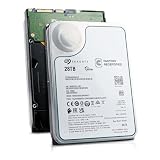
- MASSIVE 28TB CAPACITY – Store and manage enormous datasets with ease. Ideal for data centers, servers, NAS systems, cloud storage, and large-scale backup solutions.
- ENTERPRISE-CLASS PERFORMANCE – 7,200 RPM spindle speed, SATA III 6Gb/s interface, and large cache deliver fast, consistent throughput for demanding 24/7 workloads
- CMR TECHNOLOGY (CONVENTIONAL MAGNETIC RECORDING) – Designed for predictable performance, reliability, and compatibility in RAID and enterprise storage environments.
- BUILT FOR 24/7 OPERATION – Engineered for continuous use with enterprise-grade durability, making it suitable for mission-critical applications and high-density storage arrays.
- STANDARD 3.5” SATA FORM FACTOR – Seamlessly integrates into most enterprise servers, workstations, and NAS enclosures that support 3.5-inch SATA hard drives.
Why do data silos form?
Disconnected systems and incompatible interfaces
Legacy applications may not integrate with the wider technology stack or expose APIs that newer systems can use. Different formats, ingestion methods, and access paths can also make exchange difficult. Teams sometimes compensate with manual exports or separate copies, adding more points where data can diverge.
Department boundaries and unclear ownership
Business units may not share information, or no one may be clearly accountable for its quality, definitions, permissions, and upkeep. Local incentives can reinforce separation: a team may optimize for its own reporting needs without considering downstream consumers.
Rank #2

- MODEL P74439-005: Compact and affordable HPE ProLiant MicroServer Gen11 powered by Intel Pentium Gold G7400 3.7GHz processor, ideal for file sharing, NAS, and basic business workloads
- READY OUT OF THE BOX: Includes 16GB DDR5 UDIMM memory (expandable to 128GB), one 1TB SATA 6G Business Critical HDD, embedded Intel VROC SATA, dedicated iLO-M.2 port kit, 180w external power adapter and 1/1/1 warranty for dependable plug-and-play server operation
- WHISPER-QUIET & SPACE-SAVING: Ultra-compact mini tower design fits easily in small office spaces; supports wall, flat, or vertical placement for deployment flexibility
- INTEGRATED REMOTE MANAGEMENT: Comes with HPE iLO 6 and embedded TPM 2.0 for secure, license-free remote server administration through shared port access
- EXPANDABLE DESIGN: Two PCIe slots (including PCIe 5.0) and four LFF-NHP drive bays provide robust options for storage and component scalability. Features new MR408i-p controller support for enhanced storage performance
Weak governance and growth without a data plan
Without rules for collection, sharing, storage, deletion, and access, each project can make its own choices. Rapid organizational or technical growth can multiply those choices before teams agree on common responsibilities and standards. Technical and organizational causes often reinforce one another: a department boundary can preserve a disconnected application, while a rushed workaround creates another copy.
What risks do silos create?
- Conflicting or inaccurate information: Copies maintained in separate systems can drift apart, leaving teams with different answers to the same question.
- Manual work: People may repeatedly export, reconcile, and transfer data between systems instead of relying on a dependable flow.
- Stale or incomplete decisions: A report built from a partial or outdated view can mislead decision-makers, particularly when current information matters.
- Unclear control: When ownership, lineage, and access rules are not dependable, it becomes harder to establish who is responsible for a dataset and how it is being used.
Not every copy is harmful. A temporary or experimental copy can help a team explore data without making it part of an operational process. The key question is whether business processes or downstream products now rely on that copy. Microsoft’s lakehouse guidance distinguishes experimental copies from operational copies that can get out of sync. For an operational copy, check whether its owner, lineage, synchronization, and controls are clear.
Rank #3
How to find and address data silos
- Map the current landscape. Inventory applications, databases, files, warehouses, lakes, data flows, owners, consumers, and access paths. Record where data originates, where it is copied or transformed, and who depends on it. AWS recommends mapping systems and data flows to locate bottlenecks.
- Identify the failure point. Look for manual transfers, API or connector limits, duplicate operational data, unclear ownership, inconsistent definitions, and missing governance responsibilities. Distinguish a technical blockage from a policy or incentive problem; some systems will have both.
- Set responsibilities and rules. Define who owns each dataset, who maintains its quality and definitions, who can approve access, and what rules govern sharing, storage, deletion, tracking, and compliance. Make these rules usable across teams rather than leaving them as informal assumptions.
- Choose a remedy that matches the cause. Integrate disconnected systems, use middleware where legacy systems cannot connect directly, migrate selected data where that is appropriate, or expose data through a governed sharing mechanism. A single central store is not mandatory: centralizing data alone does not guarantee that it is discoverable, well-governed, or usable.
- Plan for the platform you already have. If introducing data products or mesh-style governance, decide how existing lakes and warehouses will coexist with the new capabilities. Google advises planning which existing resources move, remain, or participate without being moved as a mesh develops. Google’s data mesh guidance discusses architecture and functions in that model.
How do centralized, hub-and-spoke, and mesh approaches differ?
These patterns distribute ownership and platform responsibilities differently. Their suitability depends on the organization’s systems, use cases, team capacity, and governance needs; there is no universal winner. AWS recommends evaluating data mesh against centralized data lake and multi-account hub-and-spoke approaches rather than assuming mesh is the default. AWS’s 2024 prescriptive guide covers these architecture choices.
| Approach | Ownership and responsibility | What to assess |
|---|---|---|
| Centralized | A central team or platform provides a primary point for managing data and access. | Whether central capacity can meet domain needs, and whether central control improves consistency without becoming a bottleneck. |
| Hub-and-spoke | A central hub coordinates shared capabilities, with connected accounts or teams handling some local responsibilities. | How the hub and spokes divide governance, integration, and operational work across existing systems. |
| Data mesh | Domain teams own and maintain data products, supported by shared platform services and federated governance. | Whether domains can operate products responsibly and whether common discovery, standards, and controls can support cross-domain use. |
The table describes broad patterns, not a guarantee that a particular implementation will have those exact responsibilities. Real designs can combine elements of more than one approach. Compare candidates using practical questions:
Rank #4

- 3.5'' SATA or SAS Hard Drive
- 24/7 operation
- Toshiba Stable Platter Technology
- Persistent Write Cache technology
- Flexibility in block size and SIE and SED options
- Ownership and decision rights: Who is accountable for each dataset or product, and who decides on definitions and access?
- Discoverability and access: Can consumers find data, understand its semantics, and request or receive permission through a clear process?
- Governance and security: Can quality standards, policy enforcement, and auditability remain consistent across sources?
- Integration with existing systems: Do APIs and connectors fit, or are migration, hybrid or on-premises support, and copy synchronization needed?
- Organizational fit: Are there enough distinct domains and producer-consumer relationships to justify more distributed ownership? Do teams have the capacity to take it on?
- Operating complexity: What platform services, staffing, monitoring, role clarity, and deployment practices will the approach require?
What is a data mesh, and what does it require?
A data mesh is an architecture and operating model that organizes data ownership around business domains while relying on shared platform capabilities and federated governance. AWS identifies four principles: domain ownership, data as a product, a self-service data platform, and federated governance. Its 2024 guide names those principles.
- Domain ownership: The teams closest to a domain’s data take responsibility for it.
- Data as a product: Teams treat data for consumers as a maintained, usable product rather than an unmanaged by-product of an application.
- Self-service data platform: A central platform team provides reusable capabilities so domain teams do not each have to build every infrastructure function themselves.
- Federated governance: Shared governance establishes organization-wide standards while allowing domain teams to manage their products within those rules.
Mesh is not the removal of central control, nor does it mean letting every department create an isolated lake. Consumers still need shared discovery and interoperable definitions, and the platform and governance functions must make responsible sharing practical.
Do these 3 things before closing this tab:
1Fix the driver behind crashes, sound loss and screen glitches2Clear out junk files and repair common Windows errors3Scan for outdated or missing drivers - takes under a minuteBest Value
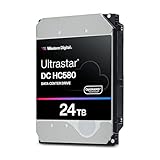
- Store vast amounts of data with a class-leading 24TB capacity, perfect for hyperscale environments, data centers, and big data applications.
- 7200 RPM, SATA 6Gb/s interface, and large 512MB cache, delivering fast, predictable performance for demanding server workloads.
- Designed for 24/7 operation with a high 2.5 million hours MTBF (Mean Time Between Failures) rating, ensuring enterprise-class durability and data dependability.
- Conventional Magnetic Recording (CMR): Employs proven CMR technology for consistent and reliable performance across various workloads.
- Engineered for massive scale-out (MSO), high-density data centers, and cloud storage applications.
What does an enterprise data mesh architecture include?
Google’s enterprise reference architecture is one cloud-specific example, not a vendor-neutral requirement. It describes producer and consumer teams alongside a central governance team and a self-service infrastructure platform team. Its layered blueprint covers infrastructure, enterprise foundations, data capabilities, applications, and CI/CD; the data capabilities include ingestion, storage, access control, governance, monitoring, and sharing. Permissions are scoped across infrastructure, governance, and domain-based producers and consumers. Google documents the enterprise platform blueprint.
A separate Microsoft Fabric example divides work into ingestion and integration, transformation, governance, and consumption. It describes managed Dataverse mirroring and pipelines for other sources, then publishing curated data products. These examples illustrate how responsibilities and controls can be separated; neither example is a required technology stack. Microsoft’s reference architecture describes the Fabric and Dataverse example.
Quick Recap
Product prices and availability are accurate as of the date/time indicated and are subject to change. Any price and availability information displayed on Amazon at the time of purchase will apply.

