
The Kioxia BG6 is a PCIe 4.0 NVMe SSD family for mainstream laptops and desktops, available in single-sided M.2 2230 and 2280 sizes. Its top models are rated for sequential reads up to 6,000MB/s and writes up to 5,300MB/s, but those are manufacturer maximums—not independent benchmark results—and lower-capacity versions are slower. Whether one is a sensible upgrade depends first on whether your device supports the drive’s interface and exact module length.
What is the Kioxia BG6?
Kioxia announced the BG6 on May 22, 2023, as a PCIe 4.0 client SSD family intended for mainstream notebooks and desktops. Kioxia described it as its first product using sixth-generation BiCS FLASH and said it offered almost 1.7 times the performance of the previous BG5 comparison. Kioxia’s announcement provides the launch context.

The BG6 uses TLC flash and the NVMe 1.4c command set. It is DRAM-less, using Host Memory Buffer (HMB) to use some host memory for mapping data. A separate self-encrypting-drive (SED) option supports TCG Opal 2.01; confirm that the particular listing or system configuration includes that option rather than assuming every BG6 has it.
BG6 specifications by capacity
Kioxia lists four capacities. Maximum sequential speeds and endurance ratings vary with capacity; the headline maximums apply to top models, not every drive in the range.
#1 Best Overall
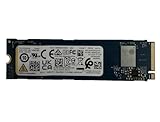
- Sequential read/write up to (MB/s): 3050/1550
- Random read/write up to (IOPS): 355K/365K
- Compatibility: all systems supporting M.2 2280 NVMe PCIe Gen3 x4
| Capacity | Maximum sequential read | Maximum sequential write | Rated endurance (TBW) |
|---|---|---|---|
| 256GB | Up to 6,000MB/s (Kioxia manufacturer maximum; capacity-specific speed may be lower) | Up to 5,300MB/s (Kioxia manufacturer maximum; capacity-specific speed may be lower) | 150TBW (Kioxia, 2024) |
| 512GB | Up to 6,000MB/s (Kioxia manufacturer maximum; capacity-specific speed may be lower) | Up to 5,300MB/s (Kioxia manufacturer maximum; capacity-specific speed may be lower) | 300TBW (Kioxia, 2024) |
| 1,024GB (1TB) | Up to 6,000MB/s (Kioxia manufacturer maximum; capacity-specific speed may be lower) | Up to 5,300MB/s (Kioxia manufacturer maximum; capacity-specific speed may be lower) | 600TBW (Kioxia, 2024) |
| 2,048GB (2TB) | Up to 6,000MB/s (Kioxia manufacturer maximum; capacity-specific speed may be lower) | Up to 5,300MB/s (Kioxia manufacturer maximum; capacity-specific speed may be lower) | 1,200TBW (Kioxia, 2024) |
The 6,000MB/s read and 5,300MB/s write figures are Kioxia’s headline maxima, not guaranteed speeds for every capacity or host. Kioxia also cites up to 900,000 random-read IOPS and 900,000 random-write IOPS on top models. The available specifications do not establish independent lab benchmarks, so real-world performance should not be inferred from these peak figures alone.
Kioxia rates the family at 1,500,000 hours MTTF. MTTF is a statistical reliability rating, not a promise that an individual drive will run for that many hours. Typical active power is listed at approximately 4.3–4.7W depending on model; the listed L1.2 low-power mode is 3.0mW typical. Actual behavior depends on the drive model and host implementation.
Rank #2

- Sequential read/write up to (MB/s): 3050/1550
- Form factor: M.2 2280 (22mm x 80mm)
- Interface: NVMe PCIe 3.0 Gen3 x4
- Compatibility: all systems with M.2 2280 NVMe PCIe slot
What is the difference between BG6 2230 and 2280?
The numbers describe the module’s physical dimensions: M.2 2230 is about 22mm wide and 30mm long, while M.2 2280 is about 22mm wide and 80mm long. BG6 modules are single-sided in both sizes. A 2230 fits systems designed for that shorter module, including some ultra-mobile devices; 2280 is the more familiar length in laptops and desktops.
Length is not interchangeable by default. A 2230 drive will not replace a 2280 drive in a standard 2280 mounting position without suitable mounting and clearance, and a 2280 module cannot fit a space limited to 2230. Check the device’s service documentation for supported lengths, mounting points and physical clearance before ordering.
Rank #3
Will a BG6 work in your laptop, desktop or handheld?
Check both the connector/interface and the physical bay. The BG6 is an M.2 PCIe 4.0 x4 NVMe drive; a device with an M.2 slot for SATA-only drives or a different interface may not support it. PCIe generations are generally backward compatible, but the host determines the negotiated link speed, so a compatible older-generation system will not run the drive at PCIe 4.0 speeds.
- Look up the exact supported M.2 length: 2230 or 2280.
- Confirm the slot supports PCIe NVMe, not just an M.2-shaped SATA connection.
- Check the device maker’s capacity limits and installation requirements.
- If encryption is a requirement, verify that the specific drive configuration is the SED option with TCG Opal 2.01 support.
These checks matter for handhelds and compact laptops as much as desktops: a compatible interface does not guarantee that the drive’s length, mounting or clearance will fit.
Rank #4

- Compatibility: all systems that support M.2 2280 PCIe Gen3 x4 NVMe
- Form factor: M.2 2280 (22mm x 80mm)
- Sequential read/write up to (MB/s): 3050 / 1550
- Random read/write up to (IOPS): 355K / 365K
- MTTF: 1.5 million hours
Is the Kioxia BG6 worth buying?
The BG6’s appeal is a compact PCIe 4.0 design offered in two common M.2 lengths, with capacities up to 2TB and strong manufacturer-rated peak speeds. It may suit a system that explicitly supports the chosen size and NVMe interface. The specifications alone cannot establish value against alternatives: independent test results, current street prices and retail availability are not established here.
Choose in this order: confirm compatibility, pick the capacity you need, compare its TBW rating with your expected write workload, and check the listing for any required SED feature. Before buying a listing such as “KIOXIA BG6 1TB M.2 2230 NVMe SSD,” verify that your device accepts a 2230 NVMe drive and that the listing’s exact model and condition meet your needs.
Do these 3 things before closing this tab:
1Clear out junk files and repair common Windows errors2Fix the driver behind crashes, sound loss and screen glitches3Repair Windows errors before they cause bigger problemsQuick Recap
Product prices and availability are accurate as of the date/time indicated and are subject to change. Any price and availability information displayed on Amazon at the time of purchase will apply.

