
To synchronize maps in real time, turn each meaningful map action into a small, validated event, send it through Socket.IO to a room for that shared map, and apply the accepted update on every connected client. Keep the server authoritative for shared state, send a snapshot when a client joins or reconnects, and prevent remote updates from being emitted back as new local actions.
How map synchronization works
A map library handles rendering and interaction; Socket.IO carries application events between browsers and your server. The server decides which users may join or change a shared map, updates its canonical state, and broadcasts accepted changes to the relevant room.
- Initialize the map in each browser.
- Listen for actions that matter to your application, such as a marker drag ending or a user selecting a feature.
- Convert each action into a compact payload with a map identifier, action type, feature identifier, and relevant coordinates or viewport values.
- Send the event to the server. Validate the user’s authorization and the payload before changing shared state.
- Broadcast the accepted update to clients in that map’s room.
- Apply incoming updates locally without treating them as new user actions.
- Send a current snapshot on joining and after reconnection so clients can recover state they may have missed.
This pattern works for shared markers, trip progress, selected features, and synchronized viewports. It does not require every browser to send every pixel of pointer movement: transmit semantic changes that other users need to see.
Choose events and payloads that match the map
Send meaningful changes, not noisy input
For a draggable marker, send its final position when the drag ends rather than broadcasting every intermediate pointer movement. For a collaborative viewport, send the center and zoom after a deliberate view change, or send bounds if the shared action depends on the visible area. High-frequency updates can be useful for a live cursor or moving vehicle, but decide deliberately how often to send them and whether intermediate positions can be dropped.
#1 Best Overall

- 【Real-time GPS tracker】Our small GPS tracker allows global tracking and location, it can record the location of your things at any time, and find your lost items by making a sound.
- 【No Subscription】The GPS tracker for vehicles no subscription required or monthly fees. You can use it for a long time with just a one - time purchase.The tracker device also suitable for tracking pets, and can even be used for tracking vehicles, the elderly and children.
- 【Battery durable】The GPS trackers for cars is battery-powered with a low-power design and a standby time of more than 1 year. Once the battery runs out, it can be replaced.
- 【Portable & hidden】The tracking device for cars is compact and lightweight, so you can take it with you anywhere.lt can be easily attached to various valuable items such as keys, wallets, backpacks, luggage, etc. lt's well hidden and not easily found by others.
- 【iOS Only】This GPS tracking device is for iOS only and compatible with Apple Find My without the need to download an additional app, making it easy and convenient to use.
Give the event a stable, explicit shape
A marker update might look like this:
{"mapId":"trip-42","type":"marker:move","featureId":"van","lat":37.77,"lng":-122.42,"revision":8}Include only fields needed to apply or validate the action. A stable application user or session ID can be useful for attribution, but the server should derive identity from authenticated connection state rather than trust an actor ID supplied by the browser. Treat IDs, coordinates, event types, and revision values as untrusted input.
Distinguish shared state from transient presence
A marker position or selected feature may need to become part of canonical shared state. A cursor position may only need a transient broadcast and may not need persistence. Make that distinction explicit: storing every temporary movement can increase traffic and create stale state, while failing to store important changes means a returning user cannot recover them from a snapshot.
Build a minimal Socket.IO server
Install the server package with npm install socket.io. This example uses Node’s built-in HTTP server and an in-memory map state to show the event flow. It is a teaching skeleton, not a complete production service: add authentication, authorization, durable storage or shared state for multiple server instances, and application-specific validation before deployment.
Rank #2

- Premium GPS Tracker — The LandAirSea 54 GPS tracker provides accurate global location, real-time alerts, and geofencing. Easily attaches to vehicles, ATVs, golf carts, or other critical assets.
- Track Movements in Real-Time — Track and map (with Google Maps) in real-time on web-based software or our SilverCloud App. Location updates as fast as every 3 seconds with historical playback for up to 1 year.
- Powerful & Discreet — The motion-activated GPS tracker will sleep when not in motion for extended periods, preserving the battery life. The ultra-compact design and internal magnet create the ultimate discreet tracker.
- Lifetime Warranty — This GPS tracker is built to last. LandAirSea, a USA-based company and pioneer in GPS tracking offers a unconditional lifetime warranty that covers any manufacturing defects in the device encountered during normal use.
- Subscription Required — Affordable subscription plans are required for each device. Fees start as low as $9.95 a month for annual plans and $19.95 for monthly plans. No contracts, cancel anytime for a hassle-free experience.
const http = require("node:http");
const { Server } = require("socket.io");

const httpServer = http.createServer();
const io = new Server(httpServer);
const maps = new Map();

function validMapId(value) {
  return typeof value === "string" && /^[a-zA-Z0-9_-]{1,80}$/.test(value);
}

function getMap(mapId) {
  if (!maps.has(mapId)) {
    maps.set(mapId, { revision: 0, markers: {} });
  }
  return maps.get(mapId);
}

io.on("connection", (socket) => {
  // Attach authenticated user identity to socket in your auth middleware.
  socket.on("map:join", async ({ mapId } = {}, acknowledge = () => {}) => {
    if (!validMapId(mapId)) {
      return acknowledge({ ok: false, error: "Invalid map ID" });
    }

    // Replace with a real access check for this user and map.
    const allowed = true;
    if (!allowed) {
      return acknowledge({ ok: false, error: "Not authorized" });
    }

    const room = `map:${mapId}`;
    await socket.join(room);
    acknowledge({ ok: true, state: getMap(mapId) });
  });

  socket.on("marker:move", ({ mapId, featureId, lat, lng } = {}, acknowledge = () => {}) => {
    if (!validMapId(mapId) || typeof featureId !== "string" || featureId.length > 100 ||
        typeof lat !== "number" || !Number.isFinite(lat) || lat < -90 || lat > 90 ||
        typeof lng !== "number" || !Number.isFinite(lng) || lng < -180 || lng > 180) {
      return acknowledge({ ok: false, error: "Invalid marker update" });
    }

    // Verify this socket is authorized for this map and has joined its room.
    const room = `map:${mapId}`;
    if (!socket.rooms.has(room)) {
      return acknowledge({ ok: false, error: "Join the map first" });
    }

    const state = getMap(mapId);
    state.revision += 1;
    state.markers[featureId] = { lat, lng };
    const update = { mapId, featureId, lat, lng, revision: state.revision };

    // Send to the other members of this room, not back to the sender.
    socket.to(room).emit("marker:moved", update);
    acknowledge({ ok: true, revision: state.revision });
  });
});

httpServer.listen(3000);
The example checks coordinate ranges and confirms the socket joined the map room. A real authorization check must also run when joining and when modifying state; being in a room is not a substitute for verifying permissions. If you run several server processes, an in-memory Map is not shared across them. Use durable canonical storage and a Socket.IO-compatible shared adapter or another coordinated delivery design appropriate to your deployment.
Quick wins for a faster PC:
Repair Windows errors before they cause bigger problemsFix Now →Fix the driver behind crashes, sound loss and screen glitchesFind Drivers →Clear out junk files and repair common Windows errorsFree Scan →Connect a Leaflet map to the events
Leaflet emits events for map interactions, and its click event includes a latlng location. The following browser-side pattern assumes you have initialized a Leaflet map and marker named map and marker, and imported the Socket.IO client as io. Install the client package in the JavaScript application with npm install socket.io-client.
import { io } from "socket.io-client";

const socket = io();
const mapId = "trip-42";
let applyingRemoteUpdate = false;

function applyMarkerPosition(lat, lng) {
  applyingRemoteUpdate = true;
  marker.setLatLng([lat, lng]);
  applyingRemoteUpdate = false;
}

function joinMap() {
  socket.emit("map:join", { mapId }, (result) => {
    if (!result?.ok) {
      console.error("Could not join map:", result?.error);
      return;
    }

    const saved = result.state.markers.van;
    if (saved) applyMarkerPosition(saved.lat, saved.lng);
  });
}

// Register event handlers once, not inside the connect callback.
socket.on("connect", joinMap);
socket.on("marker:moved", (update) => {
  if (update.mapId !== mapId || update.featureId !== "van") return;
  applyMarkerPosition(update.lat, update.lng);
});

marker.on("dragend", () => {
  if (applyingRemoteUpdate) return;
  const position = marker.getLatLng();
  socket.emit("marker:move", {
    mapId,
    featureId: "van",
    lat: position.lat,
    lng: position.lng
  }, (result) => {
    if (!result?.ok) console.error("Marker update was rejected:", result?.error);
  });
});
Registering data handlers outside connect matters because that event fires again after a reconnection; adding the same handler inside it can make one server event trigger multiple client callbacks. Here, the connect handler rejoins the room and requests a fresh snapshot. The remote-update flag prevents programmatic marker movement from being treated as a new local drag; if you also synchronize viewport changes, use the same kind of guard around remote viewport application.
Rank #3

- LONG-BATTERY VEHICLE TRACKING – Built for cars, trailers, fleets, equipment, boats, and motorcycles, Tracki’s trailer GPS tracker uses a 10,000mAh battery for 2 to 7 months active at 1–5 minute updates or up to 12 months in sleep mode.
- SUBSCRIPTION-POWERED SERVICE – The Tracki GPS tracker connects through 4G LTE Cat1 with built-in global SIM, giving app access, real-time location updates, alerts, and support after activation; Subscription Required, Cancel Anytime.
- FLEET-WIDE CONTROL – A practical fleet GPS tracker for work vehicles, with subscription-powered 15-second to 1-minute updates plus speed, geofence, movement, idle time, impact, and battery alerts through SMS, email, and app notifications.
- TRAILER & ASSET COVERAGE – A GPS tracker for trailer, car, truck, RV, boat, or equipment use, with 185+ country coverage, GPS accuracy of 5 to 10 meters outdoors, and Wi-Fi fallback indoors when GPS signals are harder to reach.
- SECURE TWO-WHEEL MONITORING – Use this motorcycle tracker for authorized bikes and powersport assets, with a built-in strong magnet, included screw mount, and weatherproof design for flexible vehicle placement.
The example uses an acknowledgment callback for join and update results. That lets the client distinguish an accepted update from a rejected one, but it does not replace snapshot recovery. A client may disconnect after sending an event and before receiving the acknowledgment, so production designs should use canonical revisions and snapshots to resolve uncertainty rather than assume the update definitely succeeded or failed.
Synchronize the viewport carefully
Viewport synchronization is a separate design choice from marker synchronization. It can make a shared exploration session feel coordinated, but it can also repeatedly override a user who is inspecting a different area. Decide whether the map follows one designated controller, whether each participant may move it, or whether viewport changes are merely suggestions.
Do these 3 things before closing this tab:
1Fix the driver behind crashes, sound loss and screen glitches2Repair Windows errors before they cause bigger problems3Scan for outdated or missing drivers - takes under a minuteLeaflet provides map events such as movement and zoom changes. For Google Maps JavaScript API, event listeners are registered with addListener; when the application needs authoritative viewport bounds, Google recommends bounds_changed rather than relying on center_changed and zoom_changed independently. Those events can fire separately, before getBounds() is useful for the completed viewport.
Rank #4
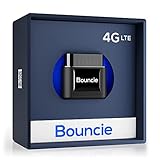
- Real-Time GPS Tracker Device for Vehicles — Ideal for personal use or fleet management, this car GPS tracker provides up-to-the-minute location updates. Our car tracking device also provides unlimited trip history, including a detailed route history
- Driving Insights — Our OBD tracker for cars monitors speed, acceleration, hard braking, idle time, and more. This versatile family and fleet GPS tracker for cars also helps improve road safety by sending alerts in response to unsafe driving practices
- Vehicle Health — Unlike other vehicle tracking devices, our car tracker device continuously monitors diagnostic engine data, alerting you to potential maintenance issues, so you can avoid downtime and keep fleet and family vehicles in peak condition
- Geo-Fencing & Accident Detection — Set up geo-fences to receive notifications when your vehicle enters or exits designated areas; Equipped with advanced sensors and software, this vehicle tracker device instantly detects impacts and sends SMS alerts
- Easy To Install & Low Monthly Subscription — Our OBD GPS tracker for vehicles plugs directly into OBD2 ports and works on most vehicles 1996 and newer; $9.65 monthly subscription required - no hidden activation or return fees - cancel anytime
- Send a coherent viewport payload, such as center plus zoom or bounds, instead of separate partially updated values.
- Apply incoming viewport data without emitting it back as a local change.
- Consider a controller or ownership rule when simultaneous viewport changes would cause users to compete.
- Throttle or debounce frequent view events if the application does not need every intermediate position.
Leaflet or Google Maps JavaScript API?
| Consideration | Leaflet | Google Maps JavaScript API |
|---|---|---|
| Provider model | Provider-agnostic map library; choose and configure a tile provider separately. | Managed commercial mapping API. |
| Interaction events | Map and layer objects emit subscribable events, including map clicks with a location. | Uses event listeners for map, marker, and shape interactions; use bounds_changed for authoritative viewport bounds. |
| Operational considerations | Check the chosen tile provider’s terms and attribution requirements. | Check the current API terms, attribution requirements, quotas, and costs for your use case. |
Choose based on the rendering and data-layer features your application needs, as well as provider terms and operating requirements. Socket.IO’s role is the communication channel; it does not choose a map renderer or remove the need to comply with the map or tile provider’s conditions.
Rooms, identities, and recovery
Scope broadcasts to one shared map
A Socket.IO room is a natural boundary for a shared map, trip, or project: join clients to the appropriate room, then broadcast map events only there. Namespaces can separate larger communication domains or permission boundaries, but do not treat either namespaces or rooms as a replacement for application-level authorization.
Do not use socket.id as a permanent user identity
A Socket.IO socket.id is ephemeral: it can change after reconnection and differs between browser tabs. It also does not provide a server-side queue for messages sent while that client is disconnected. Use an authenticated application user or session identity for durable attribution and permissions, and keep it separate from the current transport connection.
Free tools Windows power users keep installed
One-click scans. No signup required.
Best Value

- 📱 Global Cloud Positioning – Works with both Google's Find Hub and Apple‘s Find My (Not for Huawei app or GPS app)
- 📢 Loud Alert Sound – Built-in speaker with up to 110dB for quick locating
- 🔋 Far Superior Battery Life – Up to 2 years battery life on Android and ios
- 💧 IP68 Waterproof – It provides protection against rainwaterand splashes
- 🔊 Visualize Distance – Visualize distance using Find my & Find Hub technology within Bluetooth range, allowing you to immediately see the distance
Recover from missed events with canonical state
Reconnection restores communication, but it does not by itself guarantee a disconnected client received every update that happened while it was away. On connect, rejoin the relevant room and fetch the latest canonical snapshot. A monotonically increasing revision, as in the example, can help a client detect whether its local state is behind. For applications where gaps must be reconciled precisely, define a server-side history or resynchronization protocol; do not assume the connection ID or transport reconnection alone supplies one.
Socket.IO is not a raw WebSocket endpoint
Socket.IO normally uses WebSocket transport, can fall back to HTTP long-polling when WebSocket is unavailable, and automatically attempts reconnection after a lost connection. It also defines its own protocol metadata around packets, namespaces, and acknowledgments. A generic WebSocket client cannot connect to a Socket.IO server as though it were a plain WebSocket service; use the Socket.IO client library on the browser side.
Quick Recap
Product prices and availability are accurate as of the date/time indicated and are subject to change. Any price and availability information displayed on Amazon at the time of purchase will apply.

