
What’s actually slowing this PC down?
Pick the symptom - the matching free tool is one click away.
Use the OpenAI API as a dependency inside your test runner—not as a replacement for the runner’s setup, assertions, isolation, or reporting. A reliable integration prepares known test data, calls the API, validates the response, checks any resulting application behavior with ordinary assertions, and saves enough evidence to diagnose failures.
How an API-backed test should work
Keep the test runner in charge of the test lifecycle. The model can supply a classification, propose a test case, or request an application-owned tool; your code decides what runs and whether the result passes.
- Prepare: Load a known input and establish isolated application state.
- Call: Send a request to the OpenAI API using the official SDK and credentials supplied through the execution environment. The OpenAI quickstart demonstrates environment-variable configuration and a first Responses API request.
- Validate: Check for refusal or incomplete output, then validate the response format and any required fields.
- Assert: Verify the application behavior that matters with deterministic checks, including user-visible results where appropriate.
- Record: Preserve request context and framework artifacts sufficient to understand a failure without exposing secrets or sensitive test data.
Keep API keys out of source control and test files. Supply them through the CI or local execution environment, and avoid logging credentials or sensitive prompts.
Choose function calling or structured output by the job
| Choice | Use it for | What your code must do |
|---|---|---|
| Function calling | The model needs to request an action from an application-owned function or tool. | Validate the requested call, execute it under your application’s rules, and return the tool result to the model as part of the multi-step exchange. |
| Structured output | Your application needs a response in a declared schema, such as a classification or proposed test case. | Use a supported schema, validate the result, and handle refusal or incomplete responses rather than assuming every request returns the expected payload. |
These mechanisms solve different problems: function calling mediates actions, while structured output constrains data returned to your application. OpenAI explains the distinction and supported schema constraints in its Structured Outputs guide and function-calling guide. Strict mode has schema requirements; check the current documentation before relying on a particular schema.
#1 Best Overall

- 【USB Cable Performance Testing】Test USB cable continuity, functionality (charging, data transfer, high-speed signal), and measure internal resistance for power efficiency. Verify ground wire connection to outer shell for cable integrity, safety, and shielding.
- 【Type-C eMarker Chip Reading】Reads eMarker chip parameters in Type-C cables, providing detailed performance information (e.g., maximum current, voltage, data transfer rates) to help users fully understand cable capabilities and ensure safe, efficient device usage.
- 【High-Definition Color Display】 The USB cable checker features a 2.4-inch high-definition color display. With the left white button, you can easily switch between function pages to view real-time detailed status of the cable, including internal resistance, power delivery efficiency, and cable quality. This helps you quickly identify inferior cables.
- 【Wide Compatibility】The usb tester can accurately identify and verify USB cable versions, including USB 2.0 and USB 3.2. It integrates PD 3.0 and PD 3.1 protocol detection functions, enabling quick verification of whether the cable supports the latest PD 3.0/3.1 standards, ensuring the cable meets high-power charging and fast data transfer requirements.
- 【Multiple Power Supply Options】The black button on the left can flexibly switch the power supply mode, and support the use of AAA battery or Type C 5V to stably supply power to the USB tester
A valid structured response proves only that the output met the applicable format constraints. It does not prove the content is correct, that generated test code is safe, or that the application behaves as intended. Those questions require evaluation criteria and ordinary application assertions.
Build repeatable model checks alongside application tests
Store representative model inputs and evaluation criteria as versioned test assets. For each case, define what acceptable behavior means, run the cases against the model-backed behavior under review, inspect failures, and refine the implementation or criteria. This makes it possible to compare behavior across application changes or model upgrades.
Rank #2
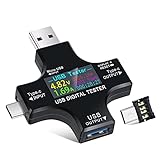
- UPGRADED MULTIFUNCTIONAL USB C POWER METER: Detects the charging status and process of your USB-enabled or type c-enabled devices. Supports QC3.0, QC2.0 and BC1.2. A Must Gadget checks the charging performance (charging speed and quality) of the output wall/car/solar panel chargers and USB charging cables. It can be also used to find the highest current of the Wireless Charger, and test capacity and electric energy of power bank
- PROFESSIONAL SAFETY GUARD: Featured with over-voltage protection, over-current protection, under-voltage protection, low energy protection and alarm system. This upgraded USB Type C tester can detect safety and maximally protect the appliances from damaging. It will cut off output automatically and alarm by sound, while it will save data when power off suddenly
- MULTIPLE COLOR SCREEN DISPLAY MODES: New upgraded version offers 8 LCD main color screen display interfaces, allowing switching the display interface by pressing the key. With the new interface settings, this instrument can monitor voltage, current, capacity, electric quantity, power, load impedance, D+/D- voltage and other data of USB
- WIDE RANGE OF APPLICATION: Thanks to the PD protocol quick charging mode measurement technology, this new multimeter supports the updated iPhone X mobile phone. (Support iphone 8 / 8P / iPhone Xs quick charging, 29W power, 5V3A / 9V3A / 12V2.5A / 15V2A). It also can be applied to test other type C devices, Compatible With Galaxy S10/S9/Note 10 +, ChromeBookPixel, OnePlus and More
- QUALITY COMMITMENT: We always believe in the stability and continuous improvement of product quality. Package includes 1 x USB Tester. (Note: If the USB tester does not show any parameters, please insert the small adapter sent with the package into the side hole of the USB tester to trigger the PD charging function)
OpenAI’s Evals guide describes criteria-driven evaluation and says existing Evals become read-only on October 31, 2026, with the platform scheduled to shut down on November 30, 2026. The guide points new users toward Datasets for iterative experimentation. This is a changing product timeline; verify the current dates and migration guidance before adopting a workflow that depends on Evals.
Evaluation cases complement, rather than replace, conventional tests. A model evaluation asks whether outputs meet defined criteria across representative inputs; a deterministic application assertion checks a specific application contract or user outcome.
Rank #3

- Improved Measurement Accuracy: Our USB C Tester can accurately measure accuracy: ± (1%+5). The data is more accurate for detecting charging devices such as chargers, mobile phones, tablets, and power banks. Make this Type-C meter suitable for more 3C digital peripheral products, making it the first choice for digital gamers and electronics enthusiasts.
- Wide Applicability: Thanks to the PD protocol quick charging mode measurement technology. Measuring current: 0-6.5A; measuring voltage: 4V-30V. The wide test range makes this USB meter suitable for more 3C digital peripheral products, and it’s a cost-effective solution for anyone looking to optimize their electronic devices’ charging performance.
- Detect Various Fast Charging Protocols: The USB power meter supports PD2.0/3.0, QC2.0/3.0, FCP. SCP, AFC, PE, DASH VOOC and Super VOOC protocol charging. Whether you’re testing chargers, power banks, or any USB-C device, this tester is up to the task.
- LED Color Display Interface: This USB C Power Meter features a LED color high-definition display with high resolution and clarity. It can display voltage, current, power, capacity, energy, time, current direction, and CPU temperature, D+/D- voltage and other data of USB. You can easily switch between interfaces by pressing a key. Double-click the button to rotate the displayed content.
- Button Function: 1.Click the button once to switch screens in a cyclical manner; 2.Double-click the button to rotate the displayed content; 3.Press and hold the button (3 seconds): Clear all capacity, amount of electricity, timing.
Use Playwright and Pytest without mixing responsibilities
For browser end-to-end coverage, Playwright recommends its Pytest plugin. Its function-scoped page and browser-context fixtures provide a fresh context for each test, helping keep browser state isolated. The Python introduction and Pytest documentation cover setup, fixtures, browser selection, and artifact configuration.
A sound test keeps the model call separate from browser assertions: make the API request in the test or a fixture, validate its result, then drive the page using stable, user-facing locators and assert what a user would see. Playwright’s principle is: “Automated tests should verify that the application code works for the end users.” Its best-practices guide also recommends isolation and resilient locators.
Rank #4

- 【7 Modes Display Monitor】 DROK USB Tester is equipped with digital color LED display screen, which can be switched between 7 display modes. This multimeter can be used to measure voltage, current, power, capacity. Through the 7 modes, you can clearly see the voltage, current, capacity and power during charging. Only 1 button to switch the display mode, simple and handy.
- 【Dual USB Output】 This item is equipped with USB-A input and dual USB 2.0 output. The output ports support PD QC 3.0 fast charge protocol. This meter can auto identify the fast charge protocol, which can charge your device among 3.6V to 12V 3A. Output Ⅰ can be used for device charging and data transfer, and output Ⅱ can only be used for charging.
- 【Multifunction】 DROK USB detector can be used for capacity checking, capacity clear, over voltage, under voltage, over current and short circuit alarm, which is easy to test the power, quality and know the health condition of your device chargers or USB cables.
- 【Easy to Use】 The multimeter only has 1 button. Once you plug in the meter, you can test the parameter you want. The button can switch 7 modes display——VA(Voltage & Current), C(Capacity), P(Power), VA+C, VA+P, C+P, VA+C+P.
- 【Application】 DROK USB Meter can be used for the devices between 3.2-30V and 0-5A. You can use this for 5V 9V 12V 24V 30V solar panel, power bank, battery charger, USB able.
When the UI flow matters
Use the Pytest browser fixtures to exercise the interaction, and assert observable behavior such as visible text, enabled controls, or a completed workflow. Avoid making a model’s own judgment the sole pass/fail condition for the application.
When a direct API check is enough
Use Playwright’s APIRequestContext to prepare server state before opening a page or verify backend postconditions after an interaction. The API testing documentation describes direct HTTP(S) requests and using them for setup and post-action checks. Add browser interaction only when the user-facing flow is part of what you need to test.
The Tool Desk
Outbyte PC Repair FREERepair Windows errors before they cause bigger problemsFix Now →Outbyte Driver Updater FREEScan for outdated or missing drivers - takes under a minuteDriver Scan →Best Value

- Improved Measurement Accuracy: Our USB C Tester can accurately measure accuracy: ± (1%+5). The data is more accurate for detecting charging devices such as chargers, mobile phones, tablets, and power banks. Make this Type-C meter suitable for more 3C digital peripheral products, making it the first choice for digital gamers and electronics enthusiasts.
- Wide Applicability: This USB power meter is equipped with a 12A high current terminal, which is more stable. Measuring current: 0-12A; measuring voltage: 4V-30V. The wide test range makes this USB meter suitable for more 3C digital peripheral products, and it’s a cost-effective solution for anyone looking to optimize their electronic devices’ charging performance.
- Detect Various Fast Charging Protocols: The USB power meter supports PD2.0/3.0, QC2.0/3.0, FCP. SCP, AFC, PE, DASH VOOC and Super VOOC protocol charging. Whether you’re testing chargers, power banks, or any USB-C device, this tester is up to the task.
- Upgraded Curve Function: This USB C tester has upgraded curve function to better record real-time voltage and current. You can set the time of curve page (5mins/15mins/60mins/2hrs) by long press button to monitor the real-time voltage and current. In addition, the voltage and current of each cell will be automatically adjusted according to the actual voltage and current.
- ISP Color Display Interface: This USB C Power Meter features a 1.06-inch ISP color high-definition display with high resolution and clarity. It can display voltage, current, power, capacity, energy, time, maximum voltage, maximum current, maximum power, current direction, and CPU temperature. You can easily switch between interfaces by pressing a key. Double-click the button to rotate the displayed content.
Capture evidence that makes CI failures diagnosable
Configure Playwright to retain traces, and, where useful for your suite, screenshots or video. The Trace Viewer can show action timelines, DOM snapshots, and network requests, helping distinguish a browser or application failure from an unexpected model result.
For a failed model-backed test, useful run evidence can include the versioned input or case identifier, model and request configuration, validated structured result, failing assertion, and Playwright trace. Treat this as an implementation choice, not a mandated universal log format. Redact secrets and avoid retaining personal or sensitive data unnecessarily.
Constrain any model-requested actions
Do not treat generated code or a requested browser action as permission to execute it. Route actions through application-owned tools with explicit constraints, run them in an isolated test environment, and check resulting state using ordinary assertions. Use synthetic data for controlled test applications.
OpenAI’s computer-use guide describes a developer-provided environment that executes model requests and includes a Playwright example. It is a building block for a controlled integration, not a turnkey test framework.
Do these 3 things before closing this tab:
1Fix the driver behind crashes, sound loss and screen glitches2Repair Windows errors before they cause bigger problems3Scan for outdated or missing drivers - takes under a minuteQuick Recap
Product prices and availability are accurate as of the date/time indicated and are subject to change. Any price and availability information displayed on Amazon at the time of purchase will apply.

