
An implanted brain-computer interface helped one man with ALS produce synthetic speech from neural activity when he tried to speak. In a 2025 Nature study, the system generated voice output that closely resembled his pre-ALS voice and was more intelligible to unfamiliar listeners than his remaining speech. It did not restore his ability to speak biologically, and it remains an experimental research technology—not a routine treatment or consumer device.
What did the 2025 ALS brain-computer interface do?
Wairagkar and colleagues’ 2025 Nature report, “An instantaneous voice-synthesis neuroprosthesis,” described one man with amyotrophic lateral sclerosis (ALS) and severe dysarthria. He still had some residual speech, but it was difficult to understand. The implanted system decoded neural activity as he attempted to speak and used it to synthesize voice.
The study’s key result was communication through generated speech, not recovery of the muscles used for speaking. The synthesized voice closely resembled the participant’s voice before ALS, and transcriptions by listeners unfamiliar with the system showed a considerable intelligibility improvement over his residual speech. Those findings apply to this participant and the study’s tasks; they do not establish how well the system would work for other people.
How did the implanted system work?
Four arrays containing 256 microelectrodes recorded activity from the ventral precentral gyrus, a brain region involved in movement. The participant attempted to say phrases presented on a screen. The system decoded the neural activity and synthesized speech, with closed-loop audio feedback so he could hear the generated output.
Outdated Drivers Are Slowing You Down
One free scan finds every outdated or missing driver and matches the right update for your exact hardware.Free scan · exact hardware matchWindows Errors? Fix Them Before They Spread
Repair common Windows errors and clear accumulated junk for a smoother, more stable PC - no reinstall needed.Free scan · no reinstall#1 Best Overall

- Preset & Programmable Buttons - Our AAC device features 38 preset buttons with essential daily phrases like “yes,” “no,” “I'm thirsty,” and “I love you,” so kids can start communicating right away. The 16 programmable buttons can be customized to fit individual needs, helping build emotional connections and encourage real interaction. Helps non‑verbal children and individuals with autism, stroke, or TBI express needs, feelings, and thoughts with ease.
- Take It Anywhere - This AAC device runs on 3 AAA batteries and needs no Wi-Fi. It‘s compact with both side handles for easy gripping and carrying. Use it as a desktop device at home or school, or take it along for travel, medical appointments, or everyday outings. No auto-shutoff — so it’s always ready when your child needs it.
- Designed for Non‑Verbal Users - Struggling with communication? This speech therapy tool changes that. Designed for non-verbal children, stroke survivors, and individuals with autism, ALS, aphasia, or Down syndrome — it significantly improves daily communication and expression. It gives a voice to those who struggle to express emotions. A truly remarkable tool for families and therapists.
- Improving Communication Skills - This talking Aids tool helps reduce anxiety, build confidence, and provide positive feedback — while encouraging daily practice of language and speech skills. A more convenient, all-in-one alternative to traditional non-verbal communication cards, PEC cards, and communication boards.
- Intuitive Easy Use - This communication aid features a simple, intuitive layout. The raised buttons provide tactile input, while the combination of distinct colors and unique icons on each button keeps the device clear and easy to understand — helping children visually sort words and phrases with ease.
This is not evidence that the implant reads arbitrary private thoughts. The demonstrated task involved neural activity associated with attempted speech, in a structured setting. “Instantaneous” describes the voice-synthesis approach in the paper’s title; it should not be taken to mean that the study established effortless, unrestricted conversation in everyday life.
How does this result compare with other speech-BCI studies?
Several recent studies have shown that brain-computer interfaces can support communication, but they involved different participants, recording systems, tasks and outcome measures. Their figures should not be treated as a single head-to-head ranking.
Rank #2

- 37 Easy To Understand Talking Buttons- Our AAC device for speech comes with 37 pre-installed instructions in a picture and color format that makes it very easy to communicate simple, but essential instructions such as yes, no, I’m thirsty, I’m sleepy, it's too loud and many more, Compared with other competing products, more talking buttons can better meet daily needs
- 1 Male/Female Voice Switch & 8 Programmable Buttons- AAC device for autism features a male and female voice switch button can switch the device to male or female voice at will. 8 programmable buttons that allow you to record your own tailored instructions with your voice! You can customize the device to your specific needs by recording your voice to provide a more personalized and effective communication experience
- Adjustable Volume- AAC Communication Device for Speech Therapy Requires 3AAA batteries, the sound is louder and louder, you can use it in busy areas at will. AAC device can also adjust the volume to meet the needs of any scenario. The product is lightweight and has a storage bag, so it is easy to carry when traveling
- A Wide Variety Of Uses- The non verbal communication tools are suitable for a wide range of individuals, including non-verbal Children, those with autism or other special needs, as aids for stroke patients, those with apraxia or aphasia, or just anyone with speech difficulties. The device is a fantastic convenient alternative to non verbal communication cards, PEC cards for autism, and communication boards for nonverbal kids
- Reduce Anxiety and Build Confidence- The Talker Buddy Build confidence and understanding by Clicking the button to expand language and communication skills and encourage response and recognition with pictorial cues. Engineered to help provide nonverbal individuals with an effective means of communication to express their needs and feelings with loved ones
| Study | Participant and system | What was reported |
|---|---|---|
| 2024 UC Davis/BrainGate study, summarized by the National Institutes of Health | A 45-year-old man with ALS and severe dysarthria. Four intracortical arrays with 256 electrodes recorded brain activity; decoded words appeared on a screen and were spoken using text-to-speech designed to resemble his pre-ALS voice. | The system activated 25 days after implantation. NIH reported an initial 30-minute calibration using a 50-word vocabulary and about 97.5% word accuracy within 16 hours of use. These are results for this separate system, not the 2025 voice-synthesis study. |
| 2025 Wairagkar et al. study in Nature | One man with ALS used an implanted neuroprosthesis to synthesize speech from activity recorded as he attempted to speak. | Listeners’ transcriptions showed a considerable intelligibility improvement over his residual speech. The cited study summary does not state a directly comparable word-accuracy percentage. |
| 2025 UCSF/UC Berkeley study in Nature Neuroscience, summarized by NIH | A 47-year-old woman with paralysis after a stroke—not ALS—used high-density surface recordings and a continuously streaming speech synthesizer. | NIH reported decoding in 80-millisecond increments. This latency result belongs to the stroke study, not the ALS voice-synthesis report. |
| 2026 ALS home-use study, summarized by Nature Portfolio | One man with ALS used an intracortical BCI at home near daily for almost two years to communicate and control a cursor. | Nature Portfolio reported more than 3,800 hours of use, 183,060 sentences, nearly two million words and an average of 56 words per minute. Structured testing exceeded 99% word accuracy with a vocabulary exceeding 125,000 words; 92% of sentences were rated at least mostly correct. These measures belong to this separate home-use study. |
The NIH’s 2024 account quotes that study’s participant, Casey Harrell: “I hope that technology like this speech brain-computer interface will help future patients speak with their family and friends.” Harrell was not the participant in the 2025 Nature voice-synthesis report.
What the results do—and do not—show
Together, these reports demonstrate several ways researchers are translating brain activity into communication: synthesized voice, text displayed on a screen, and systems used over extended periods. They are promising demonstrations, but evidence from one person cannot establish the likely benefit for the broader ALS population, population-wide long-term safety, or when an implant might become routinely available.
Rank #3
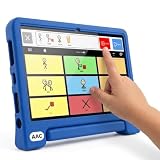
- Setup in ~40 seconds — open the box, power on, start speaking.
- No Wi-Fi required — works offline anywhere.
- One-time purchase — no subscriptions, no surprise fees.
- Start small, grow big — begin with a few tiles and expand to large boards as skills grow.
- 3,400+ built-in images for everyday communication.
The longer home-use study provides evidence that one person could use an intracortical system at home over an extended period. Its Nature Portfolio summary also identifies challenges that remain, including broader applicability, portability, caregiver training and consistent accuracy during natural conversation. Results from that system should not be attributed to the 2025 instantaneous voice-synthesis case.
Independent reader supportYour contribution helps us test, update, and keep practical guides available for everyone.Can someone with ALS get this implant now?
The cited reports describe research systems, not implants offered as ordinary consumer products or routine treatment. They do not establish general availability, a standard clinical pathway or a timeline for wider access. An individual’s communication needs and options are matters to discuss with their clinical team and speech-language or assistive-technology specialists.
Rank #4

- Preset and Recordable Buttons - Our AAC device features 38 preset buttons with essential daily phrases like “yes,” “no,” “I’m thirsty,” and “I love you,” so kids can start communicating right away. The 16 programmable buttons can be customized to fit individual needs, helping build emotional connections and encouraging real interaction. You can also use the included DIY stickers to doodle or label each recording.
- A Wide Variety Of Uses -Struggling with communication? This speech therapy tool changes that. Its simple, colorful interface makes it easy for students learning to use AAC to get started. It features large, easy-to-press buttons, a clear layout, and clear, adjustable audio. Designed for non-verbal children, stroke survivors, and individuals with autism, ALS, aphasia, or Down syndrome, it significantly improves daily communication and expression. It gives a voice to those who struggle to express emotions — a truly remarkable tool for families and therapists.
- Portable and Easy to Carry - This AAC device runs on 3 AAA batteries and works without an internet connection. It’s generously sized for easy operation, with handles on both sides for a comfortable grip and easy carrying. Use it as a desktop device at home or school, or take it along for travel, medical appointments, or everyday outings.
- Improving Communication Skills - This talking aid features a textured back for extra sensory support — a thoughtful and unique design. It helps reduce anxiety, build confidence, and provide positive feedback while encouraging daily practice of language and speech skills. It’s a more convenient, all-in-one alternative to traditional non-verbal communication cards, PECS cards, and communication boards.
- Easy to Get Started - This communication aid features a simple, intuitive layout with raised buttons for tactile input. Distinct colors and unique icons help children visually sort words and phrases with ease. The male/female voice switch delivers a natural, authentic voice. Smart auto shut-off after 5 minutes of inactivity saves battery life — press any button or use the switch to wake it instantly. Designed for effortless daily use.
Augmentative and alternative communication (AAC) can provide other ways to communicate. The 2024 New England Journal of Medicine study abstract notes that some people with paralysis use eye-gaze systems or head trackers, while the 2026 Nature Portfolio summary notes that assistive technologies can be slow, unreliable or dependent on professional support. These approaches do not use an implanted neural decoder; access, setup and support needs vary by person.
For now, the practical distinction is between a promising implanted research system and communication tools that may already be available through AAC services. A low-tech communication board can also serve as an alternative or backup, but it does not restore biological speech or provide neural voice synthesis.
Quick wins for a faster PC:
Repair Windows errors before they cause bigger problemsFix Now →Scan for outdated or missing drivers - takes under a minuteDriver Scan →Quick Recap
Best Value
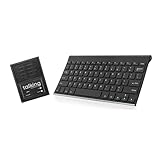
- ✅ 𝐖𝐢𝐫𝐞𝐥𝐞𝐬𝐬 𝐓𝐚𝐥𝐤𝐢𝐧𝐠 𝐊𝐞𝐲𝐛𝐨𝐚𝐫𝐝: Talking Keyboards wireless standard keyboard is perfect for adults and seniors who can type on a standard computer-sized keyboard. A great choice for laryngectomy, throat cancer, and post-operative patients.
- ✅ 𝐏𝐨𝐰𝐞𝐫𝐟𝐮𝐥 𝐒𝐩𝐞𝐞𝐜𝐡 𝐆𝐞𝐧𝐞𝐫𝐚𝐭𝐢𝐧𝐠 𝐃𝐞𝐯𝐢𝐜𝐞: Designed for vocally impaired and speech-limited persons of all ages. Talking Keyboards wireless standard keyboard works seamlessly without the need for a PC. It is a battery-powered, portable solution that speaks with an unlimited vocabulary.
- ✅ 𝐂𝐮𝐬𝐭𝐨𝐦𝐢𝐳𝐚𝐛𝐥𝐞 𝐏𝐡𝐫𝐚𝐬𝐞𝐬 𝐰𝐢𝐭𝐡 𝐐𝐮𝐢𝐜𝐤 𝐏𝐫𝐞𝐬𝐬: The wireless standard keyboard speaks 30 user-defined phrases with single key presses. Has the option to choose between male and female voices. Speech is instantly generated, making communication a breeze.
- ✅𝐔𝐬𝐞𝐫-𝐅𝐫𝐢𝐞𝐧𝐝𝐥𝐲 𝐚𝐧𝐝 𝐏𝐨𝐫𝐭𝐚𝐛𝐥𝐞: Our keyboard is ready to work straight out of the box. Lightweight and ultra-portable, it is designed for maximum convenience, ensuring you can communicate effortlessly, wherever and whenever.
- ✅𝐀𝐟𝐟𝐨𝐫𝐝𝐚𝐛𝐥𝐞 𝐀𝐀𝐂 𝐓𝐞𝐜𝐡𝐧𝐨𝐥𝐨𝐠𝐲: The wireless standard keyboard offers the most affordable keyboard augmentative communication (AAC) solution for children and adults. It focuses on simplicity and is highly compatible.
Product prices and availability are accurate as of the date/time indicated and are subject to change. Any price and availability information displayed on Amazon at the time of purchase will apply.

