
The Tool Desk
Outbyte Driver Updater FREEScan for outdated or missing drivers - takes under a minuteDriver Scan →Outbyte PC Repair FREEClear out junk files and repair common Windows errorsFree Scan →A Kinect can control MIDI, but it is not a MIDI instrument by itself. The camera supplies depth and body-joint data; tracking and mapping software converts that motion into notes, control changes, pitch bend, velocity, tempo or program changes, then sends MIDI to Ableton Live, another DAW, a software synthesizer or external hardware.
There is no single standardized “Kinect instrument” to install. The documented systems are custom controllers, research projects and installations, so a practical setup combines a compatible Kinect, a computer, skeletal-tracking software and a MIDI routing or mapping layer.

How the Kinect-to-MIDI signal chain works
- Sense: The Kinect measures depth and estimates body-joint positions.
- Interpret: Tracking software filters coordinates, recognizes gestures and determines which movement zones or performers are active.
- Map: A mapping layer converts movement features into MIDI notes, continuous controllers, pitch bend, velocity, tempo or program changes.
- Route: MIDI is sent to Ableton Live, Logic, MaxMSP, Gestrument, a virtual instrument or an external MIDI device.
- Render: The destination produces sound while visual or audio feedback tells the performer which gestures, zones and values are active.
This separation matters: changing the Kinect does not automatically change the musical behavior. The mapping software defines whether raising a hand plays a note, changes a filter, selects a track or does nothing.
What you need
- A compatible Kinect and its required power or data adapter. Kinect generations use different connections, drivers and operating-system support. Confirm those requirements before designing the software side.
- A computer with a supported tracking runtime. The runtime must expose skeletal or positional coordinates to the mapping application.
- A mapping layer. This can be a Processing program, Max/MSP patch, dedicated converter or custom application. It should provide calibration, smoothing, gesture thresholds and MIDI output.
- A MIDI destination. Use a DAW such as Ableton Live or Logic, a virtual synthesizer, Gestrument or physical MIDI hardware. A USB MIDI interface is needed when the destination is external hardware rather than software.
- Feedback. A screen showing skeletons, zones, active notes and control values makes calibration and performance much more reliable.
Documented Kinect music systems
| Project | Tracking and performers | Musical mapping and destination | Useful lesson |
|---|---|---|---|
| 01X, Rochester Institute of Technology (2016) | Real-time skeletal tracking; the documented setup supports one performer’s position and movement. | Movement cues are relayed to Ableton Live and can drive up to four tracks. | Position can select or control multiple musical layers, not just individual notes. |
| UPM Kinect MIDI controller (2013) | Commercial Kinect camera with Processing; hand movement and other body points are tracked. | Body positions are converted to MIDI control information for Ableton Live 8.2.2. The project separates its graphical controller from MIDI information management. | A modular design makes the visual interface and MIDI engine easier to change independently. |
| Human-motion MIDI controller thesis | Microsoft Kinect for Windows; hand positions are used, with a virtual foot controller. | Hand motion controls MIDI-enabled instruments or a DAW, with calibration and filtering. | Filtering and calibration are performance features, not optional polish. |
| Sculpting the Air analysis (IRCAM) | Kinect data is captured as movement input. | GestrumentKinectConverter transforms the data into MIDI values interpreted by Gestrument; the wider setup also uses Ableton Live and MaxMSP. | A converter can let a movement system feed an existing generative or compositional instrument. |
| MOTIV | Movement controls musical parameters. | Motion influences note velocity and tempo, and multitrack MIDI sequences can be loaded. | Motion can shape the expression and timing of prepared material instead of triggering every note directly. |
| KinectTheremin | Hand elevation; a two-person arrangement uses MIDI channels. | Height controls tone and routes to software synthesizers. | A small, continuous gesture vocabulary can produce an immediately understandable instrument. |
| Play Space | An overhead Kinect identifies participants and assigns them separate MIDI channels. | Movement is mapped to virtual instruments in Logic. | Overhead placement helps reduce occlusion when several people share the space. |
| dance.music | Kinect depth and position are processed in Processing. | Spatial zones activate Ableton Live tracks while body movement manipulates sound. | Zones provide a simple way to make physical space correspond to musical structure. |
These projects are examples of architectures, not interchangeable products. Their sensor generations, software, mappings and performance spaces differ.
Do these 3 things before closing this tab:
1Clear out junk files and repair common Windows errors2Scan for outdated or missing drivers - takes under a minute3Repair Windows errors before they cause bigger problems#1 Best Overall
](https://m.media-amazon.com/images/I/21EmpEz+OeL._SL160_.jpg)
- Requires power adapter for Xbox One S and X models (sold separately)
- Put down the controller and play Xbox One games using just your body, voice, and gestures. Command your TV and even make Skype calls in HD.
- Play games where you are the controller, Be recognized and signed-in automatically
- Be recognized and signed-in automatically you can also call friends and family with Skype in HD
- Broadcast gameplay live with picture-in-picture
Build a Kinect controller for Ableton Live
- Verify the sensor path. Identify the Kinect generation, obtain its required adapter and confirm that the computer and operating system can run its tracking software. A camera that produces video but no skeletal coordinates cannot drive the intended mapping.
- Expose body data. Install or configure a tracking layer that reports joints such as hands, shoulders, hips and feet. Check the coordinate scale, frame updates and whether a joint is marked unreliable when it is occluded.
- Choose a small first mapping. Start with one performer and one or two body features. For example, use horizontal hand position for a continuous controller and a hand entering a defined zone for a note or track trigger.
- Add calibration and smoothing. Let the performer set a neutral pose and usable movement range. Smooth coordinates before converting them to MIDI, and add separate engage and release thresholds so a value does not chatter at a boundary.
- Create a MIDI output. Configure the mapping application to send to a virtual MIDI port. Give the port a distinctive name so it can be selected unambiguously in the DAW.
- Enable the port in Live. In Ableton Live, open Settings/Preferences > Link, Tempo & MIDI. For the chosen input port, enable Track when Live should receive notes and enable Remote when Live’s MIDI mapping should receive controllers. Labels can vary by Live version and operating system.
- Connect a MIDI track. Create a MIDI track, select the Kinect’s MIDI port as its input, set monitoring to In or arm the track, and load an instrument. Notes should now trigger the instrument; controller messages can be assigned with Live’s MIDI mapping mode.
- Test one message at a time. Confirm that a hand movement produces the intended note, CC, pitch-bend or other message before adding more gestures. A MIDI monitor is useful for distinguishing a tracking problem from a DAW-routing problem.
- Add feedback and expand. Display the active zone, performer identity, note state and controller value. Only after the single-performer version is stable should you add more tracks, gestures or participants.
Useful motion-to-MIDI mappings
| Movement feature | Suitable MIDI output | Design considerations |
|---|---|---|
| Hand enters a spatial zone | Note on/off or a track or scene action | Use hysteresis and a minimum dwell time to prevent repeated triggers. |
| Hand height or distance | Continuous controller or pitch bend | Calibrate the performer’s reachable range and clamp values outside it. |
| Speed of a gesture | Note velocity or an effect amount | Filter brief tracking spikes; speed should not become volume noise. |
| Body lean or torso angle | Filter, spatial effect or mix control | Use a neutral-pose reference so the control follows relative movement. |
| Gesture recognized once | Program change, scene launch or sequence selection | Require a clear start and end state so the action fires only once. |
| Elapsed movement or global activity | Tempo or sequence intensity | Constrain the result to a musical range instead of mapping raw coordinates directly. |
Continuous controls need smoothing and a defined range. Discrete gestures need state changes, thresholds and cooldowns. A system that uses every available joint and gesture at once is usually harder to learn than one with a compact vocabulary.
Calibration, latency and playability
Calibrate the performer and space
Record a neutral pose, identify the usable floor and height range, and define where each person stands. Recalibration should be quick enough to perform between pieces. If the camera or performer moves, old coordinate ranges may no longer make musical sense.
Rank #2
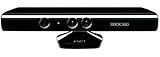
- Does not come with the power cable needed for the original Xbox 360
Filter without making the instrument sluggish
Raw skeletal coordinates can jitter, especially when a joint is partly hidden. Smoothing reduces accidental modulation but adds response delay. Use lighter smoothing for note triggers and more smoothing for expressive continuous controls, then adjust by ear and by feel.
Design thresholds and gesture states
Use separate thresholds for entering and leaving a zone, minimum hold times for triggers and a cooldown for gestures that should fire once. Mark lost or low-confidence joints as invalid rather than converting them into sudden MIDI extremes.
Free tools Windows power users keep installed
One-click scans. No signup required.
Rank #3
Provide visible feedback
Show the tracked skeleton, active zones, MIDI channels, notes and controller values. Feedback reveals whether silence comes from missing tracking, an unmapped gesture, disabled MIDI input or an instrument that is not receiving the message.
No universal latency, accuracy percentage or current retail price is established for Kinect MIDI instruments. Response depends on the Kinect generation, tracking runtime, computer, filtering and destination software.
Rank #4
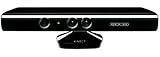
- Does not come with the power cable needed for the original Xbox 360
Single performer and multi-person designs
A single performer is the simplest starting point: one skeleton, one MIDI channel and a small set of mappings. Multi-person systems must identify each participant, preserve that identity as people move and assign channels or instrument roles consistently.
Occlusion is the principal spatial problem. People can hide one another’s hands or joints from a front-facing camera. Play Space used an overhead Kinect to reduce this problem. Additional cameras, wider spacing or restricted movement zones can help, but they also increase calibration and routing complexity.
Best Value

- Easily hook up with friends with Video Kinect, no headset required.
- Sign into your profile by just stepping in front of the sensor
- Kinect games give you the freedom to jump, duck, and spin your way through a unique adventure.
- Kinect uses cutting-edge technology to provide a whole new way to play
- Kinect Adventures game
Microsoft Research demonstrated a media-player interface with 22 gestures and eight actions in 2011. That figure describes that specific demonstration; it is not a recommended gesture count or a capability claim for every Kinect MIDI instrument.
Choosing a practical architecture
| Architecture | Best for | Trade-off |
|---|---|---|
| Spatial zones and a few triggers | First prototypes, installations and performers who need predictable actions | Easy to learn, but limited in continuous expression. |
| Continuous joint-to-CC mapping | Filter sweeps, effects, pitch and other expressive control | More expressive, but requires careful range calibration and smoothing. |
| Gesture recognition plus prepared sequences | Dance pieces, multitrack arrangements and scene-based performances | Powerful structure, but gesture thresholds and false triggers need testing. |
| Multi-person channel assignment | Participatory installations and ensemble control | Requires occlusion management, participant identification and more feedback. |
Troubleshooting common failures
- The Kinect is visible but no MIDI arrives: Check that skeletal tracking is active, the mapping application is sending to the intended virtual port and Live has Track enabled for that port.
- Notes repeat while a hand stays still: Replace level-based triggering with an enter-state, add hysteresis and impose a cooldown.
- Controllers jump: Inspect joint confidence, remove invalid frames, narrow the usable range and increase smoothing only as much as the performer can tolerate.
- The wrong instrument responds: Check the MIDI channel, selected track, monitoring state and whether another application has claimed the port.
- Two performers interfere: Improve spacing or camera placement, use an overhead arrangement, and assign each tracked participant a stable MIDI channel.
- The instrument feels delayed: Reduce unnecessary filtering and processing stages, then test whether the delay originates in tracking, MIDI routing or the audio instrument.
Is a ready-made Kinect MIDI instrument available?
The documented examples are custom prototypes and installations rather than one universally supported commercial instrument. Expect to assemble compatible hardware and software, select or write a mapping layer and tune it for the intended performer and space. The payoff is flexibility: the same motion data can control a DAW, virtual instrument, generative system or external MIDI hardware, provided the mapping and routing are designed explicitly.
Quick Recap
Product prices and availability are accurate as of the date/time indicated and are subject to change. Any price and availability information displayed on Amazon at the time of purchase will apply.

