
Free tools Windows power users keep installed
One-click scans. No signup required.
Stream processing continuously computes over events as they are produced. Unlike batch processing, which waits for a bounded collection to finish, a stream processor must produce useful results while data is still arriving, preserve state across records, handle events that arrive late or out of order, and recover consistently from failures. The field has therefore progressed from low-latency event handling to stateful, distributed systems with explicit models for time, windows, watermarks, triggers, and delivery guarantees.
What stream processing means
A stream is an ongoing sequence of records such as transactions, sensor readings, application logs, or user actions. An unbounded stream has a beginning but no defined end, so a system cannot wait for the complete input before calculating an answer. A bounded stream has a known end and can be processed as batch data. Apache Flink explains this distinction in its architecture documentation.


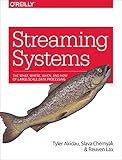
In practice, stream processing often combines continuous ingestion with transformations, joins, aggregations, enrichment, alerting, and writes to downstream systems. The difficult part is not merely reducing latency. Applications must decide which events belong together, how long to wait for missing data, where intermediate state lives, and what output remains valid after a failure or a late arrival.
From records to state
A stateless filter can examine one record at a time. Useful applications usually need memory: a running total for each account, the latest device status, a join between two event streams, or a session that remains open until activity stops. That per-key or operator state must be updated atomically enough to avoid corruption and recovered after a crash. Modern engines therefore treat state management and fault recovery as core parts of stream execution, not optional add-ons.
#1 Best Overall
How the field evolved
From low-latency handling to continuous computation
Early event-driven systems emphasized reacting quickly to individual messages. As event volumes and use cases grew, teams needed rolling analytics and joins rather than isolated callbacks. The central design shift was to compute continuously over an input that may never finish, instead of repeatedly launching jobs after a finite data set had accumulated.
State, time, and failure became first-class concerns
Continuous computation exposed problems that simple message handling could avoid: records can be delayed, clocks can disagree, and machines can fail while state is changing. Stream processors consequently added durable state, checkpointing, event-time windows, watermarks, and controlled handling of late data. Flink describes asynchronous and incremental checkpointing as a way to preserve exactly-once state consistency while limiting checkpoint impact on processing latency.
“Its asynchronous and incremental checkpointing algorithm ensures minimal impact on processing latencies while guaranteeing exactly-once state consistency.” — Apache Flink architecture documentation
This history is best understood as a change in the unit of computation: from a message, to a stateful operator over a stream, to a distributed dataflow whose correctness includes time and recovery.
Recommended Free Tools
Rank #2
The concepts that determine correctness
Event time and processing time
Event time is the timestamp associated with what happened in the source domain—for example, when a payment was authorized. Processing time is when the stream processor handles the record. Network delays, retries, offline devices, and overloaded services can make those moments different. Apache Beam’s Beam model guide treats the distinction as fundamental: processing-time results are fast but can reflect arrival conditions, while event-time results aim to reflect when events actually occurred.
Windows turn an infinite stream into finite calculations
Aggregations need a boundary. Windows provide one, but each type answers a different question:
| Window type | How it groups events | Typical use |
|---|---|---|
| Fixed (tumbling) | Non-overlapping intervals of a set duration | Count requests in each five-minute interval |
| Sliding | Overlapping intervals that advance by a slide period | Compute a rolling average every minute over the previous hour |
| Session | Events separated by less than a configured inactivity gap belong to one session | Group user activity until the user has been inactive |
Window definitions, allowed lateness, and trigger behavior are part of the application’s semantics, not just tuning knobs.
Watermarks estimate completeness
A watermark is an estimate that data up to a particular event-time position is expected to have arrived. It is not proof that an older event can never appear. Beam explicitly notes that late elements may arrive after a watermark has passed a window’s end.
Do these 3 things before closing this tab:
1Scan for outdated or missing drivers - takes under a minute2Repair Windows errors before they cause bigger problems3Fix the driver behind crashes, sound loss and screen glitchesTriggers decide when to emit
Triggers control when a window produces output. An application can emit an early estimate for low latency, emit again when the watermark advances, and accept late firings that refine the result. This creates a deliberate trade-off:
- Earlier output improves responsiveness but may be provisional.
- More waiting and allowed lateness can improve completeness but retains state longer.
- More firings can increase downstream work and storage costs.
The right policy depends on whether a consumer needs an immediate alert, a corrected dashboard, or a final accounting value.
Delivery guarantees and the meaning of “exactly once”
At-least-once processing may retry a record after a failure, so downstream systems must tolerate duplicates or deduplicate them. At-most-once processing avoids retries but can lose records. Exactly-once processing aims to make each logical effect appear once within a stated boundary. That boundary must always be named.
State consistency is not automatically end-to-end exactly once
An engine can restore its operator state consistently while an external database, HTTP service, or file sink still observes duplicate side effects. Source offsets, state updates, output records, and external effects may be coordinated by different systems.
What’s actually slowing this PC down?
Pick the symptom - the matching free tool is one click away.
Kafka Streams documents a specific end-to-end guarantee for Kafka-to-Kafka processing. Its versioned 3.3 documentation says:
“Kafka Streams tightly integrates with the underlying Kafka storage system and ensure that commits on the input topic offsets, updates on the state stores, and writes to the output topics will be completed atomically instead of treating Kafka as an external system that may have side-effects.” — Apache Kafka Streams core concepts
That statement covers Kafka input offsets, Kafka Streams state stores, and Kafka output topics. It should not be generalized to arbitrary external sinks without an integration that provides equivalent coordination or idempotence.
Questions to answer before choosing a guarantee
- Does the guarantee cover source acknowledgement or offset commits?
- Is operator state included, and how is it checkpointed or logged?
- Are output writes transactional with state updates?
- What happens to a side effect in an external system when the operator retries?
- Can the sink deduplicate by an event identifier or transaction boundary?
How the main programming models differ
There is no universal fastest or best framework. Deployment coupling, time semantics, state size, recovery behavior, and sink integration usually matter more than a headline throughput claim.
The Tool Desk
Outbyte PC Repair FREEClear out junk files and repair common Windows errorsFree Scan →Outbyte Driver Updater FREEScan for outdated or missing drivers - takes under a minuteDriver Scan →| Option | Programming and deployment model | Time and late-data model | Correctness boundary | Operational considerations |
|---|---|---|---|---|
| Kafka Streams | A library embedded in an application and closely coupled to Apache Kafka. | Supports stream-time-oriented processing, windows, joins, and stateful transformations through the Kafka Streams model. | Kafka’s documented exactly-once path atomically coordinates Kafka offsets, state stores, and Kafka output topics. | Operational responsibility remains with the application and Kafka deployment; external systems require separate side-effect handling. |
| Apache Flink | A distributed processing engine for bounded and unbounded data. | Provides event-time processing, windows, watermarks, and stateful operators for continuously running jobs. | Checkpointing provides consistent engine state; end-to-end behavior depends on source and sink integrations. | State size, checkpoint storage, rescaling, and cluster or cloud deployment are central design concerns. |
| Apache Beam | A portable programming model executed by runners such as Google Cloud Dataflow. | Defines windows, triggers, watermarks, and late-data concepts, but runner support varies. | Actual guarantees depend on the selected runner and its integrations. | Portability can simplify application code, but the capability matrix must be checked for the target runner. |
Beam’s model is intentionally portable, not identical everywhere. Its capability matrix, updated September 30, 2026, compares runner support for state, window types, event-time features, and triggers. A pipeline that uses a feature exposed by the API may still require a runner that implements it with the needed semantics.
Independent reader supportYour contribution helps us test, update, and keep practical guides available for everyone.A practical way to evaluate a stream-processing workload
- Define the event contract. Identify the event-time field, key, uniqueness or deduplication identifier, schema evolution rules, and expected disorder.
- Define result timing. Decide whether consumers need processing-time alerts, event-time completeness, early updates, final results, or corrections after late data.
- Choose window and lateness policies. Specify fixed, sliding, or session windows; watermark assumptions; allowed lateness; and trigger behavior.
- Map state and recovery. Estimate per-key and total state, checkpoint frequency, retained history, restore time, and behavior during rescaling.
- Draw the correctness boundary. Document which offsets, state changes, output writes, and external side effects are atomic, idempotent, or merely retryable.
- Validate the deployment model. Compare Kafka coupling, a dedicated Flink cluster, or a Beam runner against security, scaling, observability, regional, and operational requirements.
A 2024 practical study of migrating to Kafka and Flink for real-time event joining illustrates why these decisions are intertwined: the authors identify causal dependencies, event-time versus processing-time choices, and exactly-once versus at-least-once delivery as concrete implementation challenges, not abstract terminology. See Real-time Event Joining in Practice With Kafka and Flink.
What is changing now
Flink 2.0 emphasizes large state and cloud-native operation
Apache Flink announced version 2.0.0 on March 24, 2025, describing it as the project’s first major release since Flink 1.0 nine years earlier. The announcement reports 165 contributors, 25 FLIPs, and 369 completed issues—figures for that release, not industry-wide adoption measures. Read the announcement at Apache Flink 2.0.0: A new Era of Real-Time Data Processing.
The release highlights:
- Disaggregated state storage and management: separating state from local disks can reduce local resource constraints and make large-state rescaling more practical when distributed file systems are used.
- Materialized tables: a higher-level model intended to reduce the stream-processing machinery application developers must manage directly.
- Improved batch execution: better support for workloads that do not require continuous real-time treatment.
- Deeper Apache Paimon integration: support for streaming lakehouse patterns.
Flink’s announcement also frames cloud-native architectures, data lakes, and AI or large-language-model workflows as requirements shaping its priorities. Those are project signals and release features, not proof that every organization will adopt the same architecture.
Windows Errors? Fix Them Before They Spread
Repair common Windows errors and clear accumulated junk for a smoother, more stable PC - no reinstall needed.Free scan · no reinstallOutdated Drivers Are Slowing You Down
One free scan finds every outdated or missing driver and matches the right update for your exact hardware.Free scan · exact hardware matchPortability is advancing, with qualifications
Beam demonstrates a different direction: one API that can target multiple execution engines. The practical question is no longer only whether a runner is supported, but whether it implements the required state, trigger, watermark, and lateness behavior at the needed reliability and cost. The published matrix is therefore an essential design document, not an afterthought.
The likely future—and its limits
Durable trends
- State will remain central as pipelines perform joins, personalization, anomaly detection, and incremental aggregates.
- Event-time semantics will remain necessary wherever source clocks and network delays make arrival order unreliable.
- Recovery and rescaling will move toward elastic, cloud-oriented state services rather than dependence on a single machine’s local disk.
- Higher-level table and SQL-style abstractions will hide routine mechanics while leaving guarantees, time policies, and sink boundaries explicit.
- Hybrid pipelines will combine continuous processing with bounded or historical workloads instead of treating batch and streaming as completely separate worlds.
What cannot be predicted from current project direction
Release roadmaps do not establish industry-wide adoption, market share, or comparative performance. A feature can be technically available yet unsuitable for a team’s data volume, latency target, compliance needs, or operational skills. Framework selection should therefore follow workload semantics and integration boundaries, not a universal forecast about which project will “win.”
Quick Recap
Key takeaways
- Stream processing computes over ongoing, potentially unbounded data; batch processing works on bounded collections.
- State, event time, windows, watermarks, triggers, and late-data policies define what a result means.
- Exactly once is a scoped systems guarantee. State consistency and atomic source-to-sink effects are separate claims.
- Kafka Streams, Flink, and Beam differ mainly in coupling, deployment, state management, runner behavior, and integration boundaries—not in a single universal ranking.
- Flink 2.0 and Beam’s capability matrix show active movement toward cloud-native state, higher-level abstractions, and portable execution, while leaving future ecosystem outcomes uncertain.
Product prices and availability are accurate as of the date/time indicated and are subject to change. Any price and availability information displayed on Amazon at the time of purchase will apply.

