
Edge AI is not one framework: it is a stack. Model-conversion and inference tools such as LiteRT and OpenVINO help prepare and run models; EVE-OS addresses distributed-device operations; and Fledge focuses on industrial machine-data pipelines and edge ML. Choose the layer that matches your constraint—model compatibility, target hardware, latency, fleet management, industrial integration, or security—and verify the complete software-and-device combination.
What open-source tools can run AI at the edge?
“Edge AI” describes running machine-learning workloads near where data is produced or used. That can reduce the need to send every input to a remote service, but it does not identify a single product or solve every deployment problem. LF Edge points to latency, bandwidth savings, privacy, security, and autonomy as reasons to process data at the edge; it also notes that heterogeneous technologies and legacy systems make deployments complex. LF Edge’s EVE project overview discusses both the motivations and that complexity.
The projects below occupy different layers, so they are not interchangeable alternatives. “Open source” also does not mean every model, accelerator, board, or production feature works in every configuration. Check the relevant project documentation and validate the exact target before committing to a deployment.
| Project | Primary role | What its cited documentation describes | Best fit to investigate |
|---|---|---|---|
| LiteRT | Model conversion, optimization, and on-device inference | Google lists mobile, web, desktop, and IoT deployments, with CPU, GPU, and NPU acceleration. Its documentation describes export and quantization paths from PyTorch, TensorFlow, and JAX to the .tflite format. Google for Developers: LiteRT |
Running a compatible model on an application-facing device; verify current release support for the framework, operators, and accelerator you need. |
| OpenVINO | Deep-learning inference optimization and deployment | Intel’s versioned 2023.3 overview lists ONNX, PyTorch, TensorFlow, TensorFlow Lite, Keras, and PaddlePaddle model support, plus local runtime and model-server deployment. OpenVINO 2023.3 overview | Optimizing inference in an Intel-oriented deployment or evaluating the documented model and runtime paths; confirm compatibility for the version you plan to use. |
| EVE-OS | Distributed-edge operating system and orchestration | LF Edge describes support for Docker containers, Kubernetes clusters, virtual network functions, and virtual machines across hardware classes including x86, Arm, GPU, and RISC-V. Its page lists remote updates with rollback and security capabilities such as measured boot and remote attestation when appropriate hardware is used. LF Edge: EVE | Managing distributed edge workloads and devices, where operating-system and fleet capabilities matter alongside model execution. |
| Fledge | Industrial data integration and edge ML | LF Edge describes industrial machine-data pipelines, integrations, inference, edge MLOps, and running TensorFlow Lite at the edge. LF Edge: Fledge | Industrial settings where data from equipment and integration with existing systems are central requirements. |
These roles can complement one another. For example, an industrial deployment may need a data pipeline, a model runtime, and a way to manage devices remotely. The right combination depends on the application; the project descriptions do not establish one universal architecture.
#1 Best Overall
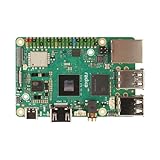
- POWERFUL COMPUTING: Advanced single board computer featuring high-speed LPDDR5 memory for superior processing capabilities and edge AI computing performance
- CONNECTIVITY: Multiple USB ports, HDMI output, and Ethernet connectivity provide versatile interface options for various applications
- COMPACT DESIGN: Space-efficient circuit board layout integrates powerful computing components in a single compact form factor
- DEVELOPMENT READY: Ideal platform for edge AI development, programming, and prototyping with comprehensive hardware interfaces
- EXPANDABILITY: Features multiple GPIO pins and standard connectors enabling extensive hardware expansion possibilities
How do you choose a stack for your deployment?
Start with the failure or constraint you need to address, then test the corresponding layer. A model runtime cannot by itself provide fleet rollback; an operating system does not guarantee that a particular model converts successfully; and a data-integration platform is not automatically the right fit for a consumer application.
- Confirm the model path. Identify the model framework, operators, input/output formats, and any conversion or quantization steps. Check that the chosen runtime supports that precise path in the release you will deploy.
- Fix the target hardware. Record the actual processor and accelerator—CPU, GPU, or NPU—and the device’s memory, power, and operating constraints. Treat listed hardware classes as possibilities, not proof that every device or accelerator combination is supported equally.
- Define the application constraint. Specify acceptable latency, bandwidth use, offline behavior, and where data may be processed. Measure on the intended model and device; results on another model or platform may not transfer.
- Plan operations before rollout. For a fleet, determine how devices receive updates, how failed deployments are recovered, and what remote management is required. EVE-OS lists update rollback and other management capabilities, but availability depends on the deployment and hardware.
- Map industrial integration needs. If the workload depends on machinery or existing industrial systems, investigate protocols, data transformation, and integration requirements. Fledge is explicitly positioned for industrial use rather than as a general consumer edge framework.
- Specify security controls. Decide how the deployment will establish device trust, restrict access, protect model integrity, and secure update paths. Keeping data local is a placement choice, not a security control by itself.
What does edge inference performance evidence show?
A 2026 preprint, Benchmarking Edge Inference Strategies for Deep Learning Models in Industrial Machine Vision, compared plain PyTorch, ONNX Runtime, OpenVINO, and TensorRT on selected CPU and GPU hardware using convolutional and transformer-based vision models. In the configurations it evaluated, OpenVINO had the lowest CPU inference time and TensorRT the lowest GPU inference time. TensorRT did not outperform plain PyTorch for the transformer model considered.
Rank #2

- [High performance] Quad-core ARM SoC up to 1. 8GHz with 3GB RAM- The Tinker Edge R features the Rockchip RK3399Pro SoC and Mali - T764 GPU along with 2GB of Dual Channel LPDDR4 memory for system, 1 GB LPDDR3 memory for NPU and 16GB eMMC flash
- [Gigabit Class networking]Tinker Edge R features a high speed GB LAN port for true Gigabit Class networking throughput along with 3x USB3.2 Gen1 Type-A. It also features onboard Wi-Fi & Bluetooth for robust IoT & Network connectivity
- [Open-source]The board will come with fully open-source kernel and support for multiple APIs, including OpenGL, Vulkan, OpenCL, OpenVX, TensorFlow Lite, Android NN, and Caffe
- [HD Audio & UHD video support] It supports 192/24bit HD Audio playback with automatic Audio jack detection as well as accelerated HD & UHD ( 4K ) video playback and supports HDMI CEC for seamless power on & off configurations
- [WiKi]For more information please refer to the product description, any technical issues after purchase please contact with our tech-support team: click "WayPonDEV" and ask a question. Package Content: 1x Tinker Edge R (3GB+16G eMMC); 2x Wi-FiVBT antenna cable; 1x Stand offset(4xScrew+4xHex); 2x Camera MIPI Convert cable (22P to 15P); 1 x Shielding bag; 1 x Quick start guide
Those results are specific to the study’s selected models and hardware. They are not a universal ranking of edge runtimes, nor do they establish which tool will be fastest on a different workload. Benchmark your own model on the intended device and include the constraints that matter in production, such as latency and available compute resources.
Does local AI make an application private and secure?
No. Processing data on a device can reduce what must leave that device, but privacy and security still depend on how the application and fleet are designed. Consider where inputs, outputs, logs, and backups go, who can access them, how devices are authenticated, and how software and models are updated.
Do these 3 things before closing this tab:
1Scan for outdated or missing drivers - takes under a minute2Repair Windows errors before they cause bigger problems3Fix the driver behind crashes, sound loss and screen glitchesRank #3

- Supports access to online large model platforms and includes Edge Impulse object detection demo for real-time multi-object recognition
- Equipped with Xtensa dual-core LX7 processor (up to 240MHz), 8MB PSRAM, 16MB Flash, and dual-mode WF + BT LE
- Dual-microphone array with noise reduction and echo cancellation for high-quality voice processing
- Integrated audio input and output module, supporting AI speech interaction and voice recognition applications
- Onboard camera interface (DVP) and SPI / QSPI display interface for image capture, recognition, and external display connection
Intel’s 2025 OpenVINO security documentation says the toolkit does not supply model encryption, decryption, or authentication; those can be implemented using third-party tools. It emphasizes that protection requirements depend on the deployment scenario. OpenVINO security considerations. Treat model protection and device security as explicit system requirements rather than assuming an inference toolkit provides them.
Independent reader supportYour contribution helps us test, update, and keep practical guides available for everyone.How do the layers fit together in practice?
For a standalone device, a developer might choose a conversion and inference runtime based on model compatibility and hardware, then integrate it into the application. For a distributed deployment, the same inference workload may also need an operating system and orchestration layer to manage applications and updates. In an industrial installation, a pipeline layer may be needed to collect and transform equipment data before inference. These are architectural roles, not a prescribed bundle: select only the layers the use case needs, and verify their integration on the target system.
Rank #4
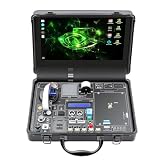
- 30-in-1 No-Solder Sensor Board, Plug and Play: Integrates 30 functional sensors including temperature & humidity, ultrasonic ranging, gas and motion sensors. Innovative common board design requires no soldering or complex wiring, and comes with a full set of accessories like 128G SD card, adapter board and acrylic mounting plates for zero-threshold experiments
- 8MP Gimbal Camera & Dual Servos for Professional Visual AI: The Starter Kit is equipped with an IMX219 8MP monocular camera and a dual-servo gimbal, supporting face and target tracking, and is ideal for AI edge computing scenarios such as intelligent monitoring, robot navigation, and automated recognition
- 38 Step-by-Step Python Tutorials, From Beginner to Practical Application: The Jetson Orin Nano Starter Kit comes with 38 well-designed Python tutorials progressing from basic programming to vision practice, covering all key knowledge of sensor control, embedded development and AI visual recognition for both beginners and advanced learners
- 11.6-inch IPS HD Screen & AI Voice Interaction System: Built-in 1366*768 resolution IPS screen eliminates the need for an external monitor, enabling one-device experimentation and visual feedback. The exclusive AI voice interaction system supports intelligent Q&A and voice command control for natural human-computer dialogue
- Rich Expansion Interfaces & Portable All-in-One Design: Features 2x I2C, 1x UART and 2 IO expansion interfaces to meet personalized experiment expansion needs; a custom carrying case integrates all components (11.81×7.87×3.94 inch), allowing AI experiments and demonstrations anytime and anywhere
LF Edge’s Fledge page also reproduces a statement attributed to Craig Wiley, Director, Google Cloud AI: “Fledge’s ability to collect, process, transform and integrate machine data as well as run TensorFlow Lite on the edge makes it an excellent complement to Google’s AI platform… Google is proud to contribute to the Fledge project, empowering next generation industrial processes and intelligent automation.” LF Edge: Fledge
Quick Recap
Product prices and availability are accurate as of the date/time indicated and are subject to change. Any price and availability information displayed on Amazon at the time of purchase will apply.

