
The Tool Desk
Outbyte PC Repair FREERepair Windows errors before they cause bigger problemsFix Now →Outbyte Driver Updater FREEScan for outdated or missing drivers - takes under a minuteDriver Scan →A machine-learning data catalog helps an organization find and understand the data and AI assets it uses, along with their business meaning, owners, quality signals, lineage, and access context. It can make those assets easier to govern and reuse, but the catalog alone does not make data trustworthy or ensure that machine-learning use is responsible or compliant: people still need to define and maintain the rules.
What a machine-learning data catalog does
A data catalog is a searchable, organized representation of data assets and their metadata. For business management, that metadata should connect technical details—such as a dataset’s schema or location—to context people can act on: what the data means, who is responsible for it, how it relates to other assets, whether quality checks raise concerns, and what access rules apply.
That connection matters for machine learning because teams need more than a way to locate a table. They need to understand whether a dataset is appropriate for a particular use, where it came from, how it was transformed, and which models or reports may depend on it. A catalog can bring this context together; the completeness and accuracy of the information depend on the sources it connects to and the people who maintain it.
Which assets should the catalog cover?
Start by defining the scope your organization needs. Some catalogs emphasize datasets and their metadata; others document a broader set of data and AI assets, which may include models, dashboards, applications, or data products. Product descriptions are not interchangeable, so check the specific asset types and integrations that matter to your environment.
#1 Best Overall

- Storage Capacity: 500 GB (gigabyte) of storage space.
- Compact Size: 2.5-inch form factor for portability.
- Multi-Platform Compatibility: Works seamlessly with PS4, Mac, phones (Andriods with USB C), and Xbox devices.
- High-Speed Data Transfer: USB 3.0/C for fast data transfer speeds.
- Sleek Design: Stylish and durable casing.
| Product and documentation | Capabilities described in the cited documentation | Qualification |
|---|---|---|
| Google Cloud Knowledge Catalog — Knowledge Catalog documentation and overview | Business context and governance, including metadata enrichment, glossaries, lineage, data quality, access workflows, search, and AI context retrieval. | The overview describes these capability areas; confirm support for the particular systems and workflows you use. |
| Amazon SageMaker Catalog — Amazon SageMaker Catalog | Discovery, governance, and collaboration across data, models, BI dashboards, and applications; semantic search, access controls, quality monitoring, classification, and lineage. | Confirm which of your asset types and connections are supported in your deployment. |
| Microsoft Purview — governance, Unified Catalog, and classic Data Catalog lineage documentation | Governance documentation describes data products, lineage, quality, and role-based access workflows. Unified Catalog documentation describes governance domains, curation, access policies, glossary terms, and discovery. The classic lineage guide identifies Azure Machine Learning and Power BI among systems that can report lineage into Purview. | These are distinct documentation areas; do not assume the lineage coverage described for the classic catalog applies identically to every Purview experience or integration. |
| Databricks Unity Catalog — Data governance with Unity Catalog | Governance of data and AI assets through access control, discovery, lineage, classification, and quality monitoring. | Validate that the documented capabilities cover the assets and workflows you intend to govern. |
| Oracle OCI Data Catalog — Oracle Cloud Infrastructure Data Catalog | A managed self-service discovery and governance service for technical, business, and operational metadata. | The cited page shows an update date of April 16, 2025; check current documentation for feature scope and availability. |
This is a map of capabilities described in the named product documentation, not a complete feature comparison or a vendor ranking. Feature scope and service availability can change, and may depend on geography and deployment model.
How catalogs support business management of machine learning
Make business meaning searchable
A business glossary gives teams shared definitions for terms that might otherwise be interpreted differently across departments. Pairing those definitions with technical metadata helps users judge what an asset represents, rather than relying on a table or model name alone. Ownership, classifications, and descriptions add context about responsibility and handling.
Rank #2

- Capacity Display Variance: 1TB external ssd often appears as around 931GB on Windows. MacOS can show full 1 TB capacity. This is binary calculation difference and doesn’t affect SSD hard drive actual physical storage
- 1050 MB/s Speed: Instantly access to your files with blazing-fast 10Gbps external SSD read up to 1050MB/s and write up to 1000MB/s. LED Light indicates USB SSD instant activity
- Data Security: Solid state drives S.M.A.R.T. health diagnostics and adaptive TRIM optimizing data block management ensures consistent write speeds and extends the longevity of the portable SSD
- USB-C & USB-A Cable: Both cables featuring rapid USB 3.2 Gen2, this USB SSD effortlessly bridges devices, enabling seamless cross-platform file transfers and backup between computers, smartphones, tablets and iPhone
- Always Fast: No slowdowns for large file transfers. With SLC caching (25% of current available capacity allocated as high-speed cache), this external SSD delivers steady 10Gbps for transfers within the cache capacity
Make lineage useful for change decisions
Lineage records where an asset came from and how it was transformed, and can show downstream dependencies. For a machine-learning workflow, that context can help a team investigate a changed source or identify models, dashboards, and other consumers that may be affected. Coverage varies by source system and workflow: verify that lineage reaches the transformations and ML or reporting assets relevant to your environment, and whether it is available at the asset or column level where you need it.
Expose quality and access context
Quality signals can help consumers assess whether an asset meets expectations, while access policies and request workflows can make the path to authorized use clearer. Ask what a platform actually measures, how often its signals are refreshed, and who is responsible for resolving an issue. A quality indicator is useful only when its meaning and follow-up process are clear; a catalog entry by itself is not proof that data is fit for a particular model or decision.
What’s actually slowing this PC down?
Pick the symptom - the matching free tool is one click away.
Rank #3

- Slim durable design to help take your important files with you
- Vast capacities up to 6TB[1] to store your photos, videos, music, important documents and more
- Back up smarter with included device management software[2] with defense against ransomware
- Help secure your important files with password protection and hardware encryption
- 3-year limited warranty
Assign people to the governance work
Catalog software can organize metadata and support workflows, but it cannot take responsibility for business definitions, quality decisions, or access approvals. AWS enterprise governance guidance describes owners and stewards as people who interpret metadata and connect it to business processes. Microsoft Purview documentation also distinguishes central data office, data consumer, data owner, and data steward responsibilities.
- Central data office: establish governance standards and coordinate the processes and roles used across the organization.
- Data owner: take named responsibility for an asset or domain and its business context, including decisions that require accountable ownership.
- Data steward: maintain definitions, classifications, metadata, and quality processes so that governance information stays usable.
- Data consumer: use the catalog to discover assets, understand their context, and follow the organization’s access and use processes.
Adapt these responsibilities to your operating model rather than assuming that a product’s role labels determine who should do the work. Specify who registers assets, approves or reviews access, maintains glossary terms, and receives quality issues—and how each responsibility is handed off.
Rank #4
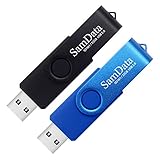
- [Package Offer]: 2 Pack USB 2.0 Flash Drive 32GB Available in 2 different colors - Black and Blue. The different colors can help you to store different content.
- [Plug and Play]: No need to install any software, Just plug in and use it. The metal clip rotates 360° round the ABS plastic body which. The capless design can avoid lossing of cap, and providing efficient protection to the USB port.
- [Compatibilty and Interface]: Supports Windows 7 / 8 / 10 / Vista / XP / 2000 / ME / NT Linux and Mac OS. Compatible with USB 2.0 and below. High speed USB 2.0, LED Indicator - Transfer status at a glance.
- [Suitable for All Uses and Data]: Suitable for storing digital data for school, business or daily usage. Apply to data storage of music, photos, movies, software, and other files.
- [Warranty Policy]: 12-month warranty, our products are of good quality and we promise that any problem about the product within one year since you buy, it will be guaranteed for free.
Evaluate a catalog against your organization’s needs
Assess the catalog using representative assets and workflows, not a generic feature list. For each area, ask for evidence in the systems and processes your team actually uses.
- Asset coverage and integration: Which databases, lakes, warehouses, pipelines, BI systems, models, and other AI assets appear? Which metadata is collected automatically, and what must people enter or maintain?
- Business context: Can business users find and maintain definitions, ownership, classifications, and data products in language they understand?
- Lineage and impact analysis: Can users follow source-to-consumption flows through the transformations that matter? Is the required asset- or column-level detail available for the connected systems?
- Quality signals: Which checks, profiles, freshness indicators, or other signals are visible? Who can investigate and resolve a reported issue?
- Access and responsible use: Can the organization express its permissions and policies, handle self-service requests, record approvals, and meet its audit needs?
- Operating model: Who registers assets, curates context, reviews access, resolves quality issues, and maintains governance standards?
When comparing candidates, run the same proof of concept on representative assets and workflows. Inspect scanned metadata for completeness; check suggested context or classifications for accuracy and maintenance effort; trace lineage through transformations into relevant ML and reporting assets; and have a consumer discover an asset and follow the access-request process. This evaluates whether a product fits your needs; it should not be mistaken for a published comparative benchmark.
Do these 3 things before closing this tab:
1Repair Windows errors before they cause bigger problems2Scan for outdated or missing drivers - takes under a minute3Clear out junk files and repair common Windows errorsWhat a catalog can—and cannot—establish
A catalog can make information about data and AI assets easier to discover, interpret, and govern when its integrations, metadata, and operating processes are adequate. It cannot, by itself, verify that every entry is current, that every dependency is captured, that a model is appropriate, or that an organization complies with its obligations. Treat it as part of a governance capability: define the rules and responsibilities, check what the technology covers, and maintain the context people rely on.
Quick Recap
Product prices and availability are accurate as of the date/time indicated and are subject to change. Any price and availability information displayed on Amazon at the time of purchase will apply.

