
Move beyond a single database server when measured workload, availability, storage, or operational requirements exceed what that server can reliably and economically provide—not merely because your user count or row count has grown. Start by identifying the limiting factor, then choose the smallest architecture change that fixes it.
When should I move beyond a single-server database?
There is no dependable universal threshold based on users, rows, or database size. The practical trigger is a capacity or reliability gap that monitoring can demonstrate. AWS describes this in service terms: read traffic may exceed one database instance’s capacity, while some relational workloads may require more write throughput or storage than one Aurora instance can provide (Amazon RDS FAQs; AWS database decision guide).



Separate the problem into five questions before selecting a technology:
- Read throughput: Are queries, connection counts, or read latency saturating the instance?
- Write throughput: Are inserts, updates, deletes, locks, or transaction logs exhausting CPU, I/O, or connection capacity?
- Storage: Is the data volume, growth rate, or required IOPS beyond the server’s practical limit?
- Availability: Can the business tolerate the current failure and maintenance recovery time?
- Operational burden: Is patching, backup, failover, monitoring, and capacity work consuming more engineering time than the team can justify?
If none of these is measured as a problem, tune queries, indexes, connection pooling, caching, and instance sizing first. A larger or better-configured single server can be safer than a premature distributed design.
Outdated Drivers Are Slowing You Down
One free scan finds every outdated or missing driver and matches the right update for your exact hardware.Free scan · exact hardware matchPC Slower Than It Used to Be?
A free scan shows the junk files, broken settings and background clutter dragging Windows down - then fixes them in one click.Free scan · Windows 10 & 11#1 Best Overall
How do I scale a database beyond one server?
The options below solve different constraints. They are not interchangeable, and a managed service does not automatically provide unlimited capacity.
| Path | Primary constraint addressed | Application and data changes | Operational and migration trade-offs |
|---|---|---|---|
| Optimize and scale the existing server | Unproven or moderate CPU, memory, I/O, query, or connection pressure | Usually none; may require query, index, schema, or configuration changes | Lowest architectural risk; remains limited to one server’s capacity and failure domain |
| Add read replicas | Read traffic beyond the primary instance’s capacity | Route eligible reads to replicas; account for replication lag and read-after-write behavior | Primary writes remain on the source; replicas do not by themselves solve write, storage, or availability requirements (AWS RDS FAQs) |
| Replatform to managed hosting | Infrastructure maintenance and resilience work | Keeping the same engine can preserve most SQL and application behavior | The provider operates defined parts of the service, but limits, pricing, configuration, and some administration remain your responsibility |
| Change database engine | Current engine’s features, economics, or operating model no longer fit | Schema conversion, SQL and procedure changes, driver changes, and application testing may be required | More compatibility work and rollback complexity; AWS calls this a heterogeneous migration (AWS migration strategies) |
| Adopt horizontal or distributed capacity | Measured write throughput or storage exceeds one instance | Potential partitioning, key, transaction, consistency, and application redesign | Highest architectural complexity; AWS positions Aurora PostgreSQL Limitless for relational workloads beyond a single Aurora instance, not as a universal performance guarantee (AWS database decision guide) |
Choose read scaling only for a read bottleneck
A read replica can increase query capacity when reads are the measured constraint. Confirm which queries are safe to run against a replica, define acceptable lag, and keep writes and consistency-sensitive reads on the primary as needed. Replicas do not prove that write capacity, storage, or every availability objective has been solved.
Rank #2
Use managed hosting to reduce database operations
Moving to a managed version of the same engine is an incremental replatform, not a new data model. AWS distinguishes homogeneous migration—retaining the database engine—from heterogeneous migration, which changes engines (AWS Prescriptive Guidance). Check the service’s supported extensions, versions, instance limits, backup and recovery behavior, maintenance controls, networking, and pricing before assuming the operational burden disappears.
Change engines or models only for a demonstrated fit problem
An engine change can improve feature fit, cost, or scaling characteristics, but it exposes every engine-specific assumption in the application. Inventory stored procedures, triggers, extensions, collations, isolation behavior, data types, SQL dialect, drivers, and administrative scripts before committing. Google Cloud’s migration guidance also calls for reviewing source configuration, destination compatibility, network and security requirements, and application changes (Google Cloud Architecture Center).
The Tool Desk
Outbyte PC Repair FREEClear out junk files and repair common Windows errorsFree Scan →Outbyte Driver Updater FREEFix the driver behind crashes, sound loss and screen glitchesFind Drivers →Adopt distributed capacity when one instance is demonstrably insufficient
Horizontal or distributed systems can address limits that vertical scaling and replicas cannot, but they add design work around partitioning, transactions, consistency, failover, observability, and operational recovery. Treat vendor positioning as a service-specific option: AWS’s statement that “Use Limitless Database when your relational workload requires write throughput or storage beyond the limits of a single Aurora instance” describes that product’s intended use, not an independent benchmark or a threshold for every database.
How do I migrate with minimal downtime?
Downtime tolerance determines the migration pattern. Google Cloud describes a scheduled, one-time migration as simpler and generally lower in cost and complexity when an interruption is acceptable. Continuous replication requires more setup and planning, but can reduce the final interruption for mission-critical systems (Google Cloud Architecture Center). Actual downtime and data-loss exposure depend on engine behavior, data volume, replication, network conditions, application writes, and rehearsal quality.
Rank #4
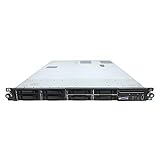
- HP ProLiant DL360 G7 8B Server
- 2x X5650 2.66GHz 12-Cores Total
- 32GB RAM / 8x 146GB 10K 2.5in SAS Hard Drives
- P410 w/ 512MB
Scheduled maintenance (one-time migration)
- Stop or quiesce writes during an approved window.
- Copy the data, apply schema and configuration, validate it, then redirect the application.
- Prefer this when the business can afford downtime and the team wants the least moving parts.
- Plan for an extended outage if validation fails and the migration must be repeated.
Continuous replication (online migration)
- Establish ongoing change replication from source to destination.
- Run validation while production remains available and monitor replication lag.
- At cutover, pause or coordinate writes, allow the destination to catch up, switch connections, and verify application behavior.
- Expect more preparation, tooling, monitoring, and possibly application refactoring than with a one-time copy.
A controlled migration checklist
- Measure the workload. Record read and write rates, latency percentiles, CPU, memory, I/O, connections, storage growth, replication needs, incident history, and recovery objectives. Identify whether the constraint is capacity, availability, or operational toil.
- Inventory compatibility. List engine version, extensions, collations, stored procedures, triggers, jobs, schemas, data types, drivers, connection behavior, and backup requirements.
- Select the smallest effective change. Tune or resize first when that meets the requirement; otherwise choose replicas, managed hosting, an engine change, or distributed capacity according to the measured constraint.
- Choose the downtime strategy. Set a maximum interruption, acceptable data-loss window, replication-lag limit, and explicit cutover decision point.
- Prepare both environments. Configure destination schemas, source settings, network routes, firewall rules, identities, encryption, secrets, monitoring, backups, and migration tooling. Google Cloud’s Database Migration Service documentation provides a service-specific reference for these concerns (Google Cloud Database Migration Service).
- Rehearse in a representative environment. Restore realistic data, run application and performance tests, verify permissions and scheduled jobs, measure copy and catch-up time, and document every manual step.
- Define acceptance and fallback. Specify checks for row counts or checksums where appropriate, critical queries, error rates, latency, replication state, background jobs, and business transactions. Decide when to abort and how connections return to the source.
- Cut over deliberately. Communicate the window, freeze or coordinate writes as planned, switch configuration or connection endpoints, watch errors and lag, and keep the source intact while validation runs.
- Validate before cleanup. Confirm application behavior, backups, restores, monitoring, alerts, permissions, and recovery procedures. Decommission the source only after the agreed recovery criteria are met.
- Tune after migration. Revisit indexes, query plans, connection pools, instance sizing, storage settings, and alert thresholds. Migration changes the platform; it does not automatically optimize workload behavior.
Signals that the move is premature
- No metric identifies a capacity, availability, storage, or operations problem.
- The proposed architecture solves reads when writes are the bottleneck, or adds distribution when a resize and query fix would meet the requirement.
- Engine-specific dependencies have not been inventoried or tested.
- There is no tested rollback path, recovery objective, or owner for cutover decisions.
- The team cannot yet operate the target’s backups, monitoring, security, and failure procedures.
What a good decision looks like
A defensible move beyond one server names the constraint, the metric that proves it, the smallest option that addresses it, the compatibility work it requires, and the recovery plan if migration fails. Keep a single server when it still meets reliability, cost, and operational requirements; graduate when measured needs—and not growth anxiety alone—show that it no longer does.
Quick Recap
Product prices and availability are accurate as of the date/time indicated and are subject to change. Any price and availability information displayed on Amazon at the time of purchase will apply.
Recommended Free Tools

