
Start with the job your build system must do: compile firmware or application components, or assemble and maintain a complete embedded Linux image. Those are distinct needs, and one project can use tools from both categories. The right choice depends on your target hardware and operating system, vendor support, product variants, release obligations, team skills, and CI environment—not on a universal ranking of tools.
First define what “build system” means for your project
In embedded development, “build system” can refer to either a component-level tool that compiles firmware or applications, or a system-level framework that constructs an operating-system image. Decide which job is in scope before comparing products.

- Component or firmware build: Compiles an application, library, or firmware for a target. CMake and Meson are general build tools with cross-compilation capabilities; Bazel can model host and target platforms.
- Complete Linux image: Assembles a deployable system that may include a toolchain, root filesystem, kernel, and bootloader. Buildroot and Yocto Project document this system-construction role.
A Linux product might use Yocto or Buildroot to create its image and CMake or Meson to build an application included in that image. Treat these as potentially complementary layers, not necessarily mutually exclusive choices.
Write down the constraints that determine fit
Before selecting candidates, turn the project’s requirements into a short written brief. Separate non-negotiable constraints from preferences, and capture at least:
Quick wins for a faster PC:
Clear out junk files and repair common Windows errorsFree Scan →Scan for outdated or missing drivers - takes under a minuteDriver Scan →Repair Windows errors before they cause bigger problemsFix Now →#1 Best Overall

- ✅【High-Performance ESP32-S3 Processor】Powered by the ESP32-S3 dual-core Xtensa LX7 processor with up to 240MHz clock speed, this development board features 16MB Flash and 8MB PSRAM. It provides powerful performance for IoT devices, embedded systems, AI applications and advanced DIY projects.
- ✅【Pre-Soldered GPIO Headers for Easy Use】The board comes with pre-soldered GPIO headers, eliminating the need for manual soldering. It can be directly connected to breadboards, sensors and expansion modules, making project setup faster and more convenient for makers and developers.
- ✅【WiFi & Bluetooth 5.0 Wireless Connectivity】Built-in 2.4GHz WiFi and Bluetooth 5.0 enable stable wireless communication for smart home, automation and IoT applications. The reserved IPEX antenna connector allows optional external antenna installation for different project requirements.
- ✅【Large Memory & Flexible Development】With 16MB Flash and 8MB PSRAM, this ESP32-S3 board provides more storage and memory resources for complex firmware, graphical interfaces, OTA updates and data-intensive applications.
- ✅【Arduino IDE, ESP-IDF & MicroPython Support】Compatible with Arduino IDE, ESP-IDF and MicroPython development environments. With dual USB-C interfaces and rich expansion options, it is suitable for robotics, sensors, automation and embedded system development.
- Target architecture, operating system, boards, and required vendor BSPs or SDKs.
- Whether the output is firmware, selected components, or a complete image—and what the boot chain requires.
- Required packages, patches, libraries, and control over image contents.
- Number of board and product variants, and how those variants will be maintained.
- How toolchain versions and dependencies must be pinned, including any offline or controlled-network requirement.
- How releases are built, tested, flashed or deployed, updated, and recovered.
- Expected product lifetime, security or compliance evidence, and licensing obligations.
- Developer host environments, CI constraints, team experience, and who will maintain build definitions and vendor integrations.
These details can change the decision more than a tool’s general feature list. A candidate that can theoretically cross-compile is not automatically configured for a particular SDK, dependency, board, or release pipeline.
Choose candidates from the right tool category
Use the official project descriptions to identify plausible candidates, then verify the exact target and workflow in a prototype. The documentation establishes scope and capabilities, not comparative performance or a universal winner.
| Candidate | Documented role or capability | What to verify for your project |
|---|---|---|
| Buildroot | Automates construction of a complete embedded Linux system; can generate a cross-compilation toolchain, root filesystem, Linux kernel image, and bootloader, or use an existing toolchain to build selected pieces. | Whether it supports your board and vendor requirements, the packages and image changes you need, and your maintenance and release process. Buildroot manual (manual page identifies generation on 2026-09-04 from revision d5180309b1). |
| Yocto Project | Provides a flexible, metadata-driven approach to tailored Linux and RTOS images, with dependency tracking and native or cross-compilation during builds. | Whether its metadata model, available vendor layers, and upgrade ownership suit your product and team. Yocto Project technical overview. |
| CMake | General build tool with cross-compilation support, including embedded devices without an operating system; separates build-host and target-platform information. | Whether the project’s toolchain, dependencies, and configuration cross-compile successfully. CMake warns that individual projects may need additional setup. CMake toolchains manual. |
| Meson | General build tool whose project documentation lists cross-compilation for many operating systems and bare metal, and support for C and C++ among other languages. | Support for your specific compiler, SDK, dependencies, and target in a real build. Meson cross-compilation documentation. |
| Bazel | Models platforms with constraints and describes cross-compilation as building for a target platform different from the host or execution platform. | Embedded-specific rules and integration with your MCU, compiler, and vendor SDK; platform modeling alone does not establish turnkey support. The cited material is for Bazel 6.6. Bazel 6.6 platform documentation. |
Compare the candidates against the same evidence
For each plausible option, record the answers to the same project-specific questions. The project documentation does not provide comparative measurements for these dimensions, so treat them as items to evaluate—not assumed advantages of one tool.
- Does it handle the actual job: selected components or a complete image?
- Does it support the target OS, architecture, board, and vendor BSP or SDK?
- How does it represent board and product variants, packages, patches, and image contents?
- Can you pin dependencies and toolchain versions, and reproduce a clean build from a controlled checkout?
- Can CI produce the required deployable artifact with provenance you can retain?
- What are clean and incremental build costs on developer machines and CI under fixed conditions?
- How difficult is onboarding and debugging for the people who will own it?
- What upgrade path and ongoing maintenance work will the organization need to support?
- How will licensing and compliance requirements be addressed?
Run a representative prototype before committing
A small vertical slice can expose incompatibilities that a feature checklist cannot. Use the real toolchain, libraries, board support, and release route rather than a generic sample disconnected from the product.
Rank #3

- Powerful Processor for Embedded Systems: The Luckfox Lyra Zero W is powered by the Rockchip RK3506B SoC, featuring a 1.2GHz ARM Cortex-A7 processor, delivering smooth performance for running Linux-based applications and making it suitable for embedded and IoT projects.
- High-Quality Display Interface: The board supports MIPI DSI 2-lane, allowing easy connection to high-resolution displays, ideal for applications like digital signage, HMI systems, and embedded interfaces.
- Extensive Connectivity Options: With USB 2.0 OTG, USB Host 2.0, and GPIO pins, the Lyra Zero W allows connectivity to various peripherals, making it versatile for sensors, devices, and other embedded systems.
- Onboard Wireless Capabilities: Equipped with Wi-Fi 6 and Bluetooth 5.2, the board supports seamless wireless communication, perfect for IoT, networking, and remote control applications.
- Cost-Effective Solution for Development: Offering a budget-friendly price, the Lyra Zero W provides a feature-rich platform for developers to prototype and create advanced embedded systems without exceeding their budget.
- Define the output: Write one sentence, such as “We need to build firmware and application components for these targets” or “We need to produce and maintain a complete Linux image for these products.”
- Choose the smallest meaningful target: Include a representative board or emulator and the vendor support the production build will require.
- Include a dependency: Build at least one third-party library or package so the prototype tests more than the simplest compilation path.
- Test reproducibility: Build from a clean checkout, then change an input and record whether the expected outputs rebuild.
- Exercise CI and delivery: Run the build in the intended CI environment and follow it through to a flashable or deployable artifact.
- Record results: Capture supported targets and vendor layers, build success, rebuild behavior, duration under fixed conditions, artifact contents, provenance, maintenance steps, and onboarding effort.
These are evaluation measures for your project, not published comparative results. Keep the conditions consistent when comparing candidates so that differences in hardware, caches, or CI resources do not masquerade as differences between tools.
Independent reader supportYour contribution helps us test, update, and keep practical guides available for everyone.Assign ongoing ownership as part of the decision
A build setup is part of the product’s maintenance burden. Identify who will handle toolchain and dependency updates, metadata or recipe changes, vendor integration, CI failures, and release reproducibility. If no team can own those tasks for the expected product lifetime, a technically capable option may still be a poor organizational fit.
Rank #4
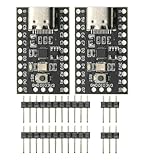
- CH32V003 Development Minimum System Board for Nano RISC-V CH32V003F4U6 Chip TYPE-C USB 22Pin
- on-board 24MHz Crystal oscillator
- Power by TYPE-C USB
The available project descriptions do not settle which tool fits a particular board, vendor SDK, deployment or OTA process, industry standard, or performance target. Those answers require the actual hardware and product constraints. Use the prototype to test the required integrations and release path rather than inferring support from a tool’s general cross-compilation claims.
Quick Recap
Product prices and availability are accurate as of the date/time indicated and are subject to change. Any price and availability information displayed on Amazon at the time of purchase will apply.
Do these 3 things before closing this tab:
1Fix the driver behind crashes, sound loss and screen glitches2Repair Windows errors before they cause bigger problems3Scan for outdated or missing drivers - takes under a minute
