
Azure Stack HCI is the former name of Azure Local; it is not another name for Azure Stack Hub. Because “Azure Stack” alone can mean different things, use the full product name when referring to either one. Microsoft says existing Azure Stack HCI deployments continue without interruption or migration action because of the rename.
What is Azure Stack HCI called now?
Microsoft now calls Azure Stack HCI Azure Local. The terminology change began appearing in Microsoft text strings on November 19, 2024. Microsoft also updated related terms: clusters are called Azure Local instances, and servers are Azure Local machines. See Microsoft’s Azure Local rename FAQ for the naming details.
Azure Stack HCI remains a name you may see in older documentation, product interfaces, or lifecycle information. Microsoft’s lifecycle listing still identifies Azure Stack HCI as supported under the Modern Lifecycle Policy; that listing does not make it the same product as Azure Stack Hub. See Microsoft’s Azure Stack HCI lifecycle page.
Is Azure Stack HCI the same as Azure Stack?
Not necessarily: “Azure Stack” by itself is ambiguous. If the reference is to the former Azure Stack HCI, the current name is Azure Local. If it is to Azure Stack Hub, it refers to a separate Microsoft product with its own documentation. Use Azure Stack Hub when that is the product meant.
#1 Best Overall

- MODEL P74439-005: Compact and affordable HPE ProLiant MicroServer Gen11 powered by Intel Pentium Gold G7400 3.7GHz processor, ideal for file sharing, NAS, and basic business workloads
- READY OUT OF THE BOX: Includes 16GB DDR5 UDIMM memory (expandable to 128GB), one 1TB SATA 6G Business Critical HDD, embedded Intel VROC SATA, dedicated iLO-M.2 port kit, 180w external power adapter and 1/1/1 warranty for dependable plug-and-play server operation
- WHISPER-QUIET & SPACE-SAVING: Ultra-compact mini tower design fits easily in small office spaces; supports wall, flat, or vertical placement for deployment flexibility
- INTEGRATED REMOTE MANAGEMENT: Comes with HPE iLO 6 and embedded TPM 2.0 for secure, license-free remote server administration through shared port access
- EXPANDABLE DESIGN: Two PCIe slots (including PCIe 5.0) and four LFF-NHP drive bays provide robust options for storage and component scalability. Features new MR408i-p controller support for enhanced storage performance
| Name | What it refers to | How to use the name |
|---|---|---|
| Azure Local | Current name for the infrastructure formerly called Azure Stack HCI. | Use for current references to that product. |
| Azure Stack HCI | Former name for Azure Local; it still appears in older materials and lifecycle information. | Use when explaining older references or quoting historical product terminology. |
| Azure Stack Hub | A separate Microsoft product with separate documentation. | Use the full name when referring to Hub. |
What does Azure Local do?
Azure Local is infrastructure for local deployments in customer-owned environments. Microsoft’s overview describes connected and disconnected deployment modes, while its baseline architecture describes on-premises and edge physical servers hosting virtual machines, Kubernetes clusters, and Arc-enabled services. It is not an Azure datacenter simply because Azure services can help manage it.
Azure Arc provides a management and governance connection to Azure. Depending on the deployment, supporting services may include Azure Monitor, Azure Key Vault, Azure Policy, Defender for Cloud, Azure Backup, and Site Recovery. Microsoft’s Azure Local overview and baseline architecture describe these deployment concepts. The availability of particular Azure services or capabilities in a disconnected environment is deployment-specific; do not assume it matches connected operation.
Rank #2
- MODEL P86811-005: HPE ProLiant MicroServer Gen11 preconfigured with Intel Xeon 6315P 2.80GHz 4-core processor, ideal for small business IT, edge workloads, and on-premise compute
- WHISPER-QUIET & SPACE-SAVING: Ultra-compact mini tower design fits easily in small office spaces; supports wall, flat, or vertical placement for deployment flexibility
- READY OUT OF THE BOX: Includes 16GB DDR5 UDIMM memory (expandable to 128GB), dedicated iLO-M.2 port kit, embedded Intel VROC SATA controller for Gen11 servers, 180w external power adapter and 1/1/1 year warranty for dependable plug-and-play server operation
- EXPANDABLE DESIGN: Two PCIe slots (including PCIe 5.0) and four LFF-NHP drive bays provide robust options for storage and component scalability. Features new MR408i-p controller support for enhanced storage performance
- INTEGRATED REMOTE MANAGEMENT: Comes with HPE iLO 6 and embedded TPM 2.0, enabling secure, remote administration through browser, command line, or API with shared port access
Do existing Azure Stack HCI customers need to migrate?
No migration is required because of the name change. Microsoft says existing deployments, configuration, and integrations continue to function, and customers do not need to take action for the rename. Its FAQ states: “All existing deployments, configuration, and integration continue to function as they do today without any action from you.” Microsoft also said pricing, licensing, service-level agreements, certifications, and support remained the same when that FAQ was written.
Quick Recap
Rank #4
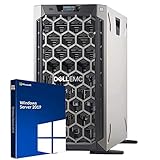
- 3.5 Inch Hot Plug Hard Drive PowerEdge T340 Tower Server Chassis
- Microsoft Windows Server 2019 Standard Operating System
- Processors: Intel Xeon E-2124 Quad-Core 3.3GHz 8MB CPU, Up To 4.3GHz Turbo
- Memory: 32GB (2 x 16GB) DDR4 PC4-21300 2666MHz Unbuffered Memory
- Hard Drive: 8TB (4 x 2TB) 7.2K RPM 6Gb/s SATA 3.5 Inch HDDs in RAID
Rank #3

- Dell PowerEdge R730xd 24B SFF 2U Server
- 2x Intel Xeon E5-2690 v4 2.6Ghz 14-Core (28-cores Total)
- 128GB DDR4 RAM – 4x 1.2TB 10K SAS 2.5” 12Gb/s
- Dell H730P mini 2GB 12Gb/s RAID
- 2x 750W PSU - 2x 10Gb SFP+ 2x 1Gb (RJ45) NIC
Product prices and availability are accurate as of the date/time indicated and are subject to change. Any price and availability information displayed on Amazon at the time of purchase will apply.
Free tools Windows power users keep installed
One-click scans. No signup required.

