
The Institute for Information Industry (III) is presenting an e-paper ID card as an open technology platform, not a retail product. Its prototype combines a 4-inch color E Ink Holdings display with NFC, Bluetooth, indoor positioning, posture sensing, vibration feedback and wireless charging. In a hospital health-screening center, the card can show a person’s next checkpoint, support identity verification and receive backend updates as the visit progresses.
What III is actually building
III describes the e-paper ID-card project as a reusable foundation that other organizations can adapt. Its stated role is to make the hardware and software building blocks available to brands, original design manufacturers (ODMs) and system integrators, rather than manufacture and sell a finished ID card.
Calvin Tsai, director of III’s Digital Transformation Research Institute (IDEAS for the Future), summarized the approach this way: “Our purpose in developing these technologies is not to sell products, but to provide an open platform which can enable different brands and system integrators to rapidly build their own solutions on this foundation and extend them further.”
That distinction matters. The project demonstrates an integration model and a workflow, but it is not evidence that consumers can buy an III-branded card or that the design is in mass production.
#1 Best Overall
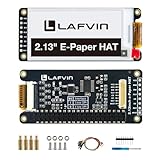
- Enjoy a paper-like viewing experience with the 2.13-inch e-paper display. The screen can retain the last displayed image even after power is removed, making it ideal for applications requiring long-term information display without continuous power supply.
- Designed for low-power projects, this e-ink module only consumes energy during screen updates and remains in standby mode most of the time. Perfect for battery-powered devices, smart labels, IoT projects, and long-running applications.
- Featuring a 250x122 pixel black-and-white display, this e-paper HAT delivers clear text and image rendering. Partial refresh support helps reduce update time and power consumption for smoother display operation.
- Equipped with a standard Raspberry Pi 40-pin GPIO header and SPI communication interface, this display module works with Raspberry Pi series boards, Arduino, ESP32 and other compatible development platforms. Built-in voltage conversion supports both 3.3V and 5V MCUs.
- Comes with connection accessories and supports online resources including driver board diagrams and example programs for Raspberry Pi, Arduino, and ESP32, helping developers quickly start their projects.
How the card’s technology stack works
| Platform element | Role in a deployment | What III’s account establishes |
|---|---|---|
| 4-inch color e-paper module | Displays identity, instructions and the next destination while using an e-paper screen suited to persistent information. | The display core is identified as a 4-inch color module from E Ink Holdings. A model number, resolution, refresh specification and viewing-performance data are not stated. |
| NFC | Can support short-range identification or check-in interactions with compatible readers. | NFC is listed as part of the integrated stack; a specific protocol profile or reader compatibility is not stated. |
| Bluetooth | Provides a wireless link to nearby equipment or infrastructure. | Bluetooth is included, but the version, range and supported profiles are not stated. |
| Indoor positioning | Helps determine where a user is inside a facility and can trigger location-aware guidance. | Indoor positioning is listed; the positioning technology and accuracy are not stated. |
| Posture sensing | Allows an application to react to how the card or its wearer is oriented. | Posture sensing is part of the modular concept. III gives no sensor part number or accuracy figure. |
| Vibration feedback | Provides a tactile alert when a user needs attention. | Vibration feedback is listed; alert patterns and intensity are not stated. |
| Wireless charging | Recharges cards without exposing a physical connector. | Wireless charging is included; charging power, time and battery capacity are not stated. |
The design is intentionally modular. III uses a smartphone-case example to illustrate that an application can omit pose detection when that function is unnecessary. This is an example of configurable architecture, not a claim that a commercial smartphone case is shipping.
What the hospital workflow looks like
In November 2025, III, Winstec Corporation and Taichung Veterans General Hospital were conducting field verification in the hospital’s health-screening center. The reported workflow connects the physical card to a backend system.
Rank #2

- This is 2.13inch E-Ink display HAT with Raspberry Pi 40PIN GPIO extension header, compatible with Raspberry Pi series boards, Jetson Nano. 250x122 resolution, Black and White Two Display colors, with embedded controller, communicating via SPI interface, supports partial refresh.
- No backlight, keeps displaying last content for a long time even when power down. Ultra low power consumption, basically power is only required for refreshing.
- SPI interface, for connecting with controller boards likeArduino/STM32, etc. Onboard voltage translator, compatible with 3.3V / 5V MCUs.
- Version Notice: The driver board is Rev2.1 (Version 2.1), which is independent of the screen version. Currently, there is only Rev2.1 (Version 2.1) for the driver board and QC label V4 is for the screen version, QC label V4 is currently being shipped.
- Comes with online development resources and manual (driver board circuit diagram, examples for Raspberry Pi/Jetson Nano/Arduino/STM32): bit.ly/3hZh77i
- Check-in: The visitor receives or activates a card associated with the screening visit.
- Identity verification: The system uses the card and facility equipment to confirm that the person is matched to the correct visit. The source does not specify the exact authentication method.
- Path guidance: The card presents directions or the next destination within the center, with indoor-positioning and feedback functions available to the application.
- Examination update: After an examination, the relevant information on the card is updated so it can display the next checkpoint.
- Backend coordination: Staff can update many cards in a batch for large events. A retrieval alert is described for cases in which a user carrying a high-value card approaches an exit.
III presents this workflow as a way to reduce errors and improve operational efficiency. No measured error rate, time saving, positioning accuracy or independent evaluation was published with the account, so those benefits should be treated as intended outcomes rather than quantified results.
Why an e-paper card fits this use case
A screening center needs information to remain visible while a visitor moves between stations. E-paper can keep the latest displayed instruction on screen without behaving like a continuously animated phone display. Color allows the interface to distinguish stages, warnings or destinations, while NFC, Bluetooth and positioning provide ways to exchange status with the surrounding system. Vibration can add an alert when looking at the screen is inconvenient.
Rank #3

- Beautiful, Ready-to-Use ePaper Display - The reTerminal E1001 arrives fully assembled in a sleek and durable enclosure, turning it into a ready-to-use HMI (Human Machine Interface) right out of the box. It features a crisp 7.5-inch 800×480 monochrome ePaper display that stays readable in any lighting. Powered by Espressif’s ESP32-S3, it delivers smooth performance and instant visuals with no additional setup required.
- Ultra-Low Power with Up to 3-Month Battery Life - Built with power efficiency in mind, the reTerminal E1001 includes a 2000mAh rechargeable battery that can last up to 3 months in deep-sleep mode (6-hour refresh interval). You can place it anywhere—on your desk, by your bedside, or mounted on a wall—without worrying about frequent charging or complicated wiring.
- No-Code UI Design & Deployment with SenseCraft HMI - Create your own beautifully customized dashboards with SenseCraft HMI, an AI-enhanced, no-code design platform. Simply drag and drop UI elements, choose from ready-made templates, or let AI assist your design flow. Connect live data from onboard sensors or web APIs and deploy your dashboard to any reTerminal E1001/E1002 in just a few clicks. Everything—from UI design to data configuration to deployment—happens seamlessly on one platform.
- Works with Popular Smart Home & Developer Platforms - Enjoy smooth integration with multiple ecosystems. Build no-code TRMNL dashboards with 300+ plugins for personal and work data, connect instantly to Home Assistant via ESPHome, or develop fully customized applications using Arduino, PlatformIO, or ESP-IDF. Whether you’re a beginner or a maker, the reTerminal E1001 makes your projects easier and more fun.
- Flexible Hardware & Software Customization - With seeed studio’s experience in open hardware and customization, the reTerminal E1001/E1002 can be tailored to your needs—whether that means adding specific sensors, tweaking I/O options, or creating your own UI layouts. It’s flexible enough for smart home enthusiasts, educators, makers, and even professional prototyping.
The practical value comes from the complete system, not the display alone. A card is useful only when its identity, location events, examination records, update service and staff procedures are connected reliably.
What “open platform” means for adopters
System integrators
Integrators would connect the card’s communications and sensing functions to registration, scheduling, wayfinding and alert systems already used by a hospital, venue or enterprise.
Rank #4
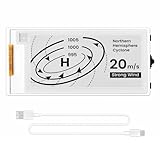
- Built-in ESP32-S3 Controller & SPI Interface - Comes with ESP32-S3 as the main MCU (up to 240 MHz) and standard 3-/4-wire SPI (default 4-wire) for easy integration. Supports the classic e-ink reader feel and responsive development flow
- Ultra-Low Power & Power-Off Retention - This epaper display only consumes power during refresh. Static content stays visible without a continuous power supply, ideal for battery-powered devices, smart labels and always-on displays
- Reflective, Sunlight-Readable - The pure reflection mode means no backlight required; the content remains clearly readable even under strong sunlight. Hard-coated anti-glare surface ensures excellent visibility and durability
- Rich Interfaces & Ready for Development - Includes BAT interface (2.2 V-3.7 V), UART0, GPIO header, back/menu/reset/boot buttons, hard-coated anti-glare surface. Compatible with Arduino IDE, and suitable for DIY makers alike
- High-Resolution e-ink Display - This 2.13″ e-paper display with 122x250 resolution delivers sharp black/white contrast and a wide viewing angle. Provides crisp clarity and a paper-like reading experience for smart tags and DIY devices
ODMs and hardware developers
ODMs could adapt the enclosure, electronics and sensor mix for a particular environment. A deployment that does not need posture sensing, for example, could remove that module instead of carrying its cost and power requirements.
Commercial brands and enterprise owners
Organizations can use the prototype as a starting point for their own application version. III reported beginning with 100 prototypes so these groups could test and refine scenarios; that figure is a prototype count, not production volume or sales.
Do these 3 things before closing this tab:
1Scan for outdated or missing drivers - takes under a minute2Repair Windows errors before they cause bigger problems3Fix the driver behind crashes, sound loss and screen glitchesBest Value

- Provide online user manual (examples for Raspberry Pi/Jetson Nano/Arduino/STM32), please check the manual carefully before using!
- This is an E-Ink display module, 1.54inch, 200x200 resolution, with embedded controller, communicating via SPI interface, supports partial refresh.
- Due to the advantages like ultra low power consumption, wide viewing angle, clear display without electricity, it is an ideal choice for applications such as shelf label, industrial instrument, and so on.
- No backlight, keeps displaying last content for a long time even when power down. Ultra low power consumption, basically power is only required for refreshing
- SPI interface, for connecting with controller boards like Raspberry Pi/Arduino/Nucleo, etc. Onboard voltage translator, compatible with 3.3V/5V MCUs
Winstec is identified as the technical-integration collaborator, while Taichung Veterans General Hospital is the field-verification partner. The account does not establish that either organization offers a generally available service or disclose commercial terms.
Independent reader supportYour contribution helps us test, update, and keep practical guides available for everyone.Questions to resolve before a deployment
- Display: Is a 4-inch color screen large enough for the required text, maps and accessibility settings? Obtain the exact module model, resolution, refresh behavior and contrast data.
- Connectivity: Which NFC and Bluetooth versions, readers and security modes are supported?
- Location: What indoor-positioning infrastructure is installed, and what accuracy is required before an instruction changes?
- Power: How many operating days are needed between wireless charges, and how will cards be charged, tracked and sanitized?
- Backend: Can the software update one card and batch-update an event while recording delivery status and failures?
- Safety and privacy: How are identity data, location events and health-screening information protected, retained and separated from the display identifier?
- Operations: What happens if a card is lost, unreadable, out of range or left at an exit?
- Integration: Can the partner connect the platform to the institution’s existing registration and examination systems without creating duplicate records?
These questions are implementation requirements, not specifications that III has already published.
Evidence limits and commercialization status
The core account appeared in an EE Times sponsored article dated November 18, 2025. It describes a prototype and an ongoing hospital field-verification effort, but it does not provide battery-life measurements, prices, market-size figures, interoperability guarantees or quantified performance results. It also does not establish the prototype’s deployment status after that publication date or the current retail availability of the display module.
III says it does not plan to mass-produce the cards. The realistic route to a finished deployment is therefore a partner-led project involving an integrator, ODM or brand that defines the workflow, supplies the operational systems and adapts the modular hardware.
What’s actually slowing this PC down?
Pick the symptom - the matching free tool is one click away.
How to evaluate an implementation partner
Rather than ranking named products, compare proposals against the functions the platform is intended to support:
| Decision area | Questions to ask |
|---|---|
| Display capability | Does the proposed size and color capability make instructions legible for the target users and environment? |
| Required functions | Are NFC, Bluetooth, indoor positioning, posture sensing and vibration all necessary, or can unused modules be removed? |
| Workflow software | Does the backend support individual and batch updates, checkpoint progression and exit-retrieval alerts? |
| System integration | Can the partner connect identity, scheduling and examination systems with appropriate security and audit trails? |
| Operational support | Who charges, inventories, cleans, replaces and recovers cards, and how are failures handled? |
The Bottom Line
III’s e-paper ID card is best understood as a modular reference platform: a color e-paper display plus wireless links, sensing, feedback and backend software that can turn a physical card into a changing guide through a facility. The hospital example shows how check-in and checkpoint updates could work, while the 100 prototypes and stated no-mass-production plan make clear that commercialization depends on partners building and deploying their own versions.
Quick Recap
Product prices and availability are accurate as of the date/time indicated and are subject to change. Any price and availability information displayed on Amazon at the time of purchase will apply.

