
Mobile cloud computing lets a phone, tablet, or other mobile device use computing, storage, and data services beyond its own hardware. Depending on the application, work can stay on the device, move to a nearby cloudlet, or run in a public cloud. Connected IoT devices may also contribute data or processing. The approach can make demanding mobile applications possible, but its results depend on the app’s architecture, network connection, data-handling rules, and the location where each task executes.
What is mobile cloud computing?
Mobile cloud computing combines mobile devices with cloud resources. A mobile app can call remote servers for processing, storage, synchronization, or access to shared data instead of performing every operation locally.
The term is broader than simply using a cloud-backed phone app. NIST describes an architecture that can include mobile devices, nearby cloudlets, public-cloud infrastructure, and connected IoT devices. The exact components vary by application; using a mobile device does not automatically mean that all three execution tiers are involved.
NIST’s formal definition of cloud computing comes from SP 800-145: “Cloud computing is a model for enabling ubiquitous, convenient, on-demand network access to a shared pool of configurable computing resources … that can be rapidly provisioned and released with minimal management effort or service provider interaction.” That definition describes cloud computing generally, not mobile cloud specifically.
#1 Best Overall

- 【Strong Adsorption】The inspiration of the silicone phone suction case comes from the adhesive force of the octopus. Each suction cup phone mount is 3.15 inches long and 2.17 inches wide, with 24 independent suction cups providing a stronger and more stable suction force, so you don't have to worry about your phone falling during use.
- 【Back of Phone Suction Grip】Remove the adhesive film on the phone suction cup and stick it on the phone case. You can then fix the phone on any smooth surface, which is very convenient. (The phone suction cup cannot be removed and reused after being attached to the phone case. It is recommended to attach it to a regular phone case, not a valuable one.)
- 【Widely Used】Our non-slip silicone phone sticky grip mount attaches to almost any flat phone case and make it compatible with common mobile phones such as iPhone and Android.You can shoot, watch videos or video calls in the kitchen, gym, dance studio, bathroom and other places.
- 【Capture the Wonderful Picture】Whether you are a TikTok creator or just like to share videos and photos, this phone suction cup can help you hands-free capture wonderful videos and photos for sharing with friends.
- 【Note】You can fix the phone suction cup on a smooth surface such as a mirror or glass. If necessary, wipe the suction cup with a damp cloth to obtain stronger suction. Before releasing your hand, make sure the phone is firmly fixed. (Not applicable to rough walls, wooden surfaces, and other uneven surfaces)
How the mobile-cloud architecture works
A mobile application divides work according to capability, delay tolerance, connectivity, privacy, and state requirements. A task might run locally, be offloaded to a nearby cloudlet, or execute in a public cloud.
| Execution location | Typical role | Key dependency | Main design question |
|---|---|---|---|
| Mobile device | Runs self-contained or delay-sensitive operations using the phone or tablet’s processor, memory, storage, sensors, and battery. | Local hardware and battery capacity | Can the device complete the task within its resource and energy limits? |
| Cloudlet | Provides a nearby cloud resource for work that benefits from shorter network paths or local coordination. | Reachable local network and available cloudlet capacity | Is a nearby resource available and trusted when the device needs it? |
| Public cloud | Offers scalable remote compute, storage, databases, and services shared through a provider’s infrastructure. | Wide-area connectivity and service availability | Is the task’s delay, data movement, and outage tolerance compatible with a remote service? |
Application offloading means transferring some computation or data processing from the mobile device to another tier. Offloading is not free: communication, application isolation, authentication, synchronization, and persistence must all be designed. A cloudlet can reduce the distance to a resource, but NIST’s project material does not establish a universal latency or performance improvement for every deployment.
Rank #2

- SUPERIOR COMFORT — Unlike traditional circular ear buds, the design of EarPods is defined by the geometry of the ear. Which makes them more comfortable for more people than any other ear bud–style headphones.
- HIGH-QUALITY AUDIO — The speakers inside EarPods have been engineered to maximize sound output and minimize sound loss, which means you get high-quality audio.
- BUILT-IN REMOTE — EarPods with USB-C plug also include a built-in remote that lets you adjust the volume, control the playback of music and video, and answer or end calls with a pinch of the cord.
- COMPATIBILITY — Works with all devices that have a USB-C port.
- INTEGRATED MICROPHONE — A built-in microphone precisely captures your voice while you’re on the phone, taking a FaceTime call, or summoning Siri — so you’re always heard loud and clear.
Why the mobile cloud matters
Access to more computing capacity
Remote resources can supplement a device when an application is CPU-intensive or data-intensive. Examples include analyzing large image collections, processing sensor streams, rendering complex content, or running models that exceed local capacity. The benefit is conditional: the application must be able to divide work safely and the connection must support the required data exchange.
Support for connected, real-time experiences
Mobile-cloud systems can combine data from phones, IoT sensors, and other devices. NIST identifies real-time, concurrent interactive IoT streams as a motivation for this work. Such systems still need a clear decision about which operations remain local and which can tolerate a trip to a cloudlet or public cloud.
Quick wins for a faster PC:
Repair Windows errors before they cause bigger problemsFix Now →Fix the driver behind crashes, sound loss and screen glitchesFind Drivers →Clear out junk files and repair common Windows errorsFree Scan →Rank #3

- Secure Hold: Our PopSockets adhesive phone grip gives your cell phone a secure, comfortable hold in hand to help prevent drops while texting, taking photos, or scrolling on the go. Designed to stick firmly to most phone cases and devices.
- Hands-Free Made Easy: Easily turn your PopSocket into a phone stand to prop up your phone anywhere, perfect for watching videos, video calls, or following recipes. A must-have phone holder that keeps your device secure and ready for anything.
- Compatibility: Works with all phones, tablets, and Kindles. Sticks best to smooth, hard plastic cases and may not adhere to silicone or textured cases. Easily swap your PopTop to change up your style.
- Black PopSockets: Simple, refined, and endlessly versatile. A timeless essential for any phone.
- Travel Must-Have for People On the Go: A must-have travel accessory for flights, flying, airports, air travel, airplanes, planes, international trips, cruises, and long travel days. Key gadget for your airport haul, travel accessories and must-haves.
Shared data and continuity across devices
Cloud storage and services can preserve application state and make information available across authorized devices. Persistence becomes a design concern when a task moves between tiers or when connectivity disappears; the app must define what is cached locally, what is queued, and which version of the data is authoritative.
Operational visibility
Monitoring from the device’s perspective can expose changing network conditions, service availability, and execution behavior in a distributed, real-time architecture. Monitoring is therefore part of the mobile-cloud design, not merely an afterthought for the server team.
Rank #4

- [360 ° Flexible Rotation Design] Comes with a rotatable lanyard ring that supports 360 ° free rotation, effectively solving the problem of twisted and tangled lanyards
- [Wide compatibility] The ultra-thin 0.02-inch design does not block the charging port at all, and both wired and wireless charging can be used directly without removing the pad. Compatible with most smartphones such as iPhone, compatible with various wristbands, lanyards, crossbody straps, and keychains
- [Durable and Portable Material] Premium rust-resistant stainless steel material with good flexibility, which not only avoids scratching the phone case, but also has excellent anti rust and anti fading performance
- [Multi scenario Practical] Paired with a lanyard or wristband, hands-free use can be achieved. The phone is within reach and not easily dropped, ideal for daily commuting and outdoor activities. Suitable for full coverage phone cases, does not support half coverage phone cases
- [Quality Service] If you find any damage or other issues with the product upon receipt, please contact us immediately. We will handle it quickly
Trade-offs and failure modes
- Connectivity and delay: A remote task depends on a functioning network path. Interactive features may need local fallbacks or a nearby tier when delay is unacceptable.
- Communication overhead: Uploading inputs and downloading results consumes bandwidth, time, and often battery power. Offloading a small task may cost more than doing it locally.
- Privacy and data movement: Data leaving the device must be protected in transit and handled according to the application’s security and privacy requirements. Minimize, encrypt, and control data at each boundary.
- Application isolation: Offloaded code and workloads need separation from other tenants and from the device. Identity, authorization, and secure execution boundaries must be explicit.
- Persistence and recovery: A dropped connection can interrupt a remote operation. Design resumable jobs, local queues, retry rules, and conflict handling where the user experience requires continuity.
- Resource variability: Device battery, radio conditions, cloudlet availability, and public-cloud capacity can change. A fixed assumption about performance is unsafe without measurements for the actual deployment.
Mobile cloud versus local, cloudlet, and public-cloud execution
There is no universal “best” tier. Choose the execution location by matching the task’s requirements:
- Keep it local when the operation is small, privacy-sensitive, usable offline, or highly delay-sensitive.
- Use a cloudlet when a trusted nearby resource is available and the task needs more capacity than the device but should avoid a distant service when possible.
- Use a public cloud when the workload benefits from broad geographic reach, durable shared storage, or elastic infrastructure and can tolerate network dependence.
- Split the workflow when sensors and immediate feedback belong on the device while aggregation, heavy analysis, or long-term storage belongs remotely.
These are architectural options, not guarantees that an app will expose a user-selectable switch among tiers.
What’s actually slowing this PC down?
Pick the symptom - the matching free tool is one click away.
Best Value
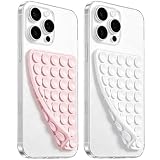
- 【PKYAA Double Sided Silicone Suction Phone Case Mount】PKYAA With Double Sided 40 Strong and Reliable individual suction cups, PKYAA provides a thicken and upgraded universal silicon suction mount for your phone.
- 【Friendly to Content Creators】If you are a content creator or an online influencer, you can create videos anywhere with this suction mount completely hands free with this silicone cell phone mount for cases.
- 【HANDS-FREE & Adhere to Mirrors】This Double Sided silicone suction phone case mount allows you to stick your phone to the mirror easily. No longer holding your phone in one hand to watch video tutorials while making up.
- 【Strong Grip on the Smooth Surface】You can easily hang your phone anywhere with a smooth surface. All you do is you clean off your phone and smooth surface. It is STURDY and it not only sticks to mirrors, it also sticks to windows, it sticks to refrigerators, tiles and other clean, flat surfaces.
- 【Press Down Firmly Every 30 Minutes】Use your palm or fingers to press the phone down firmly and check it's secure before letting go. Apply even pressure for a few seconds to allow the suction cup to adhere properly. To maintain the grip and prevent accidental falls, it's a good practice to periodically reapply pressure to the suction cup.
Where standard cloud models fit
NIST SP 800-145 classifies cloud computing in two ways. The counts below are taxonomy categories established by NIST in 2011, not market-share or adoption statistics.
| Cloud concept | NIST categories | How it can appear in a mobile-cloud system |
|---|---|---|
| Essential characteristics | Five: on-demand self-service, broad network access, resource pooling, rapid elasticity, and measured service. | Describe how a mobile client obtains and uses shared remote resources. |
| Service models | Three: Software as a Service (SaaS), Platform as a Service (PaaS), and Infrastructure as a Service (IaaS). | A mobile app may consume a finished service, use a managed development platform, or control virtualized infrastructure. |
| Deployment models | Four: private, community, public, and hybrid cloud. | The back end may be dedicated, shared by a defined community, publicly provided, or combined across environments. |
“Mobile cloud” is therefore an application and architecture context layered on top of these cloud concepts; it is not a fifth NIST service model.
Questions to answer before building or choosing a mobile-cloud design
- Which functions must work without connectivity?
- What is the maximum acceptable delay for each interaction?
- How much data must cross the device boundary, and can it be reduced or anonymized?
- What happens when a cloudlet or public-cloud endpoint is unavailable?
- Which state is cached, queued, replicated, or persisted remotely?
- How are users, devices, services, and workloads authenticated and isolated?
- What device-side measurements will reveal battery drain, radio cost, delay, failed requests, and stale data?
What mobile cloud is not
- It is not simply “the internet on a phone.” It is a deliberate distribution of application work and state across mobile and cloud resources.
- It does not guarantee faster performance. Remote execution can help demanding workloads, but communication and service conditions can also make an operation slower.
- It is not necessarily fully remote. A robust design commonly keeps some sensing, interaction, validation, or fallback behavior on the device.
- It is not limited to consumer apps. The same architecture can support enterprise systems, industrial sensors, and other IoT compositions.
The bottom line
Mobile cloud computing matters because it lets mobile applications combine local responsiveness with resources that a handset cannot provide alone. Its value comes from choosing the right execution tier for each task and engineering communication, isolation, persistence, privacy, and monitoring around the realities of an unreliable, changing network.
Quick Recap
Product prices and availability are accurate as of the date/time indicated and are subject to change. Any price and availability information displayed on Amazon at the time of purchase will apply.

