
What’s actually slowing this PC down?
Pick the symptom - the matching free tool is one click away.
Intel uses two different kinds of hackathon activity to expose hardware and platform weaknesses. Its internal Security Hack-a-Thons (HaT) put Intel security specialists and product engineers together to attack specific products as part of product assurance. Hack@DAC is an open, community-facing competition in which researchers examine open-source hardware designs. They address different gaps, but together they extend security work beyond routine validation.
What Intel’s internal Security Hack-a-Thons do
Intel describes HaT as ongoing training and hands-on security work that brings product experts together with security specialists. The security team contributes adversarial methods and a security-driven mindset; product experts contribute detailed knowledge of the target’s architecture and implementation.

Intel characterizes the approach as “breaking what we build.” In its words: “Security experts provide guidance on a security-driven mindset and knowledge about how to break systems. This why Intel refers to this internally as ‘breaking what we build.’ Product experts provide intimate knowledge about the inner workings of the specific target product.”
A HaT is not a replacement for formal review, verification, or validation. It adds practical, attacker-oriented work to those activities and can test whether routine assurance processes are finding the issues that matter in real use.
Do these 3 things before closing this tab:
1Fix the driver behind crashes, sound loss and screen glitches2Clear out junk files and repair common Windows errors3Scan for outdated or missing drivers - takes under a minute#1 Best Overall

- 64-in-1 Precision Screwdriver Set: This small screwdriver set includes 48 bits (Phillips, Flathead, Torx, Torx security, Triwing, Pentalobe, Hex, Triangle, U-type, Square, SIM, MID, OVAL, Gamebit, Nut driver). It's a complete electronics repair kit that has been professionally designed to repair computers, PC, laptops, Macbooks, tablet, phones, PS4 PS5, XBOX, Switch, eyeglasses, drone, watches, Ring doorbells and more
- Ergonomic & Magnetic Design: The super smooth swivel cap on the top of the handle makes it easier to rotate screws with less effort. This mini screwdriver features an ergonomic non-slip design and rubberized handle that provides a comfortable grip and precise control. The built-in strong magnet ensures magnetic bit holder transmits magnetism through the screwdriver tip to help you with tiny screws
- Practical Accessories: Our electronics tool kit comes with 8 types of 15 essential accessories. Magnetizer can enhance the magnetism of the screwdriver tip, pointed tweezers make it easy to handle screws and tiny components, spudger and hook tool is effective for connecting/disconnecting components, scraping off adhesives, suction cup, pry tools, opening picks and brush to help open and clean your device
- Organize & Portable Storage: All screwdriver bits are stored in rubber bit holder which marked with type and size for fast recognizing. The rubber bit holder can be fixed on the shelf of the sturdy plastic case, also can be removed for easy access, making it more convenient for you to perform repairs. The case provides secure protection and organized storage, while being lightweight and portable for easy transportation
- Premium Quality & Warranty: STREBITO manufactures premium quality, pro-grade screwdriver set. The precision bits are CNC machined to be precise, made of 60HRC Chromium-vanadium steel which is resist abrasion, oxidation and corrosion. This micro screwdriver set is covered by our lifetime warranty. If you have any issues with the quality or usage, simply contact customer service for troubleshooting help
What the events are intended to produce
- New weaknesses in the product or its surrounding platform flows.
- Evidence that a validation method, tool, or training exercise needs improvement.
- Recommendations for additional tools or attack methods.
- Security knowledge shared between product and security teams.
- Follow-up actions for current products and lessons for future architectures.
Intel calls this a closed-loop learning process: findings are reviewed after the event, then considered in remediation, architecture, validation, tooling, and training. The reviewed material describes Intel’s process and goals; it does not independently measure how much the events reduce real-world risk.
Hack@DAC opens hardware research to the wider community
Hack@DAC tackles a different problem: researchers need realistic, accessible designs in order to study hardware security weaknesses, but relatively few open hardware examples expose meaningful vulnerability patterns. Intel says its hardware-security work also responds to limited outside research attention on unintentional hardware design weaknesses.
Intel says it began Hack@DAC in 2018 with research teams from TU Darmstadt, Texas A&M University, and the Synopsys Cloud team. The competition is associated with the Design Automation Conference and has also been co-located with USENIX Security and CHES for several years.
How the competition helps
Participants examine open-source hardware designs and submit vulnerability reports in a format similar to responsible disclosure. Intel says submissions include a CVSS score and an explanation of the security impact. That gives researchers concrete targets for finding and mitigating vulnerabilities while giving tool builders examples on which to test analysis techniques.
The Tool Desk
Outbyte Driver Updater FREEFix the driver behind crashes, sound loss and screen glitchesFind Drivers →Outbyte PC Repair FREERepair Windows errors before they cause bigger problemsFix Now →Rank #2
Hack@DAC therefore serves as a hardware hacking competition and a research infrastructure project. It does not assess a confidential Intel product in the way an internal HaT does. Current participation rules and event dates are not established by the material reviewed here, so readers should check the event’s current announcement before planning a submission.
Hardware CWE work supplies a common weakness vocabulary
Intel’s work with MITRE extends Common Weakness Enumeration (CWE) to hardware design. CWE is a taxonomy: it describes recurring root causes and weakness patterns so teams can classify, discuss, and prevent them consistently.
Intel says it began systematic root-cause analysis of product-security issues in 2011 and has authored more than 75 hardware CWE entries. That is an Intel-reported count from its November 6, 2025 article, not an independently verified census of all hardware weaknesses.
The taxonomy and Hack@DAC are complementary rather than interchangeable:
Quick wins for a faster PC:
Repair Windows errors before they cause bigger problemsFix Now →Scan for outdated or missing drivers - takes under a minuteDriver Scan →Clear out junk files and repair common Windows errorsFree Scan →Rank #3
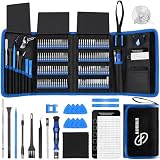
- 【Wide Application】This precision screwdriver set has 120 bits, complete with every driver bit you’ll need to tackle any repair or DIY project. In addition, this repair kit has 22 practical accessories, such as magnetizer, magnetic mat, ESD tweezers, suction cup, spudger, cleaning brush, etc. Whether you're a professional or a amateur, this toolkit has what you need to repair all cell phone, computer, laptops, SSD, iPad, game consoles, tablets, glasses, HVAC, sewing machine, etc
- 【Humanized Design】This electronic screwdriver set has been professionally designed to maximize your repair capabilities. The screwdriver features a particle grip and rubberized, ergonomic handle with swivel top, provides a comfort grip and smoothly spinning. Magnetic bit holder transmits magnetism through the screwdriver bit, helping you handle tiny screws. And flexible extension shaft is useful for removing screw in tight spots
- 【Magnetic Design】This professional tool set has 2 magnetic tools, help to save your energy and time. The 5.7*3.3" magnetic project mat can keep all tiny screws and parts organized, prevent from losing and messing up, make your repair work more efficient. Magnetizer demagnetizer tool helps strengthen the magnetism of the screwdriver tips to grab screws, or weaken it to avoid damage to your sensitive electronics
- 【Organize & Portable】All screwdriver bits are stored in rubber bit holder which marked with type and size for fast recognizing. And the repair tools are held in a tear-resistant and shock-proof oxford bag, offering a whole protection and organized storage, no more worry about losing anything. The tool bag with nylon strap is light and handy, easy to carry out, or placed in the home, office, car, drawer and other places
- 【Quality First】The precision bits are made of 60HRC Chromium-vanadium steel which is resist abrasion, oxidation and corrosion, sturdy and durable, ensure long time use. This computer tool kit is covered by our lifetime warranty. If you have any issues with the quality or usage, please don't hesitate to contact us
| Effort | Where the work happens | Primary output |
|---|---|---|
| Internal Security Hack-a-Thons | Intel products, firmware, software, and platform flows | Findings, remediation actions, architecture advice, and improved validation or training |
| Hack@DAC | Open-source hardware designs examined by external researchers | Vulnerability reports, mitigation ideas, and examples for research tools and methods |
| Hardware CWE | Cross-project analysis of recurring design weaknesses | A shared classification and root-cause vocabulary |
| Bug bounty programs | External reports submitted under Intel’s program rules | Vulnerability disclosures and associated rewards or handling, subject to the program’s terms |
What Intel reports from the TDX hackathons
Intel’s public TDX offensive-security article describes five hackathons focused on distinct parts of the Intel Trust Domain Extensions (TDX) stack:
- MCHECK.
- The Intel TDX Module.
- The SEAM Loader.
- The Linux software stack.
- End-to-end TDX platform flows.
Intel reports that this scoped effort found 76 vulnerabilities and generated 12 architectural recommendations. Intel says the mitigations were applied to 4th Generation Intel Xeon processors, code-named Sapphire Rapids, and later generations. These figures apply to the five named TDX-focused hackathons, not to every Intel hackathon or all Intel products.
The severity breakdown in the TDX assurance report
Intel’s version 2.0 TDX Security Research and Assurance report, updated August 5, 2024, lists the following vulnerability severities:
| Severity | Findings reported by Intel |
|---|---|
| Critical | 2 |
| High | 16 |
| Medium | 25 |
| Low | 33 |
| Total | 76 |
The same technical report lists 13 recommendations, while Intel’s offensive-research article says 12 architectural recommendations. Those are different measures reported in different documents; they should not be merged into a single number.
Rank #4

- 64-in-1 Precision Screwdriver Set: This small screwdriver set includes 48 bits (Phillips, Flathead, Torx, Torx security, Triwing, Pentalobe, Hex, Triangle, U-type, Square, SIM, MID, OVAL, Gamebit, Nut driver). It's a complete electronics repair kit that has been professionally designed to repair computers, PC, laptops, Macbooks, tablet, phones, PS4 PS5, XBOX, Switch, eyeglasses, drone, watches, Ring doorbells and more
- Ergonomic & Magnetic Design: The super smooth swivel cap on the top of the handle makes it easier to rotate screws with less effort. This micro screwdriver features an ergonomic non-slip design and rubberized handle that provides a comfortable grip and precise control. The built-in strong magnet ensures magnetic bit holder transmits magnetism through the screwdriver tip to help you with tiny screws
- Practical Accessories: Our electronics tool kit comes with 8 types of 15 essential accessories. Magnetizer can enhance the magnetism of the screwdriver tip, pointed tweezers make it easy to handle screws and tiny components, spudger and hook tool is effective for connecting/disconnecting components, scraping off adhesives, suction cup, pry tools, opening picks and brush to help open and clean your device
- Organize & Portable Storage: All screwdriver bits are stored in rubber bit holder which marked with type and size for fast recognizing. The rubber bit holder can be fixed on the shelf of the sturdy plastic case, also can be removed for easy access, making it more convenient for you to perform repairs. The case provides secure protection and organized storage, while being lightweight and portable for easy transportation
- Premium Quality & Warranty: STREBITO manufactures premium quality, pro-grade screwdriver set. The precision bits are CNC machined to be precise, made of 60HRC Chromium-vanadium steel which is resist abrasion, oxidation and corrosion. This micro screwdriver set is covered by our lifetime warranty. If you have any issues with the quality or usage, simply contact customer service for troubleshooting help
Why TDX testing reaches into hardware assurance
The report covers interfaces and lifecycle, measurement and attestation, key management, memory management, concurrency, error handling, guest software, the SEAM Loader, MCHECK, DMA protections, and hostile platform components. Its hardware-related research includes CPU and SoC RTL, microcode, and related low-level firmware.
That breadth matters because a TDX security failure can arise at the boundary between silicon-facing logic, firmware, software, and platform behavior. It would be inaccurate, however, to describe all 76 findings as silicon flaws: the published scope spans the complete TDX implementation and its platform flows.
Independent reader supportYour contribution helps us test, update, and keep practical guides available for everyone.How external researcher programs fit in
Intel’s external bug bounty and Project Circuit Breaker initiatives are adjacent to, but distinct from, employee HaT events. A 2021 Project Circuit Breaker announcement described targeted, time-limited activities that could provide training, access to new or pre-release products, and collaboration with Intel engineers.
That announcement reported that 97 of 113 externally found vulnerabilities in 2021 came through Intel’s bug bounty program. It is a dated, company-reported historical statistic, not a current participation rate. The announcement does not establish today’s eligibility requirements, rewards, scope, or event calendar.
Outdated Drivers Are Slowing You Down
One free scan finds every outdated or missing driver and matches the right update for your exact hardware.Free scan · exact hardware matchWindows Errors? Fix Them Before They Spread
Repair common Windows errors and clear accumulated junk for a smoother, more stable PC - no reinstall needed.Free scan · no reinstallBest Value

- Complete Security Bit Set: Includes nine security torx bit sizes, six SAE and metric hex security bit options, four spanner bits, three torq-set bits, and four tri wing bits for comprehensive fastening solutions
- Tamperproof Screwdriver Set: Engineered for specialty screwdriver bits applications; tackle tamper proof screws with precision-machined tips that ensure superior grip and prevent screw damage during removal
- Magnetic Extension Included: Features a magnetic bit extension for your drill that simplifies bit swapping and provides extended reach; ideal for accessing challenging locations in automotive and electronic repairs
- Security Allen Wrench Set Versatility: Functions as a tamper proof allen wrench set and safety bit set; CNC machined construction delivers exact fit for tamper resistant applications requiring specialty tools
- Professional Security Screwdriver Kit: This security screw bit set equips you with security bits for tamper proof screws; perfect for gaming consoles, handheld devices, and tasks requiring security torque bit set precision
External programs invite independent researchers to report issues under published rules. Internal HaT events are controlled exercises involving Intel personnel and a defined product target. Treating one as evidence of the other would obscure who performed the work and how the results were obtained.
What this strategy changes for hardware security
The common thread is deliberate adversarial pressure at several levels. Internal hackathons test whether Intel can break and learn from its own products. Hack@DAC gives the wider community open designs on which to develop discovery and mitigation techniques. Hardware CWE entries preserve recurring lessons in a form that can be reused across projects. Bug bounty channels add reports from researchers outside the company.
This layered model can improve feedback into architecture and engineering, but the public material establishes Intel’s reported activities and findings rather than an independently verified reduction in vulnerability or attack risk. The strongest supported conclusion is narrower: Intel is using both internal and open research mechanisms to find hardware and platform weaknesses earlier, classify their root causes, and feed lessons into later designs and assurance work.
Quick Recap
Product prices and availability are accurate as of the date/time indicated and are subject to change. Any price and availability information displayed on Amazon at the time of purchase will apply.

