
Recommended Free Tools
How do I lower my CPU temperature? Start by confirming that the reading is genuinely abnormal for your exact processor and workload. Then check dust, fans, airflow, cooler mounting and thermal paste before buying hardware. Intel’s guidance does not set one safe temperature for every CPU; processors have their own thermal limits, and laptop cooling and power controls are largely determined by the computer manufacturer.
First, find out whether the temperature is actually a problem
Use validated monitoring software and compare the result with the specifications for your exact CPU. Intel describes thermal throttling in relation to the processor’s own maximum threshold rather than a universal number. For a non-Intel system, use the processor maker’s and computer maker’s current documentation.
Match the reading to the workload
Record temperatures at idle and while gaming, rendering, compiling or running another demanding task. A brief rise during heavy work is not automatically a fault. Close only background programs you do not need, and check whether the temperature falls when the demanding workload ends.
Check for thermal throttling
Intel defines throttling as reducing clock speed when system temperature rises above TJ Max or Tcase. Look in your monitoring software for thermal-limit or throttling indicators and compare clock speeds and performance during the same workload. Repeated throttling, sudden performance drops, shutdowns or temperatures approaching the CPU’s documented limit justify troubleshooting.
Quick wins for a faster PC:
Clear out junk files and repair common Windows errorsFree Scan →Fix the driver behind crashes, sound loss and screen glitchesFind Drivers →Repair Windows errors before they cause bigger problemsFix Now →#1 Best Overall

- CONTACT FRAME FOR INTEL LGA1851 | LGA1700: Optimized contact pressure distribution for longer CPU life and better heat dissipation
- ARCTIC's P12 PRO FAN: More power at any speed - more powerful and quieter than the P12, especially at low speeds. Higher maximum speed for optimal cooling performance under high load
- NATIVE OFFSET MOUNTING FOR INTEL AND AMD: Shifting the cold plate center towards the CPU hotspot ensures more efficient heat transfer
- INTEGRATED VRM FAN: PWM-controlled fan that lowers the temperature of the voltage converters and thus ensures reliable performance
- INTEGRATED CABLE MANAGEMENT: The PWM cables of the radiator fans are integrated in the sheathing of the hoses so that only a single visible cable is connected to the motherboard
10 practical ways to lower CPU temperatures
-
Confirm the sensor reading and model-specific limit
Verify that the monitoring application identifies the correct CPU and that you are reading the package or core values you intend to monitor. Compare those values with the exact processor documentation, not a generic “safe temperature” chart. Intel’s Overheating Symptoms and Troubleshooting for Intel Boxed Processors (reviewed December 17, 2025) recommends validated monitoring software and processor-specific information. Laptop owners should also check the system OEM’s thermal guidance.
-
Identify what causes the heat
Note whether the rise occurs at idle, only under sustained load, or after a recent software, BIOS or hardware change. Check Task Manager, Activity Monitor or your operating system’s equivalent for a process keeping the CPU busy. Unnecessary background work can be closed, but high temperatures during a legitimate heavy workload may be expected for that processor and cooler.
-
Remove dust and clear blocked vents
Power the computer down, disconnect it from mains power and inspect the CPU heatsink, case intake filters, exhaust openings and laptop vents. Dust packed into fins or fans restricts heat transfer; a blocked intake or exhaust prevents air from moving through the system. Clean using the equipment manufacturer’s procedure and avoid spinning fans aggressively with compressed air.
Rank #2
Sale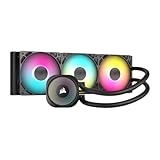 CORSAIR Nautilus 360 RS ARGB Liquid CPU Cooler – 360mm AIO – Low-Noise – Direct Motherboard Connection – Daisy-Chain – Intel LGA 1851/1700, AMD AM5/AM4 – 3X RS120 ARGB Fans Included – Black
- Simple, High-Performance All-in-One CPU Cooling: Renowned CORSAIR engineering delivers strong, low-noise cooling that helps your CPU reach its full potential
- Efficient, Low-Noise Pump: Keeps your coolant circulating at a high flow rate while generating a whisper-quiet 20 dBA
- Convex Cold Plate with Pre-Applied Thermal Paste: The slightly convex shape ensures maximum contact with your CPU’s integrated heat spreader, with thermal paste applied in an optimised pattern to speed up installation
- RS120 ARGB Fans: RS ARGB fans create strong airflow and high static pressure, with easy ARGB control via a compatible motherboard. CORSAIR AirGuide technology and Magnetic Dome bearings ensure great cooling performance and low noise
- Easy Daisy-Chained Connections: Reduce the wiring in your system by daisy-chaining your RS ARGB fans and connecting them to just one 4-pin PWM fan header and one +5V ARGB header
-
Make sure every required fan works
With the system running, check that the CPU fan, case fans and, where applicable, radiator fans spin normally. Look for loose headers, a cable caught in a blade, a failed fan or grinding and ticking noises. A disconnected CPU-fan header can trigger protective shutdowns or leave the cooler unable to remove heat.
Special offer. See more information about Outbyte and uninstall instructions. Please review EULA and Privacy policy. -
Improve unobstructed case airflow
Reroute cables and remove objects blocking front, bottom or side intakes and rear or top exhausts. Confirm that each fan faces the intended direction and that intake and exhaust are arranged to move air through the case rather than recirculate it. Add a case fan only when inspection shows inadequate airflow or a failed fan; more fans alone do not correct a blocked or incorrectly oriented layout.
-
Verify cooler compatibility and mounting
Confirm that the cooler supports the CPU socket and is rated appropriately for the processor’s power requirements. Check that the mounting hardware is the correct revision, all screws or clips are engaged evenly and the cold plate sits flat. Remove any protective film from a new cooler’s contact surface. An incompatible, undersized or unevenly mounted cooler can overheat even in a clean case.
Rank #3
 ARCTIC Liquid Freezer III Pro 360 - AIO CPU Cooler,3 x 120 mm Water Cooling
- CONTACT FRAME FOR INTEL LGA1851 | LGA1700: Optimized contact pressure distribution for longer CPU life and better heat dissipation
- ARCTIC's P12 PRO FAN: More power at any speed - more powerful and quieter than the P12, especially at low speeds. Higher maximum speed for optimal cooling performance under high load
- NATIVE OFFSET MOUNTING FOR INTEL AND AMD: Shifting the cold plate center towards the CPU hotspot ensures more efficient heat transfer
- INTEGRATED VRM FAN: PWM-controlled fan that lowers the temperature of the voltage converters and thus ensures reliable performance
- INTEGRATED CABLE MANAGEMENT: The PWM cables of the radiator fans are integrated in the sheathing of the hoses so that only a single visible cable is connected to the motherboard
-
Replace thermal paste when the cooler is remounted
Thermal interface material fills microscopic gaps between the processor heat spreader and cooler. If you remove the cooler, clean the old compound from both surfaces and apply fresh paste according to the paste and cooler instructions. Do not spread new paste over used paste. Many new coolers already have paste pre-applied, so adding more can make the contact worse. Intel’s How to Apply or Remove Thermal Interface Material (reviewed January 30, 2025) gives this guideline: replace the TIM when reinstalling the processor or fan-heatsink.
-
Inspect an installed liquid cooler
For an all-in-one or custom liquid loop, confirm that the pump and radiator fans are connected to the correct headers and that the pump is operating. Check for visible leaks, unusual pump noise or signs of fluid loss. Do not open a sealed AIO unit. A failed pump can cause rapid temperature increases even when radiator fans spin.
PerformancePC Slower Than It Used to Be?DriversOutdated Drivers Are Slowing You DownPerformanceWindows Errors? Fix Them Before They SpreadSpecial offer. See more information about Outbyte and uninstall instructions. Please review EULA and Privacy policy. -
Undo a recent change or restore standard settings
If overheating began after a BIOS update, overclock, undervolt, fan-curve change or hardware installation, reverse that change where it is safe to do so. Intel’s troubleshooting guidance also lists loading BIOS defaults as a diagnostic step. Save any custom settings first, and remember that frequency or voltage changes can affect stability, security, performance, component life and warranty coverage.
Rank #4
 Thermalright Aqua Elite 240 V3 Water Cooling CPU Cooler, Double PWM ARGB Fans with S-FDB Bearings,Efficient PWM Controlled Pump,for AMD/AM4/AM5, Intel LGA1150/1151/1200/1700/1851, (AE240 V3)
- 【Better Cooling】 The cooler adopts the fourth generation pump head + 240 cold row size black aluminium fin heat sink plate + protective preparation mesh water pipe + standard configuration 120mm ARGB fan, to create a low vibration, high heat dissipation, low evaporation, high life span of the one-piece water-cooled cooler area unit.
- 【Unique Pump Head】 The octagonal shaped cold pump head adopts the exclusive frame of the 4th generation water pump, the swirling rectangle design and the ARGB halo under the logo luminous marking creates a colourful visual experience, and the life of the cold pump head is up to 40,000 hours with a rotation speed of up to 2800 RPM ± 10%, which ensures that the CPU is provided with excellent heat dissipation for a long period of time
- 【Excellent LED Lighting Effect】Fan and water-cooling header ARGB sync with 5V 3pin on the motherboard to achieve light sync, 1600W colour soft light effect, efficient cooling while providing rich light effect, support light effect series and motherboard sync to avoid insufficient light interface.
- [CPU Fan Parameters]Equipped with dual-fan TL-C12B-S V2, Speed:1500RPM±10%, size: 120x120x25mm, fan noise≤25.6dBA, power supply interface: 4PIN PWM, light interface: 5V/3PIN ARGB, airflow: 66.17CFM(MAX), with PWM and ARGB function, can automatically adjust the speed according to the CPU temperature, provide strong airflow and lower noise, ARGB light colour can be manually adjusted.
- 【Convenient Installation】 AIO cooler compatibility, support AMD & Intel slots, support AMD: AM4/AM5, Intel: lga1150/1151/1155/1156/1200/1700, comes with accessories that can be installed on the corresponding platforms, the installation is simple, can be installed according to the instructions and tutorials.
-
Escalate persistent overheating
If the CPU is within the cooler’s supported socket and power range, the mount is even, paste is fresh and fans and airflow are normal, continued overheating may indicate a defective cooler, motherboard control problem or system-specific fault. Contact the motherboard manufacturer or computer OEM with the CPU model, temperatures, workload, BIOS version and checks already completed. For a laptop, the OEM is the correct escalation point because its chassis, firmware, power and current limits determine the cooling behavior.
How to choose a replacement cooler
Buy a replacement only after the checks above identify insufficient capacity or a failed component. Compare the following before price or appearance:
| Check | What to verify |
|---|---|
| Socket and CPU capacity | The cooler supports the exact socket and the processor’s power requirements. |
| Physical fit | Air-cooler height, radiator length and thickness, mounting clearance, RAM clearance and motherboard-component clearance match the case and board specifications. |
| Cooling design | Air cooling uses a heatsink and fan; liquid cooling adds a pump, tubing and radiator. Liquid systems introduce pump installation and pump-failure considerations. |
| Noise and airflow | Check fan operation and how the cooler fits the case’s intake and exhaust arrangement. The available manufacturer guidance does not provide comparative noise test results. |
| Price and warranty | Compare current listings and the seller or manufacturer’s warranty terms at the time of purchase; these vary by region and date. |
No cooler type is universally superior. The right choice depends on the CPU, socket, case clearances, airflow and your workload.
What’s actually slowing this PC down?
Pick the symptom - the matching free tool is one click away.
Best Value

- Simple, High-Performance All-in-One CPU Cooling: Renowned CORSAIR engineering delivers strong, low-noise cooling that helps your CPU reach its full potential
- Efficient, Low-Noise Pump: Keeps your coolant circulating at a high flow rate while generating a whisper-quiet 20 dBA
- Convex Cold Plate with Pre-Applied Thermal Paste: The slightly convex shape ensures maximum contact with your CPU’s integrated heat spreader, with thermal paste applied in an optimised pattern to speed up installation
- RS120 ARGB Fans: RS ARGB fans create strong airflow and high static pressure, with easy ARGB control via a compatible motherboard. CORSAIR AirGuide technology and Magnetic Dome bearings ensure great cooling performance and low noise
- Easy Daisy-Chained Connections: Reduce the wiring in your system by daisy-chaining your RS ARGB fans and connecting them to just one 4-pin PWM fan header and one +5V ARGB header
Desktop and laptop troubleshooting are different
On a self-built desktop, you can inspect the heatsink, fan headers, case layout, thermal paste and cooler compatibility directly. On a laptop, vents, fan curves, heat pipes and power or current limits are designed by the OEM. Clean accessible vents and confirm the manufacturer’s recommended monitoring and service procedure, but do not assume a desktop cooler, BIOS setting or generic temperature target applies.
When the temperature still will not come down
- Stop using the system for sustained heavy workloads if it is repeatedly shutting down or throttling.
- Document idle and load temperatures, clock speeds, fan or pump behavior and the exact workload.
- Recheck the cooler mount and protective-film removal before applying more paste or buying another fan.
- Use the motherboard maker’s or computer OEM’s support channel when the documented cooler and installation checks pass.
Intel’s stated thermal-management goal is to keep the processor at or below its maximum operating temperature. The practical route to that goal is diagnosis first: establish the model-specific limit, identify the workload, restore unobstructed cooling and replace only the component that the evidence points to.
Quick Recap
Product prices and availability are accurate as of the date/time indicated and are subject to change. Any price and availability information displayed on Amazon at the time of purchase will apply.

