
Outdated Drivers Are Slowing You Down
One free scan finds every outdated or missing driver and matches the right update for your exact hardware.Free scan · exact hardware matchPC Slower Than It Used to Be?
A free scan shows the junk files, broken settings and background clutter dragging Windows down - then fixes them in one click.Free scan · Windows 10 & 11Not yet as a patient-ready product. MIT and Brigham and Women’s Hospital researchers have reported an investigational, under-skin implant that monitors vital signs and can release naloxone when its algorithm detects a pattern consistent with fentanyl overdose. The reported 96% reversal rate comes from animal studies, not human trials. No evidence in the available reports establishes FDA approval, a commercial launch, price, implant duration, or a replacement schedule.
What the implant is designed to do
The MIT prototype is a closed-loop system: sensors watch the body, software evaluates the signals, and a small pump delivers naloxone without waiting for a bystander to recognize an overdose. Researchers described the device as roughly the size of a stick of gum, implanted under the skin.
It measures heart rate, breathing rate, blood pressure, and oxygen saturation. The onboard algorithm is intended to recognize the progression of opioid-induced respiratory depression and distinguish it from other causes of slow breathing, such as sleep apnea. If the pattern meets its trigger criteria, the pump can release naloxone from a reservoir holding up to 10 milligrams in about 10 seconds.
Naloxone is an opioid antagonist. It can displace opioids at receptors and restore breathing, but its effect is temporary. An automatic dose would therefore be an emergency intervention, not a substitute for medical care or continued observation.
#1 Best Overall
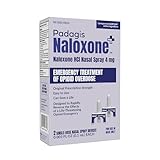
- QUICK & EFFECTIVE: Padagis Naloxone HCl Nasal Spray delivers a dose of naloxone, designed to provide quick and effective reversal of opioid overdose symptoms.
- SIMPLE TO USE: With a simple nasal spray mechanism, Padagis Naloxone HCI Nasal Spray is user-friendly, allowing for ease of use in emergency situations. Safe to use even when Opioids aren’t present.
- COMPACT & CONVENIENT: Each packet contains a nasal spray device and can be easily carried in pockets, purses, or emergency kits, ensuring life-saving intervention is always within reach.
- TRUSTED BY PROFESSIONALS: By equipping individuals with the means to respond to opioid overdoses, Padagis Naloxone HCI Nasal Spray empowers communities to help save lives, offering support in critical moments. Naloxone is trusted by first responders.
“This could really address a significant unmet need in the population that suffers from substance abuse and opiate dependency to help mitigate overdoses, with the initial focus on the high-risk population,” said Giovanni Traverso of MIT and Brigham and Women’s Hospital.
How detection and reversal work
- Continuous sensing: The implant collects several vital signs rather than relying on breathing alone.
- Pattern analysis: An algorithm looks for the combination and sequence of changes associated with opioid-induced respiratory depression.
- Automatic delivery: When the trigger threshold is reached, a micropump releases naloxone from the implanted reservoir.
- Emergency follow-up: Because naloxone can wear off and the overdose can recur, emergency services and clinical monitoring remain necessary.
The multisensor design is meant to reduce false alarms while still responding quickly. However, the published reports do not establish a human false-positive rate or show how the device performs across different opioids, medical conditions, or real-world environments.
Rank #2

- Original Prescription Strength: Two 4 mg single-dose devices. Available over the counter without a prescription. Works quickly, reversing an opioid overdose in minutes.
- A Staple For Medical Supplies & Equipment: NARCAN Nasal Spray is an addition to any emergency first aid kit. It's designed for opioid emergencies and can help save a life in case of an opioid overdose.
- Used by First Responders: Naloxone nasal spray is carried by first responders and commonly employed in emergency situations. NARCAN Nasal Spray is designed to rapidly reverse the effects of a life-threatening opioid overdose. Use as directed.
- Easy to Use: Easy to use nasal spray opioid overdose treatment. No nasal swabs or injections are needed. Safe to use even if opioids are not present.
- First Aid Kit Item: this naloxone overdose medicine can help complete your first aid kit. Designed to rapidly reverse the effects of opioid overdose No training required.
What has actually been tested
MIT and Brigham and Women’s Hospital implant
In 2024, the researchers reported a 96% overdose-reversal rate in animal studies. That is the strongest numerical result reported for this implant, but it is animal evidence and cannot be presented as a human success rate. MIT described human testing as a future goal while work continued on miniaturization, battery life, and the best implantation location.
The Naloximeter platform
Researchers at Washington University and Northwestern University described the Naloximeter, a related implantable concept combining optical sensors, drug delivery, and communications. Their paper reported rescue in small- and large-animal studies and presented the system as clinically translatable research. It is not described as an approved commercial implant.
Recommended Free Tools
Rank #3

- Used by first responders
- Original prescription strength
- Safe and easy to use
- Designed to rapidly reverse the effects of an opioid emergency
Human feasibility work on a different device
A University of Washington wearable injector provides limited human feasibility context, but it is not the MIT implant or the Naloximeter. In Vancouver, 25 people with opioid-use disorder provided real-world breathing data for algorithm development; naloxone was not injected in that part of the work. In a separate hospital study, 20 healthy volunteers held their breath for 15 seconds to simulate apnea, and the wearable injected naloxone. The investigators said longer unsupervised studies and testing in people using opioids nonmedically were still needed.
Implant, wearable, spray, and monitoring system compared
| Option | Detection and delivery | Evidence reported | Bystander needed? | Regulatory status and availability | Battery, reservoir, and replacement |
|---|---|---|---|---|---|
| MIT under-skin implant | Autonomous vital-sign detection with an implanted micropump; naloxone released in about 10 seconds when the algorithm triggers | Animal studies; 96% reversal reported in 2024 | Not for the initial trigger, although emergency follow-up is still required | Investigational prototype; no established consumer availability | Reservoir up to 10 mg; battery-life, implant-duration, and replacement details not stated; miniaturization remains under development |
| Naloximeter | Optical sensing, implanted naloxone delivery, and communications for alerts | Small- and large-animal studies | Not for automatic detection and dosing, but communications are intended to involve responders | Research platform, not an approved commercial implant | Specific battery, reservoir life, and replacement schedule not stated |
| University of Washington wearable injector | Wearable breathing detection with automatic naloxone injection | Algorithm data from 25 people with opioid-use disorder; injection demonstrated during simulated apnea in 20 healthy volunteers; no reported real-overdose injection study | Designed to automate injection, but deployment and alert arrangements depend on the system | Research device, not the implant in the headline; ordinary consumers cannot buy it as an approved treatment | Wearable power and drug-cartridge replacement requirements were not established in the cited reports |
| FDA-authorized nonprescription naloxone nasal spray | A person recognizes a suspected overdose and administers naloxone through the nose | Approved product class; the cited material does not provide a real-world success percentage | Yes | Available directly to consumers in the United States under FDA nonprescription authorization | No implant battery or reservoir; each spray is a single-use medication package |
| Masimo SafetyNet Opioid System | Monitors physiological markers for opioid-induced respiratory depression and can notify contacts or initiate an emergency-service wellness call | FDA marketing authorization described; it is a monitoring system, not an autonomous implanted naloxone pump | Alerts contacts or services rather than injecting naloxone itself | Authorized clinical monitoring system; not an implanted overdose-reversal product | Device-specific replacement details were not stated in the cited material |
Can you buy or request the implant now?
No. The available reports do not establish a completed human trial of the MIT implant or Naloximeter, FDA approval, a launch date, a price, or how long either implant would remain in the body. A clinician cannot currently prescribe this prototype as a routine overdose-prevention treatment based on the evidence described here.
Rank #4

- Full prescription strength: Nasonex 24HR provides effective allergy relief with mometasone furoate (glucocorticoid) 50 mcg per spray; available over the counter, without a prescription
- 24-hour relief: This nasal spray temporarily relieves allergy symptoms including nasal congestion, runny nose, sneezing, and itchy nose caused by hay fever or other upper respiratory allergies
- Non-drowsy, scent-free mist: Multi-symptom allergy and congestion relief nasal spray without the drowsiness, so your day stays on track
- How Nasonex works: A trusted choice designed for targeted multi-symptom control; You may start to feel relief within 12 hours and full effect after several days of regular, once-a-day use
- Dosing: Adults 12+: 2 sprays per nostril once daily; Children 2-11: 1 spray per nostril once daily (adult supervision required); Do not use under age 2; See package insert for full directions
For a physical overdose-reversal product available now in the United States, the practical option described by the FDA is nonprescription naloxone nasal spray. It works only when someone recognizes the emergency and follows the product labeling. Call emergency services immediately for a suspected overdose and continue following the approved naloxone instructions while help is coming.
Independent reader supportYour contribution helps us test, update, and keep practical guides available for everyone.Is this the same as Narcan?
No. Narcan is a brand name associated with naloxone nasal spray. The investigational implant uses the same antidote—naloxone—but stores it under the skin and aims to detect and treat an overdose automatically. Narcan nasal spray is an FDA-authorized, externally administered product that requires a person to give the dose. The route, hardware, evidence, and regulatory status are different.
Do these 3 things before closing this tab:
1Clear out junk files and repair common Windows errors2Fix the driver behind crashes, sound loss and screen glitches3Repair Windows errors before they cause bigger problemsBest Value

- Ridiculously Fast Relief: Unblock your nose in seconds with Afrin No Drip Severe Congestion Nose Spray Decongestant, a fast-acting sinus spray providing sinus pressure and congestion relief with cooling menthol in a convenient twin pack nasal spray bottle
- Effective for Severe Nasal Congestion: This maximum strength nasal spray decongestant is perfect for relieving severe nasal congestion and sinus pressure caused by colds and allergies, offering quick and effective decongestants for adults and children 6 years and older
- No Drip Technology: Afrin's No Drip sinus medicine ensures the medicated mist stays where it's sprayed, providing effective nasal decongestion without the mess or discomfort of it dripping from your nose or down your throat
- Cooling Menthol Formula: Experience the soothing and cooling sensation of menthol while the powerful nasal decongestant works to constrict blood vessels in the nasal passages and reduce swelling to help you breathe easier
- 12-Hour Non-Drowsy Decongestion: Experience long-lasting relief for up to 12 hours without drowsiness, perfect for both day and night use to alleviate nasal congestion and provide sinus pressure relief
What still has to be proven
- Human safety and accuracy: Researchers must show that the algorithm detects genuine opioid overdoses quickly without unacceptable false alarms.
- Long-term implantation: Battery life, tissue response, reservoir stability, infection risk, and replacement procedures remain unresolved in the reports.
- Real-world effectiveness: Animal rescue and simulated apnea do not establish outcomes during unsupervised human opioid use.
- Repeat dosing and recurrence: Naloxone is temporary, so protocols must address recurrent respiratory depression and emergency response.
- Regulatory review: FDA guidance for devices intended to treat opioid use disorder indicates that clinical development and evaluation are ongoing.
- Privacy and communications: Systems that transmit physiological data or contact responders will need clear rules for consent, security, reliability, and who receives alerts.
Bottom line
An implant that detects an opioid overdose and releases naloxone is a credible research direction, not an available treatment. The MIT device has shown promising animal results, and the Naloximeter represents a related research approach, but neither has established human clinical effectiveness or consumer availability. Until an implant is approved, access to naloxone nasal spray, rapid emergency response, and adherence to its FDA-approved labeling remain the practical safeguards.
Quick Recap
Product prices and availability are accurate as of the date/time indicated and are subject to change. Any price and availability information displayed on Amazon at the time of purchase will apply.

