
Quick wins for a faster PC:
Scan for outdated or missing drivers - takes under a minuteDriver Scan →Clear out junk files and repair common Windows errorsFree Scan →Not reliably. A Sandy Bridge processor’s published TDP does not tell you its idle wattage, and the available period reviews do not establish a family-wide statistical correlation between the two. TDP is a thermal-design reference for maximum theoretical load; idle consumption is a separate operating state affected by voltage, frequency, power-saving states, firmware and the rest of the platform.
TDP and idle power describe different conditions
Intel defines Thermal Design Power (TDP) as power consumption under the maximum theoretical load. Intel also states that consumption is lower at lower loads and explains that TDP gives system designers a target for selecting a suitable thermal solution.

That definition means TDP is not a constant electrical draw and is not an idle-power rating. A processor listed at 95 W TDP is not expected to consume 95 W while sitting idle. TDP is primarily about cooling design under demanding conditions; idle power is measured while the processor and platform are doing little work.
What Sandy Bridge specifications actually say
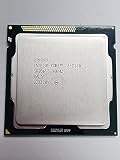
Intel ARK lists both the Core i7-2600 and Core i7-2600K as 32 nm Sandy Bridge desktop processors with a 95 W TDP and a Q1 2011 launch. Those specifications identify the thermal-design class, not the number of watts either chip uses at idle.
#1 Best Overall
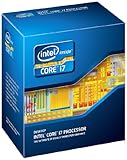
- All Core i7 processors have Intel Turbo Boost Technology
- 8 MB Intel Smart Cache is dynamically shared to each processor core, based on workload
- Quad-core processor with Intel Hyper-Threading Technology (Intel HT) delivers eight-way multicore processing
- Specs: Quad-core 3.4GHz, 8M Cache, Intel HD Graphics 2000, 95 watt TDP, Dual-channel DDR3 memory support, socket LGA1155
- Enhanced Intel SpeedStep Technology is an advanced means of enabling very high performance while also delivery power-conservation.
| Processor | Architecture and class | Published TDP | What the figure does not establish |
|---|---|---|---|
| Core i7-2600 | Sandy Bridge desktop, 32 nm | 95 W | Its isolated CPU idle wattage |
| Core i7-2600K | Sandy Bridge desktop, 32 nm | 95 W | Its isolated CPU idle wattage |
Two chips can share a TDP rating while showing different idle behavior, and chips with different TDP ratings can show similar idle readings under comparable conditions. The specification alone cannot distinguish those cases.
Why idle consumption varies
Voltage and frequency at light load
Modern power-management logic can reduce clock speed and voltage when demand is low. The resulting consumption depends on the particular silicon, firmware decisions and the workload rather than simply on the maximum-load TDP label.
Package and core power states
Idle may involve clock gating or deeper sleep states, but the attainable state depends on operating-system policy, BIOS settings, background activity and whether connected devices allow the platform to enter those states.
Rank #2

- Core i7-3930K 3.20GHz 6-Core 12-Thread 12MB Cache FCLGA2011
Platform configuration
Memory modules, graphics hardware, storage devices, fans, chipset logic, add-in cards and the power supply all contribute to a wall-meter reading. A processor’s TDP cannot predict those components’ consumption.
The Tool Desk
Outbyte Driver Updater FREEScan for outdated or missing drivers - takes under a minuteDriver Scan →Outbyte PC Repair FREEClear out junk files and repair common Windows errorsFree Scan →Measurement boundary changes the answer
“Idle power” is not one universal measurement. A reading taken at the CPU power connector differs from package telemetry, and both differ from a whole-system wall reading. A server measurement includes its motherboard, memory, storage, fans, power supplies and installed processors.
| Measurement | What it includes | Use when comparing |
|---|---|---|
| CPU/package or connector | Power attributed closely to the processor, with instrumentation-specific losses | Processor behavior, if the same method is used |
| Wall or whole-system idle | CPU plus motherboard, memory, storage, graphics, fans and PSU losses | Electricity use of a complete, otherwise-matched build |
| Server total-system idle | All hardware in the tested server configuration | That server configuration, not an individual CPU |
For a valid comparison, record the exact SKU and TDP, measurement point, motherboard and installed components, operating system, power-management settings and the test’s definition of “idle.”
What the Sandy Bridge-era measurements show
Desktop testing
AnandTech’s 2011 desktop review measured idle and Cinebench R11.5 load power for the Core i7-2600K, Core i5-2500K and Core i3-2100. It also reported an ATX12V-connector measurement intended to separate CPU power from motherboard and power-supply losses. Those results are useful only with the review’s specified hardware, workload and measurement boundary; they are not a controlled family-wide idle-power dataset.
Mobile testing
Notebookcheck’s 2011 mobile Sandy Bridge review reported that the top quad-core Core i7-2960XM averaged only 2 W more than the top dual-core Core i7-2640M in its tests. That close result shows that core count and performance tier do not necessarily produce a simple idle-power ladder. It is one review result from particular notebook configurations, not proof that all Sandy Bridge models behave alike.
Recommended Free Tools
Four-socket server testing
CERN Openlab reported idle and load power for a four-socket Sandy Bridge-EP server using its system energy-measurement procedure. Those figures describe the complete server platform, not the isolated idle draw of one processor, so they cannot be compared directly with a desktop CPU-connector reading.
Is there a measurable Sandy Bridge TDP-to-idle correlation?
The reviewed sources do not provide a controlled population of Sandy Bridge SKUs tested with one standardized, isolated-CPU idle protocol, nor do they publish a correlation coefficient. Their desktop, notebook and server results use different platforms and measurement boundaries. Therefore, the evidence does not justify claiming either a strong correlation or a universal absence of any relationship.
The precise conclusion is narrower: TDP alone does not predict idle power. A larger controlled dataset might find a weak indirect relationship under a fixed protocol, but that question remains unresolved by the published measurements considered here.
Independent reader supportYour contribution helps us test, update, and keep practical guides available for everyone.How to estimate power for a legacy Sandy Bridge build
If your goal is 24/7 electricity use, use a like-for-like measurement rather than converting TDP into an idle figure.
Best Value

- Intel Pentium G645 Sandy Bridge Dual-Core 2.9 GHz LGA 1155 (SR0RS) Desktop Processor
- Identify the exact processor SKU and its published TDP.
- Measure at the boundary that matches your question: CPU connector for processor-focused analysis or the wall for household electricity use.
- Keep the motherboard, memory, graphics, storage, fans and power supply constant when comparing CPUs.
- Use the same operating system, BIOS power settings and background software.
- Define idle explicitly, including how long the system settles and whether displays or peripherals remain active.
- Record separate idle and load results; do not label the TDP value as an idle measurement.
For annual energy planning, multiply the measured wall power in kilowatts by operating hours, then by your electricity rate. The resulting estimate belongs to that complete configuration and test setup, not to the processor’s TDP number.
Bottom line
Sandy Bridge TDP is a maximum-load thermal-design specification, while idle power is an operating measurement shaped by power states, firmware, voltage/frequency behavior and platform hardware. The available reviews do not establish a family-wide TDP/idle correlation. Choose or evaluate a Sandy Bridge system using comparable idle measurements at the same measurement boundary, not by treating a 95 W TDP as an idle-watt figure.
Quick Recap
Product prices and availability are accurate as of the date/time indicated and are subject to change. Any price and availability information displayed on Amazon at the time of purchase will apply.

