
AGP and conventional PCI are different expansion interfaces: AGP was designed specifically for graphics cards, while PCI was a general-purpose bus. Their slots and electrical signaling are not interchangeable, so an AGP card will not fit a conventional PCI slot. PCI Express (PCIe) is a later, distinct architecture that replaced both in newer systems.
AGP and conventional PCI: the key differences
| Feature | AGP | Conventional PCI |
|---|---|---|
| Full name | Accelerated Graphics Port | Peripheral Component Interconnect |
| Primary purpose | A graphics-focused interface for a graphics adapter | A general-purpose expansion bus used by different device types |
| Bus design | A graphics port with chipset support for a Graphics Address Remapping Table (GART) | A shared parallel bus used by multiple devices |
| Historical bandwidth figures | Microsoft’s comparison lists 264 Mbps for AGP 1X, 1 Gbps for AGP 4X, and 2 Gbps for AGP 8X | Microsoft’s same comparison lists 132 Mbps for PCI |
| Card compatibility | Requires an AGP slot and matching electrical support | Requires a conventional PCI slot |
The bandwidth figures are historical interface comparisons, not promised game-performance gains. Intel’s September 11, 2002 announcement described AGP 8X as doubling AGP graphics bandwidth to 2.1 GB/s while retaining backward compatibility with AGP 4X. Microsoft Learn lists 2 Gbps for AGP 8X in its comparison table; those published values use different stated figures and should not be treated as a measurement of frame rates.
Can you put an AGP card in a PCI slot?
No. AGP and conventional PCI use different connectors and signaling, so an AGP card is not compatible with a conventional PCI slot. The reverse is also true: a conventional PCI card does not fit an AGP slot. Do not force a card into a slot, even if the connectors look superficially similar.
Is AGP 8X the same as PCIe x8?
No. AGP 8X is a transfer mode in the AGP interface; PCIe x8 means a PCI Express link with eight lanes. The names use similar numbers, but they describe different architectures and are not interchangeable standards.
Quick wins for a faster PC:
Fix the driver behind crashes, sound loss and screen glitchesFind Drivers →Clear out junk files and repair common Windows errorsFree Scan →Scan for outdated or missing drivers - takes under a minuteDriver Scan →#1 Best Overall

- 512MB DDR2 memory
- DirectX 10.1
- Multi-monitor productivity
- AGP 2.0 8x support
- 3 year limited Warranty
PCIe uses serial, point-to-point links and lane counts, unlike the older shared parallel PCI bus. Microsoft Learn describes PCIe as an I/O bus technology designed to replace PCI, PCI-X, and AGP. See Microsoft’s PCI Express FAQ for Graphics.
How to identify the right graphics card for an old motherboard
Do not shop by the word “graphics” alone. First confirm the motherboard’s slot type and the card’s electrical and software requirements.
Rank #2

- ATI Rage 128 Ultra 16MB AGP VGA Video Graphics Card Dell 7K113
- Check the motherboard manual or inspect the board to identify whether it has an AGP slot, a conventional PCI slot, or PCIe. These are distinct slot types.
- If it is AGP, verify the supported AGP generation and signaling voltage, and check that the card’s keying matches the slot.
- Check the motherboard’s available power and BIOS support for the specific card.
- Confirm that a suitable driver supports the computer’s operating system.
- Only then search for an “AGP graphics card” or, if the board has conventional PCI but no AGP slot, a “PCI graphics card.” Check the exact card model against the motherboard documentation before buying.
A matching physical slot alone is not enough to establish compatibility: the AGP version, voltage, keying, firmware support, power, and operating-system drivers can all matter. Exact compatibility depends on the motherboard and card, so verify their documentation rather than assuming every card of the same broad type will work.
Independent reader supportYour contribution helps us test, update, and keep practical guides available for everyone.Why AGP was introduced
Conventional PCI served multiple kinds of expansion cards over a shared bus. AGP provided a graphics-focused alternative with greater bandwidth in its later modes: Microsoft’s comparison lists 2 Gbps for AGP 8X versus 132 Mbps for conventional PCI. These are historical link-bandwidth values, not a direct prediction of how much faster a game would run.
Rank #3
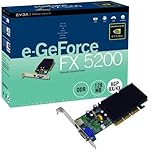
- CineFX Engine
- Multi-Display Option
- Digital Vibrance Control (DVC)
- Multi-Buffering (Double/Triple/Quad)
- MPEG2 Decoding Acceleration
PCIe later superseded both interfaces in newer systems. For context, Intel’s archived September 11, 2002 AGP 8X announcement calls AGP the Accelerated Graphics Port and gives 2.1 GB/s as the graphics bandwidth for AGP 8X.
Quick Recap
Rank #4

- Dell ATI Radeon 7500 32MB VGA TV Out AGP Video Card 0P767 1028342302
Product prices and availability are accurate as of the date/time indicated and are subject to change. Any price and availability information displayed on Amazon at the time of purchase will apply.

