
Windows Errors? Fix Them Before They Spread
Repair common Windows errors and clear accumulated junk for a smoother, more stable PC - no reinstall needed.Free scan · no reinstallCrashes, No Sound, or Screen Glitches?
Random freezes, missing sound and display glitches usually trace back to one bad driver. Find and replace yours safely.Free scan · under a minute“Tiny sensor” now means more than a small sensing element. The useful product may combine a MEMS structure, analog front end, calibration data, signal processing, machine learning, wireless connectivity, and a carefully designed enclosure. Miniature accelerometers are mature and comparatively easy to deploy; gas sensors remain calibration- and environment-sensitive; biometric devices are measurement systems whose results depend on contact, placement, motion, algorithms, and validation.
The practical rule is simple: choose the smallest complete sensing system that can produce a defensible result in its real operating conditions—not merely the smallest package.
What counts as a tiny sensor?
Specifications often describe a chip, while the application depends on a much larger stack:
- Sensing element: the physical structure responding to acceleration, chemicals, light, pressure, or electrical signals.
- Sensor IC: the element plus analog electronics, conversion, registers, filtering, interrupts, and sometimes embedded processing.
- Module: an IC combined with LEDs, photodiodes, electrodes, optics, heaters, calibration memory, or specialized packaging.
- Node or instrument: the sensor, processor, battery, radio, enclosure, calibration workflow, and software.
- Measurement algorithm: code that converts raw signals into a classification or estimate.
A 2 mm accelerometer can be close to turnkey. A gas element may need heaters, airflow control, humidity compensation, and application-specific calibration. A biometric front end may still require external optics or electrodes and extensive validation.
What’s actually slowing this PC down?
Pick the symptom - the matching free tool is one click away.
#1 Best Overall
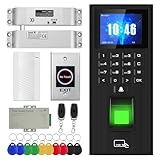
- High-quality electric deadbolt lock: Made of high-quality, durable aluminum alloy, it's built to last. Features a fail-safe mode (locks when powered on, unlocks when powered off) and an adjustable delay of 0, 3, or 6 seconds. Ideal for wooden, metal, fire-rated, stainless steel, and security doors. (Note: The door and doorframe must be level. Top and side mounting are supported. Glass doors require a frame.)
- This is a complete access control system package, including fingerprint access control host, access control power supply, small lock, sensor switch, doorbell, remote control, ID keychain
- The wiring is super simple and the installation is more convenient: just connect the 6 terminals to the corresponding numbers to complete the wiring. There is no need to think about it. It is several times faster than the traditional method and you can easily say goodbye to the wiring problem.
- Multiple unlocking methods: fingerprint/password/card swipe/remote control, support for anti-tampering alarm, 100,000 access record capacity, real-person voice
- Access control and attendance kill two birds with one stone: export attendance report to USB with one click, simple and efficient operation, no need to make statistical reports manually, attendance record capacity 100,000 records
At a glance: three very different categories
| Modality | Measures | Typical strength | Main weakness | Power pressure | Calibration burden | Privacy sensitivity |
|---|---|---|---|---|---|---|
| Accelerometer | Linear acceleration and motion | Mature, inexpensive, low power | Mounting, vibration, and bias artifacts | Low | Low to moderate | Moderate |
| Gas sensor | Chemical response or gas concentration | Environmental context and trend detection | Cross-sensitivity, drift, and enclosure effects | Low to moderate; heaters can raise it | High | Moderate to high |
| PPG | Optical blood-volume waveform | Convenient, noninvasive pulse sensing | Motion and low-perfusion sensitivity | Low to moderate | Moderate | High |
| ECG | Electrical cardiac activity | Rich cardiac signal | Requires electrodes and a suitable electrical path | Low to moderate | Moderate | High |
| Identity sensor | Fingerprint, face, iris, voice, or other identity feature | Direct authentication use | Enrollment, spoofing, placement, and security challenges | Moderate | High at system level | Very high |
This is an engineering framework, not a universal ranking. A sensor’s suitability depends on the required result, environment, and validation standard.
Miniature accelerometers: the most mature tiny sensors
How MEMS acceleration sensing works
A MEMS accelerometer suspends a microscopic proof mass. Acceleration displaces the mass, changing capacitance; electronics convert that change into a digital signal. Filtering, interrupts, FIFO memory, and event engines can detect motion while the host processor and radio sleep.
That enables wake-on-motion, orientation, tap and free-fall detection, step counting, activity recognition, asset tracking, vibration monitoring, impact detection, and camera or navigation functions when combined with a gyroscope. ST describes its MEMS products as combining mechanical structures with CMOS signal processing, while the LSM6DSTX adds a gyroscope, data batching, and a machine-learning core for motion classification (ST MEMS and sensors; LSM6DSTX).
Rank #2

- 𝐀𝐝𝐝𝐞𝐝 𝐒𝐞𝐜𝐮𝐫𝐢𝐭𝐲 𝐟𝐨𝐫 𝐲𝐨𝐮𝐫 𝐓𝐚𝐩𝐨 𝐒𝐦𝐚𝐫𝐭 𝐇𝐨𝐦𝐞 - This purchase includes 3x Tapo T110 Contact Sensors and 1x Tapo H100 Smart Hub with Chime. The sensors require the Tapo Hub to operate and use Sub-G protocol for extended range and longer battery life.
- 𝐇𝐨𝐦𝐞 𝐄𝐧𝐭𝐫𝐲 𝐏𝐫𝐨𝐭𝐞𝐜𝐭𝐢𝐨𝐧 - Receive real-time notifications when doors or windows open or close, and check their status from anywhere with the Tapo App. Also great for monitoring cabinets, refrigerators, mailboxes, and other items that open and close.
- 𝐈𝐧𝐬𝐭𝐚𝐧𝐭 𝐀𝐥𝐚𝐫𝐦𝐬 𝐟𝐨𝐫 𝐇𝐨𝐦𝐞 𝐒𝐞𝐜𝐮𝐫𝐢𝐭𝐲 - Activate a 90dB customizable alarm to deter intruders and review full activity history in the Tapo App.
- 𝐓𝐚𝐩𝐨 𝐇𝐮𝐛 - 𝐂𝐞𝐧𝐭𝐫𝐚𝐥𝐢𝐳𝐞𝐝 𝐒𝐦𝐚𝐫𝐭 𝐇𝐨𝐦𝐞 𝐂𝐨𝐧𝐭𝐫𝐨𝐥 - Connect up to 64 sensors, switches, and buttons using a low-power wireless protocol that extends connected device battery life by up to 10x compared to Wi-Fi based devices. 2.4 GHz Wi-Fi required.
- 𝐈𝐧𝐭𝐞𝐠𝐫𝐚𝐭𝐞𝐝 𝐒𝐞𝐜𝐮𝐫𝐢𝐭𝐲 𝐰𝐢𝐭𝐡 𝐓𝐚𝐩𝐨 𝐂𝐚𝐦𝐞𝐫𝐚𝐬 - Sync the contact sensors with Tapo pan/tilt cameras to detect intruders early, sound alarms, and capture footage when doors or windows are opened.
Current examples
- ST MIS2DU12: a 2.0 × 2.0 × 0.74 mm 3-axis device with ±2g, ±4g, ±8g, and ±16g ranges. ST lists 1.6–800 Hz output data rates, 0.47 µA in an ultra-low-power 1.6 Hz mode, and 5.6 µA in normal mode (product page).
- NXP FXLS8974CF: a 2 × 2 × 0.95 mm 3-axis part with ±2g to ±16g ranges, wake-on-motion features, and a stated operating range of −40°C to +105°C (product page). NXP says its MEMS sensor products transitioned to STMicroelectronics on February 2, 2026, so verify ordering, documentation, and lifecycle status before a new design.
- Bosch BMA530/BMA580: Bosch announced 1.2 × 0.8 × 0.55 mm accelerometers for wearables and hearables. The BMA530 includes a step counter and the BMA580 adds voice-activity detection based on bone conduction (Bosch announcement). “World’s smallest” is Bosch’s manufacturer claim, not an independently established industry-wide ranking.
What to evaluate beyond package size
- Axes: one axis can suit simple vibration or tilt; three axes support orientation and motion classification; six-axis IMUs add rotation sensing.
- Full-scale range: ±2g generally offers greater sensitivity for ordinary motion, while higher ranges suit impacts and machinery.
- Noise, bias, and bandwidth: these determine the smallest detectable motion and long-term stability.
- Output data rate and FIFO: they must match the motion and determine interrupt and radio overhead.
- Always-on current and embedded events: local wake detection can extend battery life.
- Temperature range, self-test, calibration, and mounting: PCB stress and mechanical coupling can change offsets and vibration response.
Miniature gas sensors: small hardware, difficult measurement
Technology families
Compact gas systems may use metal-oxide semiconductor elements, electrochemical cells, photoionization, infrared absorption, catalytic beads, MEMS-heated or resonant structures, or arrays that act as an electronic nose. They do not all answer the same question.
Gas identity and concentration are separate problems. A broad-response element may indicate that air changed without distinguishing which gas caused the change. Reliable concentration estimates require selectivity, calibration standards, temperature and humidity compensation, controlled sampling, and a model that matches the application.
The hidden engineering work
- Selectivity and cross-sensitivity: common gases, solvents, smoke, and cleaning products can produce overlapping responses.
- Limit of detection: a visible signal is not necessarily a defensible low-concentration measurement.
- Response and recovery: diffusion, pumps, flow paths, and enclosure volume affect speed.
- Drift and aging: contamination, chemistry changes, heater history, and humidity can alter the response over weeks or months.
- Calibration and bump testing: factory calibration does not guarantee field accuracy. SEMI says complete gas detection requires application-specific calibration with known concentration standards (SEMI guidance).
- Packaging: adhesives, plastics, sealants, trapped air, and airflow restrictions can contaminate or delay a reading.
Where miniature gas sensors fit
They can support indoor-air-quality trends, volatile-organic-compound screening, appliance and combustion monitoring, industrial leak detection, worker-exposure studies, breath research, food and packaging checks, and wearable context sensing. Bosch lists gas sensing, including the BME690, among wearable-oriented technologies (Bosch wearables applications).
Rank #3

- Build a 37-Module Sensor Lab: Add motion, distance, light, sound, temperature, touch, display and control functions to compatible UNO, MEGA, Nano, ESP-32 or STM32 projects for prototyping, classroom experiments and maker builds
- Explore Input Sensors and Motion: Experiment with GY-521 motion sensing, PIR detection, ultrasonic ranging, temperature and humidity, DS18B20, flame, Hall, touch, light, sound, tilt, tracking and obstacle-avoidance modules
- Add Displays, Timing and Control: Use the LCD1602, DS1307 real-time clock, joystick, rotary encoder, relay, buzzers, RGB LEDs and infrared modules to build clocks, alarms, counters, status displays and automated projects
- Follow Guided Projects Materials: Use digital tutorial materials, datasheets, wiring diagrams and example code for compatible UNO R3, MEGA 2560 and Nano boards, then adjust thresholds, timing and logic to create custom experiments
- Module-Only Expansion Kit: Controller board, USB cable, breadboard and jumper wires are not included; use 6.5–9 V DC only with the included power module, verify pin requirements before wiring and keep the laser emitter away from eyes
A low-cost sensor may be useful for detecting worsening indoor conditions, but “detects VOCs” is not the same as identifying a specific gas. A component datasheet also does not make a finished product suitable for occupational or life-safety use; those applications require the appropriate system validation and certifications.
Biometric sensors: physiology is not the same as identity
Two meanings of biometric
Physiological sensing measures heart rate, pulse waveform, oxygen saturation, ECG, respiration, skin temperature, electrodermal activity, or proxies for hydration and body composition. Biometric authentication attempts to verify identity using a fingerprint, face, iris, voice, vein pattern, ECG or pulse-wave characteristic, or behavioral motion pattern.
The Tool Desk
Outbyte PC Repair FREEClear out junk files and repair common Windows errorsFree Scan →Outbyte Driver Updater FREEScan for outdated or missing drivers - takes under a minuteDriver Scan →A heart-rate sensor can collect sensitive biometric data without authenticating anyone. Conversely, a fingerprint sensor is primarily an identity system, not a general health monitor.
Rank #4

- Avoid wasting precious time in an emergency, choose a safe with a high-quality fingerprint sensor. Verifi safes exclusively feature commercial-grade TouchChip fingerprint sensors certified by the FBI, ensuring unrivaled performance
- High-definition fingerprint imaging based on superior 3D Touch Capacitance technology sees through both dirt and scratches
- Silver Series: 1 year, Limited Warranty, Up to 4 years Battery Life, Up to 20 Fingerprint Enrollments.
- Multiple years battery life with low-battery audible alerts
- Adjustable LED lighting with Nite-Lite+
PPG and its failure modes
Photoplethysmography (PPG) shines one or more wavelengths into tissue and measures reflected or transmitted light changes associated with blood-volume variation. It is compact and convenient, but TI identifies motion sensitivity as a central challenge in wearable optical heart-rate sensing (TI guidance).
- wrist motion, vibration, and skin movement;
- loose or overly tight contact;
- ambient-light leakage;
- perspiration, tattoos, pigmentation-related optical differences, or surface contamination;
- cold skin and low peripheral perfusion;
- irregular rhythm and algorithm limitations;
- LED, photodiode, window, and light-barrier placement.
PPG, ECG, BioZ, temperature, and motion work together
- PPG: optical pulse and blood-volume waveform; convenient but highly placement- and motion-dependent.
- ECG: electrical cardiac activity; requires electrodes and a conductive path.
- Bioimpedance (BioZ): tissue response to a small electrical signal; useful for respiration, hydration, or composition estimates only with suitable electrodes and models.
- Temperature: useful context, but skin temperature is not core temperature.
- Accelerometer: often supplies the motion reference needed to reject optical artifacts.
Analog Devices’ MAX86176 integrates optical PPG and single-lead ECG front ends for applications including heart rate, SpO₂, pulse-transit-time measurements, arrhythmia monitoring, and biometric authentication (MAX86176). Its small ECG package is approximately 2.728 × 2.708 mm, but the complete optical system still needs external LEDs and photodiodes. The MAX86178 combines PPG, ECG, and BioZ channels (MAX86178).
The MAX86150 integrates PPG, pulse oximetry, and one-lead ECG in a 3.3 × 5.6 × 1.3 mm module, but Analog Devices labels it “last time buy,” making it a maintenance or evaluation choice rather than a default for a new product (MAX86150).
Quick wins for a faster PC:
Scan for outdated or missing drivers - takes under a minuteDriver Scan →Repair Windows errors before they cause bigger problemsFix Now →Best Value

- TPU Stabilizer Ring included: One TPU ring helps hold the sensor against a finger for steadier contact. Signal quality can still vary with placement, finger pressure, movement, ambient light, hardware, and software.
- Analog output for maker boards: Requires a compatible development board with an analog input. Tutorials are available for selected Arduino, ESP32, Raspberry Pi Pico, and micro:bit boards; board-specific setup may be required.
- Learn, prototype, and create: Add live pulse-wave signals to classroom activities, interactive art, biofeedback experiments, and maker projects.
- Open-source hardware: Designed in New York City by World Famous Electronics LLC, made in Taiwan, and Open Source Hardware certified, US000075.
- For education and experiments: Not a medical device and not intended for diagnosis, treatment, patient monitoring, or safety-critical use.
Why the smallest package is not the smallest product
- Optical footprint: LEDs, photodiodes, windows, barriers, and alignment can exceed the IC dimensions.
- Mechanical coupling: PCB bending, adhesive stress, enclosure resonance, and mounting direction affect accelerometers.
- Thermal behavior: MEMS bias, gas chemistry, LED output, photodiode response, and skin signals vary with temperature.
- Contact and airflow: electrodes need a reliable electrical path; gas sensors need a predictable sample path.
- Calibration: factory values may not survive a different enclosure, user population, placement, or contamination environment.
- Validation: component capability is not finished-device accuracy, clinical validation, safety certification, or authentication security.
Edge processing and sensor fusion
The smallest useful system may be the one that transmits less raw data. Local event detection lowers radio energy, latency, bandwidth, and cloud dependence. It can also improve privacy, although local processing does not guarantee secure storage, updates, debug interfaces, companion apps, or backups.
- An accelerometer can detect a wake event before the main processor powers up.
- Motion data can identify and remove PPG artifacts.
- Temperature and humidity can compensate a gas array.
- ECG and PPG can be combined for pulse-transit-time estimation.
- Embedded machine-learning engines can classify movement without streaming raw waveforms.
ST highlights intelligent sensor-processing units and machine-learning cores in its MEMS portfolio (ST MEMS and sensors). Experimental research has also explored on-sensor activity recognition to reduce latency, transmission, and power; such results should not be treated as production guarantees (example research).
Choosing a tiny sensor for a real project
Motion checklist
- Define whether you need tilt, ordinary motion, vibration, impact, or inertial navigation.
- Choose axes, full-scale range, noise, bandwidth, and output rate together.
- Compare always-on current, wake interrupts, FIFO capacity, and local classification.
- Check temperature range, self-test, calibration, mounting stress, and lifecycle status.
Gas checklist
- Name the target gas or state explicitly that you need only a broad trend.
- Set the concentration range, response time, recovery time, and acceptable false-alarm rate.
- Characterize humidity, temperature, pressure, airflow, contamination, drift, and cross-sensitivity.
- Define factory calibration, field calibration, bump testing, replacement interval, and certification requirements.
- Validate the complete enclosure and sampling path, not just the sensing element.
Biometric checklist
- Separate the physiological variable from any identity-authentication claim.
- Choose body location, optical or electrical contact method, and acceptable motion conditions.
- Specify the validation population, accuracy target, raw-data needs, and algorithm limitations.
- Budget for LEDs, photodiodes, electrodes, shielding, firmware, and artifact rejection.
- Address regulatory classification, consent, encryption, retention, deletion, and secure updates.
Privacy and security obligations
Motion, physiology, exposure, and identity signals can reveal location, routines, health status, workplace conditions, and behavior. Prefer local feature extraction where practical, encrypt data in transit and at rest, minimize retention, separate device identity from health records, document model limitations, obtain meaningful consent, and provide access and deletion controls. Treat calibration data and firmware-update paths as security-sensitive assets.
Where tiny sensing is heading
The direction is toward integrated, event-driven systems: multi-modal health front ends, gas arrays with compensation models, embedded machine learning, and inference performed close to the signal source. Packaging remains a performance constraint, not an afterthought. Better algorithms cannot fully repair poor optical contact, uncontrolled airflow, mechanical stress, or missing calibration.
Free tools Windows power users keep installed
One-click scans. No signup required.
Quick Recap
Product prices and availability are accurate as of the date/time indicated and are subject to change. Any price and availability information displayed on Amazon at the time of purchase will apply.

