
iTechGuides is reader-supported. When you buy through links on our site, we may earn an affiliate commission. As an Amazon Associate I earn from qualifying purchases. Learn more
If one Mushkin 512 MB stick keeps showing as 256 MB in every slot while its matched stick shows 512 MB, the DIMM is the leading suspect—not the motherboard. In the reported ABIT NF7-S v2.0 case, testing each stick separately and moving it between slots made the problem follow one module. That points to a defective, incorrectly programmed, or incorrectly labeled DIMM, although the reported symptoms do not prove which fault occurred.
What happened in the Mushkin and ABIT NF7-S case?
A December 2004 report described a pair of Mushkin PC3200 modules, each labeled 512 MB, installed in an ABIT NF7-S version 2.0. With both installed, the BIOS reported 768 MB. Tested separately, one DIMM showed 512 MB and the other showed 256 MB. The same capacity readings followed the respective modules when they were moved between slots. The original AnandTech thread records those symptoms and Mushkin support’s response.
The 768 MB total is consistent with one module contributing 512 MB and the other only 256 MB. More importantly, the individual-stick tests separate a module-specific problem from a problem that affects a slot or only the two-stick configuration. The thread does not report independent memory-test results or a final confirmation after replacement, so this is a strong symptom-based diagnosis, not a laboratory finding.
The Tool Desk
Outbyte PC Repair FREEClear out junk files and repair common Windows errorsFree Scan →Outbyte Driver Updater FREEScan for outdated or missing drivers - takes under a minuteDriver Scan →Why does the slot-swap test point to the DIMM?
For a useful swap test, change one variable at a time: keep the same module and move it to another slot, then repeat with the other module. The important question is whether the fault follows the stick or stays at a location.
#1 Best Overall
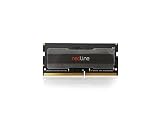
- Ideal for High-Performance Notebook Gaming Enthusiasts
- The wrong capacity follows one stick across slots: suspect that DIMM.
- Different known-good sticks fail in the same slot: suspect the slot, board traces, or another motherboard-level fault.
- Each stick works alone but the pair fails: investigate the paired configuration, memory settings, rank loading, and dual-channel operation.
In this case, one stick repeatedly showed 256 MB while the other showed 512 MB. That makes a single bad DIMM slot much less likely. A known-good 512 MB DDR DIMM tested in the same slots would provide an additional control.
Could dual-channel mode or an NF7-S limit explain it?
Dual-channel mode affects how the memory is accessed; it does not normally halve the capacity reported for one correctly functioning DIMM. Since the suspect module showed 256 MB when tested by itself, dual-channel operation is not the leading explanation.
Rank #2

- Ideal for High-Performance Gaming/Overclocking Enthusiasts
The NF7-S does have configuration limits worth keeping in mind. Kingston lists support for 512 MB and 1 GB DDR modules, with a maximum of 2 GB at DDR400 and up to 3 GB at DDR333 or DDR266. Its compatibility information also notes a four-bank DDR400 limit and that the third socket may be disabled when two double-sided DIMMs are installed. These restrictions can matter with particular combinations of speed, ranks, and populated slots, but they do not fit as well as a module fault when one stick alone shows half its expected capacity in every tested slot. See Kingston’s NF7-S v2.0 compatibility listing for those board-specific qualifications.
What might make a 512 MB DIMM show only 256 MB?
A DIMM’s memory chips are organized into banks or ranks. If part of a module fails to initialize, the system may expose only the functioning portion. In the original thread, Mushkin support suggested that one bank might not be initializing; that is the manufacturer’s contemporaneous explanation, not an independently verified postmortem.
Rank #3
- Ideal for High-Performance Gaming/Overclocking Enthusiasts
Other possibilities include a failed DRAM chip, damaged trace or solder joint, incorrect SPD programming, or a mislabeled or incorrectly packed module. Two sticks with matching labels are not proof that their internal organization or electrical behavior is identical. On older nForce2 boards, chip density and rank arrangement can also affect compatibility. Without inspecting or testing the module, the specific cause cannot be identified from the capacity reading alone.
BIOS compatibility, overclocking, timings, or voltage can cause memory detection or stability problems on an older platform. ABIT’s archived BIOS material includes memory-related compatibility fixes, including boot issues with particular Corsair modules. That makes BIOS and settings reasonable checks, but weaker explanations here than the result that one DIMM consistently shows 256 MB by itself. See ABIT’s archived BIOS information.
Rank #4

- Ideal for High-Performance DDR4 Desktop Computers
How to test the DIMMs before replacing anything
- Load safe BIOS settings. Disable overclocking and use the board’s default or optimized settings. Aggressive timings or bus settings can cause instability, even though they do not neatly explain a consistent half-capacity reading from one stick.
- Test each DIMM alone. Start in the board’s recommended primary DIMM slot. Record the BIOS-reported capacity, frequency, timings, voltage, and whether the system boots reliably.
- Move each DIMM to another slot. Repeat the capacity check. If the same module remains at 256 MB across slots, while its partner remains at 512 MB, the evidence continues to point to the module. If failures stay with a particular slot, investigate the board.
- Compare the labels and visible module layout. Check part number, stated capacity, speed rating, voltage, and chip arrangement. A heat spreader can hide the chips, and matching labels alone do not establish that the modules are electrically identical.
- Run a memory diagnostic. Mushkin’s current RMA guidance recommends testing modules individually and recording results with MemTest86+ or Windows Memory Diagnostic. A diagnostic can reveal errors in the memory the system can access; a pass does not prove that the module is fully healthy or compatible. See Mushkin’s RMA instructions.
- Try a known-good 512 MB DDR DIMM, if available. If it works in the same slots and the suspect stick still reports 256 MB, the Mushkin DIMM is strongly implicated. If the known-good DIMM also fails in one slot, the board becomes more plausible. If modules work at DDR333 but not DDR400, investigate speed, bank loading, and settings.
When should you stop troubleshooting and request replacement?
If safe BIOS defaults are loaded, each stick has been tested alone in more than one slot, and the same module still reports 256 MB, further slot swapping is unlikely to change the diagnosis. Contact the seller or Mushkin with the module part number, purchase proof, capacity results by slot, and any diagnostic results. Mushkin’s current RMA guidance asks for individual-module testing and recorded results, and says proof of purchase is required for warranty replacements. Its current warranty page describes limited-lifetime coverage for memory subject to its terms; those are present-day policies and should not be assumed to be the terms that applied in December 2004. See Mushkin’s limited lifetime warranty.
For this historical case, the original thread says Mushkin support arranged replacement matched kits. That supports the practical remedy, but it does not establish the final outcome or prove whether the original module had a physical failure, an SPD problem, or a labeling error.
Quick Recap
Best Value

- 16GB Module ( 1x 16GB ) | DDR4 3200 MHz ( PC4-25600 / PC4-3200AA )
- DDR4 SO-DIMM ( 260-Pin ) | Non-ECC Unbuffered | 2Rx8 - Dual Rank x8 | 1.2V - DDR4 Standard Voltage
- High performance Memory RAM upgrade compatible with select DDR4 Laptop, Notebook, & All-in-One (AIO) Computers
- Boosts the performance of your system by speeding up loading times, improving system responsiveness, and increasing your system's ability to handle greater workloads
- All modules undergo quality assurance testing to ensure dependable and reliable performance
Product prices and availability are accurate as of the date/time indicated and are subject to change. Any price and availability information displayed on Amazon at the time of purchase will apply.

