
Do these 3 things before closing this tab:
1Fix the driver behind crashes, sound loss and screen glitches2Repair Windows errors before they cause bigger problems3Scan for outdated or missing drivers - takes under a minuteiTechGuides is reader-supported. When you buy through links on our site, we may earn an affiliate commission. As an Amazon Associate I earn from qualifying purchases. Learn more
Yes. Removing and reinstalling a motherboard M.2 heatsink is normally safe. You can usually reuse its thermal pad if it is clean, intact, and still makes even contact with the SSD; replace it if it is torn, badly deformed, contaminated, or no longer bridges the gap. Remove the pad’s protective film before reassembly, and do not stack the motherboard heatsink on an incompatible SSD factory heatsink.
What you are removing
The motherboard M.2 heatsink is a removable cover secured over the SSD. A soft thermal pad on the cover transfers heat from the drive to the heatsink. The pad may have a clear, blue, or colored protective film on its contact side; that film is not the pad itself.
Do not remove the SSD’s product label just because you are reinstalling the motherboard cover. A label may be part of the drive’s thermal design. Check the SSD manufacturer’s instructions and warranty policy before removing a label or factory-fitted heatsink; warranty consequences vary by model and manufacturer.
PC Slower Than It Used to Be?
A free scan shows the junk files, broken settings and background clutter dragging Windows down - then fixes them in one click.Free scan · Windows 10 & 11Outdated Drivers Are Slowing You Down
One free scan finds every outdated or missing driver and matches the right update for your exact hardware.Free scan · exact hardware matchHow to remove the heatsink safely
- Shut down the computer, switch off and unplug the power supply, then briefly press the case power button to discharge residual power. ASUS also instructs users to disconnect system power before M.2 work (ASUS ROG Strix Z790-I instructions).
- Remove the heatsink screw or screws using a correctly sized driver. Keep track of screws and any separate standoffs.
- Lift the heatsink gently. If the thermal pad is tacky, ease it away slowly while supporting the SSD; do not yank the cover upward or pry against the drive with a metal tool.
- Handle the SSD by its edges and avoid touching its gold contacts. Check that the drive remains flat and secured in its M.2 connector.
Motherboard makers document this as a normal installation sequence: MSI directs users to remove the cover, install and secure the SSD, then reinstall the heatsink (MSI SSD installation guidance).
#1 Best Overall

- 【Designed for desktop PC/PS5】- Perfectly fit for Samsung 860 EVO, 960 EVO, 970 EVO, 970 Pro, 980 Pro, PS5 etc. this M.2 SSD heatsink compatible with all single sided Type.
- 【Main body material】- Aluminum alloy, silver plating (helps eliminate static electricity), anodic oxidation surface treatment. Dimensions: 3 x 0.95 x 0.4inm.2 heatsink well fit for PS5 installation as well as PC M.2 Slot.
- 【Thermal Pads】- with good thermal conductivity ability. Low viscosity, with no damage to the M.2 SSD.
- 【High Performance】- With 10°C - 20°C cooling effect (varies depending on the environments), cool your M.2 2280 SSD to a safe temp to avoid overheating and throttling, improve your computer's performance.
- 【Easy to Install 】 - With double-sided clip design, are suitable for M.2 NVME SSD of various heights, stable installation, better protection of your M.2 SSD with good heat dissipation performance.
Can you reuse the thermal pad?
Usually, if it is still in good condition and can make even contact. A pad being slightly tacky or adhering to the SSD does not by itself mean it is damaged. Inspect it before deciding:
- Reuse it if it is clean, intact, not stretched or folded, still covers the intended contact area, and compresses evenly when the heatsink is seated.
- Replace it if it is torn, partly missing, gouged, contaminated with debris, badly stretched, or permanently flattened so it no longer fills the gap. Replacement is also prudent if the heatsink rocks, will not sit flat, or no longer contacts the drive.
- Pause and check the manual if the pad arrangement depends on whether the SSD is single-sided or double-sided, or if the board specifies a particular replacement pad.
ASUS recommends replacing a damaged pad on the cited ROG Strix Z790-I configuration and specifies a 1.25 mm replacement for that design. That dimension is board-specific, not a universal M.2 pad size (ASUS instructions).
Rank #2
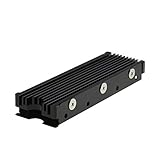
- 【Designed for M.2 SSD】-The heat sink is specially designed for M.2 2280mm SSD, which is very suitable for desktop computers/Playstation 5, etc.
- 【Double-sided cooling】- Aluminum alloy-Groove design, greatly increase the heat dissipation area, with 10°C - 30°C cooling effect (Varies depending on the environments), cool your M.2 SSD to a safe temp to avoid overheating and throttling, improving the performance of your computer.
- 【Easy to Install and Operate】 - With double-sided clip design, 6 adjustable height screws, suitable for M.2 SSD of various heights, stable installation, better protection of your M.2 SSD.
- 【Unique Nano Thermal Pad】- Advancing Gene thermal pad is made from Nano Silicon Grease Material, with good thermal conductivity ability. Soft enough and good ductility, compatible with uneven surfaces of the M.2 SSD. Low viscosity, with no damage to the SSD warranty label.
- 【Fine Workmanship】- Main body material: Aluminum alloy, silver plating (Helps eliminate static electricity), anodic oxidation surface treatment. Dimensions: 3 x 0.95 x 0.4in., net weight: 1oz., minimum installation height requirement: 12mm.
Why pad thickness and drive sides matter
The pad must bridge the space between the SSD’s heat-generating components and the heatsink without forcing the drive out of position. A pad that is too thin may leave a gap; one that is too thick can keep the cover from seating, bow the SSD, or put excessive pressure on its PCB. Do not choose a replacement thickness by assuming that all M.2 heatsinks use the same pad.
SSDs may have components on one or both sides. On some boards, a bottom pad or rubber support helps support a single-sided drive and prevent flex; a double-sided drive may occupy that space and require a different arrangement. ASUS’s build guidance describes this distinction for its cited configuration, but the correct setup depends on the motherboard (ASUS ROG system-build guide).
Rank #3
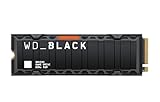
- This product has been replaced by our latest generation. Please search for the SANDISK Optimus GX PRO 850X NVMe SSD
- TRANFORM YOUR PC: Insane speeds up to 7,300MB/s (1TB - 4TB models) deliver top-tier performance with ridiculously short load times for your gaming PC or workstation — for the elite experience you’ve been waiting for.
Reinstall the SSD heatsink
- Confirm that the SSD is the right type and length for the slot, and follow the motherboard manual for its insertion orientation and retention method.
- If the SSD was removed, insert it fully and secure its free end with the specified screw, latch, or retention mechanism.
- Inspect the thermal pad. Leave it attached if it is serviceable, and remove the protective film from the side that contacts the SSD.
- Place the heatsink squarely over the drive. Start all of its screws before tightening them gently and evenly; do not force the cover down or overtighten it.
- Check that the heatsink is flat and stable and that the SSD remains secured. After powering on, confirm that the drive appears in BIOS/UEFI and the operating system.
Insertion angle is not universal. MSI’s general guidance describes inserting a conventional M.2 SSD at about 30 degrees, while ASUS specifies horizontal, 0-degree insertion and removal for the compact ROG Strix Z790-I design. Follow the instructions for your exact board rather than applying one angle to every slot (MSI guidance; ASUS guidance).
Check compatibility with an SSD’s own heatsink
Do not assume the motherboard cover will fit over an SSD that already has a factory heatsink. Stacking them can create mechanical interference or excessive pressure. Crucial warns against reinstalling a motherboard heatsink over one of its integrated SSD heatsinks (Crucial installation guide); an MSI MEG Z590 GODLIKE manual provides another board-specific example of not using the board heatsink with an SSD that has its own (MSI manual excerpt). Check both manufacturers’ instructions for your specific drive and board.
Rank #4

- High-Performance Cooling with Integrated Heatpipe: Advanced aluminum heatsink with built-in heatpipe ensures efficient heat dissipation, keeping your M.2 NVMe SSD cool even under heavy workloads.
- Maintains Maximum Read and Write Speed: Prevents thermal throttling by lowering SSD temperatures, allowing your drive to maintain top performance for longer periods.
- Compatible with Single and Double-Sided M.2 2280 Drives: Designed to fit both single-sided and double-sided M.2 2280 modules, offering flexible compatibility with a wide range of NVMe SSDs.
- Premium Black Aluminum Design: Sleek matte black finish delivers a clean, high-quality look that perfectly matches modern PC builds while providing excellent thermal conductivity.
- Easy Installation and Secure Fit: Simple mounting system allows quick, hassle-free setup on your M.2 slot for reliable cooling and long-term durability.
If the SSD is not detected after reassembly
- Power the computer down and disconnect power before opening it again.
- Reseat the SSD, checking its orientation and that it is fully inserted and held flat by the correct screw or latch.
- Check that the heatsink is not pushing the SSD upward or sideways. If the cover will not seat normally, stop and check the pad thickness, support arrangement, standoff, and SSD compatibility rather than forcing it.
- Check whether the drive appears in BIOS/UEFI. Consult the motherboard manual for slot-sharing behavior: using some M.2 slots can disable particular SATA ports or share PCIe lanes.
- If the manual permits, test detection with the heatsink removed. Refit it with the specified pad arrangement afterward.
- If detection remains intermittent, inspect the connector, retention hardware, and SSD for visible damage.
Insertion and removal mechanics vary by board: MSI’s general procedure and ASUS’s horizontal procedure for the cited compact board are not interchangeable instructions.
If SSD temperatures rise after reinstalling
Power down and inspect the contact rather than adding pressure or choosing a thicker pad at random. Check that the protective film is off, the pad has not shifted, the heatsink sits evenly, and any required bottom support is present. An inspection of the pad’s imprint can help: a centered compression mark suggests contact, while an untouched area over the controller may indicate a gap. It is a practical clue, not a substitute for the board’s specified pad arrangement.
Best Value

- 【Designed for desktop PC/PS5】- Perfectly fit for Samsung 860 EVO, 960 EVO, 970 EVO, 970 Pro, 980 Pro, PS5 etc. this M.2 SSD heatsink compatible with all single sided Type.
- 【Main body material】- Aluminum alloy, silver plating (helps eliminate static electricity), anodic oxidation surface treatment. Dimensions: 3 x 0.95 x 0.4in
- 【Thermal Pads】- with good thermal conductivity ability. Low viscosity, with no damage to the M.2 SSD.
- 【High Performance】- With 10°C - 20°C cooling effect (varies depending on the environments), cool your M.2 2280 SSD to a safe temp to avoid overheating and throttling, improve your computer's performance.
- 【Easy to Install 】 - With double-sided clip design, are suitable for M.2 NVME SSD of various heights, stable installation, better protection of your M.2 SSD with good heat dissipation performance.
Also compare like with like. A sustained transfer can heat a drive more than light desktop use, and results vary with the SSD, workload, airflow, ambient temperature, and pad contact. Tom’s Hardware reported inconsistent M.2 heatsink contact among the tested motherboards, so fit and contact are worth checking when cooling appears worse after reassembly (Tom’s Hardware contact testing).
Does every M.2 SSD need a heatsink?
There is no universal requirement. A heatsink can help a high-performance NVMe drive during sustained transfers, while its importance may be lower for a lower-power drive or workloads with long idle periods. Removing a heatsink can allow temperatures to rise and may contribute to thermal throttling under sustained load. Whether to use the motherboard cover or an SSD’s own heatsink depends on compatibility and the specified pad arrangement; there is no guaranteed temperature reduction for every system.
Quick Recap
Product prices and availability are accurate as of the date/time indicated and are subject to change. Any price and availability information displayed on Amazon at the time of purchase will apply.
What’s actually slowing this PC down?
Pick the symptom - the matching free tool is one click away.

