
There is no universal winner: Crucial vs. Mushkin depends on whether you are buying RAM or an SSD, and on the exact models. For a new RAM purchase in 2026, Mushkin is a practical choice when its kit is compatible and competitively priced. Crucial can still make sense for compatibility-focused upgrades or well-priced existing stock, but Micron has announced a wind-down of the Crucial consumer business. For SSDs, compare the drive’s design, performance, endurance, warranty, and price—not just the brand.
What are you comparing?
Crucial and Mushkin sell products across overlapping categories, including desktop and laptop memory, SATA and NVMe SSDs, and other storage products. A brand-level comparison cannot tell you which individual product is faster, more compatible, or better value. RAM and SSDs need separate comparisons, and SSD components can differ substantially between models from the same brand.
Mushkin’s catalog lists memory, SSDs, SD cards, and USB flash drives (Mushkin product catalog). Crucial’s catalog has covered memory and storage products; its consumer-business wind-down changes how buyers should consider current availability and future product continuity (Crucial product catalog and announcement).
Crucial vs. Mushkin for RAM
For RAM, start with compatibility and the system’s requirements. Crucial emphasizes upgrade matching and offers tools such as its Upgrade Selector and System Scanner; its memory products carry a limited lifetime warranty subject to the official terms (Crucial memory; Crucial product warranty).
#1 Best Overall

- Disclaimer: Maximum Speed requires overclocking/PC BIOS adjustments. Maximum speed and performance depend on system components, including motherboard and CPU
- Hand-sorted memory chips ensure high performance with generous overclocking headroom
- VENGEANCE LPX is optimized for wide compatibility with the latest Intel and AMD DDR4 motherboards
- A low-profile height of just 34mm ensures that VENGEANCE LPX even fits in most small-form-factor builds
- A solid aluminum heatspreader efficiently dissipates heat from each module so that they consistently run at high clock speeds
Mushkin’s current catalog includes enthusiast-oriented Redline DDR5 kits with published specifications. For example, cited Redline ST kits include a 32GB (2 × 16GB) DDR5-6000 model rated at 36-36-36-76 and a DDR5-6400 model rated at 30-37-37-96; the cited Redline Lumina DDR5-6000 kit adds RGB lighting. Mushkin lists lifetime warranties for these cited products. These are manufacturer specifications, not proof that a kit will run at its advertised profile in every system (Redline ST DDR5-6000; Redline ST DDR5-6400; Redline Lumina DDR5-6000).
Choose the kit that fits the system
- Form factor: Desktop systems generally use UDIMMs; laptops generally use SODIMMs. Confirm what the device accepts.
- Generation: DDR4 and DDR5 are physically and electrically different; a module must match the motherboard or laptop.
- Capacity and configuration: Check the system’s maximum supported capacity and use a matched kit where appropriate. Mixing separate kits can cause instability.
- Profile and platform: Check XMP or EXPO support, motherboard compatibility information, and the CPU and BIOS requirements. An advertised profile is not a guarantee of stable operation on every system.
- Speed, timings, and voltage: Compare the complete specifications, not just the headline MT/s number. A faster kit may need tuning or may run at a lower fallback speed; a slower kit with tighter timings may be a better fit for a particular platform.
- Value and seller: Compare price per gigabyte, warranty terms, and whether the seller is traceable and authorized.
Which RAM brand fits common upgrades?
- Laptop or branded prebuilt: Crucial may be appealing when its compatibility tools identify a suitable module. Verify the exact system model and whether memory is replaceable before ordering.
- New gaming PC: Favor a matched kit with enough capacity for your workload, a suitable XMP or EXPO profile, and confirmed motherboard support. Mushkin’s published Redline specifications make it worth comparing for enthusiast builds, but the best kit depends on the exact platform and price.
- Existing Crucial system: A compatible Crucial module or kit can remain a sensible upgrade if the price, seller, and warranty are acceptable. The consumer-business announcement is relevant to future product continuity, not a reason to replace working memory.
Crucial vs. Mushkin for SSDs
For an SSD, compare the exact model and capacity. Interface and form factor are only the start: controller, NAND type, DRAM or host-memory-buffer design, firmware, and sustained-write behavior all affect suitability. Crucial’s SSD catalog includes SATA, NVMe, external, and high-performance products. Its T710 page lists manufacturer-claimed sequential speeds up to 14,900 MB/s read and 13,800 MB/s write, random performance up to 2.2 million/2.3 million IOPS, 1TB, 2TB, and 4TB capacities, and up to 2,400 TBW. These are manufacturer specifications, not independent benchmark results (Crucial SSD catalog and T710 specifications).
Rank #2

- Requires overclocking/BIOS adjustments. Maximum speed and performance depends on system components, including motherboard and CPU.
- G.SKILL RipjawsV Series DDR4 U-DIMM Memory Kit, Model: F4-3200C16D-16GVKB
- Non-ECC, DDR4 U-DIMM, 288-pin, for Desktop PC & Gaming
- Includes JEDEC default profile, and Intel XMP memory overclock profile
- Do not mix memory kits. Memory kits are sold in matched kits that are designed to run together as a set. Mixing memory kits will result in stability issues or system failure.
Mushkin continues to list NVMe SSDs. Its cited Alpha 4TB and Delta 4TB pages advertise five-year warranties, while the cited Tempest 256GB page advertises a three-year warranty. That spread is one reason not to assume a single warranty duration for an entire brand (Mushkin Alpha 4TB; Mushkin Delta 4TB; Mushkin Tempest 256GB).
Match SSD performance to the workload
- Compatibility: Check whether the drive is SATA or NVMe, its M.2 size (if applicable), the slot’s supported interface, and motherboard lane sharing. A PCIe Gen5 drive will not deliver Gen5 performance in a system that cannot support it.
- NAND and cache: Identify TLC, QLC, or another NAND type, and whether the drive uses DRAM or host-memory buffer. If a product page does not state a component, do not assume it is present.
- Peak sequential performance: Useful for some large-file transfers and benchmark workloads, but it does not predict everyday responsiveness or game loading by itself.
- Random performance: Relevant to many small operating-system and application requests, though results still depend on workload and system.
- Sustained writes: Look for independent testing of long writes and behavior after any fast write cache is exhausted, especially for video editing, large datasets, backups, and scratch disks.
- Endurance and warranty: Compare TBW, calendar warranty, and any conditions that end coverage. TBW is a warranty threshold or endurance rating, not a prediction of the precise day a drive will fail.
- Thermals and firmware: High-performance drives may need adequate cooling. Check for relevant firmware support and use current vendor guidance.
- Price and capacity: Compare current price per terabyte at the same capacity and account for warranty, endurance, and performance—not price alone.
A budget QLC drive may suit games and general use while being a poor choice for repeated, heavy writes. Conversely, a high-end drive’s headline throughput may have little value if the system cannot use its interface or the workload rarely generates large sequential transfers. Without independent, model-specific failure-rate or long-term test data, neither brand can be called inherently more reliable.
Rank #3
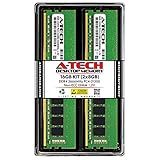
- Compatible with select DDR4 Desktop computers + Easy to install at home, no expertise required
- Maximize your system's performance, boost loading speeds and multitask with ease
- Backed by A-Tech's Lifetime Warranty + Friendly tech support team available to help before and after your purchase
- 16GB RAM Kit ( 2 x 8GB Modules ) | DDR4 DIMM 288-Pin | Speeds up to 2666MHz (2667MHz), PC4-21300 / PC4-2666V
- NON-ECC Unbuffered | 1Rx8 or 2Rx8 - Single or Dual Rank | JEDEC DDR4 standard 1.2V
Warranty, support, and availability in 2026
Micron announced that it was winding down the Crucial consumer business, with consumer shipments continuing through February 2026 and warranty and support continuing afterward. Remaining products may still be sold through distributors and resellers. The announcement does not mean support ended immediately, but it does make seller and replacement availability more important when buying new Crucial stock (Crucial product catalog and announcement).
Crucial memory has a limited lifetime warranty subject to its terms. SSD coverage varies by model: Crucial says the applicable warranty may be three or five years and may end when the published TBW limit is reached, whichever comes first. Check the exact product’s conditions and applicable country terms (Crucial memory; Crucial SSD warranty).
Rank #4

- Boosts System Performance:16GB DDR4 laptop memory RAM kit (2x8GB) that operates at 3200MHz to improve multitasking and system responsiveness for smoother performance
- Easy Installation: Upgrade your laptop RAM with ease—no computer skills required Follow step-by-step how-to guides available at Crucial for a smooth, worry-free installation
- Compatibility Guaranteed: Ensure seamless compatibility with your laptop by using the Crucial System Scanner or Crucial Upgrade Selector—get accurate recommendations for your specific device
- Trusted Micron Quality: Backed by 42 years of memory expertise, this DDR4 RAM is rigorously tested at both component and module levels, ensuring top performance and reliability
- ECC Type = Non-ECC, Form Factor = SODIMM, Pin Count = 260-pin, PC Speed = PC4-25600, Voltage = 1.2V, Rank and Configuration = 1Rx16, 1Rx8 or 2Rx8
The cited Mushkin Redline memory products list lifetime warranties, while the cited Alpha and Delta SSDs list five years and the cited Tempest SSD lists three years. Verify the current terms for the exact product and region before purchase using the product pages linked above. Warranty claims commonly require purchase documentation, and coverage or remedy can depend on the seller, country, and product terms. A warranty does not guarantee an identical replacement model; a refund, credit, or another remedy may apply if the original product is unavailable.
Check before buying remaining Crucial stock
- Confirm whether the seller is authorized and whether the item is new stock.
- Identify who handles returns and manufacturer warranty claims.
- Keep the invoice and proof of purchase.
- Consider whether a replacement or refund would meet your needs if the exact model is no longer available.
How to compare two specific products
- Identify the category and exact model numbers. Compare RAM with RAM and SSD with SSD; do not infer performance from brand names.
- Confirm compatibility. For memory, check generation, form factor, capacity limits, and motherboard or system validation. For an SSD, check interface, size, slot support, and cooling.
- Compare the specifications that affect your workload. For RAM, review capacity, timings, voltage, and XMP/EXPO. For an SSD, review NAND, cache design, endurance, and tested sustained performance.
- Read independent tests of the exact drive revision where available. SSD components can change between revisions under a retail model name; check the tested capacity, firmware, controller, NAND, and review date.
- Verify warranty, seller, and return terms. Consider regional conditions and, for SSDs, any TBW cutoff.
- Compare current prices at the same capacity and form factor. Use price per gigabyte for RAM and price per terabyte for SSDs, while accounting for differences in specifications and support.
Common mistakes to avoid
- Buying DDR5 for a DDR4 motherboard, or desktop UDIMM memory for a laptop SODIMM slot.
- Assuming every M.2 slot supports both SATA and NVMe, or that an older system can exploit a Gen5 SSD’s peak speed.
- Combining unrelated RAM kits or assuming an advertised XMP/EXPO speed will work on every CPU and BIOS.
- Installing a high-end Gen5 SSD without checking cooling needs or motherboard lane sharing.
- Choosing an SSD solely by sequential-read claims, or using a low-end QLC drive for frequent large writes without checking sustained performance.
- Cloning a drive without checking partition style, boot mode, and encryption requirements.
- Assuming warranty duration alone predicts endurance, reliability, or the availability of a like-for-like replacement.
Should you consider another brand?
You do not need to restrict a purchase to Crucial or Mushkin. RAM buyers can also compare G.Skill, Kingston, Corsair, TeamGroup, and Silicon Power; SSD buyers can compare Samsung, Western Digital, Solidigm, SK hynix, Kingston, TeamGroup, Seagate, and SanDisk. These are alternatives to evaluate, not a ranking: check current model specifications, compatibility, independent tests, seller, and warranty. In SSDs especially, controller, NAND, cache, and firmware differences can matter more than the name on the label.
Quick Recap
Product prices and availability are accurate as of the date/time indicated and are subject to change. Any price and availability information displayed on Amazon at the time of purchase will apply.

