
Recommended Free Tools
First check whether your active WordPress theme is classic or block-based: classic themes may have widget areas under Appearance > Widgets, while block themes use the Site Editor and may not show a Widgets screen. To style one item without changing every widget, add a distinctive CSS class to that block and write a rule for that class.
Identify the editor your theme uses
The active theme determines where the content lives and which styling options are available. Widget areas often appear in a sidebar or footer, but their placement and availability vary by theme.


Classic theme: Appearance > Widgets
In a classic theme that supports widget areas, open Appearance > Widgets. Some installations also expose widget areas through Appearance > Customize > Widgets. Since WordPress 5.8, the block-based widget editor has allowed blocks alongside widgets in these areas. Third-party and older widgets can appear as Legacy Widget blocks. See WordPress’s widget documentation and its WordPress 5.8 widget-editor overview.
Block theme: Appearance > Editor
Block themes use the Site Editor rather than traditional widget areas in the same sense. Open Appearance > Editor, then edit the template or template part containing the sidebar- or footer-like content. Depending on the theme, the relevant content may be organized with patterns and template parts. The Widgets menu may be absent; the WordPress block-theme documentation explains this distinction.
What’s actually slowing this PC down?
Pick the symptom - the matching free tool is one click away.
#1 Best Overall
Style one block in a classic widget area
-
Go to Appearance > Widgets and open the widget area containing the block. In the Customizer-based widget editor, open the block menu and choose Show more settings if its settings panel is collapsed.
-
Select the block and open Settings > Advanced. Enter a distinctive value in Additional CSS class(es), such as
sidebar-feature. WordPress documents this field as the way to add CSS classes that custom CSS can target; see Advanced settings for blocks. -
Add a matching CSS rule in the available Additional CSS field or your theme’s stylesheet. For example:
.sidebar-feature {
  background: #f4f4f4;
  border: 1px solid #ddd;
  padding: 1rem;
}
This illustrative rule has not been tested against your theme. Preview the front end and adjust it to the markup and appearance you actually see.
Special offer. See more information about Outbyte and uninstall instructions. Please review EULA and Privacy policy.
Avoid a broad selector such as .widget when you intend to change only one item; it can affect multiple widgets. If a classic or plugin widget has no block-level Additional CSS class(es) field, inspect its rendered markup and target a stable class or ID emitted by that widget. Scope the selector under its containing area when possible. There is no universal selector guaranteed for every classic or plugin widget.
Choose CSS based on the scope of the change
| What you want to style | Where to work | Scope |
|---|---|---|
| One block instance in a classic widget area | Block’s Settings > Advanced > Additional CSS class(es), then a matching CSS rule | Only elements matched by the unique class, subject to the rendered markup and CSS |
| A block type throughout a block theme site | Appearance > Editor > Styles > Blocks | Every block of that type across the site, not one individual instance |
| Site-wide CSS in a block theme | Appearance > Editor > Styles | Site-wide styling |
| Standard block appearance maintained by a theme | theme.json, using its styles property where possible |
Theme-defined styles that users can customize through Editor > Styles |
| A larger or more complex per-block stylesheet in a theme | Register a separate stylesheet with wp_enqueue_block_style() |
Block-specific theme CSS |
WordPress’s Site Editor documentation covers Styles, including site-wide Additional CSS and CSS for individual block types. The latter applies to all blocks of that type, so use an instance-specific class when only one widget-area block should change.
Rank #3
For theme developers, prefer the theme’s style system where practical
For standard WordPress block styles, WordPress Developer Resources advises: “When styling blocks, you should always do so via the theme.json styles property if possible.” The documentation explains that this lets users customize those styles in Appearance > Editor > Styles without CSS specificity issues. For a small amount of block-specific CSS, theme.json supports block styles; for larger or more complex per-block CSS, use wp_enqueue_block_style(). See Block Stylesheets – Theme Handbook.
Core block CSS classes generally follow the pattern .wp-block-{slug}, such as .wp-block-image. Plugin blocks may use different classes, so inspect their markup rather than assuming the core naming pattern.
The Tool Desk
Outbyte PC Repair FREERepair Windows errors before they cause bigger problemsFix Now →Outbyte Driver Updater FREEScan for outdated or missing drivers - takes under a minuteDriver Scan →Keep theme changes and CSS ownership in mind
Additional CSS added through the Customizer is associated with the theme. WordPress’s CSS handbook says it is no longer active after switching to another theme, though it is available again if you switch back. If you put styling in theme files instead, it is maintained as theme code and should be reviewed when changing themes. See Tools for Themes.
-
For a single block: use its unique class and a narrowly scoped selector.
-
For a block type across the site: use the Site Editor’s block Styles controls or a theme-level approach.
-
For theme development: use
theme.jsonwhere possible and a registered stylesheet for more substantial per-block CSS.Free tools Windows power users keep installed
One-click scans. No signup required.
Special offer. See more information about Outbyte and uninstall instructions. Please review EULA and Privacy policy.Best Value
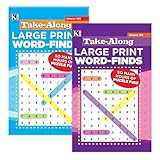 BAZIC Products Take Along Large Print Word Finds Puzzle Book, 2 Titles
- Offer contains ONLY 2 titles regardless of the order quantity placed for this listing. Set of volumes may vary. Ordering in multiples will not change the volume received. Image is meant to display the type of book you will be receiving only.
- BRAIN TEASING. Perfect Puzzle Book for all ages to learn. Enjoy puzzles, maze, word search, or crosswords! This puzzle book is ideal for people on the go and will provide hours of entertainment.
- FUN & CHALLENGING. Exercise your brains long-term memory, working memory, executive functioning, attention to detail, multitasking, and processing speed. Perfect gifting item for those who love word search puzzles!
- RELAX, RECHARGE, & REFOCUS. The word find puzzle book offers an enjoyable challenge for all, from beginners to experts. Ideal for learning, practicing, and having fun time for various users.
- OFFICIALLY LICENSED. High-resolution printing. Perfect for family activities, classroom learning, or travel. Provide an engaging, educational experience with every page, making it both fun and meaningful.
-
After changing themes: check the front end, since theme-associated Additional CSS may not be active under the new theme.
WordPress interface labels can change between versions, and themes customize available areas and controls. If a menu or field is missing, confirm the theme type and the installed WordPress version before following the other editor’s steps.
Quick Recap
Product prices and availability are accurate as of the date/time indicated and are subject to change. Any price and availability information displayed on Amazon at the time of purchase will apply.

