
Free tools Windows power users keep installed
One-click scans. No signup required.
Short answer: For most supported Windows PCs, BitLocker or automatic Device Encryption is sufficient protection against someone removing the drive and reading it offline. The harder part is edition eligibility and recovery-key custody. Device Encryption can be available on Windows Home-capable hardware and configures BitLocker automatically; manually managed BitLocker Drive Encryption is associated with Windows Pro, Enterprise and Education. VeraCrypt is a reasonable alternative when you need pre-boot authentication, portable encrypted containers or a recovery process independent of Microsoft, but it supports fewer Windows system-encryption platforms and requires more maintenance.
What Windows full-disk encryption actually protects
Full-disk encryption makes data on a powered-off drive unreadable without the volume’s encryption key. It is designed for a lost or stolen laptop, a removed SSD, or another situation in which an attacker can access the storage outside your running Windows session.
It does not make an unlocked computer safe from malware or a person who already has your Windows session. Once Windows has unlocked the volume, files can be read according to your account permissions. Encryption also cannot repair a missing recovery key: if Windows enters recovery mode and you cannot provide that key, access to the encrypted data may be lost.
Device Encryption versus BitLocker Drive Encryption
Microsoft describes Device Encryption as a simplified, BitLocker-backed feature. When eligible, it can automatically encrypt the operating-system drive and fixed internal drives, including on some devices that run Windows Home. BitLocker Drive Encryption is the manually managed interface exposed on Windows Pro, Enterprise and Education editions.
What’s actually slowing this PC down?
Pick the symptom - the matching free tool is one click away.
#1 Best Overall

- High-speed USB 3.0 performance of up to 150MB/s(1) [(1) Write to drive up to 15x faster than standard USB 2.0 drives (4MB/s); varies by drive capacity. Up to 150MB/s read speed. USB 3.0 port required. Based on internal testing; performance may be lower depending on host device, usage conditions, and other factors; 1MB=1,000,000 bytes]
- Transfer a full-length movie in less than 30 seconds(2) [(2) Based on 1.2GB MPEG-4 video transfer with USB 3.0 host device. Results may vary based on host device, file attributes and other factors]
- Transfer to drive up to 15 times faster than standard USB 2.0 drives(1)
- Sleek, durable metal casing
- Easy-to-use password protection for your private files(3) [(3)Password protection uses 128-bit AES encryption and is supported by Windows 7, Windows 8, Windows 10, and Mac OS X v10.9 plus; Software download required for Mac, visit the SanDisk SecureAccess support page]
| Capability | Device Encryption | BitLocker Drive Encryption |
|---|---|---|
| Windows availability | Available on a wider range of eligible hardware, including some Windows Home devices | Windows Pro, Enterprise and Education |
| Setup model | Automatic or guided setup with fewer decisions | Administrator chooses drives, policies and authentication options |
| Best fit | Personal PCs where automatic protection is the priority | Power users, businesses and managed fleets needing policy control |
| Protection scope | Operating-system and fixed internal drives when enabled | Operating-system, fixed-data and removable drives according to configuration |
Eligibility is determined by both Windows edition and hardware capabilities. If the Device Encryption page is absent, that does not prove the hardware is unsafe; it means the simplified feature is not available under that device’s current configuration. On a supported Pro, Enterprise or Education installation, open the BitLocker management interface instead.
Typical Windows paths
- Device Encryption: In Windows 11, check Settings > Privacy & security > Device encryption. The exact label can vary by build and hardware.
- BitLocker Drive Encryption: Open Control Panel > System and Security > BitLocker Drive Encryption on editions that expose the feature.
Is BitLocker enough?
For the offline-theft threat, normally yes: it addresses the specific risk of a person reading a drive after taking it out of your computer. It is not a universal security verdict. Your decision should include who controls the device, whether an organization must manage keys centrally, how you will recover after a firmware update, and whether your hardware is supported.
Events that can trigger recovery
BitLocker can request recovery even from the legitimate owner after hardware, firmware or software changes. Common triggers include a motherboard replacement, BIOS/UEFI changes, a change in boot configuration or other modifications that alter the measurements used to unlock the system. Treat a recovery prompt as an expected recovery workflow, not proof that the drive has failed.
Your recovery key is the critical operational control
Microsoft defines a BitLocker recovery key as “a unique 48-digit numerical password.” It is separate from your normal Windows sign-in password. Anyone who obtains the key may be able to unlock the protected volume, so handle it like a house key.
Do these 3 things before closing this tab:
1Clear out junk files and repair common Windows errors2Scan for outdated or missing drivers - takes under a minute3Repair Windows errors before they cause bigger problemsRank #2

- USB-C 2-in-1 storage OTG: The Lexar JumpDrive Dual Drive D40E features USB Type-A and Type-C connectors in a slim, portable form factor for easy device compatibility
- Transfer speeds up to 100MB/s: Based on internal testing, performance may vary depending upon the host device, interface, and usage conditions. 1MB=1,000,000 bytes
- Plug and Play: Widely compatible with USB Type-C smartphones, tablets, laptops, Macs, and traditional Type-A devices, no software installation required. The 360° swivel design allows for easy switching between connectors without the hassle of losing a cap
- Durable & Compact: The Lexar D40E USB memory stick features a metal enclosure, withstands temperatures from 0° to 50° C (32°F to 122°F), and is lightweight at 26g with dimensions of 70.4 x 16.9 x 11.7mm
- Security & Warranty: Securely protects files using an advanced security software solution with 256-bit AES encryption. Backed by a Lexar 3-year limited warranty
Create and verify backups before changing hardware
- With encryption enabled and Windows still unlocked, open the BitLocker or Device Encryption management page and use the option to back up or save the recovery key.
- Save more than one copy using storage you can reach when the computer cannot boot. Microsoft documents saving recovery information to a folder, one or more USB devices, a Microsoft Account or a printed copy.
- Label an offline USB flash drive and keep it physically separate from the computer. A second copy in a separate secure location protects against loss of the first.
- Before changing BIOS/UEFI settings, replacing a motherboard or making another major hardware change, confirm that the key exists and that you can identify which device it belongs to.
A printed key is useful during a hardware failure, but do not leave it beside the laptop: Microsoft warns that possession of the printed key could let a thief bypass the encryption. Do not paste the key into an unprotected public note or share it in a support ticket.
What to do when recovery appears
- Stop and identify the computer and the encrypted volume shown on the recovery screen.
- Retrieve the matching 48-digit key from your secured backup location or Microsoft Account.
- Enter the digits exactly. After Windows starts, investigate what changed before repeatedly rebooting or altering more firmware settings.
- If the key is unavailable, do not assume a reinstall will preserve files; resetting or reformatting can destroy the only remaining copy of the encrypted data.
When VeraCrypt is a better fit
VeraCrypt provides pre-boot system encryption: you enter a password before Windows starts. It also supports portable encrypted volumes, which can be useful when you need an encrypted container rather than encryption of the entire system disk. Its recovery model is independent of a Microsoft Account, and its open-source distribution is attractive to users who want software outside the Windows-native management stack.
Platform limits
VeraCrypt’s official system-encryption support is listed for Windows 11 x64 and Windows 10 version 1809 or later x64. System encryption is not currently supported on Windows ARM64. Check the exact architecture before committing to it; an ARM64 Windows device may still use other VeraCrypt volume features, but that is not the same as encrypting its boot drive.
Boot and maintenance implications
Pre-boot authentication adds a password step before Windows loads and creates another recovery responsibility. In EFI boot mode, the EFI partition must remain available to firmware, so VeraCrypt encrypts the Windows system partition rather than the EFI partition. Its documentation also notes that SSD TRIM can reveal which sectors are unused. These details matter for a threat model that includes forensic analysis, not just a stolen laptop.
Crashes, No Sound, or Screen Glitches?
Random freezes, missing sound and display glitches usually trace back to one bad driver. Find and replace yours safely.Free scan · under a minutePC Slower Than It Used to Be?
A free scan shows the junk files, broken settings and background clutter dragging Windows down - then fixes them in one click.Free scan · Windows 10 & 11Rank #3
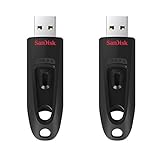
- Transfer speeds up to 10x faster than standard USB 2.0 drives (4MB/s); up to 130MB/s read speed; USB 3.0 port required. Based on internal testing; performance may be lower depending upon host device. 1MB=1,000,000 bytes
- Backward compatible with USB 2.0
- Secure file encryption and password protection(2)
Choose VeraCrypt when independent control and containers outweigh Windows-native administration. Choose BitLocker or Device Encryption when predictable Windows integration, automatic unlocking and organizational management are more important. The available sources do not establish a universal security winner or a benchmark showing one is faster.
Self-encrypting drives: hardware encryption with caveats
Self-encrypting drives (also called encrypted hard drives in Microsoft’s terminology) perform full-disk encryption in drive hardware and can be transparent to the operating system. They are a hardware category, not an automatic recommendation. Validate the exact model, firmware, vendor implementation, manageability and recovery behavior before relying on one for sensitive data. A drive’s marketing label alone does not establish that its implementation matches your security or compliance requirements.
Decision guide
| Your situation | Most practical starting point | Why |
|---|---|---|
| Windows Home laptop with an eligible device-encryption setting | Device Encryption | BitLocker-backed protection with automatic setup and fewer decisions |
| Windows Pro, Enterprise or Education PC needing policy control | BitLocker Drive Encryption | Manual drive selection and broader management controls |
| Need a boot password independent of Microsoft account services | VeraCrypt system encryption | Pre-boot authentication and an independent recovery model, where supported |
| Need encrypted containers or removable volumes across systems | VeraCrypt volumes or BitLocker To Go, after checking compatibility | Choose according to the systems that must open the media and who will hold keys |
| Considering a self-encrypting SSD | Validate the exact drive first | Firmware and vendor behavior determine whether the implementation is suitable |
Operational checklist before you enable encryption
- Confirm your Windows edition, CPU architecture and device eligibility.
- Back up important files separately; encryption is not a backup.
- Generate and verify the recovery key before firmware or hardware work.
- Store at least one key copy away from the encrypted computer.
- Decide who can access the key and how that access is revoked when a device changes hands.
- Test the recovery process on a non-critical machine or document the exact key location for your support team.
Troubleshooting common problems
The Device Encryption setting is missing
Check the Windows edition and hardware eligibility. Device Encryption is offered on a wider range of devices but is not universal. On Pro, Enterprise or Education, use the BitLocker Drive Encryption interface. If neither interface is available, do not force an unsupported system-encryption method without checking the platform requirements.
Windows asks for the key after a BIOS update
Firmware changes can trigger recovery. Enter the backed-up 48-digit key, allow Windows to boot, and then verify that the firmware update completed correctly. Keep the key available before future firmware work.
Rank #4
- High-speed USB 3.0 performance of up to 150MB/s(1) [(1) Write to drive up to 15x faster than standard USB 2.0 drives (4MB/s); varies by drive capacity. Up to 150MB/s read speed. USB 3.0 port required. Based on internal testing; performance may be lower depending on host device, usage conditions, and other factors; 1MB=1,000,000 bytes]
- Transfer a full-length movie in less than 30 seconds(2) [(2) Based on 1.2GB MPEG-4 video transfer with USB 3.0 host device. Results may vary based on host device, file attributes and other factors]
- Transfer to drive up to 15 times faster than standard USB 2.0 drives(1)
- Sleek, durable metal casing
- Easy-to-use password protection for your private files(3) [(3)Password protection uses 128-bit AES encryption and is supported by Windows 7, Windows 8, Windows 10, and Mac OS X v10.9+; Software download required for Mac, visit the SanDisk SecureAccess support page]
The key I found does not unlock the drive
Recovery keys are device- and volume-specific. Compare the identifier shown on the recovery screen with the identifier recorded alongside each backup. Do not guess or substitute a key from another computer.
VeraCrypt will not offer system encryption
Verify that Windows is 11 x64 or Windows 10 version 1809-or-later x64. Windows ARM64 system encryption is not supported by VeraCrypt’s documented requirements. Also check whether the machine is booting in a configuration compatible with VeraCrypt’s pre-boot workflow.
You are worried encryption will slow the computer
No comparative performance benchmark is established here. Modern systems may make encryption feel transparent, but the result depends on the CPU, storage, firmware and workload. Select the option whose recovery and management model you can operate reliably rather than choosing from an unsupported speed claim.
Or skip the browser setup
If you are documenting your encryption policy or recovery procedure, ScreenshotNeo can capture a clean copy of a web page without building your own browser automation. It is a separate website screenshot API and does not encrypt your Windows drive.
The Tool Desk
Outbyte PC Repair FREEClear out junk files and repair common Windows errorsFree Scan →Outbyte Driver Updater FREEScan for outdated or missing drivers - takes under a minuteDriver Scan →Quick Recap
One GET request returns an image or PDF:
curl -G "https://api.screenshotneo.com/v1/shot" -d access_key=YOUR_API_KEY --data-urlencode url=https://stripe.com -o shot.webpPython:
import requests
r = requests.get("https://api.screenshotneo.com/v1/shot", params={"access_key": "YOUR_API_KEY", "url": "https://stripe.com"}, timeout=90)
open("shot.webp", "wb").write(r.content)
Node.js:
const q = new URLSearchParams({ access_key: 'YOUR_API_KEY', url: 'https://stripe.com' });
const res = await fetch(`https://api.screenshotneo.com/v1/shot?${q}`);
See the ScreenshotNeo documentation for the request options. Cookie and consent banners, newsletter popups and chat widgets are removed before the shot; bot checks, blank pages and failed loads are not billed. Its MCP server lets AI agents take screenshots, and the Free plan includes 1,000 screenshots a month with no card; paid plans start at $5 for 3,000. Create a free ScreenshotNeo account.
Product prices and availability are accurate as of the date/time indicated and are subject to change. Any price and availability information displayed on Amazon at the time of purchase will apply.

