
If a C# crop selects the wrong area, the most common cause is that the rectangle was measured in one coordinate space and passed to an API expecting another. Convert preview or control coordinates to the current image’s pixel coordinates, account for padding and EXIF orientation, and recalculate after every geometry-changing operation. The exact fix depends on your UI framework and imaging library, so log the dimensions and bounds immediately before cropping.
First identify which coordinate space your rectangle uses
A crop rectangle can refer to several different things: source-image pixels, the image as scaled inside a preview, the full client area of a control, normalized values, or an image that has already been resized, rotated, or cropped. Those spaces are not interchangeable. A rectangle that looks correct in a preview can select the wrong pixels if the crop call interprets its x, y, width, and height as coordinates in the image itself.
Write down the coordinate space for every value in the path from user selection to crop call. For example: “mouse position in PictureBox client coordinates” is not the same as “pixel position in the decoded bitmap.” Before changing the crop API call, verify the mapping between those spaces.
Log geometry at the crop boundary
Immediately before cropping, record the source image’s current pixel width and height; the preview control’s bounds; the actual rectangle in which the image is rendered; any letterbox or padding offsets; the selected rectangle; the destination rectangle, if drawing into one; and whether EXIF orientation has been applied. Logging all of them together often reveals whether the mistake is a scale mismatch, an offset, stale coordinates, or a rectangle-arithmetic error.
The Tool Desk
Outbyte Driver Updater FREEFix the driver behind crashes, sound loss and screen glitchesFind Drivers →Outbyte PC Repair FREEClear out junk files and repair common Windows errorsFree Scan →#1 Best Overall
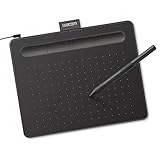
- Wacom Intuos Small Graphics Drawing Tablet: Enjoy industry leading tablet performance in superior control and precision with Wacom's EMR, battery free technology that feels like pen on paper
- Works With All Software: Wacom Intuos tablet can be used in any software program to explore new facets of digital creativity; draw, paint, edit photos/videos, create designs, and mark up documents
- What the Professionals Use: Wacom's industry leading pen technology and pen to paper feeling makes it the preferred drawing tablet of professional graphic designers
- Software and Training Included: Only Wacom gives you software with every purchase. Register your Intuos tablet and gain access to some of the best creative software and Wacom's online training
- Wacom is the Global Leader in Drawing Tablet and Displays: For over 40 years in pen display and tablet market, you can trust that Wacom to help you bring your vision, ideas and creativity to life
Convert preview selections to source-image pixels
If the user selects an area in a preview, map from the rectangle where the image is actually displayed—not automatically from the full control bounds—to the source image’s current pixel dimensions. Let the displayed image rectangle have origin (displayLeft, displayTop) and dimensions displayWidth × displayHeight; let the source image have dimensions sourceWidth × sourceHeight. For a point measured in the same UI coordinate system, use:
sourceX = (viewX - displayLeft) × sourceWidth / displayWidthsourceY = (viewY - displayTop) × sourceHeight / displayHeight
For a selected rectangle, transform both corners with the same scale and offset, then compute width and height from the transformed corners. If a preview preserves aspect ratio and leaves unused space around the image, those margins are letterboxing: include their offset by using the actual displayed image rectangle. Mapping against the whole control instead shifts or stretches the selection.
Runnable coordinate-mapping example
This helper maps a selection expressed in UI coordinates into source-pixel bounds. It uses floor for the left and top edges and ceiling for the right and bottom edges so the integer rectangle encloses the mapped selection. It clamps the result to the source image bounds; if an entirely out-of-image selection should be an error in your application, validate and reject it before clamping instead.
Rank #2

- Word-first 16K Pressure Levels: The upgraded stylus features 16,384 levels of pressure sensitivity and supports up to 60 degrees of tilt, delivering smoother lines and shading for a natural drawing experience. With no battery or charging needed, it operates like a real pen, making it easy for beginners to create effortlessly. This functionality helps novice artists develop their skills and explore their creativity without the intimidation of complex tools
- Designed for Beginners: This drawing pad desinged with 8 customizable shortcuts for both right and left-hand users, express keys create a highly ergonomic and convenient work platform
- Perfectly Adapted for Android: The XPPen Deco 01 V3 art tablet supports connections with Android devices running version 10.0 and above. It is recommended to download the XPPen Tools Android application, which adapts to your smartphone's screen aspect ratio, ensuring accurate mapping. It also supports mapping on Android screens with different aspect ratios in portrait mode
- Large Drawing Space, Bigger Bold Inspiration: This expansive drawing pad has10 x 6.25-inch helps you break through the limit between shortcut keys and drawing area
- Easy Connectivity for Beginners: The Deco 01 V3 offers USB-C to USB-C connectivity, plus adapters for USB C. This ensures easy connection to various devices, allowing beginner artists to set up quickly and focus on their creativity without compatibility concerns. Whether using a laptop, tablet, or desktop, the Deco 01 V3 provides a seamless experience, making it an ideal choice for those just starting their digital art journey
using System;

public static class CropCoordinates
{
    public static (int X, int Y, int Width, int Height) ToSourcePixels(
        double selectionLeft,
        double selectionTop,
        double selectionRight,
        double selectionBottom,
        double displayLeft,
        double displayTop,
        double displayWidth,
        double displayHeight,
        int sourceWidth,
        int sourceHeight)
    {
        if (displayWidth <= 0 || displayHeight <= 0)
            throw new ArgumentOutOfRangeException("Displayed image dimensions must be positive.");
        if (sourceWidth <= 0 || sourceHeight <= 0)
            throw new ArgumentOutOfRangeException("Source image dimensions must be positive.");
        if (selectionRight < selectionLeft || selectionBottom < selectionTop)
            throw new ArgumentException("Selection corners are reversed.");

        double scaleX = sourceWidth / displayWidth;
        double scaleY = sourceHeight / displayHeight;

        int left = (int)Math.Floor((selectionLeft - displayLeft) * scaleX);
        int top = (int)Math.Floor((selectionTop - displayTop) * scaleY);
        int right = (int)Math.Ceiling((selectionRight - displayLeft) * scaleX);
        int bottom = (int)Math.Ceiling((selectionBottom - displayTop) * scaleY);

        left = Math.Clamp(left, 0, sourceWidth);
        top = Math.Clamp(top, 0, sourceHeight);
        right = Math.Clamp(right, left, sourceWidth);
        bottom = Math.Clamp(bottom, top, sourceHeight);

        return (left, top, right - left, bottom - top);
    }
}
Pass the returned rectangle to the crop operation that accepts source-pixel coordinates. This mapping is a geometry model, not a guarantee about the rounding or out-of-bounds behavior of every imaging API. Check the overload and library version in your application. Math.Clamp requires a compatible .NET runtime; for older targets, replace it with equivalent minimum/maximum checks.
Keep source and destination rectangles separate in System.Drawing
With Graphics.DrawImage, Microsoft documents the source coordinates as relative to the source image’s upper-left corner. The source portion is scaled to fit the destination rectangle. In other words, source coordinates describe which pixels to take; the destination rectangle describes where and at what rendered size to draw them. See the Microsoft Learn Graphics.DrawImage reference for the overloads and applicable framework versions.
// sourceRect must already be expressed in source-image coordinates.
Rectangle sourceRect = new Rectangle(sourceX, sourceY, sourceWidth, sourceHeight);
Rectangle destinationRect = new Rectangle(0, 0, outputWidth, outputHeight);

graphics.DrawImage(
    image,
    destinationRect,
    sourceRect.X,
    sourceRect.Y,
    sourceRect.Width,
    sourceRect.Height,
    GraphicsUnit.Pixel);
Do not put preview coordinates in the source arguments merely because the destination is the preview’s size. Nor should a display scale be applied to the source rectangle and then applied again by drawing. Verify the selected overload’s units and bounds behavior rather than assuming it clips, rejects, or rounds a rectangle in a particular way.
Rank #3

- Customize Your Workflow: The 6 customizable press keys on Huion H640P drawing tablet for pc let you assign your most-used commands—like undo, zoom, brush switch, or save—so you can keep your hands on the tablet and your mind on the art. Whether you're a digital painter switching brushes, or a comic artist zooming in and out, these keys keep your workflow smooth and uninterrupted. Plus, the Huion driver lets you save different shortcut profiles for different apps, so you never have to reconfigure when switching software.
- Professional Pen Performance: Huion H640P drawing pad for computer comes with the battery-free PW100 stylus that's always ready when inspiration strikes. With 8192 levels of pressure sensitivity, every light sketch, or bold stroke responds naturally to your hand—just like a real pen. The 5080 LPI resolution and 233 PPS report rate deliver lag-free, precise strokes, so you can draw confidently without second-guessing your cursor. The pen side buttons help you switch between pen and eraser instantly.
- Compact and Portable: Huion H640P computer graphics tablet features a compact, ultra-portable design at just 0.3 inches thin and 0.61 lbs light, so it slides easily into your backpack—perfect for sketching in coffee shops, taking notes in class, or editing on the go between home and studio. The 6x4 inch active area offers enough room for natural pen movements while fitting comfortably on crowded desks, or lecture hall seats.
- Stable Compatibility: Huion H640P graphic drawing tablet works seamlessly with Mac, Windows, Linux PCs, and Android smartphones/tablets (OS version 6.0 or later). Left-handed friendly, and you just need to flip the tablet and adjust the settings in the driver. Please note: H640P does NOT support iPhone/iPad.
- Move Beyond the Mouse: Huion Inspiroy H640P is a pen tablet that replaces your mouse for more natural, precise control. Freehand draw, take notes, or even play OSU—everything you do with a mouse, you can do better with a pen. The precise tip makes it ideal for detailed photo editing, graphic design, or signing PDF. Meanwhile, the ergonomic pen grip helps you avoid the strain that comes from hours of using a mouse.
Use the image’s current coordinate space in ImageSharp
ImageSharp crop rectangles are expressed in the image’s current coordinate space. If an image may contain EXIF orientation metadata and the user chooses a crop based on how the image appears, orient the pixels before choosing or applying those visual coordinates. The ImageSharp guide recommends AutoOrient() for this case, and notes that after a crop the retained region becomes the new image: previous coordinates no longer identify the same positions. See Six Labors’ Crop, Pad, and Canvas guide and verify method availability and behavior against the package version in your project.
The order of operations matters. A selection made against the displayed, oriented image must be mapped to the coordinate system of the image being cropped. Either orient the image first and use coordinates in that result, or explicitly transform the selection through the orientation mapping. Mixing pre-orientation pixel coordinates with post-orientation visual coordinates can move the crop even when scale and offsets are otherwise correct.
Do these 3 things before closing this tab:
1Repair Windows errors before they cause bigger problems2Fix the driver behind crashes, sound loss and screen glitches3Clear out junk files and repair common Windows errorsRecalculate after resizing, rotating, or cropping
Coordinates belong to a particular image state. Resizing changes the relationship between pixels and any earlier preview selection; rotating changes axes and often dimensions; cropping makes the selected region the new image, with its own origin at the top-left. Track transformations in order and express each later selection in the coordinate space of the image at that point. Do not reuse pre-transform positions blindly for a follow-on crop or overlay.
Rank #4
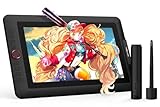
- PLEASE NOTE:XPPen Artist13.3 Pro drawing tablet Need to connect with computer,you need to use it with your computer or laptop, the 3 in 1 cable is included
- Drawing Tablet with Screen: Tilt Function- XPPen Artist 13.3 Pro supports up to 60 degrees of tilt function, so now you don't need to adjust the brush direction in the software again and again. Simply tilt to add shading to your creation and enjoy smoother and more natural transitions between lines and strokes
- Graphics Tablets: High Color Gamut- The 13.3 inch fully-laminated FHD Display pairs a superb color accuracy of 88% NTSC (Adobe RGB≧91%,sRGB≧123%) with a 178-degree viewing angle and delivers rich colors, vivid images, and dazzling details in a wider view. Your creative world is now as powerful as it is colorful
- Drawing Pad: One is enough- The sleek Red Dial on the display is expertly designed with creators in mind, its strategic placement allows for natural drawing postures. With just one wheel, you can effortlessly zoom in and out, adjust brush sizes, and flip the canvas—all tailored to suit the habits of everyday artists. The 8 customizable shortcut keys allow you to personalize your setup, streamlining your workflow and enhancing creative efficiency
- Universal Compatibility & Software Support:supports Windows 7 (or later), Mac OS X 10.10 (or later), Chrome OS 88 (or later), and Linux systems. Fully compatible with major creative software including Photoshop, Illustrator, SAI, and Blender 3D. Register your device to access additional programs like ArtRage 5 and openCanvas for expanded creative possibilities.
A useful debugging approach is to annotate each rectangle with the image state it belongs to—for example, “decoded 4000 × 3000,” “auto-oriented 3000 × 4000,” or “post-crop 1200 × 900.” If a rectangle is passed to an operation on a different state, convert it explicitly or recompute it from the new image.
Check rectangle arithmetic, units, and bounds
- Confirm that
xandyidentify the rectangle origin, whilewidthandheightare sizes—not right and bottom coordinates. - Check whether the API expects pixels, another unit, or coordinates relative to a different origin.
- Apply rounding consistently when converting floating-point preview positions to integer bounds. Decide whether the goal is to include every touched pixel or round to the nearest pixel.
- Validate that the resulting width and height are positive and that the rectangle is within the current image’s bounds.
- Decide deliberately whether a partly out-of-bounds selection should be clipped or rejected. The correct behavior depends on the API overload and application requirements.
Troubleshoot common incorrect-crop symptoms
| Symptom | Likely cause | What to check or change |
|---|---|---|
| Crop is shifted by a fairly consistent amount | Selection is relative to a control, but the image begins inside it with padding or letterboxing. | Log the rendered image rectangle and subtract its actual left and top offsets before scaling. |
| Crop is the right area but too large or too small | Preview dimensions were treated as source-pixel dimensions, or scaling was applied twice. | Map with the source-to-displayed width and height ratios; distinguish source rectangle from destination rectangle. |
| Crop is correct for some images but wrong for portrait or rotated photos | EXIF orientation differs between stored pixels and the way the image is displayed. | Orient pixels before using visually selected coordinates, or transform the rectangle through the orientation mapping. |
| A later crop or overlay drifts after an earlier operation | Coordinates refer to the pre-crop or pre-resize image. | Recompute using the current image dimensions and origin after each transformation. |
| Crop includes an extra row or column, or misses an edge | Floating-point bounds were rounded inconsistently. | Choose and apply one edge policy, such as floor for left/top and ceiling for right/bottom, then inspect the resulting integer bounds. |
| Crop throws, returns an empty area, or behaves differently across library versions | Negative or out-of-range bounds, zero dimensions, or assumptions about clipping and units. | Validate positive sizes and bounds, then consult the specific API overload and version in use. |
Choose the simpler coordinate workflow when possible
If the application can crop before rendering a preview, source-pixel coordinates can avoid the preview-to-source mapping step. If the user must select an area in a UI, keep the rendered image bounds and transform explicit. For images with EXIF orientation, orienting first often makes visual selection easier to reason about; preserving the original pixel arrangement is also possible, but then the coordinate transformation must account for orientation.
System.Drawing and ImageSharp are not interchangeable recommendations: the right choice depends on the target platform and runtime, existing dependencies, and the desired processing pipeline. Microsoft’s cited page is specifically the System.Drawing API reference; check compatibility for your target framework and operating system. ImageSharp behavior should likewise be checked against the package version actually installed.
Best Value
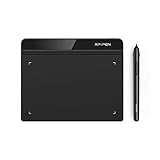
- Battery-Free Pen: StarG640 drawing tablet is the perfect replacement for a traditional mouse! The XPPen advanced Battery-free PN01 stylus does not require charging, allowing for constant uninterrupted Draw and Play, making lines flow quicker and smoother, enhancing overall performance
- Ideal for Online Education: XPPen G640 graphics tablet is designed for digital drawing, painting, sketching, E-signatures, online teaching, remote work, photo editing, it's compatible with Microsoft Office apps like Word, PowerPoint, OneNote, Zoom, Xsplit etc. Works perfect than a mouse, visually present your handwritten notes, signatures precisely
- Compact and Portable: The G640 art tablet is only 2 mm thick, it's as slim as all primary level graphic tablets, allowing you to carry it with you on the go
- Chromebook Supported: XPPen G640 digital drawing tablet is ready to work seamlessly with Chromebook devices now, so you can create information-rich content and collaborate with teachers and classmates on Google Jamboard’s whiteboard; Take notes quickly and conveniently with Google Keep, and effortlessly sketch diagrams with the Google Canvas
- Multipurpose Use: Designed for playing OSU! Game, digital drawing, painting, sketch, sign documents digitally, this writing tablet also compatible with Microsoft Office programs like Word, PowerPoint, OneNote and more. Create mind-maps, draw diagrams or take notes as replacement for mouse
Or skip the browser setup
If your goal is to capture a webpage rather than crop an image inside a C# image-processing pipeline, ScreenshotNeo provides a website screenshot API. A single GET request can return a screenshot or PDF. For example, use cURL like this; the API parameters and options are documented at ScreenshotNeo’s API docs.
curl -G "https://api.screenshotneo.com/v1/shot" -d access_key=YOUR_API_KEY --data-urlencode url=https://stripe.com -o shot.webpScreenshotNeo removes cookie banners, newsletter popups, and chat widgets before capture, with each cleanup step able to be turned off. Bot checks, blank pages, failed loads, timeouts, and cache hits are not billed, and response headers identify the page verdict and billing status. Its MCP server provides take_screenshot, get_page_info, and capture_pdf tools for AI agents and MCP clients. The Free plan includes 1,000 screenshots per month without a card; paid plans start at $5 for 3,000 shots.
Sign up for ScreenshotNeo’s free plan to try 1,000 screenshots a month with no card.
Frequently Asked Questions
Should crop coordinates use the original image size or the displayed size?
Use the coordinate space expected by the crop operation. If the selection was made on a scaled preview, convert it to the current source image’s pixel coordinates first.
Free tools Windows power users keep installed
One-click scans. No signup required.
Can I use the same crop coordinates after cropping the image once?
No. A crop creates a new image coordinate space. Recalculate later selections relative to the cropped image.
Does a PictureBox or other preview control define the crop origin?
Not necessarily. If the image is offset or letterboxed inside the control, use the actual rendered image rectangle and account for its offset.
Quick Recap
Product prices and availability are accurate as of the date/time indicated and are subject to change. Any price and availability information displayed on Amazon at the time of purchase will apply.

