
To turn rendered page content into an image with JavaScript, choose the rendering route that matches your input: use html2canvas for an element already displayed in a browser, or render supplied HTML or a public URL through a server-side screenshot service. These approaches have different fidelity, security, and execution limits; neither guarantees a pixel-perfect image of every page.
Choose the right JavaScript-to-image method
“HTML to image” can mean three different jobs. The important distinction is where the HTML exists and which browser should render it.

| What you have | Suitable approach | Where it runs |
|---|---|---|
| An element already rendered in the visitor’s browser | html2canvas can reconstruct an image from DOM information |
In the page’s browser |
| HTML markup you provide | A hosted HTML-rendering endpoint can render the supplied markup | On the service’s rendering infrastructure |
| A publicly accessible web page | A hosted screenshot endpoint loads the URL and captures it | On the service’s rendering infrastructure |
Use the browser library when the element is already part of your app and keeping the rendering flow client-side matters. Use a server-side service when you need a controlled render of supplied markup or a URL, or when the target is not already available in the browser DOM. For URL captures, the remote page needs to be publicly accessible to the service.
Capture an existing browser element with html2canvas
html2canvas documentation describes the project as traversing the DOM and building a representation, rather than taking a native browser screenshot. That distinction matters: its output can differ from what the browser displays because the library can only reproduce what its renderer supports and what the page makes accessible.
#1 Best Overall

- Compatible with Nintendo Switch 2’s new GameChat mode
- Auto-Light Balance: RightLight boosts brightness by up to 50%, reducing shadows so you look your best—compared to previous-generation Logitech webcams (1)
- Privacy with a Slide: The integrated webcam cover makes it easy to get total, reliable privacy when you're not on a video call
- Built-In Mic: The built-in microphone lets others hear you clearly during video calls
- Easy Plug-And-Play: The Brio 101 works with most video calling platforms, including Microsoft Teams, Zoom and Google Meet—no hassle; it just works
Install and load the library
Install the package in a project using npm:
npm install html2canvasIn a browser application with a bundler, import it in the module that performs the capture:
import html2canvas from 'html2canvas';Alternatively, follow the project’s browser setup instructions to load the library before the code that calls it. The example below assumes the page has an element with id="capture" and that html2canvas is available in the module.
Render and download a PNG
import html2canvas from 'html2canvas';

async function downloadCapture() {
  const element = document.querySelector('#capture');
  if (!element) {
    throw new Error('No element found with id="capture"');
  }

  const canvas = await html2canvas(element);
  const link = document.createElement('a');
  link.download = 'capture.png';
  link.href = canvas.toDataURL('image/png');
  link.click();
}

document.querySelector('#download')?.addEventListener('click', () => {
  downloadCapture().catch((error) => console.error('Capture failed:', error));
});
The returned value is a Promise that resolves to a canvas. The project’s getting-started guide demonstrates the asynchronous call pattern. A download link can use the canvas’s toDataURL() method; use a different supported image type if your app needs another output format.
Capture the right content
- Wait until the element has been rendered and any data it depends on has arrived before calling the library.
- For pages with lazy-loaded images, scroll or otherwise trigger the page’s normal loading behavior before capture; a capture cannot reliably include content that has not loaded.
- Use the project’s documented scaling option when you need a larger output canvas, and account for the resulting increase in canvas dimensions and memory use.
- Consult the project examples for region capture and excluding elements. Treat these as configuration choices, not a guarantee that every CSS effect or page resource will be reproduced.
Know the browser security and fidelity limits
Cross-origin content is a frequent reason a browser-side image is incomplete or fails to export. Browsers restrict reading image data from another origin unless that server permits the required cross-origin access. A canvas containing restricted cross-origin image data can become tainted, preventing operations such as exporting it with toDataURL(). The html2canvas guides discuss CORS configuration, but setting a client option cannot make a remote server grant permission it has not granted.
Cross-origin iframes present a separate limit: browser security prevents the library from recursively reading another origin’s frame contents. If the content is outside your origin and you do not control its permissions, a DOM reconstruction in your page may not be able to capture it.
Rank #2
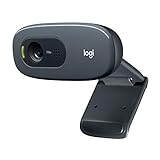
- Compatible with Nintendo Switch 2’s new GameChat mode
- Crisp HD 720p/30 fps video calls with diagonal 55° field of view and auto light correction. Compatible with popular platforms including Skype and Zoom.
- The built-in noise-reducing mic makes sure your voice comes across clearly up to 1.5 meters away, even if you’re in busy surroundings.
- C270’s RightLight 2 feature adjusts to lighting conditions, producing brighter, contrasted images to help you look good in all your conference calls.
- The adjustable universal clip lets you attach the camera securely to your screen or laptop, or fold the clip and set the webcam on a shelf. You’re always ready for your next video call.
- Missing external images: check the image server’s CORS behavior and use only resources your page is permitted to read.
- Blank or incomplete iframe region: confirm whether the frame is same-origin. A library running in the parent page cannot bypass cross-origin restrictions.
- Visual differences: compare the result with the rendered page and identify unsupported or inaccessible content; html2canvas is not a native screenshot API.
These are browser security and renderer constraints, not problems that can always be fixed by changing a selector or increasing a timeout. The project’s documentation explains the DOM-based approach and its accuracy qualification.
Render supplied HTML or capture a live URL on a server
The HTML to Image service documents two distinct workflows: an HTML endpoint accepts markup, while a screenshot endpoint loads a URL. In its JavaScript-support documentation, the HTML endpoint runs inline scripts in the supplied HTML before capture. The URL endpoint lets the target page run its own scripts, but does not inject your custom JavaScript into that page.
Use the HTML endpoint for markup you control
Send the HTML you want rendered to the service’s HTML endpoint using its current API instructions. Include the markup, CSS, and any inline script the render needs. The documentation states that scripts have a 30-second budget for the HTML endpoint; this is a service-specific limit, not a browser-wide JavaScript rule.
Quick wins for a faster PC:
Scan for outdated or missing drivers - takes under a minuteDriver Scan →Clear out junk files and repair common Windows errorsFree Scan →For dynamic markup, arrange for the script to produce the desired state within that budget. If your content is generated by an external application, make sure its dependencies and assets are available to the rendering environment. The exact request fields and output options are service-specific, so use the endpoint’s current documentation rather than assuming that URL-capture parameters also apply to HTML input.
Use the screenshot endpoint for a public URL
For a hosted page, provide its publicly accessible URL to the screenshot endpoint. The service loads the page, allowing its own scripts to run, then captures the rendered result. If an application needs custom code injected into that target page, this URL workflow does not provide that injection; use supplied HTML where appropriate or make the page render the needed state itself.
Rank #3

- 【Full HD 1080P Webcam】Powered by a 1080p FHD two-MP CMOS, the NexiGo N60 Webcam produces exceptionally sharp and clear videos at resolutions up to 1920 x 1080 with 30fps. The 3.6mm glass lens provides a crisp image at fixed distances and is optimized between 19.6 inches to 13 feet, making it ideal for almost any indoor use.
- 【Wide Compatibility】Works with USB 2.0/3.0, no additional drivers required. Ready to use in approximately one minute or less on any compatible device. Compatible with Mac OS X 10.7 and higher / Windows 7, 8, 10 & 11 / Android 4.0 or higher / Linux 2.6.24 / Chrome OS 29.0.1547 / Ubuntu Version 10.04 or above. Not compatible with XBOX/PS4/PS5.
- 【Built-in Noise-Cancelling Microphone】The built-in noise-canceling microphone reduces ambient noise to enhance the sound quality of your video. Great for Zoom / Facetime / Video Calling / OBS / Twitch / Facebook / YouTube / Conferencing / Gaming / Streaming / Recording / Online School.
- 【USB Webcam with Privacy Protection Cover】The privacy cover blocks the lens when the webcam is not in use. It's perfect to help provide security and peace of mind to anyone, from individuals to large companies. 【Note:】Please contact our support for firmware update if you have noticed any audio delays.
- 【Wide Compatibility】Works with USB 2.0/3.0, no additional drivers required. Ready to use in approximately one minute or less on any compatible device. Compatible with Mac OS X 10.7 and higher / Windows 7, 10 & 11, Pro / Android 4.0 or higher / Linux 2.6.24 / Chrome OS 29.0.1547 / Ubuntu Version 10.04 or above. Not compatible with XBOX/PS4/PS5.
Do not treat “page loaded” as proof that all application content is ready. A page may display its shell before data, images, or a chart have finished rendering. The service documents waits for a selector and a delay. Choose a selector that appears only when the relevant content is ready if the page provides one; otherwise use a delay suited to the application. The documented iframe/embed workaround for the screenshot endpoint allows a maximum delay of five seconds. That limit is specific to the workaround, not a general recommendation to wait five seconds on every page.
Keep hosted rendering credentials on the server
The official JavaScript client documentation describes a server-side client built on fetch. It lists Node.js 18 or a runtime with global fetch as a requirement and names Bun, Deno, serverless functions, and edge runtimes as usable environments. Most importantly, it warns not to expose the API key in browser code: a key shipped in a frontend bundle can be read by users.
What’s actually slowing this PC down?
Pick the symptom - the matching free tool is one click away.
Put the request in a backend route, job worker, or other trusted runtime. Have the browser call your own endpoint, validate what it is allowed to render, and return the resulting image or a controlled download response. Avoid accepting arbitrary URLs from untrusted users without considering what your server or rendering service may be asked to access.
Or skip the browser setup
For a public URL or supplied HTML, ScreenshotNeo provides a screenshot API and an MCP server. Its HTML-to-image options include rendering HTML/CSS to an image, while URL capture loads a page for a screenshot. Cookie banners, newsletter popups, and chat widgets are removed before capture; bot checks, blank pages, and failed loads are not billed. AI agents can use its MCP server, and the API supports PNG, JPEG, WebP, or PDF output. See the ScreenshotNeo API documentation for request options.
Here is a runnable cURL example that saves a WebP capture of a public URL:
curl -G "https://api.screenshotneo.com/v1/shot" -d access_key=YOUR_API_KEY --data-urlencode url=https://stripe.com -o shot.webpKeep the access key out of browser-side JavaScript. A server-side Python request can look like this:
The Tool Desk
Outbyte PC Repair FREEClear out junk files and repair common Windows errorsFree Scan →Outbyte Driver Updater FREEScan for outdated or missing drivers - takes under a minuteDriver Scan →Rank #4

- 1080P Webcam with Cover for Video Calls - EMEET computer webcam provides design and Optimization for professional video streaming. Realistic 1920 x 1080p video, 5-layer anti-glare lens, providing smooth video. C960 computer camera delivers 1920x1080 video with fixed focus (11.8–118.1 inches), so as to provide a clearer image. C960 USB webcam has a cover and can be removed automatically to meet your needs for privacy. For optimal image performance, use the webcam in a well-lit environment.
- Built-in 2 Omnidirectional Mics - EMEET webcam with microphone for desktop features 2 built-in omnidirectional microphones, picking up your voice to create clear audio for communication. When installing the webcam, select EMEET C960 as the default microphone input device in your computer and video applications and select C960 as the default device in Zoom/Teams and ensure microphone permissions are enabled for proper use. Please note that C960 does not include built-in speakers.
- Automatic Light Adjustment - Automatic exposure adjustment is applied in EMEET HD webcam 1080p so that the streaming webcam can deliver stable image performance. EMEET C960 camera for computer also features color adjustment and exposure optimization to help you look your best. For optimal video quality, it is recommended to use the webcam in normal or well-lit environments and select suitable video settings in your application. Proper lighting helps achieve a clearer and more balanced image.
- Plug-and-Play & Upgraded USB Connectivity - New C960 webcam features both USB Type-A & A-to-C adapter connections for wider compatibility. For stable performance, connect the webcam directly to the computer's main USB port and ensure the device is recognized correctly. If a hub or docking station is used, please ensure it provides sufficient power and stable data transmission, as limited ports may affect performance. 90° wide-angle lens captures more participants without frequent adjustments.
- High Compatibility & Multi Application - C960 webcam for laptop is compatible with Windows 10/11, macOS 10.14+, and Android TV 7.0+. Not supported: Windows Hello, TVs, tablets, or game consoles. It works with Zoom, Teams, Facetime, Google Meet, YouTube and more. Please select C960 webcam as the default camera and microphone device in your application and ensure camera/microphone permissions are enabled, especially on macOS. (Tips: Incompatible with Windows Hello)
import requests

r = requests.get(
    "https://api.screenshotneo.com/v1/shot",
    params={"access_key": "YOUR_API_KEY", "url": "https://stripe.com"},
    timeout=90,
)
r.raise_for_status()
open("shot.webp", "wb").write(r.content)
Or use Node.js with its built-in fetch:
const q = new URLSearchParams({ access_key: 'YOUR_API_KEY', url: 'https://stripe.com' });
const res = await fetch(`https://api.screenshotneo.com/v1/shot?${q}`);
if (!res.ok) throw new Error(`Screenshot request failed: ${res.status}`);
const bytes = new Uint8Array(await res.arrayBuffer());
await import('node:fs/promises').then(({ writeFile }) => writeFile('shot.webp', bytes));
Check the response status before treating the body as an image. ScreenshotNeo also returns X-Page-Verdict and X-Billed headers, which distinguish outcomes such as a clean capture from a non-billed failure or cache hit. Its plans include 1,000 screenshots per month free with no card, and paid plans start at $5 for 3,000. Sign up for ScreenshotNeo’s free plan.
Troubleshoot common failures
The selected element is missing or the image is empty
Confirm that the selector matches an element at capture time. If the element is inserted after an asynchronous request, wait for the application state that creates it before calling html2canvas. For hosted rendering, use a selector wait or an appropriate delay rather than assuming the initial document load means the content is ready.
The exported canvas throws a security error
Check whether the element contains cross-origin images or other resources that taint the canvas. Verify that the resource server allows cross-origin use. If you cannot control the resource’s permissions, browser-side export may not be possible. Cross-origin iframe content is not readable by the parent-page library.
The output does not match the browser view
With html2canvas, first account for its DOM-reconstruction model: it is not taking a native screenshot. Check for CSS or content that its renderer cannot reproduce and for resources that were unavailable at capture time. A hosted browser render is a different route, but it also depends on the page state, scripts, and timing configured for that service.
Windows Errors? Fix Them Before They Spread
Repair common Windows errors and clear accumulated junk for a smoother, more stable PC - no reinstall needed.Free scan · no reinstallCrashes, No Sound, or Screen Glitches?
Random freezes, missing sound and display glitches usually trace back to one bad driver. Find and replace yours safely.Free scan · under a minuteThe URL capture misses data or animation state
Make the desired state deterministic where you control the page, and wait for a specific ready selector when possible. Use a delay only when there is no better signal. A screenshot endpoint captures the page’s own execution; it does not inject arbitrary custom JavaScript into the target URL.
Best Value
The API key works locally but not after deployment
Check that the deployed backend has the key configured and that the request runs in a server-side environment. Do not move the secret into a browser bundle to work around a backend configuration issue. For the HTML to Image JavaScript client, verify the runtime meets the documented Node.js 18 or global-fetch requirement.
A request succeeds but the result is not an image
Inspect the HTTP status and response headers before saving the body as an image. With ScreenshotNeo, check X-Page-Verdict and X-Billed to understand whether the result was a clean shot, a failed capture, or a cache hit.
Performance, reliability, and cost decisions
There is no controlled comparative benchmark in the cited documentation for rendering fidelity, latency, memory consumption, or total cost across these approaches. Test the pages and workloads that matter to your application rather than assuming one method is universally faster or more accurate.
Recommended Free Tools
- Browser-side work: html2canvas uses the visitor’s browser and page state. Larger capture regions create larger canvases, so account for memory and export costs on lower-powered devices.
- Hosted work: server-side rendering adds a network request and depends on the target URL’s accessibility and readiness. Use the provider’s documented wait controls and inspect response status and headers.
- Repeat captures: caching can avoid repeated rendering when the content has not changed. For ScreenshotNeo, caching supports a TTL you choose; decide how stale an image is allowed to be before enabling it.
- Credentials and access: server-side capture keeps the API key private, but your backend should still constrain which URLs or markup it accepts and who can request captures.
For ScreenshotNeo, the published plan prices are monthly: Free includes 1,000 shots, Starter is $5 for 3,000, Growth is $15 for 15,000, Pro is $39 for 60,000, Scale is $99 for 250,000, and Business is $249 for 1,000,000. Yearly billing gives two months free. Every feature is on every plan. Verify current plan details on ScreenshotNeo before choosing a tier.
Which approach should you use?
- Choose html2canvas for an element already rendered in a browser when you can accept a DOM-based reconstruction and work within same-origin and CORS limits.
- Choose a hosted HTML endpoint when you have markup to render and need its inline scripts executed before capture.
- Choose a hosted URL screenshot endpoint when the page is publicly accessible and should run its own scripts, but you do not need custom JavaScript injected into it.
- Before relying on any option, verify its output against your actual page, including external assets, dynamic content, and the required image format.
Frequently Asked Questions
Can JavaScript turn an entire webpage into an image?
Yes, but the best method depends on where the page is rendered. A browser-side library can reconstruct an accessible DOM element; a hosted screenshot service can load a public URL and capture it.
Can html2canvas capture a cross-origin iframe?
No. Browser security prevents a parent page’s JavaScript from reading another origin’s iframe contents.
Can a hosted screenshot API run my custom JavaScript on any URL?
Not in the documented URL workflow described here: the page runs its own scripts, but custom code is not injected into the target URL.
Quick Recap
Product prices and availability are accurate as of the date/time indicated and are subject to change. Any price and availability information displayed on Amazon at the time of purchase will apply.

